




In the modern enterprise, technology is no longer confined to the server room. Teams and individuals, driven by a need for efficiency and better tools, often procure and use software, hardware, and cloud services without official approval from the IT department. This phenomenon, known as Shadow IT, is a widespread reality. While often born from good intentions, it introduces significant risks. Therefore, effectively managing shadow it is not about eliminating it entirely, but about understanding its drivers, mitigating its risks, and harnessing its potential for innovation. This article provides a comprehensive guide to navigating the complexities of unsanctioned technology within your organization.
Key takeaways
- Widespread and Costly: Shadow IT accounts for a significant portion of technology spending, with Gartner reporting it as 30% to 40% of IT spend in large enterprises.
- A Double-Edged Sword: While it can boost productivity and highlight gaps in official IT offerings, Shadow IT introduces substantial security vulnerabilities, data loss risks, and compliance challenges.
- Visibility is the First Step: You cannot manage what you cannot see. The foundational step in any shadow IT management strategy is discovering all unauthorized assets and applications operating within your network.
- Embrace, Don’t Just Block: A successful strategy involves creating clear policies, streamlining the official software request process, and educating employees, rather than simply trying to block all unsanctioned tools.
What is Shadow IT? Unpacking the Unsanctioned Tech
Shadow IT refers to any hardware, software, application, or cloud service used for business purposes without the explicit knowledge, approval, or oversight of the organization’s central IT department. It’s the technology that operates “in the shadows” of the official IT infrastructure. This isn’t about malicious software installed by hackers; rather, it involves authorized employees using unapproved tools they believe will help them perform their jobs more effectively.

The primary driver behind Shadow IT is often a desire for increased productivity and efficiency. Employees may find that the company-sanctioned tools are cumbersome, slow, or lack specific features they need. The ease of access to Software-as-a-Service (SaaS) applications, which can often be purchased with a company credit card, has dramatically accelerated this trend.
Common Examples of Shadow IT
The scope of Shadow IT is vast and continually expanding. Some of the most common examples include:
- Productivity and Collaboration Apps: Tools like Trello, Asana, or Slack are frequently adopted by teams to manage projects and communicate outside of approved channels.
- Cloud Storage and File-Sharing: Using personal or unapproved accounts on services like Dropbox, Google Drive, or OneDrive to store and share company files is a classic example.
- Communication Platforms: Employees often use messaging apps like WhatsApp, Signal, or personal Zoom accounts for work-related conversations, moving sensitive discussions outside of secure, monitored environments.
- Personal Devices (BYOD): While many companies have “Bring Your Own Device” policies, the use of personal laptops, smartphones, and tablets to access corporate data can easily become Shadow IT if not properly managed and secured.
- Shadow AI: A rapidly growing concern is the use of unsanctioned generative AI tools. Employees might input sensitive company data into public AI models without considering the privacy and security implications.
The Double-Edged Sword: Risks and Benefits of Shadow IT
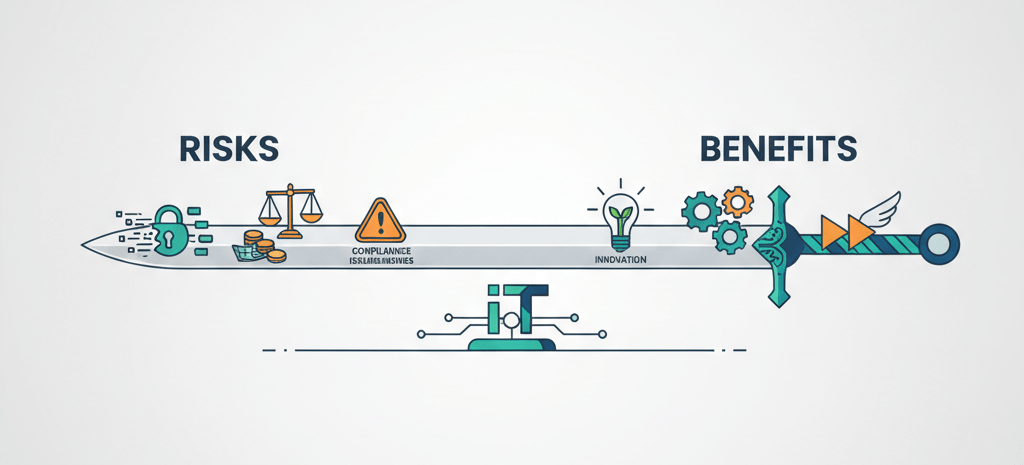
Shadow IT is not inherently evil; its existence is often a symptom of unmet business needs. However, its uncontrolled proliferation presents a serious threat to any organization. Understanding both sides of the coin is crucial for developing a balanced management approach.
The Significant Risks of Unmanaged Shadow IT
The dangers associated with unsanctioned technology are numerous and can have severe consequences for a business.
Security Vulnerabilities and Data Breaches
This is perhaps the most critical risk. Unvetted applications and services often lack the security controls mandated by the IT department. They may have known vulnerabilities that go unpatched because IT is unaware of their existence. This creates easy entry points for cyberattacks. Furthermore, employees storing sensitive company data on unsecured personal cloud accounts significantly increases the risk of data leaks and breaches. In fact, some reports indicate that nearly half of all cyberattacks can be linked to Shadow IT.
Compliance and Regulatory Issues
Many industries are subject to strict data protection regulations like GDPR, HIPAA, or PCI DSS. Using unapproved tools to handle sensitive customer or patient data can lead to serious compliance violations, resulting in hefty fines and reputational damage. For example, financial firms on Wall Street were fined $1.1 billion by the SEC in 2022 for using unauthorized communication tools.
Data Loss and Inconsistency
When data is scattered across dozens of unsanctioned applications, the organization loses a single source of truth. This can lead to inconsistent reporting and flawed business analysis. Moreover, if an employee leaves the company or a free cloud service is discontinued, the data stored there can be lost forever, as there are no official backup or retention policies in place.
Increased Costs and Inefficiencies
Shadow IT often leads to redundant software subscriptions and wasted IT spending. Multiple departments might independently purchase licenses for similar tools, missing out on the potential for enterprise-level discounts. Gartner estimates that Shadow IT can account for 30% to 40% of IT spending in large enterprises. This also creates collaboration inefficiencies when different teams use incompatible platforms.
The Unexpected Benefits of Shadow IT
Despite the risks, the existence of Shadow IT can provide valuable insights and opportunities for an organization.
Increased Productivity and Agility
The most common reason employees turn to Shadow IT is to do their jobs better and faster. When official IT processes are too slow or the provided tools are inadequate, unsanctioned apps can fill the gap, allowing teams to remain productive and agile.
Innovation and Discovery
Employees are often on the front lines of technological innovation. Their adoption of new tools can act as a grassroots research and development program for the company. By monitoring these trends, the IT department can discover new and valuable solutions that they might not have otherwise considered.
Highlighting Unmet Needs
The prevalence of a particular shadow application can be a clear signal to the IT department that the officially sanctioned tools are not meeting the needs of the workforce. This feedback, when properly analyzed, can guide future IT procurement and development, leading to better, more user-friendly solutions for everyone.
Why Effective Managing Shadow IT is Essential for Modern Enterprises
Given the pervasive nature of cloud services and the consumerization of IT, attempting to completely eliminate Shadow IT is an exercise in futility. Instead, the focus must shift to proactive shadow it management. A failure to address this issue doesn’t just invite risk; it represents a missed opportunity to align IT services with real-world business needs.

The scale of the problem is significant. The average company may have hundreds of unknown cloud services in use. This lack of visibility means IT and security teams are flying blind, unable to protect data, manage costs, or ensure compliance.
Furthermore, the rise of remote and hybrid work models has only exacerbated the challenge. Employees working from home are more likely to use personal devices and unapproved applications to get their work done, expanding the organization’s attack surface far beyond the traditional office perimeter.
Effective shadow IT solutions are not about creating a restrictive, locked-down environment. Such an approach often backfires, driving even more technology into the shadows and stifling the very innovation and productivity that employees were seeking. The goal is to strike a balance: to create a framework that provides visibility and control for the IT department while still empowering employees with the tools they need to succeed. This approach transforms IT from a gatekeeper into a strategic business partner.
Key Strategies for Shadow IT Management and Control
A successful approach to managing Shadow IT is multifaceted, combining technology, policy, and a shift in organizational culture. It requires moving from a reactive, prohibitive stance to a proactive, collaborative one.
1. Discover and Identify All Assets
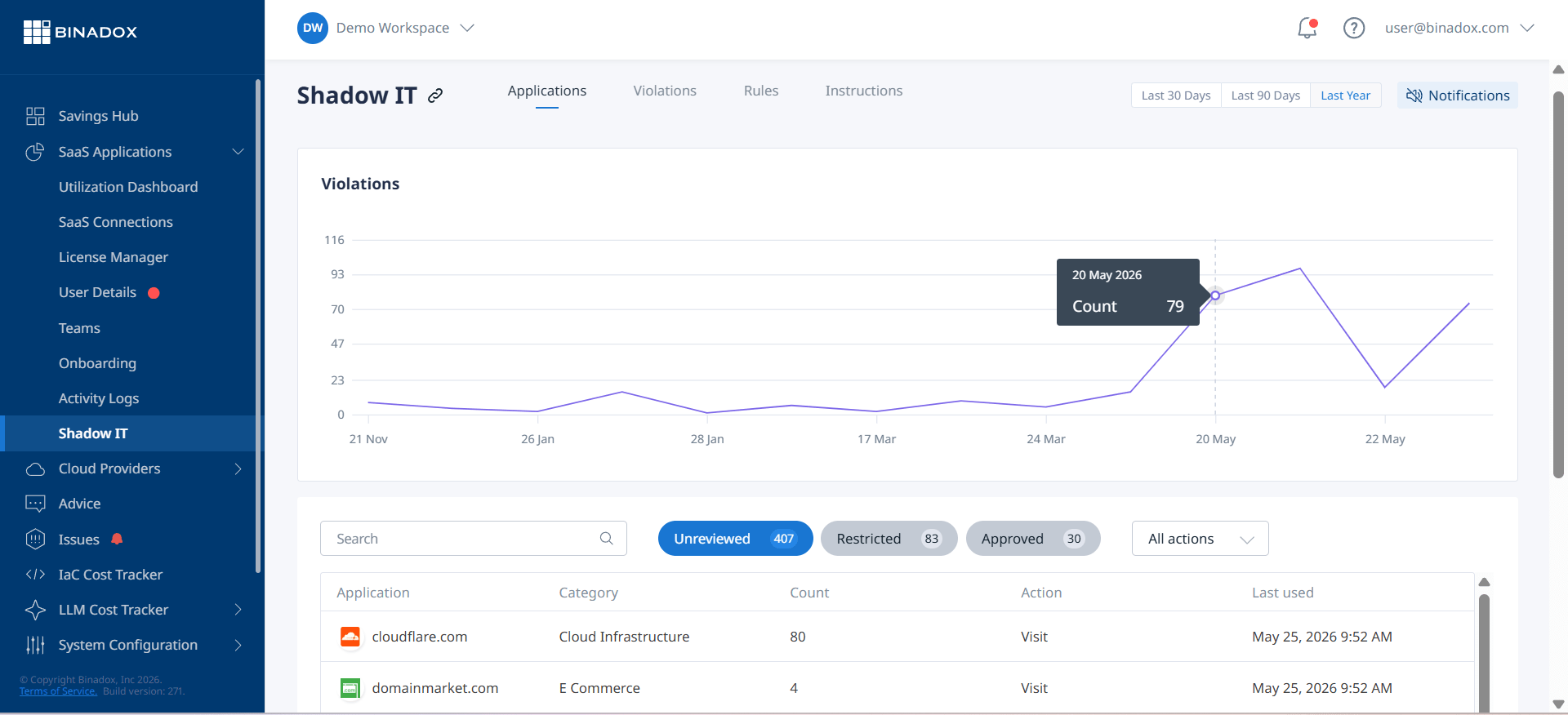
You cannot manage what you don’t know exists. The foundational step is to gain complete visibility into all the applications, devices, and services connected to your network. This involves a continuous process of discovery, not a one-time audit.
- Network Monitoring: Use network traffic analysis tools to identify data flowing to and from unknown cloud services.
- Expense Report Analysis: Regularly review expense reports and procurement data to find software subscriptions purchased by employees or departments without IT approval.
- Integrate with Identity Providers: Connect with your Single Sign-On (SSO) and identity providers (like Google Workspace or Azure Active Directory) to trace which users are accessing which applications.
2. Assess and Prioritize Risks
Once you have a list of shadow IT assets, the next step is to evaluate the risk associated with each one. Not all unsanctioned tools pose the same level of threat. A risk assessment should consider:
- Data Sensitivity: What kind of data is being accessed or stored in the application?
- Security Posture: Does the application vendor have strong security practices (e.g., encryption, multi-factor authentication)?
- Compliance: Does the tool comply with relevant industry regulations? This assessment allows you to prioritize your mitigation efforts, focusing on the highest-risk applications first.
3. Collaborate and Educate
Often, employees use Shadow IT simply because they are unaware of the risks or don’t know the proper procedure for requesting new tools. Open communication is key.
- Run Awareness Campaigns: Educate your workforce on the dangers of unvetted software, including data breaches and compliance violations.
- Foster Partnership: Position the IT department as a partner that wants to help employees find the best tools for their jobs, rather than an obstacle to be circumvented.
- Offer an Amnesty Program: Consider a program where employees can report the shadow IT they are using without fear of punishment. This can provide a treasure trove of data for your discovery efforts.
4. Provide and Promote Approved Alternatives
One of the most effective ways to reduce Shadow IT is to make the “official” way the easiest way.
- Create a Curated App Catalog: Develop a pre-vetted list of approved, secure, and supported applications for common tasks like project management, collaboration, and file sharing.
- Streamline the Vetting Process: A six-month security review for a simple productivity app is a primary driver of Shadow IT. Create a lightweight, rapid approval process for low-risk tools to show you respect the business’s need for speed.
Developing a Comprehensive Shadow IT Policy and Governance Framework
A formal policy is the backbone of any effective shadow IT management strategy. It provides clear guidelines for employees and a framework for enforcement. A good shadow IT policy is not just a list of prohibitions; it’s a document that educates, empowers, and clarifies expectations.

Key Components of a Shadow IT Policy
Your policy should be easy to understand and accessible to all employees. It should clearly define:
- What Constitutes Shadow IT: Provide a clear definition and examples of unauthorized technology so there is no ambiguity.
- Acceptable Use Guidelines: Outline the rules for using company data and network resources, including on personal devices.
- The Tool Request and Approval Process: Detail the steps an employee or team must take to request a new piece of software or service. This process should be straightforward and have clear service-level expectations for a response.
- Roles and Responsibilities: Clarify who is responsible for what. This includes the responsibilities of the end-user, their manager, and the IT department in the procurement and management process.
- Consequences for Non-Compliance: The policy should state the potential consequences of violating the rules. However, the focus should be on education and prevention rather than punishment. It’s important that the organization has clarity on these consequences.
Establishing a Governance Framework
Beyond the written policy, you need a governance structure to oversee it. This often involves creating a cross-functional committee with representatives from IT, security, legal, and key business departments. This group can:
- Regularly Review and Update the Policy: Technology changes rapidly, and your policy must adapt to new tools (like AI) and emerging threats.
- Evaluate New Tool Requests: This committee can oversee the vetting process for new applications, ensuring they meet security, compliance, and business requirements.
- Monitor and Audit: The governance framework should include procedures for regular audits to identify new instances of Shadow IT and ensure the policy is being followed.
Tools and Technologies for Discovering and Managing Shadow IT Assets
While policy and education are crucial, they must be supported by the right technology. A variety of tools can help automate the process of discovering, monitoring, and controlling shadow IT assets in your environment.
SaaS Management Platforms (SMPs)
These platforms are designed specifically to address the challenge of SaaS sprawl and Shadow IT. An SMP acts as a central hub for discovering and managing all the SaaS applications in use across the organization, whether they are sanctioned or not. Key features often include:
- Automated Discovery: SMPs integrate with financial systems, identity providers, and browser extensions to continuously discover new SaaS usage.
- Unified Dashboard: They provide a single pane of glass to view all applications, who is using them, how much they cost, and their associated risk level.
- Usage Analytics: These tools can help identify redundant applications and underutilized licenses, leading to significant cost savings.
Cloud Access Security Brokers (CASBs)
A CASB is a security policy enforcement point that sits between cloud service users and cloud applications. It can monitor all activity and enforce security policies. CASBs are particularly effective for managing shadow IT in the cloud. They can:
- Discover Cloud Usage: Analyze network logs to identify all cloud services being accessed by employees.
- Assess Risk: Provide risk scores for thousands of cloud applications based on their security and compliance features.
- Enforce Controls: A CASB can be configured to block access to high-risk, unapproved applications or enforce specific security controls, such as encrypting data before it’s uploaded to a cloud service.
Network and Endpoint Monitoring Tools
Traditional security tools also play a vital role.
- Firewalls and Network Traffic Analyzers: These can be configured to monitor and flag traffic going to known unsanctioned services.
- Endpoint Protection Systems: These tools can provide visibility into the software installed on company-managed devices, helping to identify unauthorized applications.
Best Practices for Shadow IT Security and Compliance
Once you have visibility and a policy in place, the focus shifts to ongoing security and compliance. The goal is to reduce the risk posed by both existing and future Shadow IT.
Implement a Zero Trust Security Model
A Zero Trust architecture is a powerful strategy for mitigating shadow IT security risks. The core principle is “never trust, always verify.” This means that no user or device is trusted by default, regardless of whether they are inside or outside the corporate network.
- Enforce Multi-Factor Authentication (MFA): Require MFA for access to all applications, especially those containing sensitive data. This helps prevent unauthorized access even if credentials are stolen.
- Apply the Principle of Least Privilege: Ensure that users only have access to the data and systems they absolutely need to perform their jobs. This limits the potential damage if an account is compromised.
Conduct Regular Security Audits and Training
Security is a continuous process, not a one-time fix.
- Regular Audits: Periodically audit user access rights, application configurations, and network activity to identify and address new security risks.
- Ongoing Employee Training: Cybersecurity training should be a regular event, not just part of onboarding. Keep employees informed about the latest threats and reinforce the company’s security policies, including the rules around Shadow IT.
Create a Secure Sandbox for Testing
One reason employees turn to Shadow IT is the need to test new tools quickly. To accommodate this without introducing risk, you can create a “sandbox” environment. This is an isolated, secure network where employees can test new applications under IT supervision before they are considered for formal adoption. This provides a safe outlet for innovation and reduces the temptation to use unauthorized solutions on the main corporate network.
Conclusion: Embracing and Managing Shadow IT for Strategic Advantage
The battle against Shadow IT is not one you can win by simply building higher walls. The very forces that drive its growth—the demand for agility, the ease of cloud adoption, and employee ingenuity—are the same forces that drive modern business. Attempting to crush it entirely is a losing proposition that alienates employees and stifles innovation. The more pragmatic and ultimately more successful path lies in effective managing shadow it.
This requires a fundamental shift in mindset: from viewing Shadow IT as a threat to be eradicated to seeing it as a valuable, if unruly, source of business intelligence. The appearance of a new project management tool in a department isn’t just a policy violation; it’s a data point indicating a gap in your official toolkit. By discovering these tools, assessing their purpose, and engaging with the people who use them, you can transform your IT strategy from a rigid mandate into a responsive, collaborative partnership. The goal isn’t a network free of unapproved apps—an unlikely utopia—but a transparent environment where risk is managed, needs are met, and innovation has a safe, sanctioned path forward. After all, ignoring what’s in the shadows doesn’t make it go away; it just leaves you in the dark.
Embracing proactive Shadow IT management transforms potential risks into strategic advantages, offering transparency and fostering innovation. To gain this essential visibility and control, you can explore our solution with a free trial or discover its full capabilities by scheduling a personalized demo.
 7-day free trial