



In the push to accelerate development velocity, it’s common for engineers to adopt new tools and services on their own. While this autonomy can solve immediate problems, it also creates a significant governance challenge. This phenomenon, where technology is used without explicit IT department approval, is a classic case of engineering team shadow IT. For an engineering manager, this isn’t just a minor compliance issue; it’s a direct threat to budget predictability, security posture, and operational stability. The unmanaged proliferation of SaaS applications and development tools can quickly spiral out of control, leading to redundant spending, security vulnerabilities, and a chaotic tech stack that undermines the very efficiency it was meant to enhance.
Key takeaways
- Massive Visibility Gap: On average, enterprises believe they use about 91 cloud services, but the actual number is closer to 1,220, a discrepancy of over 10x that highlights the scale of developer tool sprawl.
- Significant Financial Drain: Shadow IT accounts for a staggering 30-40% of IT spending in large enterprises, often leading to redundant subscriptions and wasted resources.
- Proactive Governance is Key: Instead of a reactive crackdown, the most effective approach involves a 4-step process: discover, assess, create a clear policy, and streamline procurement to balance developer autonomy with organizational oversight.
- Security is a Major Concern: With Gartner predicting that by 2027, 75% of employees will use technology outside of IT’s visibility, the risk of data breaches and compliance violations from unvetted tools grows exponentially.
What Is Shadow IT in Engineering?
In an engineering context, shadow IT refers to any hardware, software, SaaS platform, or cloud service that developers use for their work without official approval or oversight from IT and security teams. This isn’t about malicious intent. Rather, it’s usually driven by a desire for efficiency. When the official procurement process is perceived as slow or bureaucratic, engineers will naturally find their own solutions to maintain momentum.

Common examples within a development lifecycle include:
- Productivity and Collaboration Tools: Using personal accounts for platforms like Trello, Asana, or Slack to manage projects when the company standard feels cumbersome.
- Cloud Storage and File Sharing: Leveraging personal Dropbox or Google Drive accounts to share code snippets, logs, or documentation with external collaborators.
- Specialized Development Tools: Subscribing to a new code analysis tool, a niche API for a side project, or a cloud-based IDE because it offers a specific feature not available in the standard toolkit.
- Generative AI Services: Using personal subscriptions for AI coding assistants or other generative AI platforms, which can lead to sensitive source code being exposed to unauthorized models.
The core issue is the lack of visibility. When you don’t know what’s running in your environment, you can’t govern it, secure it, or budget for it. This developer tool sprawl creates a fragmented and often redundant ecosystem that directly impacts your ability to manage the team effectively.
Why Your Engineering Team’s Shadow IT Is a Problem
While born from a desire for productivity, uncontrolled shadow IT introduces significant risks and inefficiencies that directly impact an engineering manager’s KPIs. These problems go far beyond simple non-compliance and can actively undermine your team’s performance and the company’s bottom line.
Security and Compliance Risks
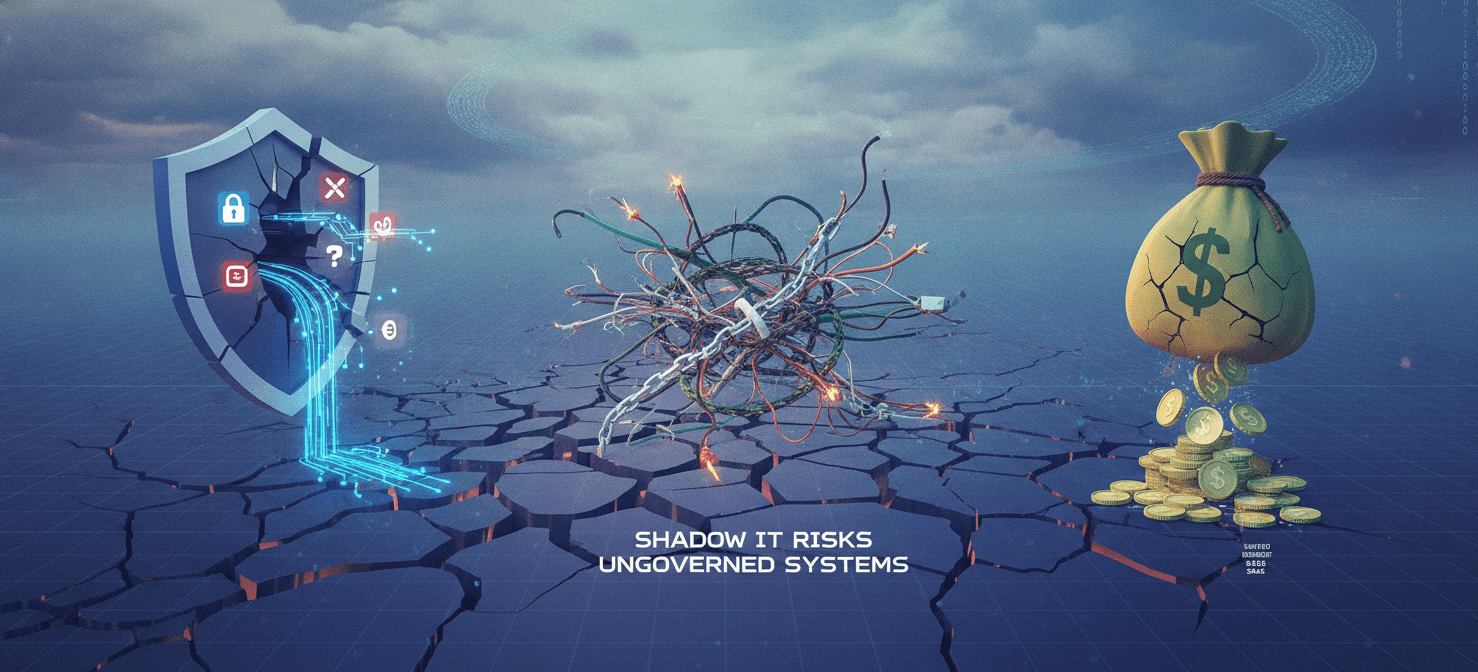
Unvetted tools are a primary vector for security breaches. Each unsanctioned application expands your team’s attack surface, creating entry points for malicious actors that your security team cannot see or defend. These tools often lack proper security configurations, may not be patched regularly, and can create serious compliance issues if they handle sensitive data, violating regulations like GDPR or SOC 2. In fact, Gartner predicts that by 2030, over 40% of organizations will experience security incidents due to unauthorized AI tools alone.
Budgetary and Operational Inefficiency
From a financial perspective, shadow IT is a major source of waste. It frequently leads to multiple teams paying for redundant tools with overlapping functionality. This developer tool sprawl results in wasted license fees and a lack of purchasing power that could be achieved through centralized procurement. Operationally, it creates data silos and integration nightmares. When critical project data is scattered across a dozen unmanaged services, it becomes nearly impossible to maintain a single source of truth, leading to misaligned efforts and costly rework. The average company wastes an estimated $135,000 annually on unnecessary SaaS tools.
Lack of Governance and Accountability
Without a clear view of the tools in use, establishing ownership and accountability is impossible. Who is responsible when an unmanaged API key is leaked from a developer’s personal account on a free-tier code repository? Who ensures that a tool is deprecated when a project ends? This lack of governance leads to a chaotic environment where security best practices are ignored, and there is no clear process for managing the lifecycle of the software your team depends on. This directly impacts your ability to ensure process adherence and maintain a stable, predictable development environment.
How to Discover and Assess Your Engineering Team’s Shadow IT
You can’t manage what you can’t see. Therefore, the first step to getting a handle on your engineering team’s shadow IT is a thorough discovery and assessment process. This isn’t about blame; it’s about building a comprehensive inventory to inform your governance strategy.
Conduct a Discovery Audit
The goal is to create a complete catalog of all the tools and services your team is using. This requires a multi-pronged approach:
- Talk to Your Team: Start with open conversations. In one-on-ones or team meetings, ask developers what tools they use to get their jobs done. Frame it as an effort to understand what works best for them, not as an inquisition.
- Analyze Expense Reports: Work with your finance department to review credit card statements and expense reports from your team members. Look for recurring subscriptions to SaaS vendors.
- Use Discovery Tools: Several platforms specialize in identifying shadow IT. These tools can analyze network traffic, browser extensions, and cloud service logs to automatically detect unsanctioned applications. Solutions like Auvik or Josys can provide a centralized view of application usage across the organization.
Assess and Categorize the Findings
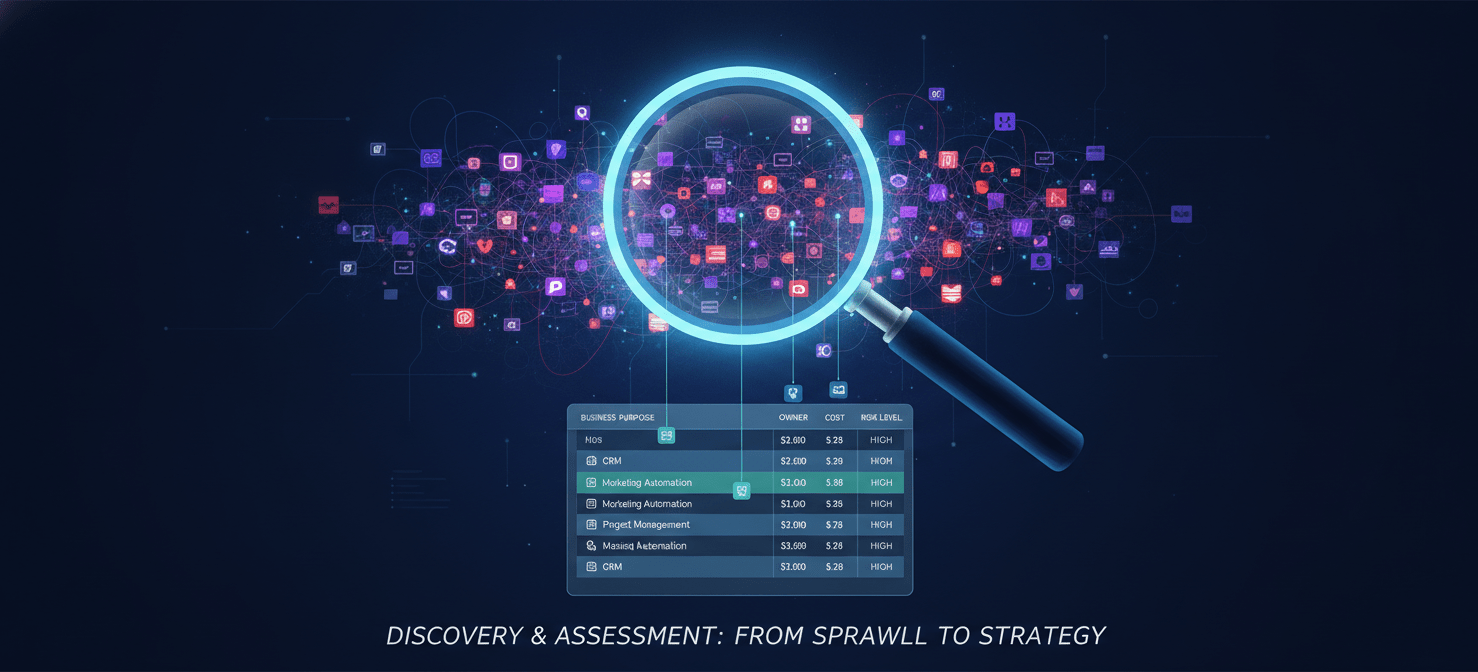
Once you have your list, the next step is to evaluate each tool. Create a simple spreadsheet or use an asset management tool to track the following for each application:
- Business Purpose: What problem does this tool solve? Which projects or teams depend on it?
- Owner/Users: Who on the team is the primary user or internal champion?
- Cost and Subscription Model: What is the monthly or annual cost? Is it a free or paid tier?
- Data Sensitivity: Does this tool access, store, or process sensitive company or customer data?
- Redundancy: Does the company already provide a sanctioned tool that serves the same purpose?
This assessment will allow you to triage the discovered tools. You’ll likely find some that are critical to a project’s success, others that are redundant, and some that pose an unacceptable security risk. This data-driven approach provides the foundation for building a sensible governance framework.
Creating a Governance Framework for Developer Tools
After discovering and assessing the scope of shadow IT, the next phase is to establish a clear governance framework. The objective is not to eliminate all non-standard tools but to create a structured process for their evaluation, approval, and management. This is how you control engineering SaaS sprawl and ensure accountability.

Develop a Clear Software Procurement Policy
A formal policy is the cornerstone of effective governance. This document should be created with input from engineering, IT, security, and finance to ensure it is both practical and comprehensive. It should clearly outline:
- The Approval Process: Define the steps a developer must take to request a new tool. This should include a lightweight business justification and a security review.
- Roles and Responsibilities: Specify who is responsible for each stage of the process—who submits the request, who conducts the security assessment, and who gives final budget approval.
- Security and Compliance Standards: List the minimum security requirements for any new tool, such as support for single sign-on (SSO), data encryption standards, and compliance with relevant regulations.
- Approved Tool Catalog: Maintain a list of officially sanctioned and supported tools that developers can use without needing additional approval. This reduces friction for common needs.
Streamline the Procurement and Onboarding Process
The primary reason developers turn to shadow IT is that official channels are too slow. Therefore, your governance framework must be built for speed and efficiency. Centralizing procurement can significantly reduce redundant spending and improve negotiating power with vendors.
Consider implementing a “paved road” approach. For tools that meet pre-defined security and operational criteria, the approval process should be fast-tracked. You can also create a “sandbox” environment where developers can safely experiment with new tools under IT supervision before they are approved for production use. By making the official process the path of least resistance, you encourage compliance without stifling innovation.
Foster a Culture of Ownership and Transparency
Finally, governance is as much about culture as it is about rules. Communicate the “why” behind the new policy. Explain the security risks and budget impacts of unmanaged tools. Furthermore, empower your senior engineers or tech leads to be part of the tool evaluation and approval process. When developers feel a sense of ownership over the tech stack and understand the rationale behind the guardrails, they are far more likely to become partners in governance rather than adversaries.
Conclusion
Tackling engineering team shadow it is not a one-time cleanup project; it’s an ongoing discipline of balancing agility with governance. For engineering managers, ignoring the issue is a direct abdication of responsibility over budget, security, and process. The proliferation of unmanaged tools, while often well-intentioned, introduces unacceptable risks and operational drag that quietly erode team effectiveness.
By systematically discovering what’s in use, assessing the business value and risk of each tool, and implementing a streamlined, transparent governance framework, you can regain control. The goal isn’t to build a bureaucratic fortress that stifles innovation. Instead, it’s to create a “paved road” that makes it easier for developers to acquire the tools they need safely and efficiently. Ultimately, a well-managed toolchain is a reflection of a well-managed engineering organization—one that moves fast, but not by cutting corners that will inevitably lead to a ditch.
To effectively manage your engineering team’s tech stack and build that paved road for innovation, you can create your free Binadox account for immediate visibility or book a demo to explore comprehensive governance solutions.
 7-day free trial