



The rapid adoption of Software-as-a-Service (SaaS) applications has transformed how businesses operate, offering flexibility and boosting productivity. However, this ease of access has a significant downside: shadow IT. When employees use software without official approval or oversight from the IT department, it creates serious security vulnerabilities, compliance risks, and uncontrolled costs. Your team might be using dozens, or even hundreds, of unsanctioned apps right now. Finding the best saas management software is therefore essential for regaining control. These platforms provide the visibility and automation needed to discover, manage, and secure your entire SaaS ecosystem, effectively turning a chaotic situation into a well-managed asset. A robust SaaS management platform helps you eliminate the guesswork and mitigate the risks associated with unauthorized software.
Key takeaways
- Shadow IT, the use of unapproved apps by employees, is present in nearly every organization and creates significant security risks and wasted spending.
- SaaS Management Platforms (SMPs) can discover up to 70% more SaaS applications than manual methods by integrating with financial systems, single sign-on (SSO) logs, and browser extensions.
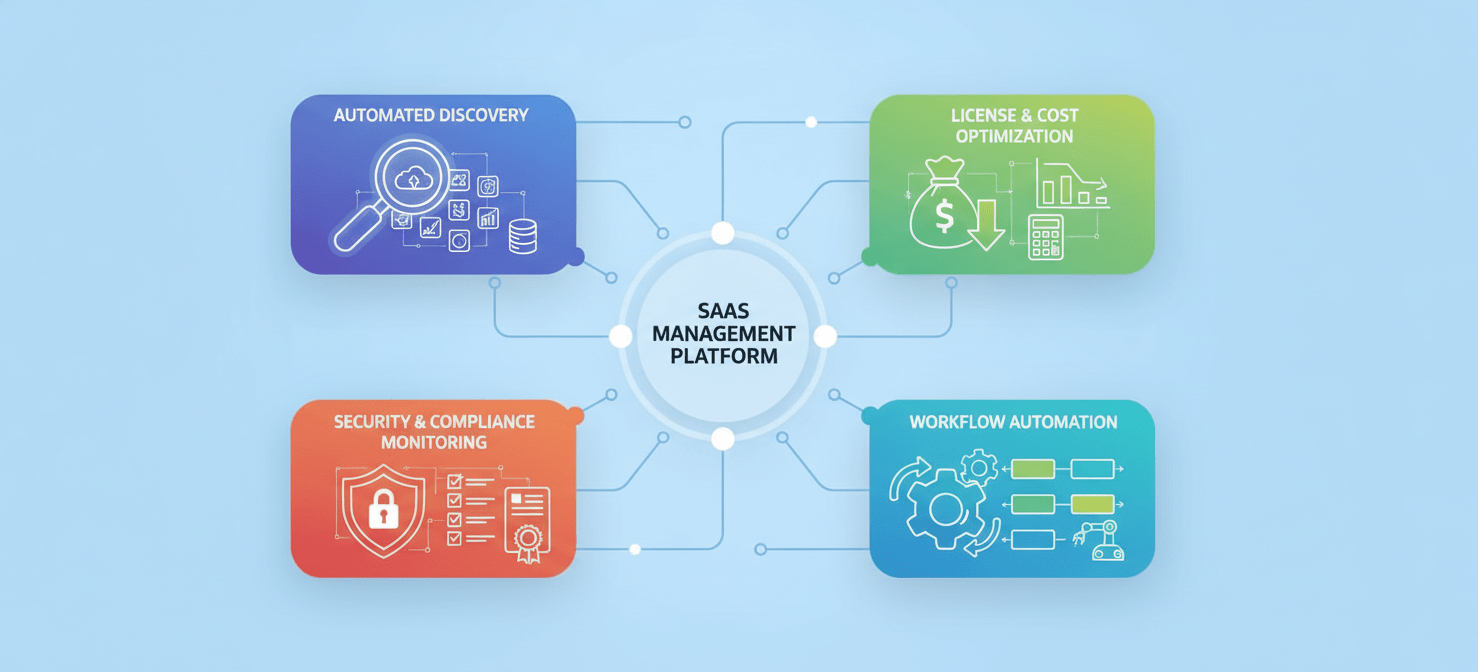
- Key features to look for include automated discovery, license and cost optimization, security and compliance monitoring, and streamlined employee onboarding/offboarding workflows.
- Implementing an SMP can be done in 5 key steps, starting with discovery and ending with continuous optimization.
What is Shadow IT (and Why Is It a Problem)?
Shadow IT refers to any software, hardware, or service used by employees for business purposes without the knowledge or approval of the company’s IT department. For example, a marketing team might start using a new project management tool to collaborate with an agency, or a sales representative might use a file-sharing service to send a large presentation. While often done with good intentions to improve productivity, this practice introduces substantial risks.

The primary issue is a complete lack of visibility. If you don’t know an application is being used, you cannot ensure it meets your company’s security standards. This opens the door to data breaches, as sensitive company information could be stored in insecure platforms. Furthermore, these unvetted applications may not comply with data protection regulations like GDPR or CCPA, putting the organization at risk of heavy fines.
Beyond security, shadow IT creates significant financial waste. Multiple departments might be paying for separate subscriptions to the same or similar tools, leading to redundant spending. Without centralized oversight, you lose negotiating power for enterprise-level discounts. Licenses for former employees may also go un-decommissioned, resulting in paying for software that no one is using. In short, shadow IT creates a chaotic, insecure, and expensive software environment.
How SaaS Management Platforms Discover Shadow IT
SaaS management platforms are designed to shine a light on this hidden application usage. They use a multi-pronged approach to create a comprehensive inventory of every application connected to your organization. Instead of relying on manual surveys, which are often incomplete, these tools automate the discovery process.
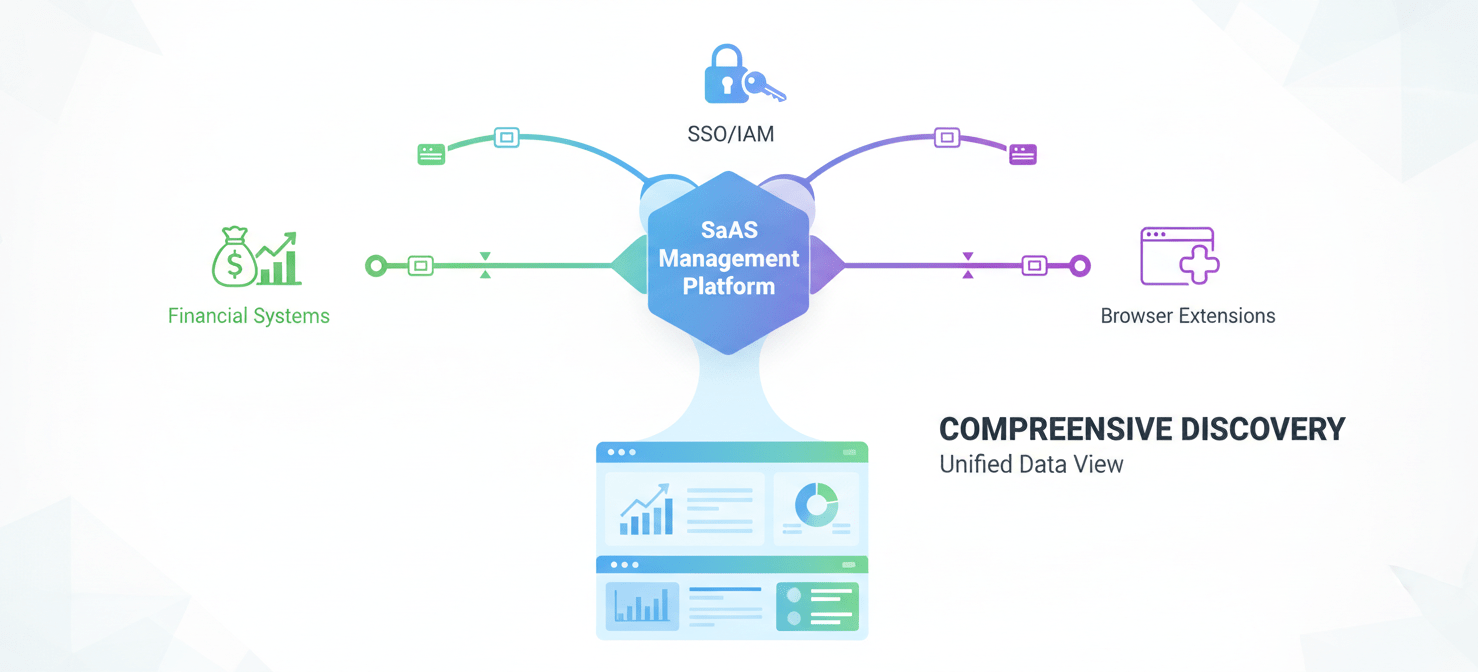
First, one of the most effective methods is integrating with your financial systems. By analyzing expense reports, corporate card statements, and accounts payable records, the platform can identify recurring payments to SaaS vendors. This approach uncovers applications that employees are expensing directly.
Next, these platforms connect to your existing identity and access management (IAM) and single sign-on (SSO) systems, like Okta or Azure AD. They analyze login data to see which applications users are accessing, whether they are officially sanctioned or not. This provides a clear picture of what is actively being used.
In addition, many solutions offer browser extensions that can be deployed to employee devices. These extensions monitor application usage directly from the source, capturing data on both web-based and desktop applications. This method is particularly effective for identifying “freemium” apps that don’t generate a financial transaction but may still hold company data. By combining these discovery methods, the best saas management platform vendors provide a single, accurate view of your entire SaaS stack.
The Best SaaS Management Software for Tackling Shadow IT
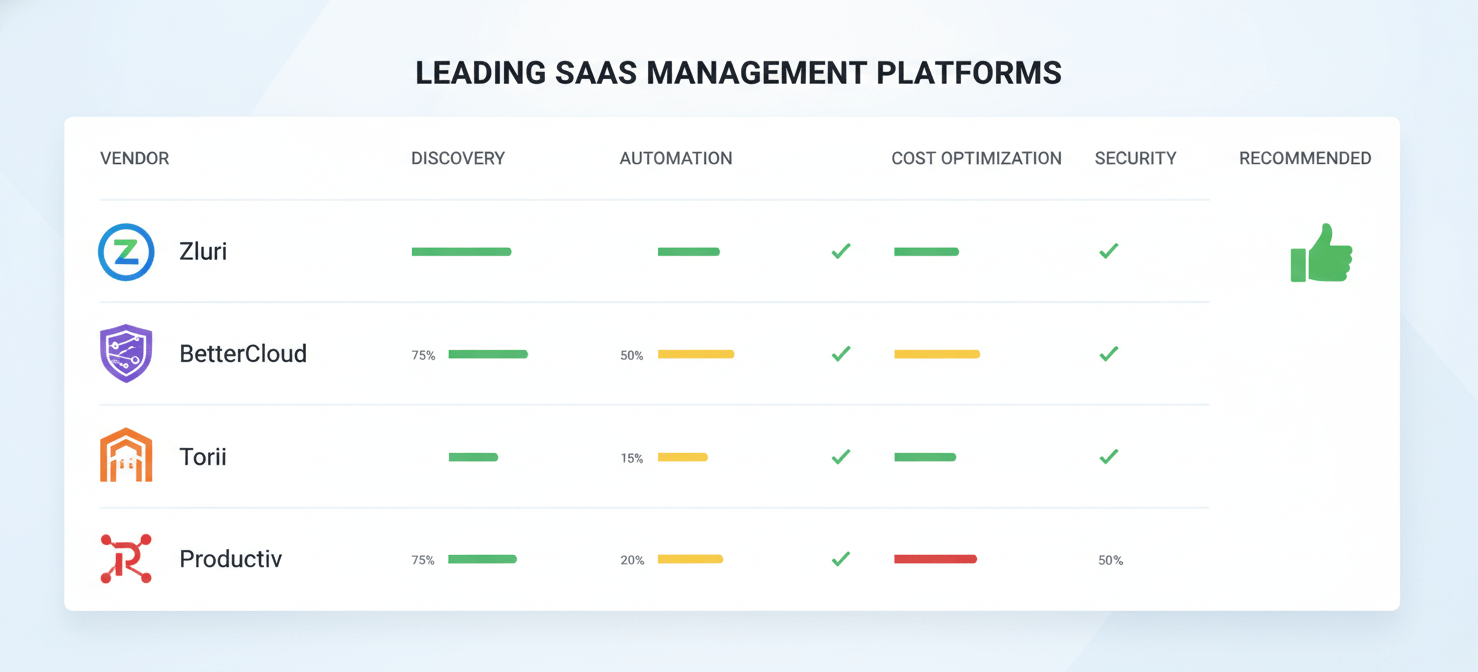
Choosing the right tool is critical for effectively managing your SaaS environment. Different platforms offer various strengths, so the best choice depends on your organization’s specific needs, size, and existing technology stack. Here are some of the leading saas management platform vendors known for their robust discovery and management capabilities.
Zluri
Zluri is frequently highlighted for its powerful discovery engine, which claims to uncover more applications than many competitors. It uses five different discovery methods—including financial, SSO, and browser-based monitoring—to provide a highly accurate inventory of all SaaS usage. Zluri is particularly strong in its automation features, helping to streamline workflows for employee onboarding and offboarding. This ensures that access is granted and revoked promptly, closing a common security gap. The platform also provides deep insights into application usage, helping you identify underutilized licenses and opportunities for cost savings.
BetterCloud
BetterCloud is a veteran in the SaaS management space, offering deep integration capabilities with a wide range of popular applications. Its platform excels at creating automated policies and workflows to manage the entire SaaS lifecycle. For example, you can build a workflow that automatically de-provisions a user from all their applications when they are marked as “terminated” in your HR system. BetterCloud provides granular controls for managing user permissions and file security settings within connected apps, which is a key part of mitigating the risks of shadow IT.
Torii
Torii is another excellent option that emphasizes a user-friendly interface and extremely fast time-to-value. Its discovery process is known for being quick and comprehensive, often providing a complete SaaS inventory within hours of setup. Torii’s “App Catalog” feature allows you to create a curated list of approved applications, guiding employees toward vetted tools and reducing the likelihood of them seeking out unsanctioned alternatives. It also offers robust features for license and contract management, helping you stay ahead of renewals and optimize spending.
Productiv
Productiv focuses heavily on application engagement metrics. Instead of just telling you what software you have, it provides detailed analytics on how employees are actually using it. By analyzing usage patterns at the feature level, Productiv helps you make more informed decisions about which applications provide the most value. This data-driven approach is invaluable for rightsizing licenses and eliminating redundant tools, directly addressing the cost inefficiencies caused by shadow IT.
Key Features to Look for in a SaaS Management Platform
When evaluating the best saas management software, it’s important to look beyond discovery. A comprehensive platform should offer a suite of features that help you manage the entire lifecycle of your SaaS applications.
Automated Discovery and Inventory
This is the foundational feature. The platform must be able to connect with multiple data sources (financial, SSO, identity providers, browser extensions) to create and maintain a continuously updated inventory of all SaaS applications in use. Without a complete and accurate picture, managing shadow IT is impossible.
License and Cost Optimization
Once you know what you have, the next step is to optimize it. Look for features that track license utilization, identify inactive accounts, and manage renewals. The platform should provide clear dashboards that highlight opportunities to downgrade plans, eliminate redundant applications, and consolidate overlapping subscriptions. According to one report, organizations can often reduce their SaaS spending by up to 30% through active management.
Security and Compliance Monitoring
A key function of a SaaS management platform is to mitigate risk. The software should help you assess the security posture of each application, tracking its compliance with standards like SOC 2, ISO 27001, and GDPR. It should also alert you to risky user behavior, such as employees using personal accounts for business applications or sharing sensitive data insecurely.
Workflow Automation
Manual management is not scalable. The best platforms offer robust automation capabilities to handle routine tasks. This includes automating the employee onboarding and offboarding processes, managing access requests, and streamlining application approvals. Automation not only saves time but also reduces the risk of human error, ensuring that policies are enforced consistently.
How to Implement a SaaS Management Platform in 5 Steps
Deploying a SaaS management platform is a structured process. Following these steps will help ensure a smooth and successful implementation that allows you to get a handle on shadow IT quickly.
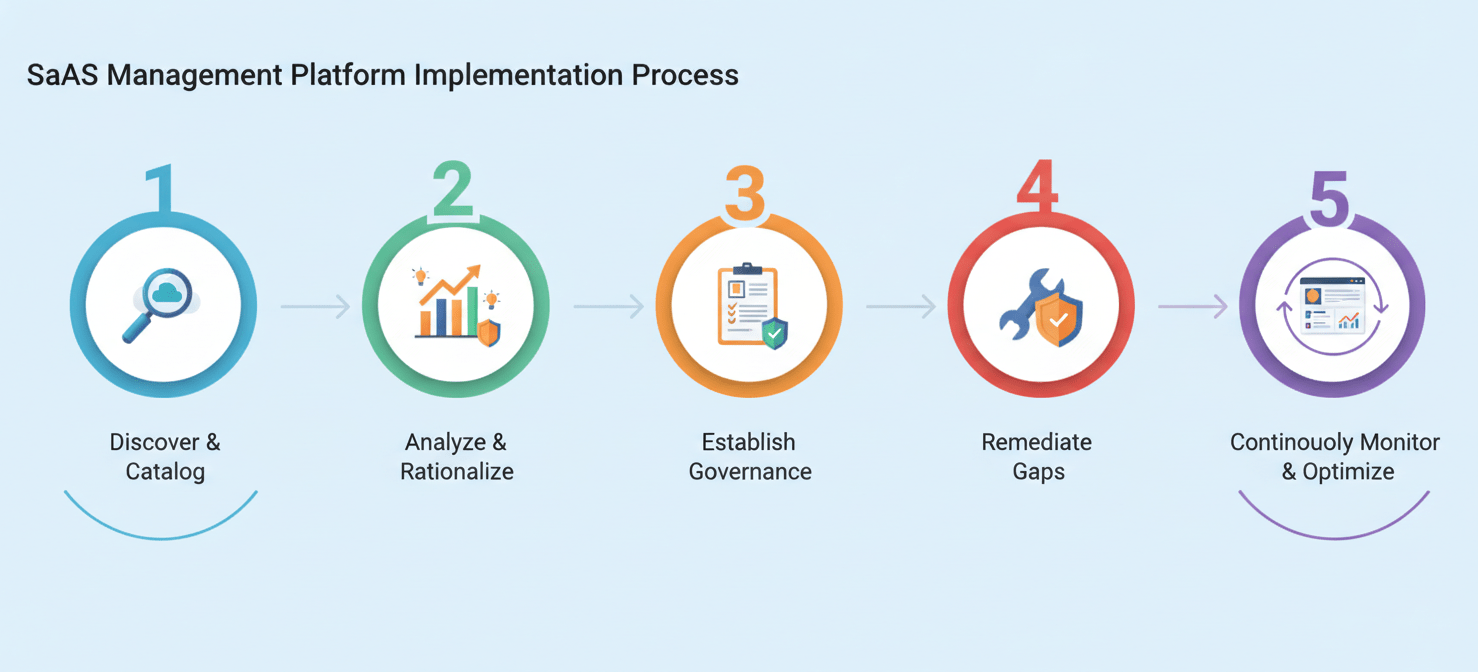
1. Discover and Catalog Your SaaS Stack The first step is to connect the platform to your data sources. This typically involves integrating with your accounting software, SSO provider, and deploying browser extensions if you choose to use them. The goal is to let the tool run its initial discovery process to build a comprehensive inventory of every application being used across the organization.
2. Analyze and Rationalize Your Portfolio Once the inventory is complete, the real analysis begins. Review the discovered applications and categorize them. Identify redundancies—for instance, you might find three different project management tools in use. Analyze usage data to pinpoint underutilized licenses. This phase is about making data-driven decisions to rationalize your application portfolio and eliminate waste.
3. Establish Governance and Approval Workflows With a clean inventory, you can now establish clear governance policies. Create an “App Catalog” of approved and vetted software for different functions. Next, build automated workflows within the platform for new software requests. This ensures that all future application adoptions go through a proper vetting and approval process, preventing the re-emergence of shadow IT.
4. Remediate Security and Compliance Gaps Use the platform’s security monitoring features to assess the risk profile of your applications. Identify any apps that do not meet your company’s security standards or compliance requirements. Develop a plan to either remediate the risks, such as by enforcing multi-factor authentication, or to migrate users to a safer, approved alternative.
5. Continuously Monitor and Optimize SaaS management is not a one-time project. Your SaaS ecosystem is constantly changing as new tools emerge and business needs evolve. Therefore, you must use your platform for continuous monitoring. Regularly review usage dashboards, manage contract renewals proactively, and continue to optimize your licenses. This ongoing process ensures that you maintain control and maximize the value of your SaaS investments.
Conclusion: Regain Control and Optimize Your SaaS Stack
The unchecked growth of shadow IT is no longer a problem that can be ignored. It represents a tangible threat to your organization’s security, compliance, and financial health. Attempting to manage hundreds of applications manually through spreadsheets is an exercise in futility. It is inefficient, prone to error, and simply cannot keep up with the pace of modern business. The only viable solution is to adopt a dedicated platform.
By implementing one of the best saas management software solutions, you can replace chaos with clarity. These platforms provide the automated discovery necessary to see what’s really going on, the data to make informed optimization decisions, and the workflows to enforce governance without stifling productivity. It is about enabling your teams with the right tools while ensuring the organization remains secure and efficient. Ultimately, you can’t manage what you can’t see, and in the world of SaaS, visibility is everything.
Ready to bring order to your SaaS chaos and gain complete visibility? You can explore the capabilities of a dedicated platform by checking out a free trial, or for a tailored walkthrough of its features, consider a personalized demo with our experts.
 7-day free trial