



Launching a public prototype that uses a Large Language Model (LLM) is an exciting step. It allows you to gather valuable user feedback and demonstrate your application’s potential. However, it also exposes your API to the open internet, creating a risk of misuse that can lead to surprising bills and service disruptions. Therefore, learning how to prevent LLM API abuse is not just a technical task—it’s a critical step for keeping your project financially viable and available for legitimate users. Without proper safeguards, a single malicious actor or a runaway script could exhaust your budget in hours.
Key takeaways
- Implement user-level authentication and token-based rate limiting, not just request-based limits, to control costs directly.
- Analyze user inputs to block prompt injection attacks and filter out content that violates usage policies before it reaches the LLM.
- Set up at least 3 layers of monitoring: track API costs in real-time, log request patterns, and create automated alerts for unusual spikes in usage or spending.
- Never expose API keys in client-side code; all LLM calls should be routed through a secure backend server that manages credentials and enforces security rules.
The High Cost of Unsecured LLM Endpoints
Leaving an LLM endpoint unsecured on a public prototype is like leaving your wallet on a park bench. The costs are not just theoretical; they are direct, financial, and can accumulate with alarming speed. Because most LLM providers bill based on the number of tokens processed (both input and output), every unmonitored request contributes to your monthly invoice.
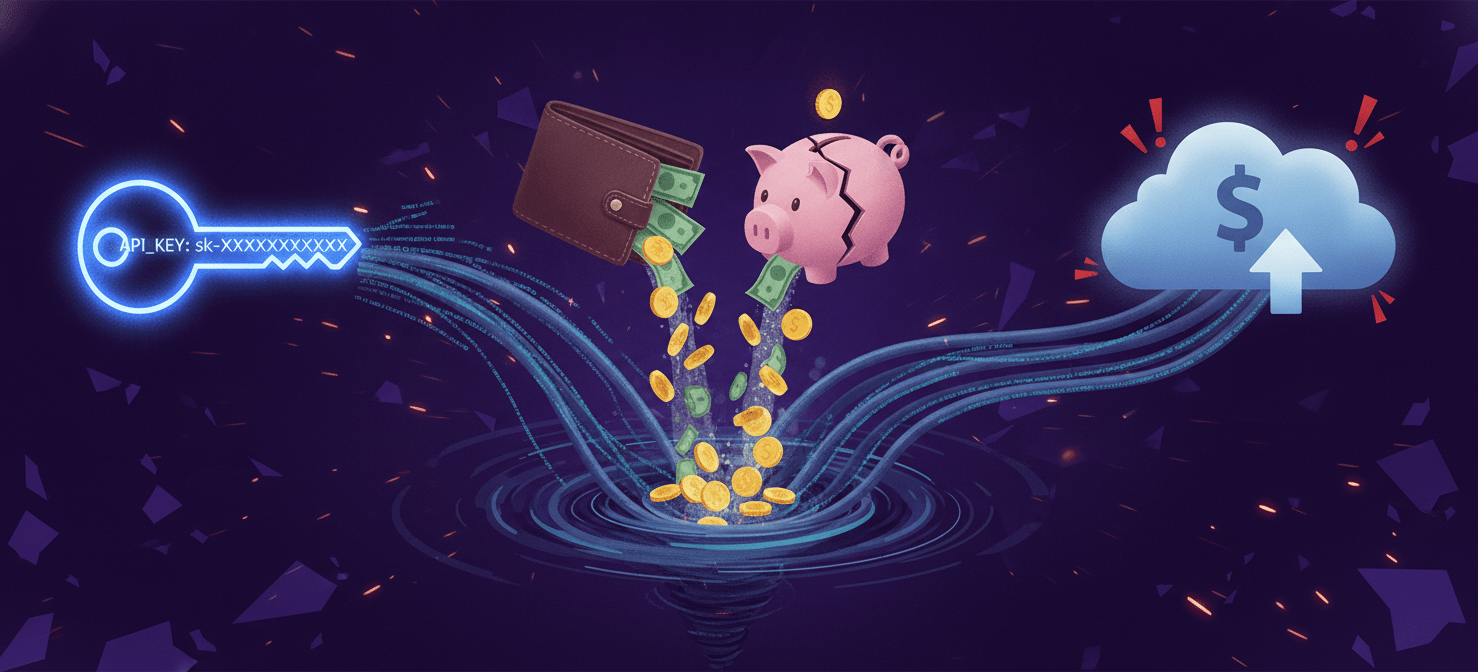
Malicious actors can exploit this by sending a high volume of requests, either to disrupt your service or to use your API for their own purposes at your expense. Even unintentional misuse, such as a user running a script that gets stuck in a loop, can lead to thousands of dollars in unexpected charges. Furthermore, this kind of abuse can cause you to hit your provider’s rate limits, leading to service degradation or outages for everyone else.
Securing Your API Keys
The first and most fundamental step is to protect your API credentials. An exposed API key is a direct invitation for abuse.
- Never embed keys in client-side code: Your API keys should never be visible in your website’s HTML, JavaScript, or mobile app code. Attackers can easily extract these keys and use them to make requests on your behalf. Instead, all calls to the LLM provider should go through your own backend server, which can securely store and use the key.
- Use a secret manager: Store API keys in a dedicated secret management service like AWS Secrets Manager or HashiCorp Vault. This practice prevents keys from being accidentally committed to public code repositories.
- Rotate keys regularly: Make it a policy to rotate your API keys periodically. If you suspect a key has been compromised, revoke it immediately and generate a new one.
User-Level LLM Rate Limiting
While API providers have their own global rate limits, you need to implement your own, more granular limits to protect your prototype. Relying solely on the provider’s limits is insufficient because they are designed to protect the provider’s infrastructure, not your budget. The key is to move beyond simple request counting and implement limits that reflect the actual cost drivers of LLM usage.
Token-Based and Cost-Based Limiting
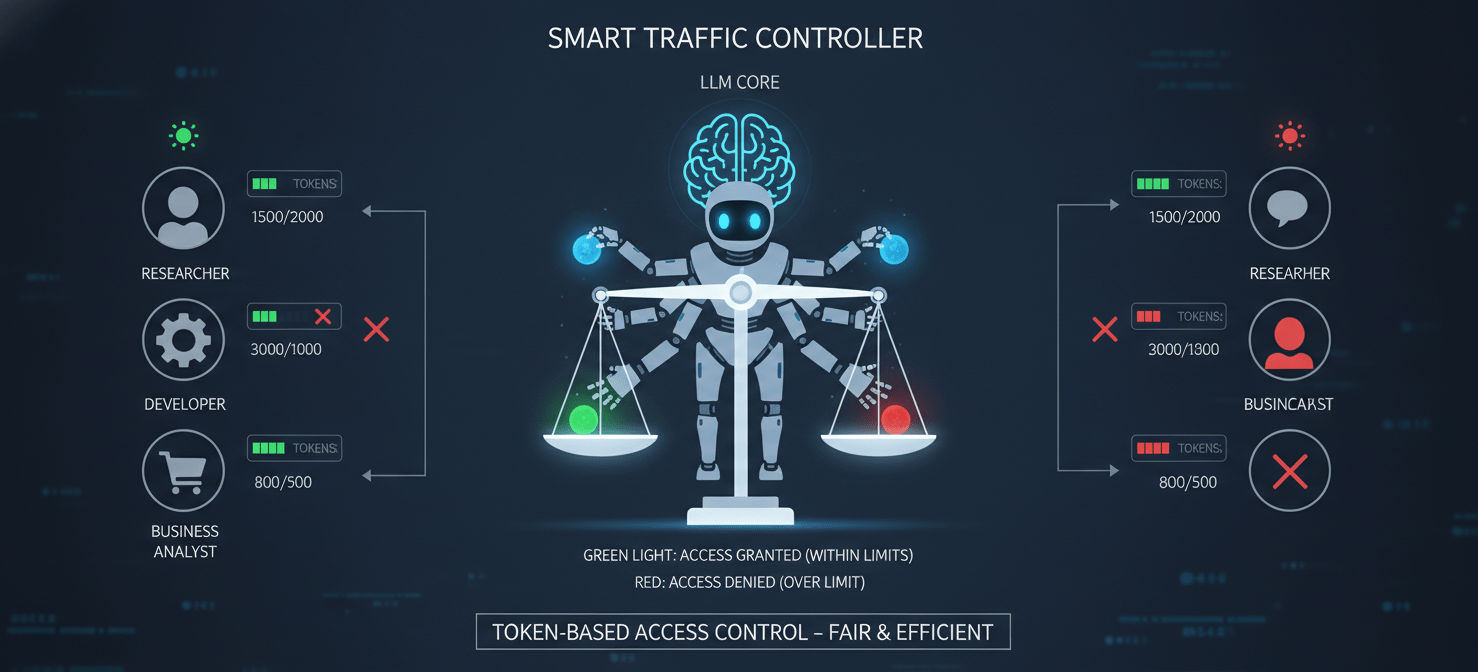
Traditional rate limiting often counts requests per minute. However, for LLMs, this is a poor measure of resource consumption. A single request with a large context window can cost hundreds of times more than a short one.
A more effective strategy is token-based rate limiting. This involves setting a cap on the total number of tokens a user can process within a given timeframe (e.g., per minute, hour, or day). This approach directly correlates with your costs and prevents any single user from consuming a disproportionate amount of your budget.
For even tighter control, you can implement cost-based limits. By estimating the cost of each request before it’s sent, you can set a hard budget for each user, ensuring that no individual can run up a bill beyond a predefined threshold.
Authentication and User Identification
To apply user-specific limits, you first need to know who the user is. Even for a public prototype, requiring some form of light authentication is a crucial step to prevent LLM API abuse.
- Simple Sign-Up: Requiring a simple email and password sign-up or a social login (like Google or GitHub) creates a barrier for automated bots.
- API Keys for Users: For more technical prototypes, you can issue unique API keys to each user. This allows you to track usage per user and revoke access for anyone who violates your terms of service.
- IP-Based Limiting as a Fallback: For unauthenticated users, you can apply stricter rate limits based on their IP address. However, be aware that this is easily bypassed by determined attackers using VPNs or proxy services.
Content and Prompt Analysis
Not all abuse is about volume; some is about content. Malicious users may attempt “prompt injection” attacks to bypass your instructions, reveal your underlying system prompt, or trick the model into generating harmful or inappropriate content.
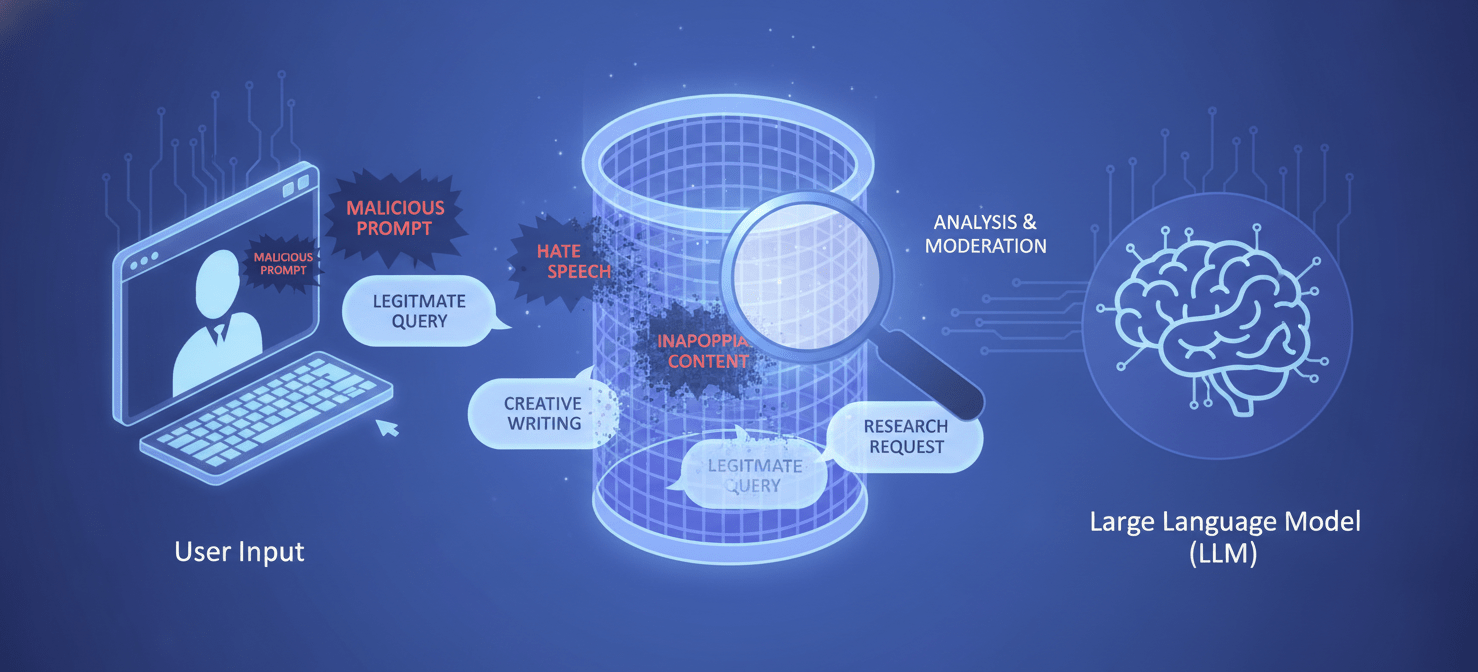
First, you should sanitize all user inputs before they are sent to the LLM. This involves filtering out keywords or commands associated with prompt injection, such as instructions to “ignore previous commands.” Second, you can use a moderation API, like the one offered for free by OpenAI, to screen both user prompts and the model’s responses for policy violations like hate speech or self-harm content. This adds a critical layer of safety.
Finally, constraining user input where possible can significantly reduce the attack surface. For example, if a user is supposed to choose from a list of items, use a dropdown menu instead of an open-ended text field. Limiting the length of both the input prompt and the maximum output tokens also helps control costs and prevent certain types of misuse.
How to Prevent LLM API Abuse with Monitoring and Alerting
You cannot stop what you cannot see. Real-time monitoring is essential for catching abuse as it happens, rather than finding out when you receive a massive bill at the end of the month.
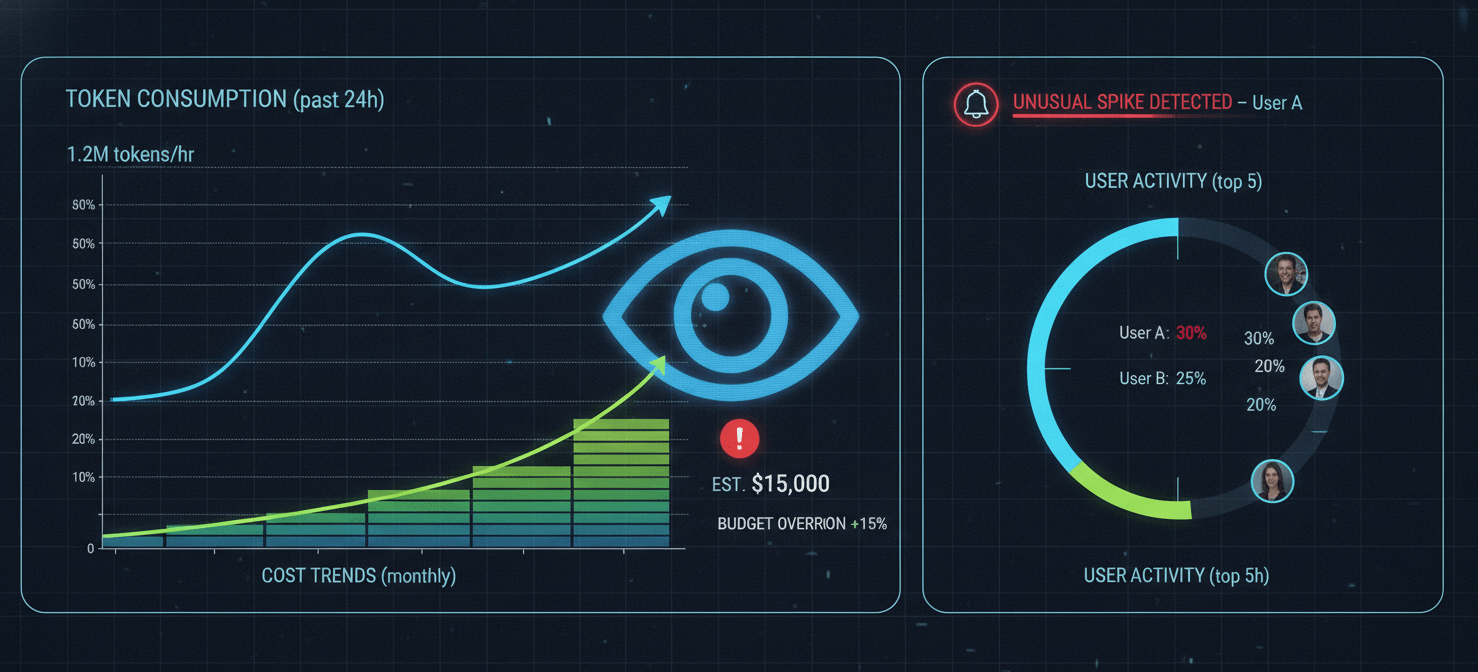
Your monitoring strategy should have several layers:
- Cost Dashboards: Use your cloud provider’s billing and cost management tools to track your LLM API spending in near real-time. Many services allow you to set up budget alerts that notify you when your spending exceeds a certain threshold.
- Usage Logs: Log every request made to your API, including the user ID (if authenticated), the number of input and output tokens, and the timestamp. Analyzing these logs can help you identify unusual patterns, such as a sudden spike in requests from a single user.
- Automated Alerts: Create automated alerts that trigger when certain metrics cross a predefined threshold. For example, you could set an alert for when a single user consumes more than 100,000 tokens in an hour or when your total daily cost exceeds your budget. This allows you to respond quickly to potential abuse by disabling the user’s account or temporarily shutting down the service.
Conclusion
Launching a public LLM prototype requires a proactive security posture. While it’s tempting to focus solely on functionality, ignoring the potential for misuse is a recipe for financial distress. The core principle to prevent LLM API abuse is to implement layers of defense. Secure your API keys diligently, enforce user-level rate limits based on tokens rather than requests, and actively monitor for suspicious activity. These measures are not about restricting access for genuine users; they are about ensuring your innovative prototype remains available and affordable long enough to succeed. After all, a prototype that gets shut down by a five-figure bill in its first week hasn’t proven much of anything.
To ensure your innovative LLM prototype remains viable and affordable, you can proactively implement these crucial safeguards by starting free with Binadox, or for a tailored discussion on securing your project, consider booking a demo with our experts.
 7-day free trial