



As engineering leaders, you are now managing a new and volatile line item: AI development costs. Unlike predictable cloud infrastructure, Large Language Model (LLM) expenses are consumption-based, driven by token counts that can fluctuate dramatically with a single feature change or an unexpected usage pattern. Without a deliberate strategy, these costs can spiral, turning promising AI initiatives into budget liabilities. Effective LLM cost governance is no longer a “nice-to-have”; it is a core competency for any team shipping AI-powered products. This guide provides a practical, four-step framework for establishing ownership, implementing controls, and fostering a culture of cost-conscious AI development.
Key takeaways
- Centralize and Tag Everything: Route all LLM traffic through a single gateway to enforce policies and tag every request with metadata (team, feature, user ID) for granular cost attribution.
- Implement a 4-Step Governance Cycle: A structured approach involves establishing a framework, implementing granular monitoring, optimizing spending, and fostering a cost-conscious culture.
- Model Routing is Your Biggest Lever: Intelligently routing requests to the cheapest model that meets quality standards can reduce costs by 40-70% alone.
- Don’t Optimize Blindly: True cost management connects spending data to quality metrics. Ensure that cost-saving measures like prompt compression or using smaller models don’t degrade the user experience.
The Financial Blind Spot: Why LLM Costs Spiral
Traditional engineering budgets are built around predictable expenses like headcount and infrastructure. LLM costs defy this model. The fundamental unit of cost is the “token”—roughly a piece of a word—and you pay for both the tokens you send (input) and the tokens you receive (output). This seemingly simple model creates several financial blind spots for engineering managers.

First, costs are variable and non-linear. A single API call can range from a fraction of a cent to over a dollar, depending on the model and the length of the conversation. An agentic workflow with multiple steps or a feature that re-sends conversation history with every turn can cause costs to compound exponentially.
Second, there is a lack of built-in accountability. Without specific tooling, a monthly bill from OpenAI or Anthropic shows a total spend but fails to identify which feature, team, or even which specific workflow step is responsible for a spike. This makes it impossible to assign ownership or perform a cost-benefit analysis on new features.
Finally, the most capable models are often the most expensive. For example, Anthropic’s powerful Claude 3 Opus model costs significantly more than its smaller Haiku model. Similarly, OpenAI’s flagship models are priced at a premium compared to more lightweight alternatives like GPT-4o-Mini. Teams often default to the most powerful model during development without a clear process for right-sizing it for production, leading to systemic overspending.
Step 1: Establish a Centralized LLM Cost Governance Framework
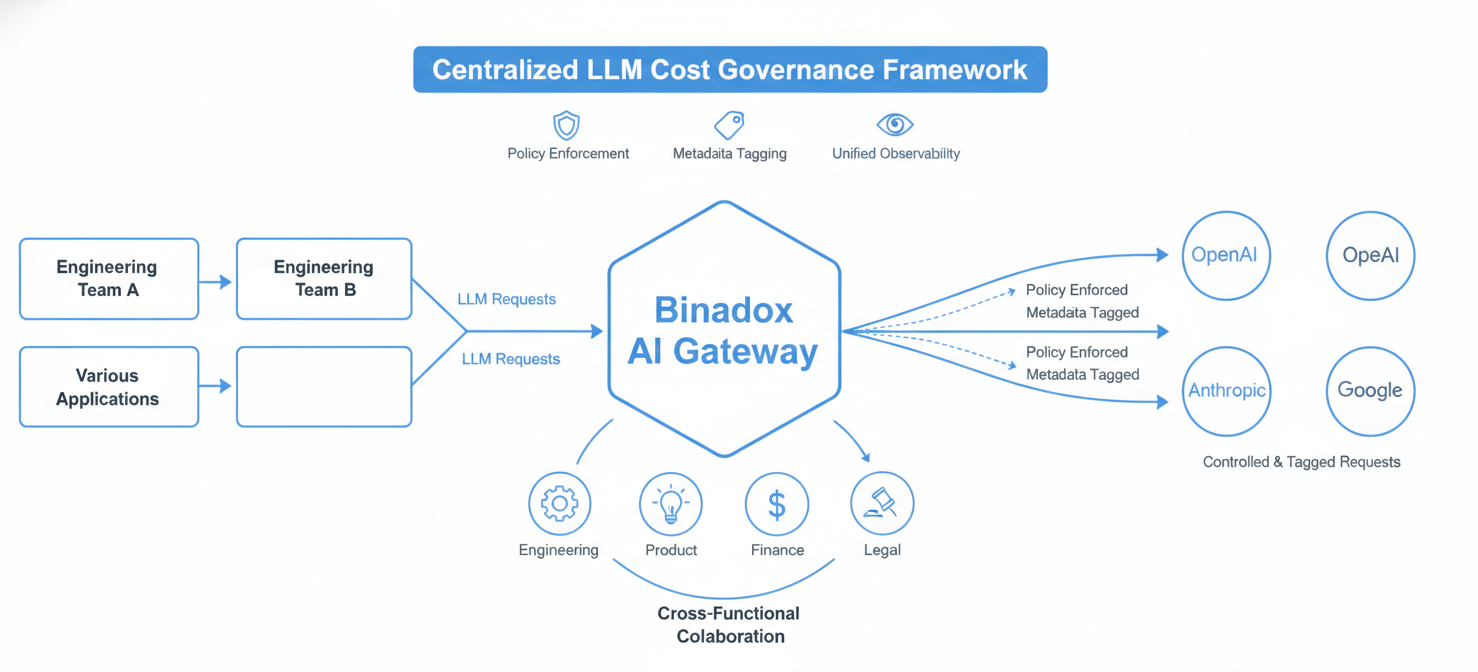
Effective LLM cost governance begins with creating a centralized control plane. Ad-hoc API calls from various services make it impossible to enforce standards or track spending. The goal is to establish a single point of entry for all LLM requests, providing a foundation for visibility, accountability, and control.
Appoint a Cross-Functional Governance Team
LLM governance is not solely an engineering problem. Assemble a small, cross-functional team that includes representatives from engineering, product, finance, and legal. This group is responsible for setting high-level policies, defining budget allocation processes, and reviewing spending against business objectives. Their mandate is to create guardrails, not roadblocks, enabling teams to innovate safely.
Implement an AI Gateway
The technical core of your governance framework is an AI gateway or proxy. This service intercepts every outgoing request to an LLM provider. By centralizing traffic, you gain the ability to:
- Enforce Policies: Implement rate limits, budget caps, and access controls that restrict the use of expensive models to authorized teams or environments.
- Standardize Metadata: Automatically attach metadata tags to every request, such as the team name, feature ID, or end-user identifier. This is the critical mechanism for cost attribution.
- Unify Observability: Integrate with your existing monitoring stack (like Datadog or OpenTelemetry) to correlate LLM costs with application performance metrics.
Several open-source and managed tools like Bifrost, LiteLLM, and Langfuse can serve this purpose, providing a unified interface across multiple LLM providers.
Step 2: Implement Granular Cost Monitoring and Attribution
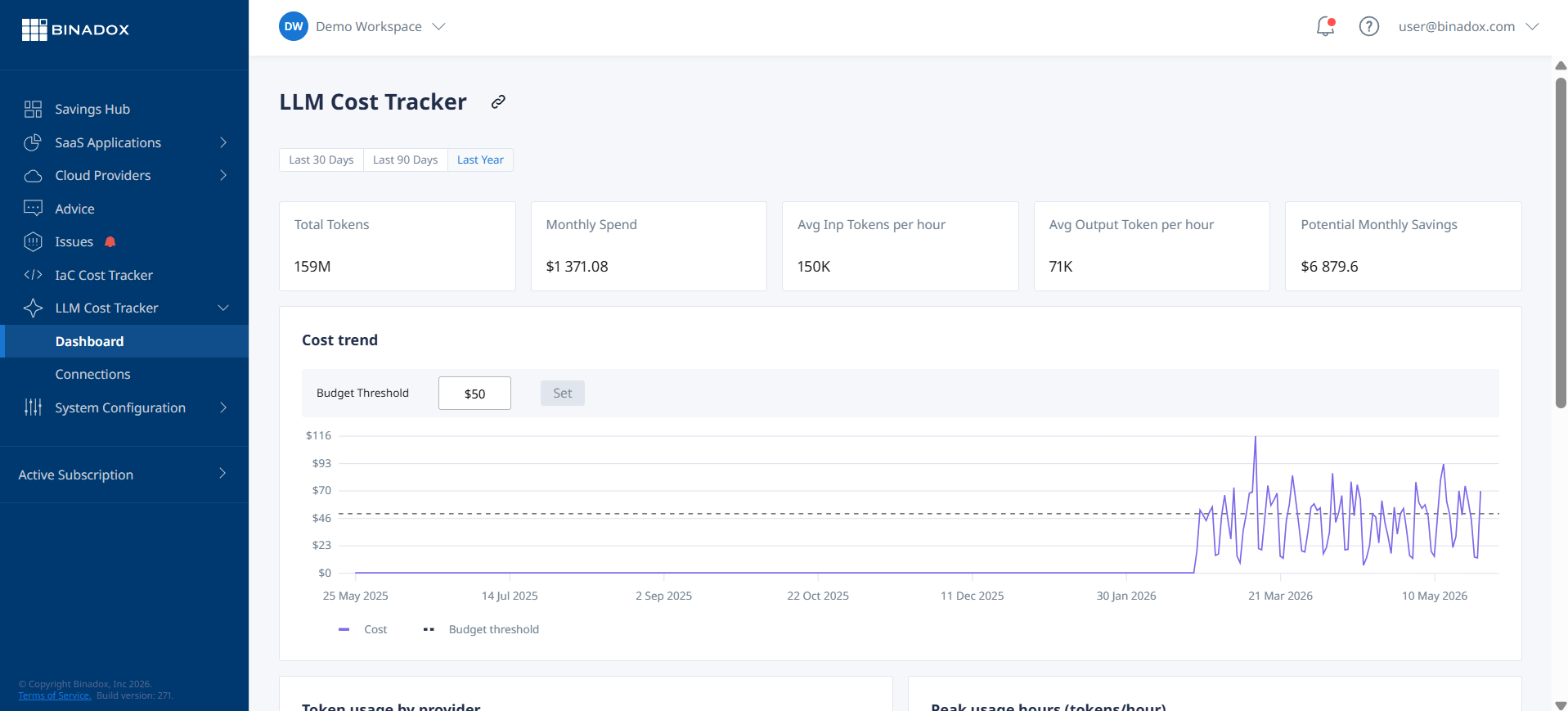
Once you have centralized your LLM traffic, the next step is to make the costs visible and attributable. The objective is to move from a single, opaque monthly bill to a real-time dashboard that provides a line-item breakdown of AI spending. This transforms cost management from a reactive accounting exercise into a proactive engineering discipline.
Track Key Cost Metrics
Your monitoring dashboard should focus on a few key metrics that provide actionable insights for your team. These include:
- Cost per Feature/Team/User: The most critical metric for accountability. This allows you to conduct a proper ROI analysis for AI-powered features.
- Tokens per Request: Helps identify verbose prompts or inefficient workflows that are driving up costs.
- Cache Hit Ratio: Measures the effectiveness of your caching strategy in reducing redundant API calls.
- Requests by Model: Highlights which models are being used most frequently, revealing opportunities to shift workloads to cheaper alternatives.
Establish Budget Alerts and Reporting
Use your monitoring tools to set up automated alerts that notify team leads when spending for a specific feature or project exceeds its budget. This prevents “runaway” features from causing significant budget overruns. Schedule regular cost reviews—weekly or bi-weekly—to analyze spending trends and identify anomalies before they become major issues. This process of informing, optimizing, and operating is a core tenet of the FinOps framework, adapted for AI.
Step 3: Optimize and Control Your LLM Spending
With a framework for visibility and accountability in place, you can now focus on tactical optimization. The goal is to systematically reduce AI development costs without degrading the quality of your product. This involves a combination of architectural changes and prompt engineering best practices.
Implement Intelligent Model Routing
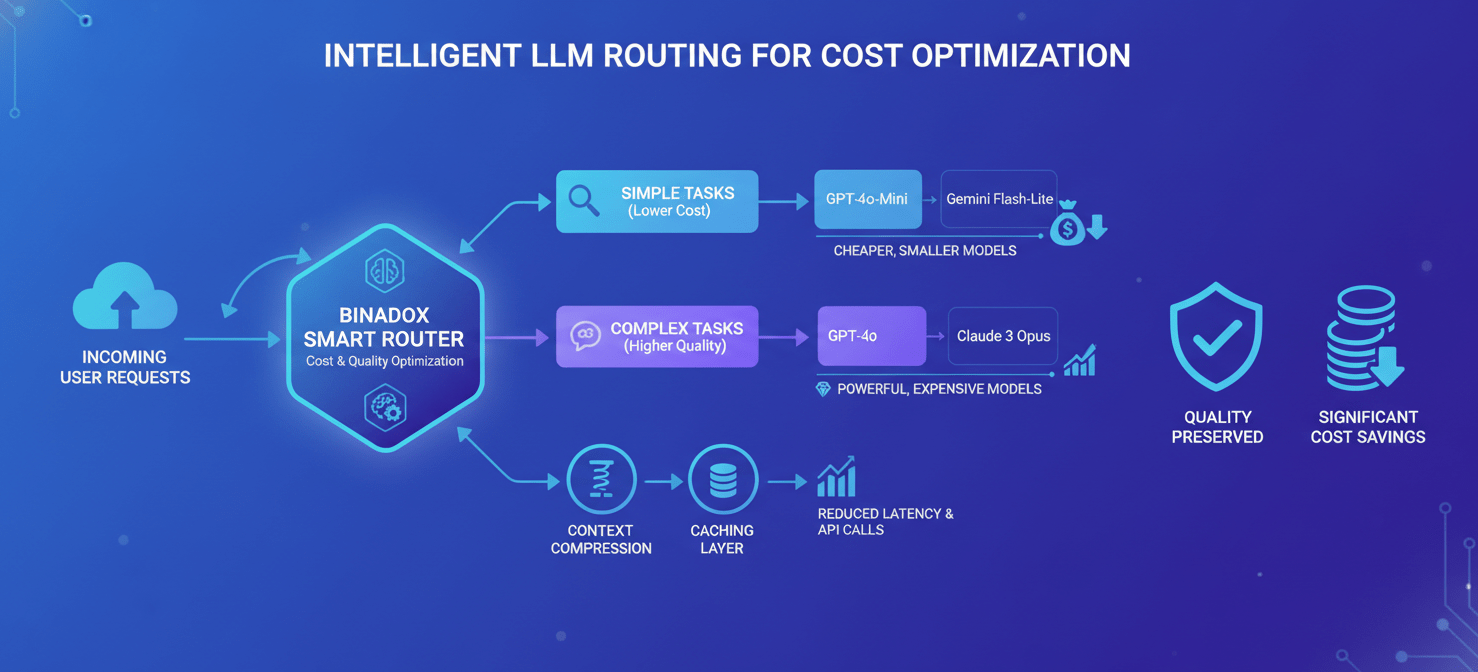
Model routing is the single most impactful cost optimization strategy. Instead of using one expensive, high-performance model for all tasks, a router classifies the complexity of each incoming request and directs it to the most cost-effective model that can handle the task. For example, simple tasks like data extraction or classification can be sent to a cheap model like Google’s Gemini 2.5 Flash-Lite (link), while complex reasoning tasks are reserved for a more powerful model like GPT-5.4. This approach can reduce costs by 40-70% while maintaining over 95% of the quality.
Leverage Caching and Context Compression
Many LLM applications repeatedly send the same information, such as long system prompts or conversation histories.
- Semantic Caching: Stores the responses to common queries. When a new, semantically similar query arrives, the cached response is served instead of making a new API call.
- Context Compression: Reduces the number of tokens sent in each request by removing redundant or irrelevant parts of the conversation history. This is particularly effective in multi-turn chat applications.
Optimize Your RAG Pipeline
For Retrieval-Augmented Generation (RAG) systems, a common mistake is retrieving too much context, which inflates the number of input tokens. Instead of retrieving a large number of documents, focus on retrieving fewer, more relevant chunks of text. This not only reduces costs but often improves the quality of the generated response.
Step 4: Foster a Culture of Cost-Conscious AI Development
Technology and frameworks alone are not enough. Long-term success in managing AI development costs requires a cultural shift within your engineering organization. The goal is to empower every engineer to make cost-aware decisions as part of their daily workflow.
Make Costs a Part of the Development Lifecycle
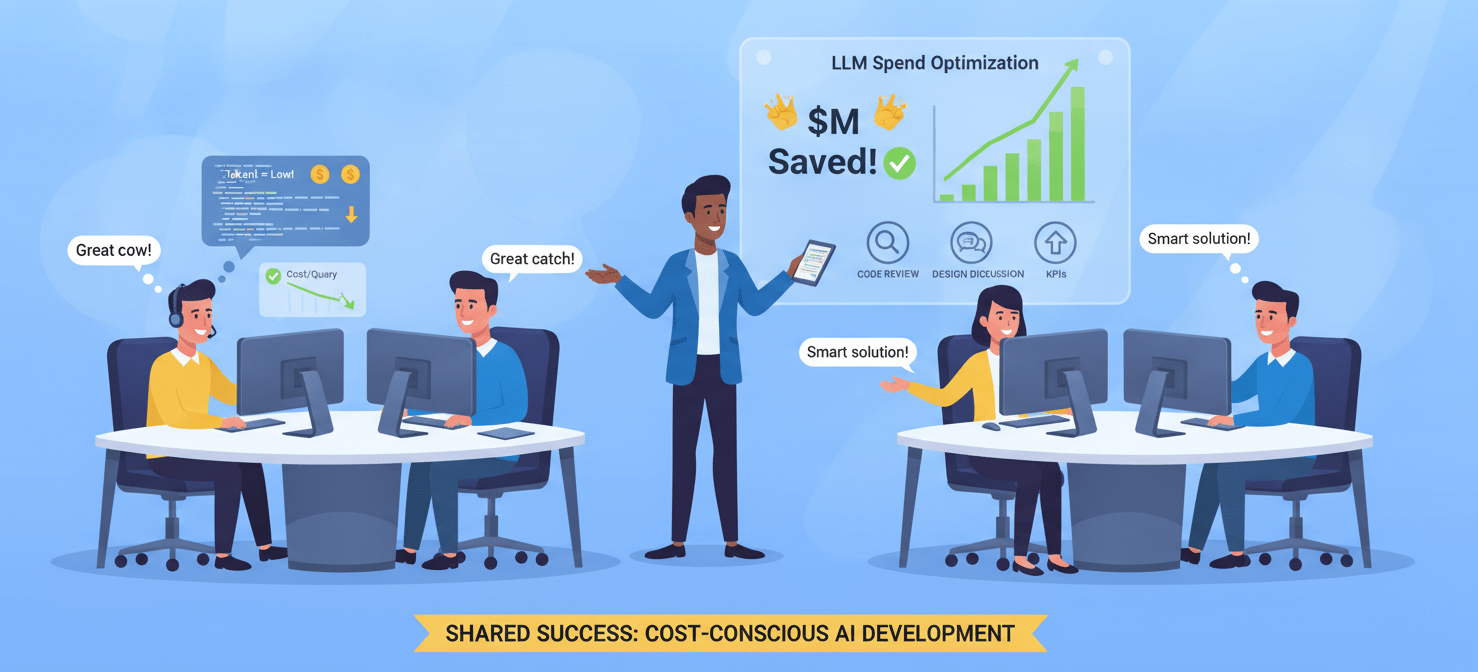
Integrate cost analysis directly into your development and code review processes. When a developer proposes a new feature that uses an LLM, the potential cost should be estimated and discussed as part of the design review. Tools that connect cost data directly to experimentation and quality checks, like Braintrust, can help teams evaluate the cost implications of different prompts or models before they are released to production.
Establish Clear Ownership and Incentives
Assign clear ownership for the LLM budget to specific team leads. When teams are directly responsible for their portion of the AI spend, they are more motivated to find optimization opportunities. Tie cost-saving initiatives to team KPIs and recognize engineers who develop innovative ways to reduce costs without sacrificing quality. This creates a positive feedback loop that reinforces cost-conscious behavior.
Conclusion
Managing LLM spend is a new and critical responsibility for engineering leaders. The days of treating API calls as a negligible expense are over. By implementing a robust LLM cost governance framework, you can transform unpredictable costs into a managed and optimized component of your engineering budget. This requires a systematic approach: centralize control through a gateway, establish granular monitoring and attribution, aggressively optimize spending through techniques like model routing, and foster a culture where cost is a key consideration in the development lifecycle. Without this discipline, you are not managing a budget; you are merely witnessing a burn rate.
To effectively manage your LLM budget rather than just track a burn rate, explore how Binadox can help by setting up your free account to implement these governance strategies, or connect with our team for a personalized demonstration of our platform.
 7-day free trial