



Unpredictable software price hikes are creating significant budget variances, leaving finance and procurement teams scrambling. What was once a stable, predictable expense has become a volatile line item, complicating financial planning and threatening IT project ROI. Effective software budget forecasting is no longer a routine annual task; it is now a critical defense mechanism against margin erosion. As vendors aggressively reprice their offerings, your ability to anticipate, analyze, and negotiate these changes will directly impact your organization’s financial health and operational stability.
Key takeaways:
- Software vendors are raising prices at an average rate of 5-33%, with some hikes reaching much higher, driven by AI feature bundling and shifts in licensing models.
- Starting renewal conversations at least six months in advance can generate up to 39% in additional savings compared to waiting until the last minute.
- A structured approach to IT budget variance analysis allows you to move from reactive damage control to proactive financial strategy, identifying the root causes of overspending.
- Centralizing contract management and engaging in data-driven vendor negotiations are your most powerful levers for controlling software spend and mitigating the impact of unbudgeted price increases.
The New Normal: Why Software Vendor Price Hikes Are Here to Stay
The era of predictable, low-single-digit annual increases in software costs is over. Today, finance and procurement leaders face a much more aggressive pricing environment. Several market forces are converging to make significant and often sudden price hikes the new standard operating procedure for software vendors. Understanding these drivers is the first step toward building a resilient forecasting and procurement strategy.
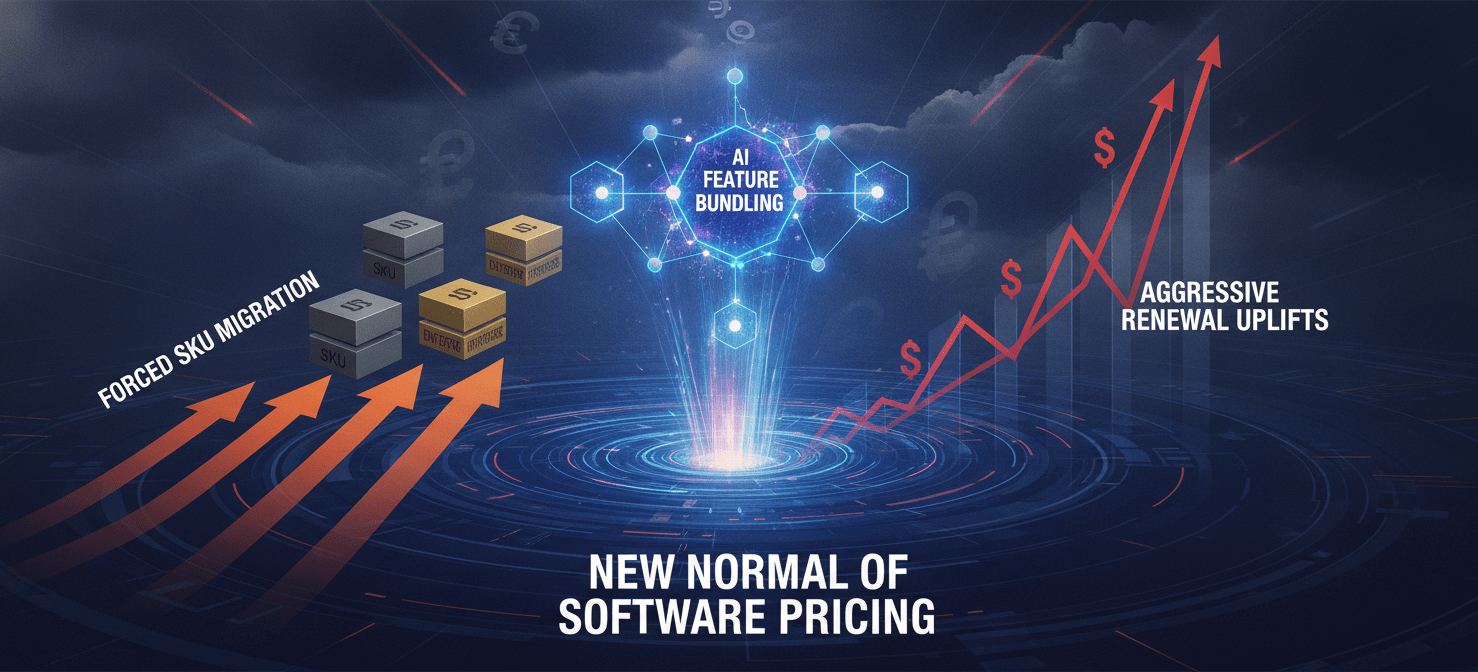
The most significant factor is the monetization of artificial intelligence. Vendors are embedding AI capabilities into their platforms and using these additions to justify substantial price increases. For example, after a seven-year period without raising prices, Salesforce implemented an average 9% list price increase in 2023, citing its investments in generative AI and other features. This trend is widespread, with vendors across categories using AI as a lever to move customers to higher-priced tiers or sell expensive add-on modules.
Furthermore, many vendors are shifting their business models to prioritize revenue growth from their existing customer base rather than focusing solely on new acquisitions. This strategy manifests in several ways:
- Forced SKU Migration: Eliminating lower-cost legacy plans and compelling customers to upgrade to more expensive, feature-rich bundles.
- Shrinkflation: Reducing features, support levels, or usage limits within existing tiers without a corresponding price decrease, effectively making you pay more for the same or less value.
- Aggressive Renewal Uplifts: Implementing steep price increases at the time of contract renewal, counting on high switching costs to retain customers.
These tactics are proving effective. Data shows SaaS prices have been increasing at a rate nearly five times that of general inflation. Overall IT spending is projected to grow significantly, with software spending expected to increase by over 15% in 2026 alone, reaching $1.44 trillion. This isn’t a temporary blip; it’s a structural shift in how software is priced and sold, requiring a more sophisticated approach from your finance and procurement teams.
Proactive Software Budget Forecasting: A CFO’s Best Defense
In this volatile environment, a reactive approach to budgeting is a recipe for financial strain. Instead of simply adding a standard cost-of-living adjustment to last year’s software spend, you must adopt a proactive and analytical model for software budget forecasting. This means treating software as a strategic and dynamic budget category that requires continuous monitoring and forward-looking analysis.

A robust forecasting model moves beyond simple extrapolation. It requires a multi-faceted approach that integrates market intelligence, vendor-specific analysis, and internal consumption data.
Building a Data-Driven Forecast
First, centralize all software contract data. You cannot forecast what you cannot see. This includes renewal dates, current costs, notice periods, and contractual price cap clauses. This central repository becomes the foundation of your forecasting model.
Next, layer in market data. Track the pricing trends of your key vendors. Major providers like Microsoft and Salesforce often signal their intentions months in advance. For instance, Microsoft announced that certain Microsoft 365 and Office 365 plans would see a 5% price increase for customers on monthly-billed annual subscriptions starting in April 2025. By incorporating this external data, you can replace generic assumptions with specific, vendor-informed projections.
Finally, analyze internal usage. Are there opportunities to consolidate duplicative software or eliminate underutilized licenses? Rightsizing your software portfolio before a renewal negotiation provides a powerful lever for offsetting vendor price hikes. This internal audit should be a continuous process, not a once-a-year event.
From Reactive to Strategic: Mastering IT Budget Variance Analysis
Budget variance analysis is often treated as a historical accounting exercise—a post-mortem on what went wrong. However, when applied strategically to software spend, it becomes a powerful diagnostic tool that can inform future forecasting and procurement decisions. The goal is to understand the “why” behind the numbers, not just the “what.”
A disciplined approach to IT budget variance analysis involves several key steps:
- Isolate the Variance: Begin by calculating the absolute and percentage variance for each major software vendor and category. A 10% variance on a multi-million dollar contract is far more significant than the same percentage on a minor tool.
- Categorize the Cause: Determine the root cause of the variance. Was it a planned price increase that was underestimated? An unplanned hike from a vendor? Or was it due to an increase in consumption, such as adding more user licenses than forecasted? Each cause requires a different corrective action.
- Distinguish Between Timing and Structural Issues: A timing variance might occur if a large software bill is paid in a different quarter than budgeted. This is a cash flow issue but doesn’t necessarily indicate overspending. A structural variance, such as a permanent price increase, is more serious and requires a strategic response, like renegotiating the contract or seeking alternatives.
By consistently performing this analysis, your team can identify patterns. For example, you might find that certain vendors consistently exceed budget due to opaque, consumption-based pricing models. This insight allows you to approach the next renewal negotiation with specific data to demand more predictable pricing structures. It transforms the finance function from a scorekeeper to a strategic partner that helps the organization make better, more cost-effective technology decisions.
Contract Negotiation and Vendor Management: Your Levers for Control
Accurate forecasting and sharp analysis are crucial, but they must be paired with disciplined execution at the negotiation table. Your procurement team’s ability to manage vendors and negotiate favorable contract terms is the ultimate defense against uncontrolled software spend. This requires a shift from transactional purchasing to strategic vendor relationship management.

The Power of Early Engagement
The single most effective negotiation tactic is starting the process early. Data shows that engaging with a vendor six months before a renewal date can lead to significantly better financial outcomes than waiting until the final month. An early start provides the time needed to conduct thorough due diligence, explore competitive alternatives, and negotiate from a position of strength rather than desperation. It signals to the vendor that you are a prepared and serious negotiator.
Key Negotiation Points Beyond Price
While securing a lower price is always a goal, a savvy negotiator focuses on the total cost of ownership and contractual protections. Key areas to address include:
- Price Caps: Negotiate a cap on future annual price increases. A multi-year agreement without a price cap is a blank check for your vendor.
- License Flexibility: Secure the right to reduce license counts during the contract term if your business needs change. This protects you from paying for “shelfware.”
- Clearly Defined Terms: Scrutinize the terms of service for clauses related to auto-renewal, data ownership, and support levels. Ensure the contract aligns with your organization’s long-term needs.
Effective vendor management also involves building strong relationships with your key suppliers. When you have an open line of communication, you are more likely to get advance warning of pricing changes and have a more collaborative, rather than adversarial, negotiation process.
Building a Resilient Software Spend Strategy
Managing software spend in the current environment requires a holistic and continuous strategy, not a series of disconnected, last-minute reactions. It’s about building a resilient system that can absorb the shock of vendor price hikes while ensuring the organization has the tools it needs to operate effectively. This strategy rests on a foundation of visibility, accountability, and control.
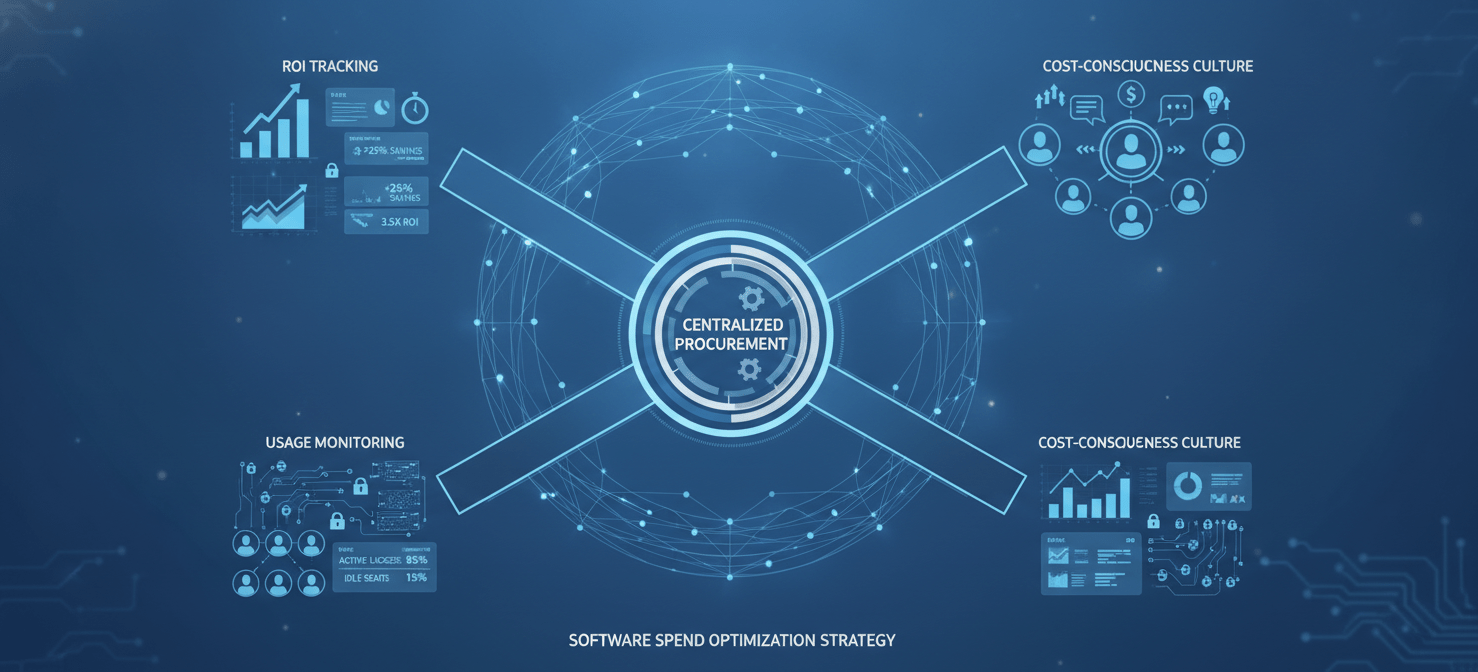
First, establish a centralized software procurement process. When individual departments are allowed to purchase software independently, the result is often a chaotic mix of duplicative tools, shadow IT, and missed opportunities for volume discounts. A centralized process, managed by procurement and finance, ensures that every software purchase is vetted, aligned with business needs, and negotiated professionally.
Next, implement a robust system for tracking software usage and ROI. Simply paying the bills is not enough. You need to understand which tools are delivering value and which are not. This requires collaboration between finance, IT, and business unit leaders to define and measure the key performance indicators for each major software investment.
Finally, foster a culture of cost-consciousness across the organization. When employees understand the financial impact of software decisions, they are more likely to be thoughtful about their requests and diligent about using the tools they have. This doesn’t mean restricting access to necessary software; it means creating a shared understanding that software is a significant investment that must be managed wisely.
Conclusion
The dynamics of software procurement have fundamentally changed. Vendors, armed with new AI features and a focus on expanding existing accounts, have tilted the pricing power in their favor. Relying on outdated budgeting methods is an invitation for significant financial pain. Effective software budget forecasting is no longer a passive exercise but an active, strategic imperative. It requires a rigorous, data-driven approach that combines market intelligence with a deep understanding of your own organization’s needs. By mastering variance analysis, empowering your procurement team with the time and data to negotiate effectively, and building a resilient, centralized strategy for managing software spend, you can regain control. The price hikes will continue, but with the right strategy, your budget will no longer be an easy target.
To gain control over your software spend and navigate these challenges, consider exploring a free trial to experience our platform’s capabilities firsthand, or arrange a personalized demonstration with our experts to see how we can tailor a solution for your specific needs.
 7-day free trial