



Organizations rely on a wide array of software, professional certifications, and security certificates to operate effectively and securely. However, each of these assets comes with a license or expiration date that must be managed. When tracking is decentralized—spread across spreadsheets, email reminders, and individual calendars—it’s easy to lose control. This can lead to compliance failures, unexpected costs, and operational disruptions. Implementing a system for centralized license tracking provides a single source of truth, giving you a clear view of all your licenses and expirations. As a result, your team can proactively manage renewals, ensure compliance, and optimize spending.
Key takeaways
- Decentralized tracking often fails due to human error, lack of visibility, and inconsistent processes, leading to compliance risks and wasted resources.
- Centralizing license and certificate data in one system provides clear visibility, reduces the risk of non-compliance by up to 30%, and streamlines audits.
- A centralized system should track key data points, including license keys, expiration dates, user assignments, purchase details, and compliance documentation.
- Implementing a centralized system involves four main steps: inventorying all assets, selecting a central platform, migrating the data, and establishing clear management processes.
Why Manual License Tracking Fails at Scale
For small teams, a spreadsheet might seem sufficient for tracking a handful of software licenses. But as an organization grows, so does the complexity of its assets. Manual methods quickly become overwhelmed.

One of the biggest hurdles is the lack of a centralized inventory. When license information is scattered across different departments and formats, it’s nearly impossible to get a complete picture. This fragmentation leads to several problems:
- Redundant Purchases: Without a central view, different teams might purchase the same software, leading to unnecessary spending on redundant licenses.
- Missed Renewals: Relying on calendar reminders is risky. An employee might leave the company, or an email can be easily overlooked, causing critical software or a security certificate to expire unexpectedly. This can disrupt operations or create security vulnerabilities.
- Compliance Risks: Non-compliance with software licensing agreements can result in significant fines and legal trouble. In fact, one in four organizations spends over $500,000 annually to resolve non-compliance issues. Manual tracking makes it difficult to ensure you are adhering to the terms of every license.
Furthermore, manual tracking is prone to human error. Typos in expiration dates or incorrect license counts can have serious consequences. As your organization scales, these small errors accumulate, creating significant financial and operational risks.
The Core Benefits of Centralized License Tracking
Adopting a centralized approach to track license expirations and other critical dates offers substantial advantages over manual, fragmented methods. By consolidating all your license and certificate data into a single platform, you gain greater control and efficiency.
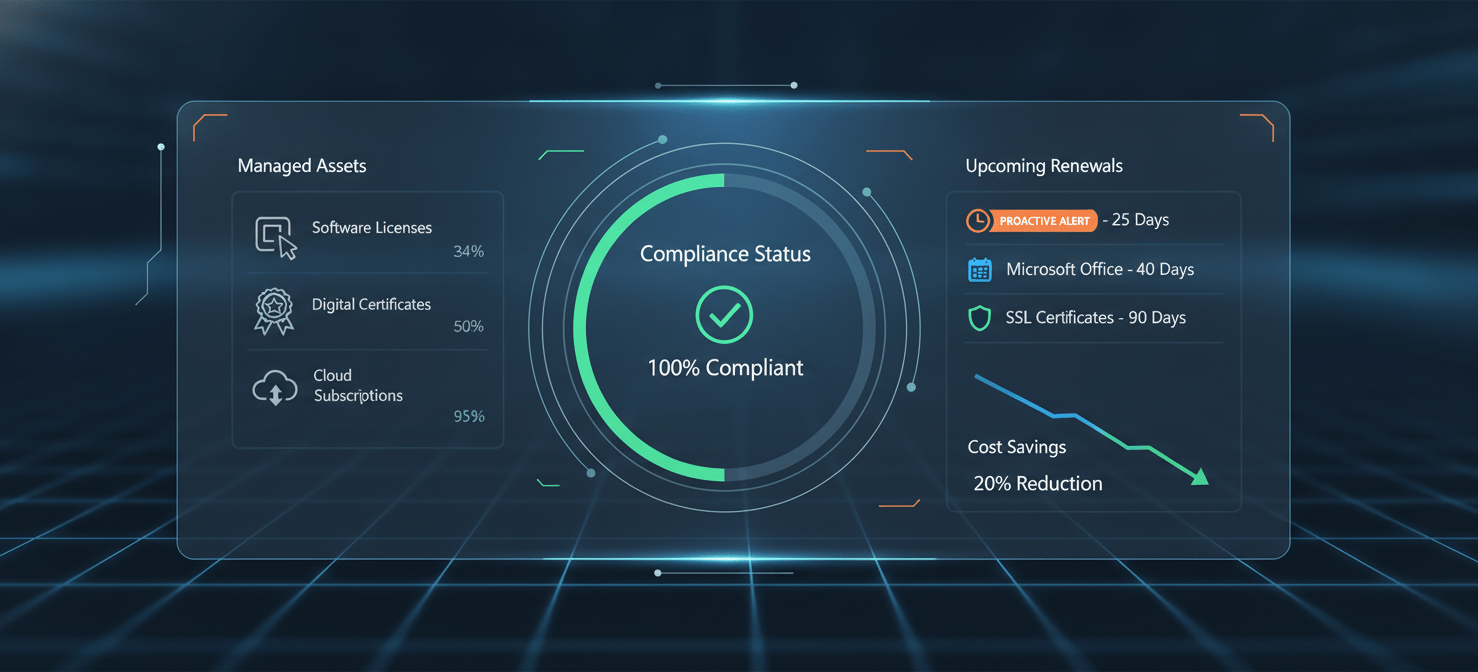
First and foremost, centralization provides complete visibility. Instead of hunting through spreadsheets and emails, your team can see the entire landscape of software licenses, professional certifications, and security certificates in one place. This makes it easier to identify unused licenses that can be reallocated, preventing wasted spending.
In addition, centralized tracking significantly improves compliance management. With all relevant documentation and renewal dates in a single repository, preparing for a software audit becomes a much simpler process. Automated alerts for upcoming expirations ensure that renewals are handled proactively, reducing the risk of lapses in service or security.
Finally, a centralized system streamlines administrative tasks. Automating the tracking process reduces the manual effort required to manage licenses, freeing up your IT and administrative teams to focus on more strategic initiatives. This enhanced operational efficiency helps to lower administrative costs and reduce the likelihood of human error.
What to Track in a Centralized System
To build an effective centralized license tracking system, it’s crucial to capture the right information for each asset. While the specific data points may vary slightly between software, professional certifications, and security certificates, a core set of details will provide the foundation for efficient management.
Key Data Points to Monitor
- Asset Name and Version: Clearly identify the software application (e.g., Microsoft Office 365, Adobe Creative Cloud) or the specific certification (e.g., SSL/TLS Certificate, PMP Certification).
- License Key or Certificate File: Store the actual license key or a secure link to the certificate file for easy access during installation or renewal.
- Purchase and Expiration Dates: Record the date of purchase and, most importantly, the expiration date to drive renewal workflows. Setting the expiry date at the time of issuance is a critical best practice.
- User or Device Assignment: Track who is using a particular software license or which server a certificate is assigned to. This helps in reclaiming unused licenses and ensuring accountability.
- Vendor and Cost Information: Keep a record of the vendor, purchase price, and any ongoing maintenance or subscription fees to inform budget forecasting.
- Associated Documentation: Attach purchase orders, contracts, and terms of use directly to the asset record. This centralizes all necessary documentation for audits and compliance checks.
For professional certifications, you should also track the name of the certified individual and the credentialing body. For security certificates, include details like the domain name it secures and the certificate authority.
How to Implement Centralized License Tracking
Transitioning to a centralized license tracking system is a structured process. By following a clear implementation plan, you can ensure a smooth and successful rollout that delivers immediate value to your organization.
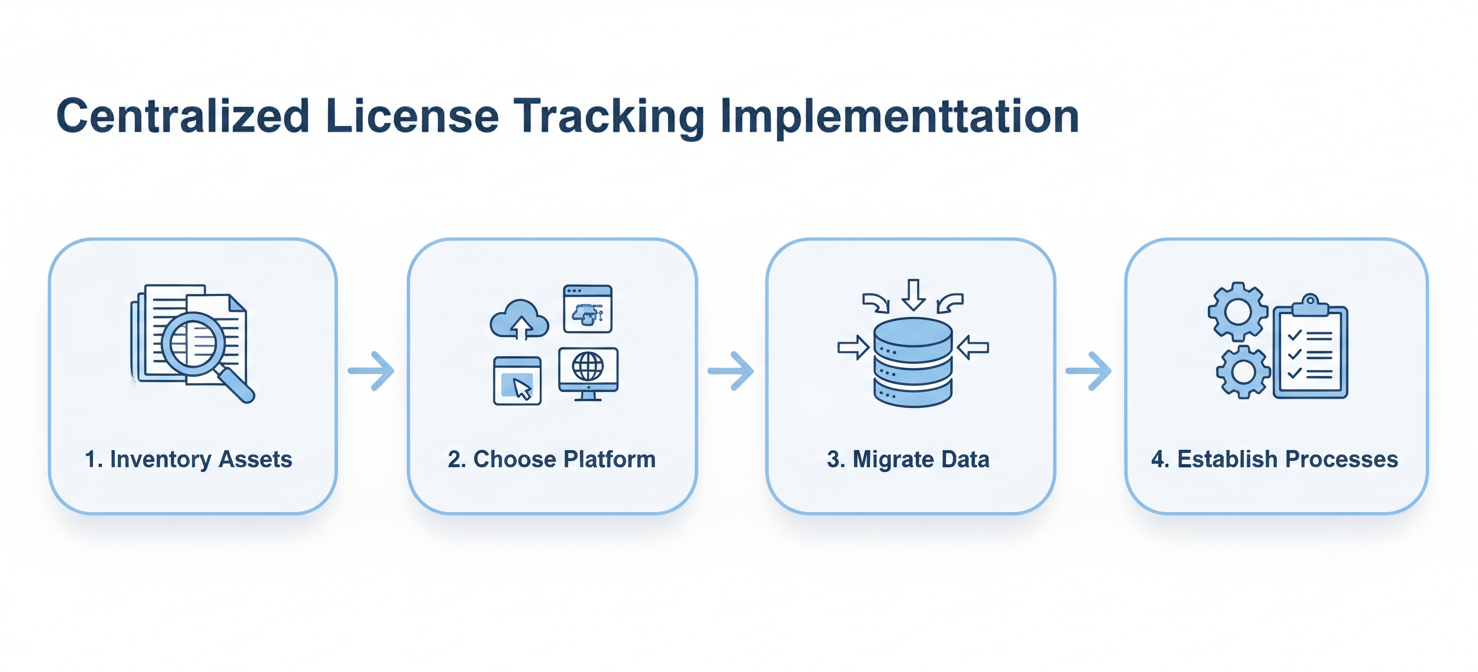
1. Conduct a Comprehensive Inventory The first step is to create a complete inventory of all your software licenses and certificates. This involves identifying every piece of software in use across the organization, including cloud-based services and applications installed by employees outside of IT oversight. Gather all related documents, such as purchase records, license agreements, and renewal information.
2. Choose a Centralized Platform While a well-organized spreadsheet can be a starting point for very small businesses, dedicated software asset management (SAM) tools are more effective for growing organizations. These tools automate the discovery and tracking of software, provide alerts for upcoming renewals, and generate reports for compliance and budgeting.
3. Migrate and Validate Your Data Once you have selected a platform, the next step is to migrate all the information you gathered during the inventory phase. This is a critical step, and it’s important to validate the accuracy of the data as you enter it into the new system. Ensure that expiration dates, license keys, and user assignments are all correctly recorded.
4. Establish Clear Processes and Responsibilities A tool is only as good as the processes that support it. Define a clear process for procuring new software and adding it to the tracking system. Assign responsibility for monitoring renewal alerts and managing the renewal process. Furthermore, you should schedule regular internal audits to ensure that your records remain accurate and up-to-date.
Choosing the Right License Tracking Tools
Selecting the right tool is a critical step in establishing a successful centralized license tracking program. The market offers a range of solutions, from simple renewal reminder applications to comprehensive IT Asset Management (ITAM) suites. The best choice for your organization will depend on its size, complexity, and specific needs.
For smaller organizations, a dedicated renewal tracking tool may be sufficient. These applications are designed to do one thing well: send automated reminders for upcoming expiration dates. They are generally easy to use and cost-effective.
Larger organizations, however, often require more robust features. A comprehensive Software Asset Management (SAM) or ITAM platform provides a centralized database for all IT assets, including software and hardware. These tools can automatically discover software installed on your network, monitor usage, and reconcile this information with your purchase records to identify compliance gaps. This level of automation can significantly reduce the administrative burden on your IT team and provide valuable insights for cost optimization.
When evaluating potential tools, consider the following:
- Automation Capabilities: Does the tool automatically discover software on your network? Can it import purchase and contract information?
- Integration: Can the platform integrate with your existing IT systems, such as help desk software or accounting systems?
- Reporting and Dashboards: Does the tool provide clear, actionable reports on license compliance, usage, and spending?
- Alerting: Can you configure multi-stage alerts for upcoming renewals to ensure you have ample time to act?
Conclusion
Failing to manage software licenses and certificates is no longer a viable option. The financial penalties for non-compliance, coupled with the operational risks of unexpected expirations, are simply too high. Manual tracking methods, reliant on spreadsheets and memory, inevitably break down as an organization grows, leaving it exposed to these risks.
Implementing a system for centralized license tracking is the most effective way to gain control over these critical assets. By creating a single source of truth, you can eliminate redundant spending, ensure compliance, and streamline administrative workflows. The process is straightforward: take a complete inventory, choose the right tool for your needs, migrate your data, and establish clear management processes. It may not be the most glamorous IT project, but it is one that pays for itself by preventing a single costly audit or a critical service outage.
To ensure your organization benefits from complete visibility and prevents costly compliance issues, you can create your free Binadox account to begin centralizing your license tracking, or simply book a demo to explore how our platform can streamline your operations.
 7-day free trial