



For a SaaS founder, every dollar of monthly recurring revenue (MRR) is sacred. It’s the fuel that extends your runway and powers your growth. However, there’s a silent killer that can siphon that fuel right out of your tank: the chargeback. More than just a reversed transaction, a chargeback is a direct hit to your revenue, your metrics, and your operational capacity. Effective SaaS chargeback management isn’t just a back-office task; it’s a core competency for capital-efficient startups that directly impacts your ability to survive and scale. This guide breaks down the threat and gives you a lean, actionable framework for protecting your runway.
Key takeaways
- Chargebacks cost more than you think: Each dispute costs an average of $128 in fees and operational costs, on top of the lost revenue.
- Prevention is cheaper than the cure: Sending a pre-billing reminder email 7 days before a free trial converts can reduce resulting chargebacks by 40-60%.
- Your merchant account is at risk: Exceeding a chargeback-to-transaction ratio of around 0.9% can land you in costly monitoring programs from Visa and Mastercard, or even get your account terminated.
- Evidence is everything: For SaaS, proof of service means user access logs, not shipping confirmation. Documenting logins and feature usage is critical to winning disputes.
Why Chargebacks Are a Silent Runway Killer
Chargebacks are a consumer protection mechanism that allows a cardholder to dispute a charge with their bank. For SaaS businesses, which rely on recurring billing, this process is uniquely dangerous. Unlike e-commerce, where a dispute often relates to a single, tangible item, SaaS chargebacks can stem from subscription confusion, forgotten trials, or difficult cancellation processes.

The typical chargeback rate for a SaaS business ranges from 0.8% to 1.5% of transactions, significantly higher than the average e-commerce rate of 0.6%. This is driven by factors unique to the subscription model:
- Free Trial Conversion: A customer starts a free trial, adds a credit card, and forgets to cancel. When the first charge hits, they don’t recognize it and file a dispute.
- Recurring Billing Amnesia: Customers, especially on annual plans, often forget about auto-renewal. The charge appears unexpected, leading to a dispute.
- Cancellation Friction: If your cancellation process is harder than a few clicks, customers will often take the path of least resistance: calling their bank for a chargeback.
When your chargeback rate climbs, payment networks like Visa and Mastercard take notice. Exceeding their thresholds (around 0.9% for Visa and 1.5% for Mastercard) places you into monitoring programs. These programs come with escalating fees and intense scrutiny that can threaten your ability to process payments at all. For a startup, losing your merchant account is a death sentence.
The Real Cost of a Chargeback (It’s Not Just the Revenue)
The impact of a chargeback goes far beyond the reversed transaction. As a founder, you need to understand the total cost to appreciate the ROI of investing in prevention.
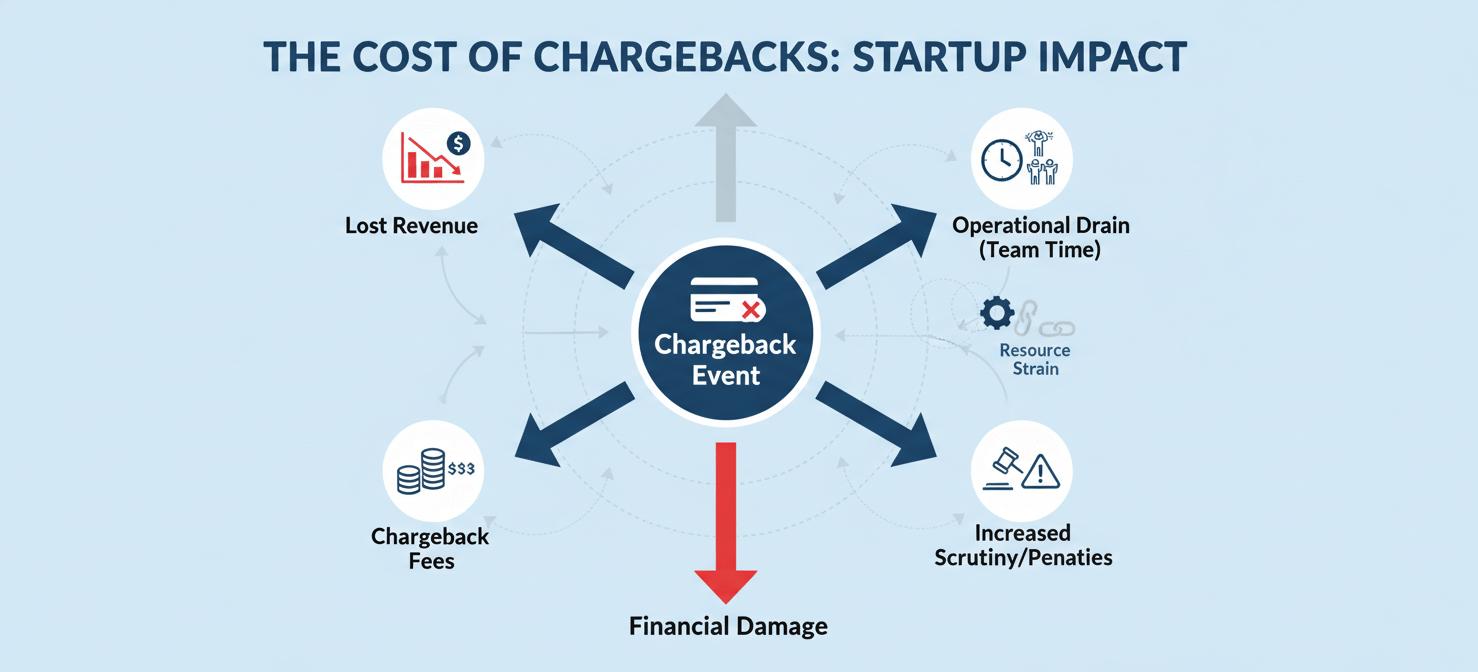
Here’s a breakdown of the real costs:
- Lost Revenue: The original transaction amount is clawed back. This directly reduces your top-line revenue and MRR.
- Chargeback Fees: Your payment processor will hit you with a non-refundable fee for every dispute, typically ranging from $15 to $100. For example, Stripe charges a $15 fee (which is refunded if you win the dispute), while PayPal’s is $20 (and is not refunded).
- Operational Drain: Your team’s time is your most valuable, non-scalable resource. Every chargeback requires someone to stop what they’re doing, investigate the claim, gather evidence, and write a response. This is time that could be spent building product or talking to customers. The average internal cost for a merchant to handle a single chargeback is estimated at $82.
- Increased Scrutiny and Fees: A high chargeback ratio leads to placement in card network monitoring programs like the Visa Chargeback Monitoring Program (VCMP). This can result in thousands of dollars in monthly penalties and, in severe cases, termination of your merchant account.
When you add it all up, the true cost of a single chargeback can be 2-3 times the original transaction value. Mastercard estimates the average all-in cost per dispute for a merchant is $128. That’s a direct hit to your gross margin and a tangible shortening of your runway.
Proactive Defense: Your First Line Against Chargebacks
The most effective way to manage chargebacks is to prevent them from happening in the first place. This isn’t about complex technology; it’s about clarity, communication, and customer experience.
Crystal-Clear Communication
Most SaaS chargebacks stem from confusion, not malice. Your first job is to eliminate that confusion at every step.
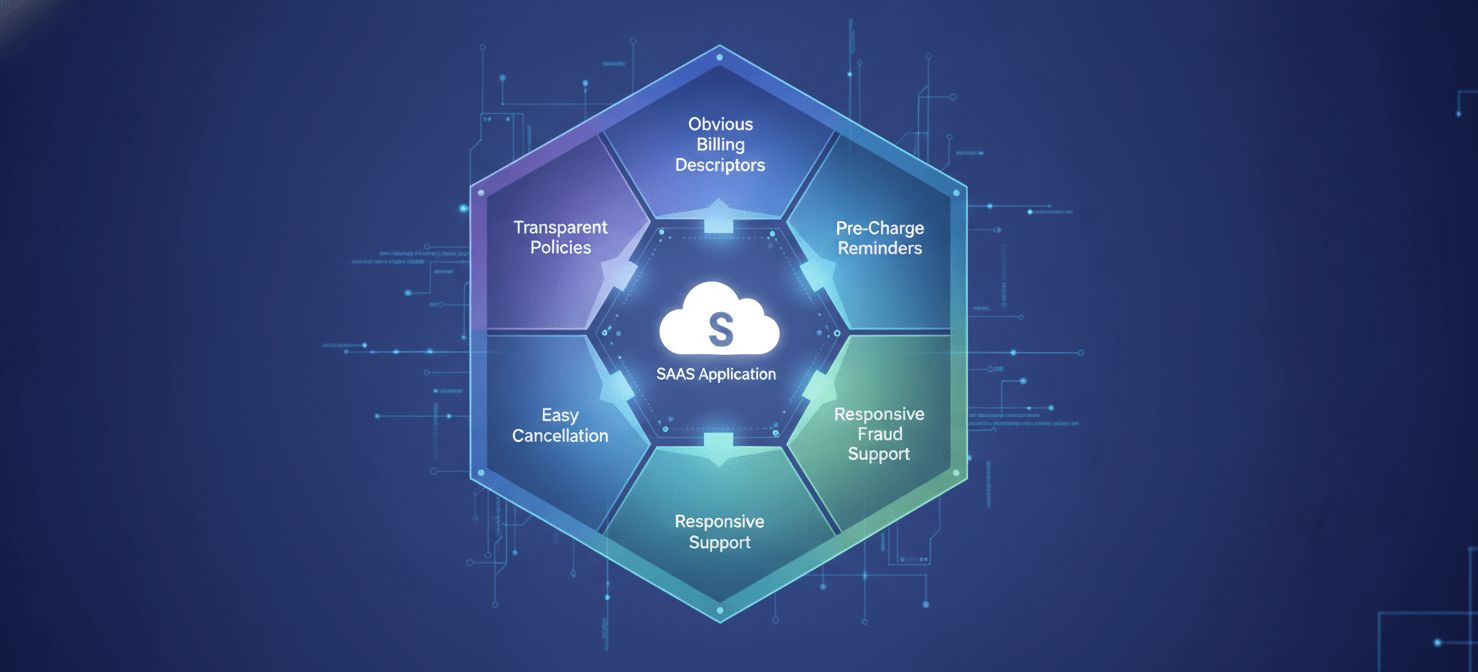
- Transparent Policies: Your terms of service, refund policy, and cancellation policy should be written in plain English and be easily accessible. A customer who understands the rules is less likely to dispute a legitimate charge.
- Obvious Billing Descriptors: The text that appears on a customer’s credit card statement is critical. It should be instantly recognizable as your company. Instead of a generic “SaaS INC,” use your product name, like “PRODUCTNAME.COM.”
- Pre-Charge Reminders: For annual subscriptions or before a free trial converts to paid, send an email reminder 7-10 days before the charge. This single action can drastically reduce chargebacks from customers who simply forgot.
A Frictionless Customer Experience
Make it easier for a customer to talk to you than to their bank.
- Easy Cancellation: Your cancellation process should be self-serve and require no more than two clicks. Hiding the cancel button is a short-sighted tactic that directly leads to higher chargebacks.
- Responsive Support: Make your support contact information prominent. When a customer has an issue, they should be able to reach a human quickly. Many customers file a chargeback only after failing to get a timely response from the merchant.
- Proactive Refunds: A refund is always cheaper than a chargeback. Empower your support team to issue refunds to dissatisfied customers quickly. This not only prevents a dispute but can also salvage the customer relationship.
Smart Fraud Prevention
While many SaaS chargebacks are “friendly fraud” (disputes of legitimate charges by the actual cardholder), true fraud is still a risk.
- Use Basic Checks: Always require Card Verification Value (CVV) and use the Address Verification System (AVS) to check for mismatches between the billing address and the one on file with the card issuer.
- Implement Stronger Authentication: For higher-value plans or in high-risk markets, consider implementing 3D Secure (like Verified by Visa or Mastercard SecureCode) to add an extra layer of authentication.
Reactive Strategy: Winning the Chargebacks You Can’t Prevent
Even with the best prevention, some chargebacks are inevitable. When a dispute is filed, you have a limited window—often 30 days or less—to respond. This process is called representment, where you “re-present” evidence to the bank to prove the charge was legitimate.
Gathering the Right Evidence
For SaaS, you don’t have shipping labels or delivery photos. Your evidence is digital. To win, you need to prove the customer signed up for and used your service.
- Customer Communications: Keep records of all emails, chat logs, and support tickets.
- Service Usage Logs: This is your most powerful evidence. Provide server logs showing the customer’s IP address, login dates and times, and key actions taken within the app.
- Transaction Records: Include a copy of the initial order confirmation and any invoices.
Crafting a Winning Rebuttal
Your response should be a concise, professional rebuttal letter that summarizes your evidence.
- Start with the basics: State the transaction amount, date, and customer name.
- Address the reason code: Each chargeback has a specific reason code (e.g., “Cancelled Recurring Transaction”). Address this reason directly. For example, if the claim is a cancelled subscription, provide evidence that no cancellation request was received before the billing date.
- Present your evidence clearly: Attach your logs and communications. Use screenshots and highlight the key information. Make it easy for the bank employee reviewing the case to understand your side.
- Keep it brief: The person reviewing your case is looking at dozens of these a day. Get straight to the point.
Choosing Your Toolstack for SaaS Chargeback Management
As a startup, you need a lean toolstack that automates as much as possible without breaking the bank.
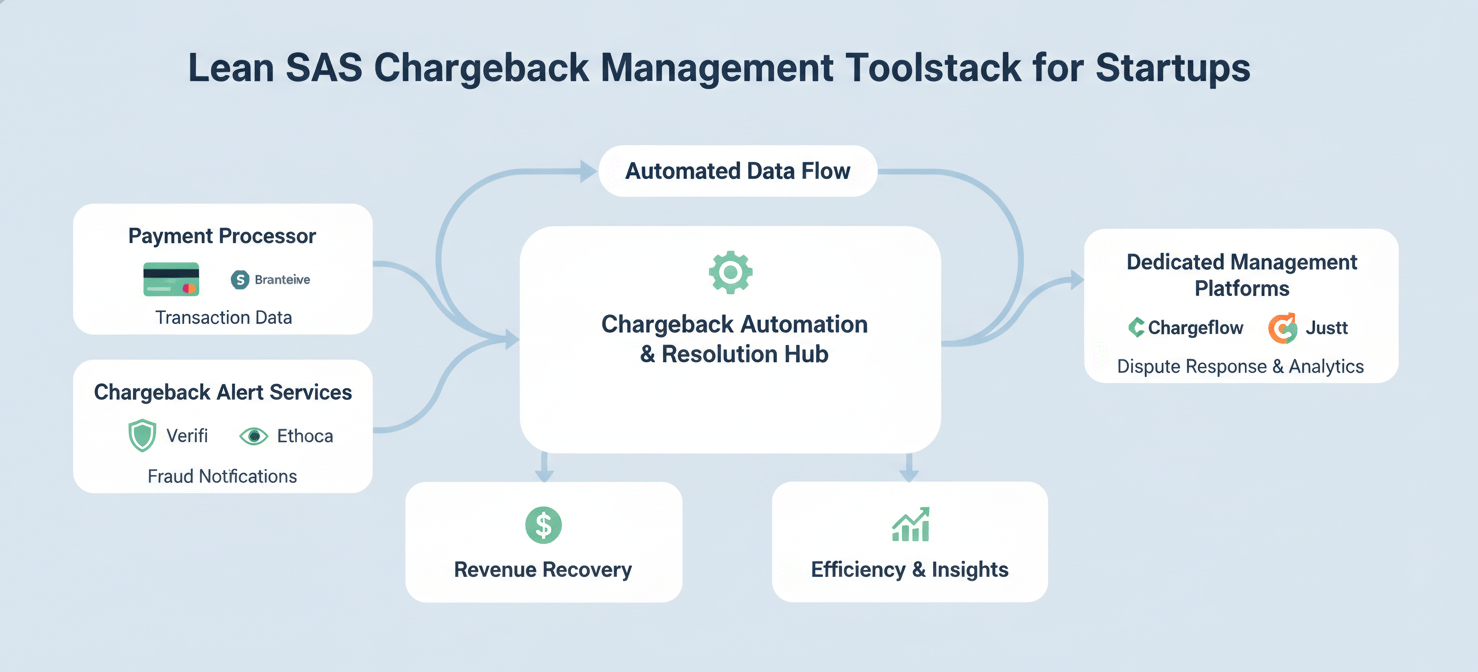
- Payment Processor Tools: Your payment processor (like Stripe or Braintree) is your first stop. They provide basic fraud filters and a dashboard for managing disputes.
- Chargeback Alerts: Services like Verifi and Ethoca (owned by Visa and Mastercard, respectively) can send you an alert when a customer initiates a dispute with their bank, giving you a window to issue a refund before it becomes a formal chargeback. This costs a fee per alert (typically $15-$40), but it protects your all-important chargeback ratio.
- Dedicated Management Platforms: As you scale, you may need a dedicated platform like Chargeflow or Justt. These tools use AI and automation to manage the entire representment process, from evidence gathering to submission, often charging a percentage of the revenue they recover for you.
Conclusion: From Defense to Offense
For a founder, managing SaaS revenue loss from disputes is not optional. It’s a direct lever on your runway. High chargeback rates are a symptom of a deeper issue—often a disconnect in communication, product expectation, or customer experience. By treating SaaS chargeback management as a core operational function, you do more than just plug a leak in your revenue. You are forced to build a more transparent, customer-centric business. The discipline required to keep your dispute rate below 0.5% will pay dividends in customer trust, operational efficiency, and, ultimately, a longer, more predictable path to growth. Don’t just defend against chargebacks; use the insights they provide to build a better company.
To truly turn chargeback defense into a strategic advantage and build a more resilient company, you can start with Binadox to gain comprehensive control over your SaaS spend, and we encourage you to book a demo to explore how our platform can specifically address your unique challenges.
 7-day free trial