



As an engineering manager or director, you own the engine of innovation. You are also responsible for the fuel it consumes. In the cloud era, that fuel is cash, and the meter is always running. Effective cloud cost control is not just a financial exercise; it is a critical component of engineering excellence and operational maturity. When costs spiral, they signal deeper issues—inefficient architecture, a lack of process, or unclear ownership. This guide reframes cloud cost management as an engineering leadership challenge, providing a practical framework to instill fiscal discipline without stifling your team’s velocity.
Key takeaways
- Implement a 3-step governance model: establish clear ownership, integrate cost into workflows, and monitor key metrics continuously.
- Shift cost considerations “left” by incorporating budget impact reviews into your existing CI/CD and architectural design processes.
- Foster a culture of cost-awareness where engineers are empowered with the data and tools to make fiscally responsible decisions.
- Leverage automated policies and alerts to prevent budget overruns before they impact your P&L.
Why Cloud Costs Spiral (and Why It’s Your Problem)
Cloud spending rarely grows in a predictable, linear fashion. Instead, it tends to expand unexpectedly, driven by a combination of technical and organizational factors. For engineering leaders, understanding these drivers is the first step toward building a sustainable cost management practice. The problem isn’t just about the total bill; it’s about the value you derive from that spend.
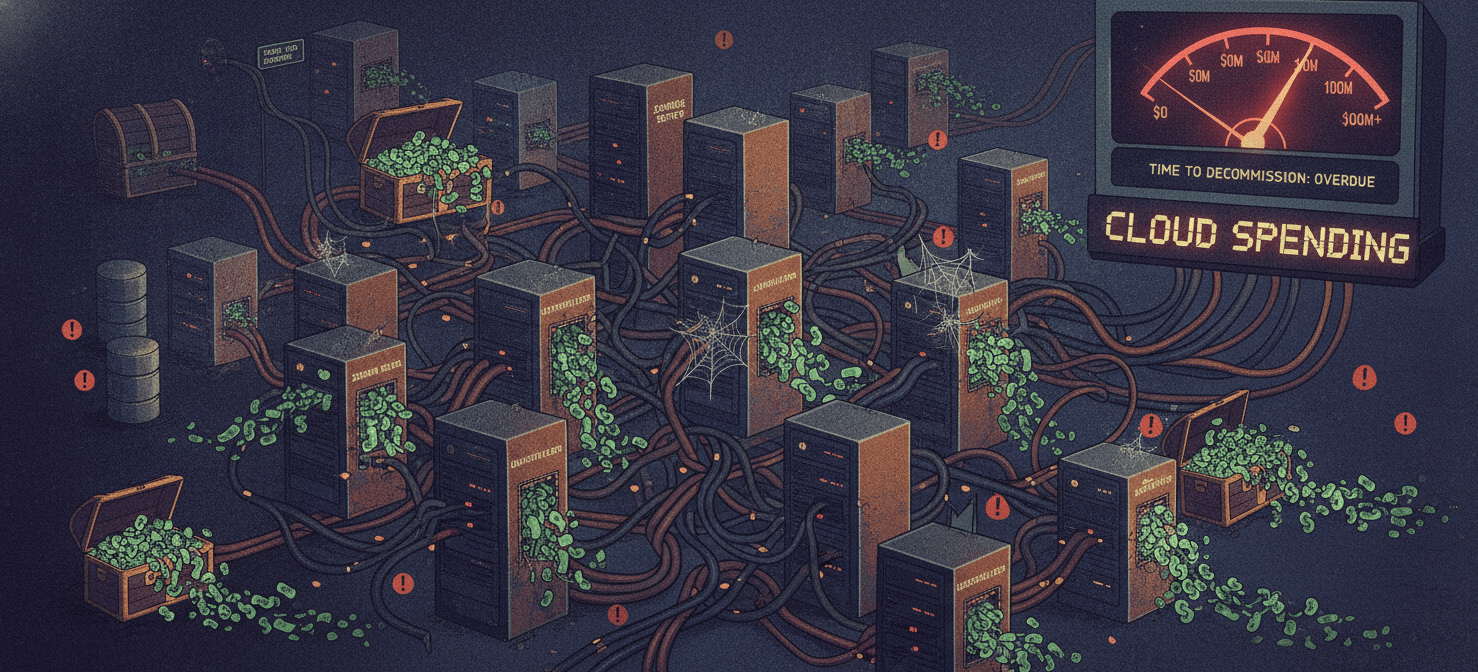
One primary cause is the frictionless nature of cloud provisioning. Engineers can spin up resources with a few clicks or lines of code, which is great for agility. However, without a corresponding process for decommissioning, these resources often become “zombies”—running, consuming budget, but delivering no value. This is a direct outcome of process gaps, not individual negligence.
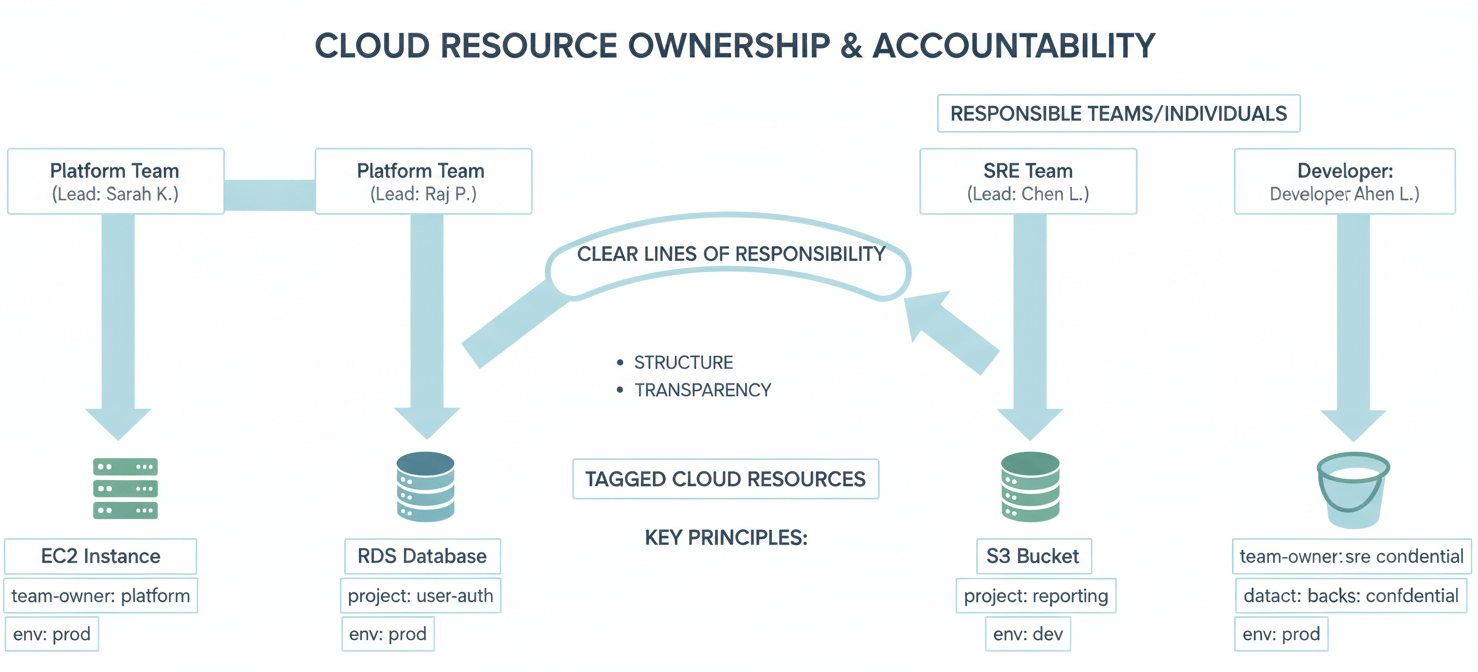
Furthermore, a lack of clear ownership is a significant contributor. When no specific team or individual is accountable for the cost of a service or application, there is little incentive to optimize it. The “tragedy of the commons” plays out in your cloud environment, where shared resources are overconsumed because accountability is diffused. As a manager, your core responsibility is to create structures that assign this ownership clearly.
Finally, architectural decisions made without considering cost implications can lock you into expensive operational patterns. For example, choosing a particular database service or instance type early in a project’s lifecycle can have compounding financial consequences. Your role is to ensure that cost is a non-functional requirement, considered alongside performance and scalability from the very beginning.
Principle 1: Establish Clear Ownership and Accountability
You cannot control what you cannot measure, and you cannot measure what you do not own. The foundational step in any engineering budget management strategy is to assign clear, unambiguous ownership for every dollar of cloud spend. This transforms cost from an abstract, centralized problem into a concrete, distributed responsibility.
The Power of Tagging
A rigorous and enforced tagging policy is your most critical tool. Tags are simple key-value pairs that you attach to cloud resources, but they provide the metadata needed to allocate costs accurately. Your goal is to create a tagging schema that reflects your organizational structure.
First, define a mandatory set of tags for all provisioned resources. Common and effective tags include:
team-owner: The specific engineering team responsible (e.g.,platform-eng,billing-squad).project: The project or product the resource supports (e.g.,user-auth-service,data-pipeline-v2).cost-center: The financial department code for chargeback.environment: The deployment stage (e.g.,prod,staging,dev).
Next, you must enforce this policy. Use infrastructure-as-code (IaC) tools like Terraform or CloudFormation to apply tags automatically during provisioning. In addition, leverage cloud-native policy enforcement tools. For example, AWS Service Control Policies (SCPs) or Azure Policy can be configured to prevent the creation of resources that lack the required tags. This makes compliance the path of least resistance.
Building a Culture of Cost-Awareness
Ownership is not just about blame; it is about empowerment. Once you can attribute costs, you must make that information visible to the teams who incur them. Provide your engineers with access to dashboards that show their team’s specific spend against their budget.
This visibility fosters a sense of agency. When an engineer sees that a change they deployed caused a 15% cost spike, they are motivated to investigate and remediate it. This is far more effective than a top-down directive from the finance department. Therefore, you should integrate cost reporting into your team’s regular rituals, such as sprint reviews or operational readiness meetings. Frame it not as a punitive measure, but as another engineering metric to optimize, just like latency or error rates.
Principle 2: Implement Robust Cloud Cost Governance
With ownership established, the next step is to create the guardrails that guide your teams’ spending. Effective cloud cost governance is not about micromanagement; it is about creating an automated, policy-driven framework that allows for autonomy within predefined limits. This is where you apply your process-oriented leadership to achieve effective cloud cost control.
Budgets, Alerts, and Automated Actions
Every major cloud provider offers tools to set budgets and trigger alerts. For instance, you can use AWS Budgets to set monthly, quarterly, or annual cost targets for specific accounts, projects, or tags. Similarly, Azure Cost Management + Billing allows for granular budget creation with alerting capabilities.
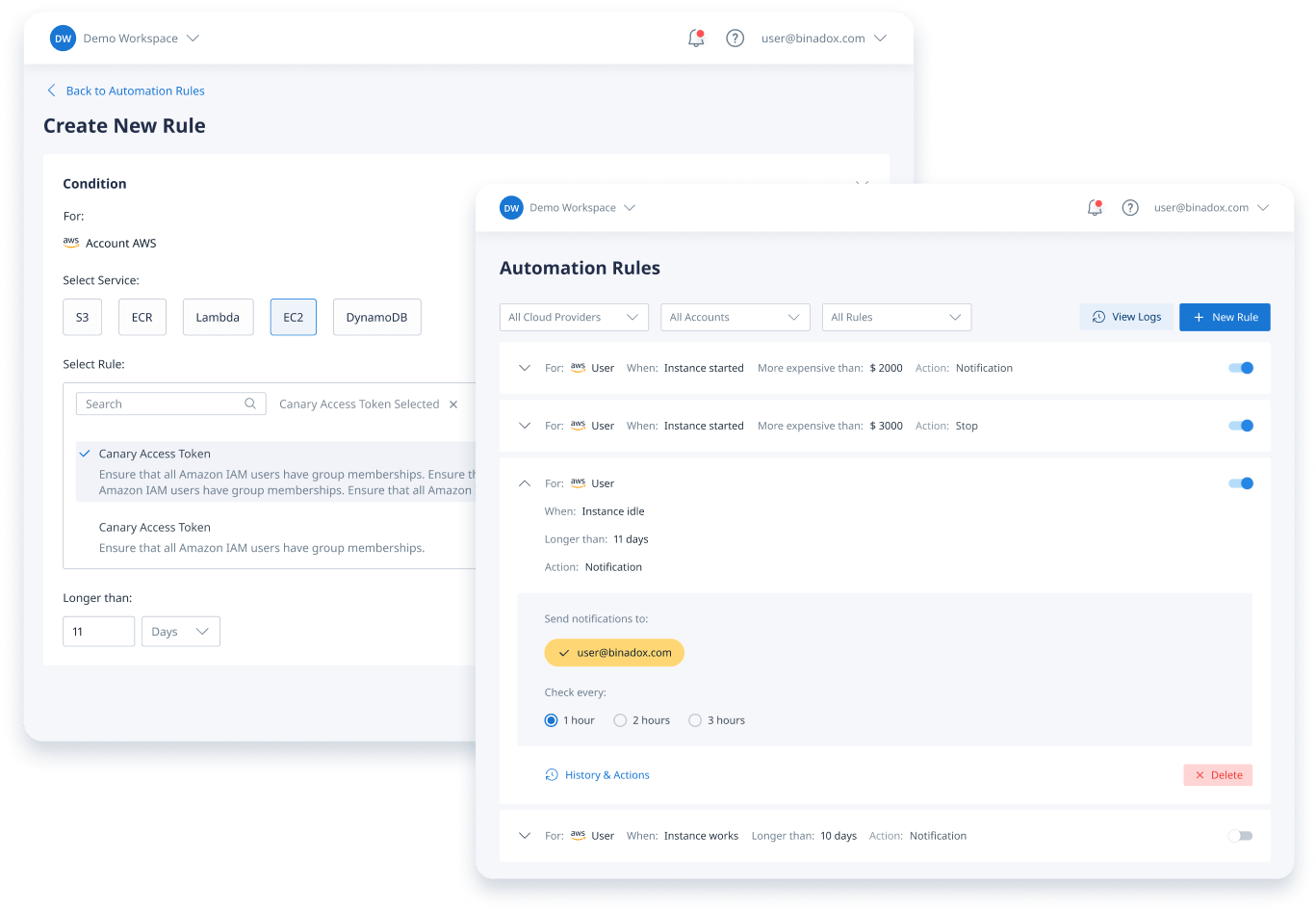
However, alerts alone are often insufficient. By the time an engineering lead sees an email alert, the budget may already be significantly exceeded. The next level of maturity is to automate responses to these alerts. For example:
- An alert at 80% of the monthly budget for a development environment could trigger a notification in the team’s Slack channel.
- An alert at 100% could trigger a Lambda function or Azure Function that automatically stops non-production EC2 instances or VMs tagged for that specific project.
This automation enforces your policies without manual intervention, ensuring that temporary development environments or experimental projects don’t lead to permanent budget damage. It provides your teams with freedom to operate, but within a safe and predictable financial envelope.
Principle 3: Integrate Cost into the Engineering Workflow
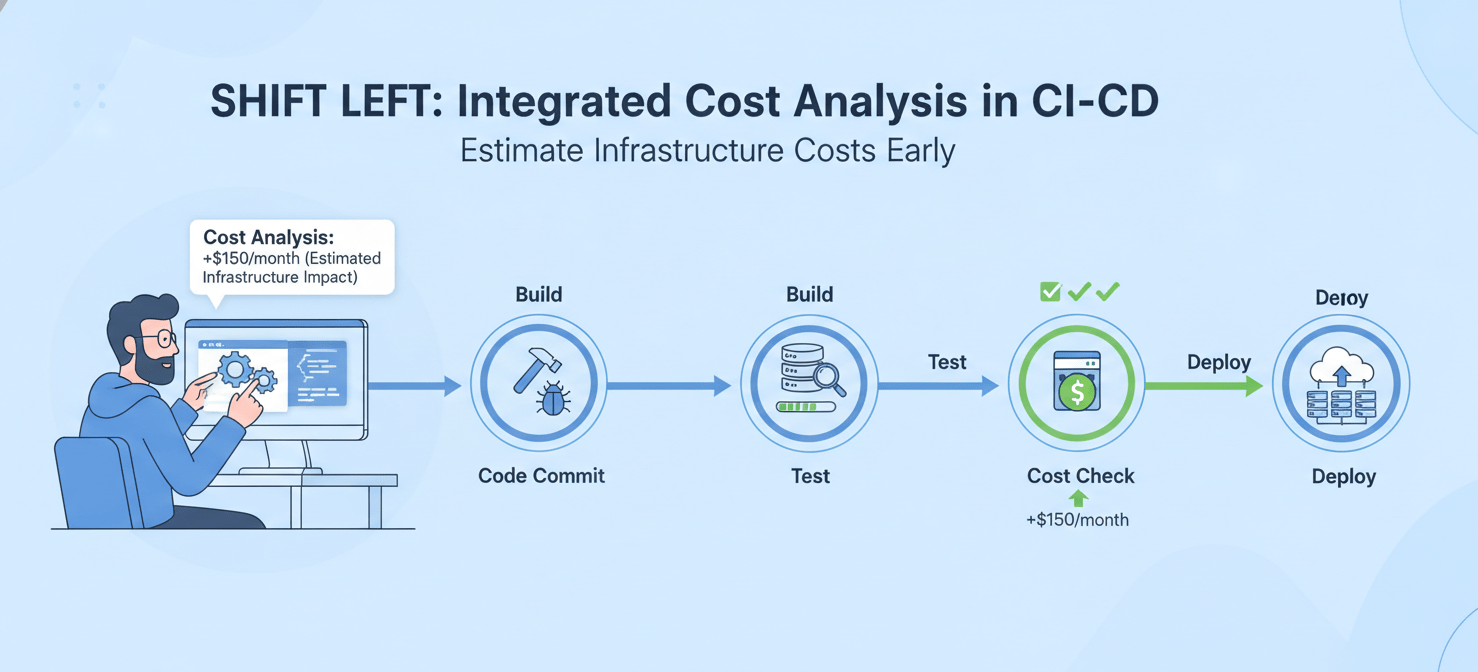
The most impactful cost optimizations happen before a single line of code is deployed. By shifting cost considerations “left”—earlier in the development lifecycle—you can prevent expensive architectural mistakes and build efficiency in from the start. This requires integrating cost analysis directly into your team’s existing workflows.
Cost-Aware Architectural Reviews
During the design phase of any new feature or service, cost should be a primary consideration. Mandate that architectural review documents include a section on estimated cloud costs. This forces engineers to think through the financial implications of their choices.
For example, will the application use a serverless architecture with pay-per-use pricing, or will it require provisioned instances that run 24/7? What are the data transfer costs associated with a multi-region deployment? Tools like the AWS Pricing Calculator or the Azure Pricing Calculator can provide estimates that inform these decisions. By discussing these trade-offs openly, you can guide your team toward more cost-effective designs that still meet performance requirements.
Cost Checks in CI/CD
You can also embed cost checks into your automated deployment pipelines. Tools like Infracost can analyze Terraform or CloudFormation plans and post a comment in a pull request showing the cost impact of infrastructure changes. This gives engineers and reviewers immediate visibility. For example, changing an instance type from t3.large to m5.2xlarge would be flagged with its associated monthly cost increase before it ever gets merged and deployed. This makes cost an explicit part of the code review process, just like unit tests or security scans.
Principle 4: Measure, Monitor, and Optimize Continuously
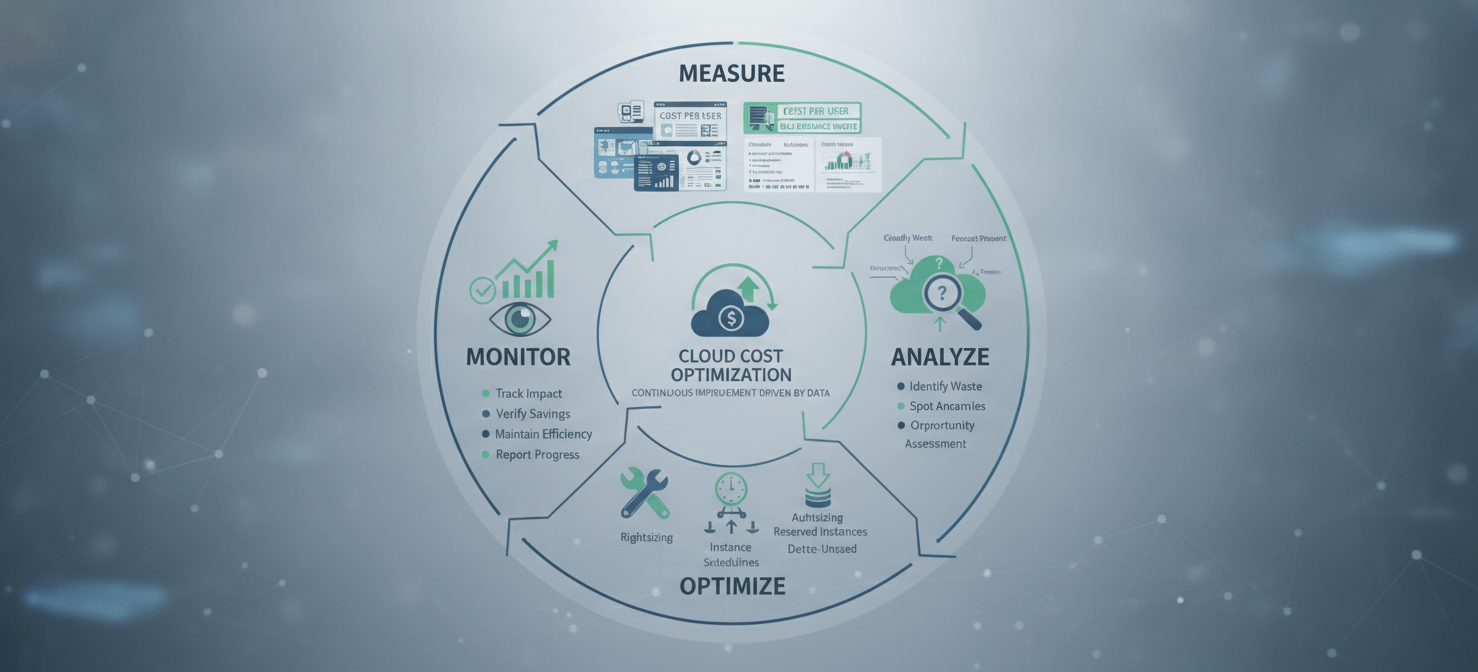
Cloud cost management is not a one-time project; it is an ongoing process of refinement. As a leader, your role is to establish the rhythm of review and the key performance indicators (KPIs) that matter. You must ensure your teams are continuously looking for opportunities to improve efficiency.
Key Metrics for Engineering Leaders
While the finance team cares about the total bill, you should focus on unit economics. These metrics tie cloud spend directly to business value. Relevant KPIs for engineering teams include:
- Cost Per User/Customer: How much does it cost to support one active user?
- Cost Per Transaction/Request: What is the infrastructure cost of a single key business action (e.g., processing a payment, serving an API call)?
- Idle Resource Waste: What percentage of your monthly spend is on unutilized or underutilized resources (e.g., idle VMs, unattached storage volumes)?
Tracking these metrics allows you to have more meaningful conversations. A rising total cloud bill is not necessarily a problem if your cost per user is decreasing. It shows you are scaling efficiently. Conversely, a flat total bill could hide rising inefficiencies if your user base is declining.
The Rhythm of Optimization
Schedule regular cost review meetings (e.g., monthly or bi-weekly) with your team leads. Use the data from your tagging and monitoring tools to guide the discussion. The agenda should focus on identifying and prioritizing optimization opportunities.
Common optimization tactics include:
- Rightsizing: Analyzing utilization metrics to downsize over-provisioned instances.
- Scheduling: Automatically shutting down non-production environments outside of business hours.
- Storage Tiering: Moving infrequently accessed data to cheaper storage classes, such as Amazon S3 Glacier or Azure Archive Storage.
- Commitment Discounts: Utilizing Savings Plans or Reserved Instances for predictable, steady-state workloads to achieve significant savings over on-demand pricing.
By making this a regular, data-driven process, you embed optimization into your team’s operational DNA. It becomes a continuous loop of measuring, analyzing, and improving.
Conclusion
Ultimately, effective cloud cost control is a reflection of strong engineering leadership. It is not about slashing budgets or denying engineers the resources they need. Instead, it is about building a system of transparency, accountability, and intelligent automation. By establishing clear ownership, implementing robust governance, integrating cost into your workflows, and continuously monitoring performance, you transform cloud spending from a reactive financial headache into a proactive lever for operational excellence. The goal is not to spend less, but to spend smarter. After all, a well-managed budget is not a constraint on innovation; it is the foundation that makes sustainable innovation possible.
To truly transform your cloud spending into a strategic asset and build a foundation for sustainable innovation, you can begin by creating your free Binadox account or book a demo to see how our platform can empower your team.
 7-day free trial