



Managing expenses in the cloud can feel like trying to nail jelly to a wall. The same scalability and on-demand resources that make the cloud powerful also make it incredibly easy to overspend. Without dedicated oversight, costs can spiral, driven by everything from forgotten test environments to inefficiently scaled resources. This is where cloud cost management tools become essential. They provide the necessary processes and software to monitor, analyze, and ultimately control your cloud spending, turning unpredictable bills into a manageable, optimized part of your IT budget.
Key takeaways
- Visibility is the Foundation: You cannot control what you cannot see. The first step in managing cloud costs is gaining clear, granular visibility into where every dollar is going.
- Automation Over Manual Effort: Relying on manual checks is inefficient and prone to error. Effective cost management uses automation to identify waste and enforce policies, saving teams an average of 20-40% on cloud spend.
- It’s a Cultural Shift: Tools are only part of the solution. True cost control requires a cultural shift, often called FinOps, that brings finance, engineering, and operations together to share responsibility for cloud spending.
- Start with Native Tools: For cloud spending under $10,000 per month, the free, built-in tools from AWS, Azure, and GCP are often sufficient to get started.
What Is Cloud Cost Management (and Why Is It So Hard)?
Cloud cost management is the continuous process of monitoring, analyzing, and optimizing your organization’s spending on cloud services. The goal is to maximize the business value derived from the cloud while minimizing waste. It’s a discipline that combines financial governance with IT operations to ensure resources are used efficiently and align with budget forecasts.

However, several factors make this a persistent challenge for many organizations.
The Complexity of Cloud Pricing
Cloud providers offer a dizzying array of services, each with its own unique pricing model. You have pay-as-you-go, reserved instances, savings plans, spot instances, and tiered pricing for data transfer and storage. This complexity makes it difficult to understand billing data, let alone forecast future expenses accurately. Furthermore, in a multi-cloud environment where 89% of enterprises operate, these challenges are compounded as each provider has a different billing data structure.
Decentralized and Dynamic Environments
One of the cloud’s biggest advantages is its agility; developers can spin up new resources with a single API call. But this speed often outpaces governance. Teams across your organization can deploy services without a centralized review, leading to “shadow IT,” resource sprawl, and untagged assets that are nearly impossible to allocate to a specific project or cost center. This lack of visibility makes it incredibly difficult to hold teams accountable for their spending.
The Gap Between Provisioned and Used
A common pitfall is paying for resources you provision, not just what you consume. An oversized virtual machine or an idle database cluster accrues costs whether it’s doing productive work or not. Studies have found that a significant portion of cloud spending, often estimated between 30-35%, is wasted on these underutilized or entirely unused resources. Without active management, this gap represents a constant drain on your budget.
Key Features to Look for in Cloud Cost Management Tools
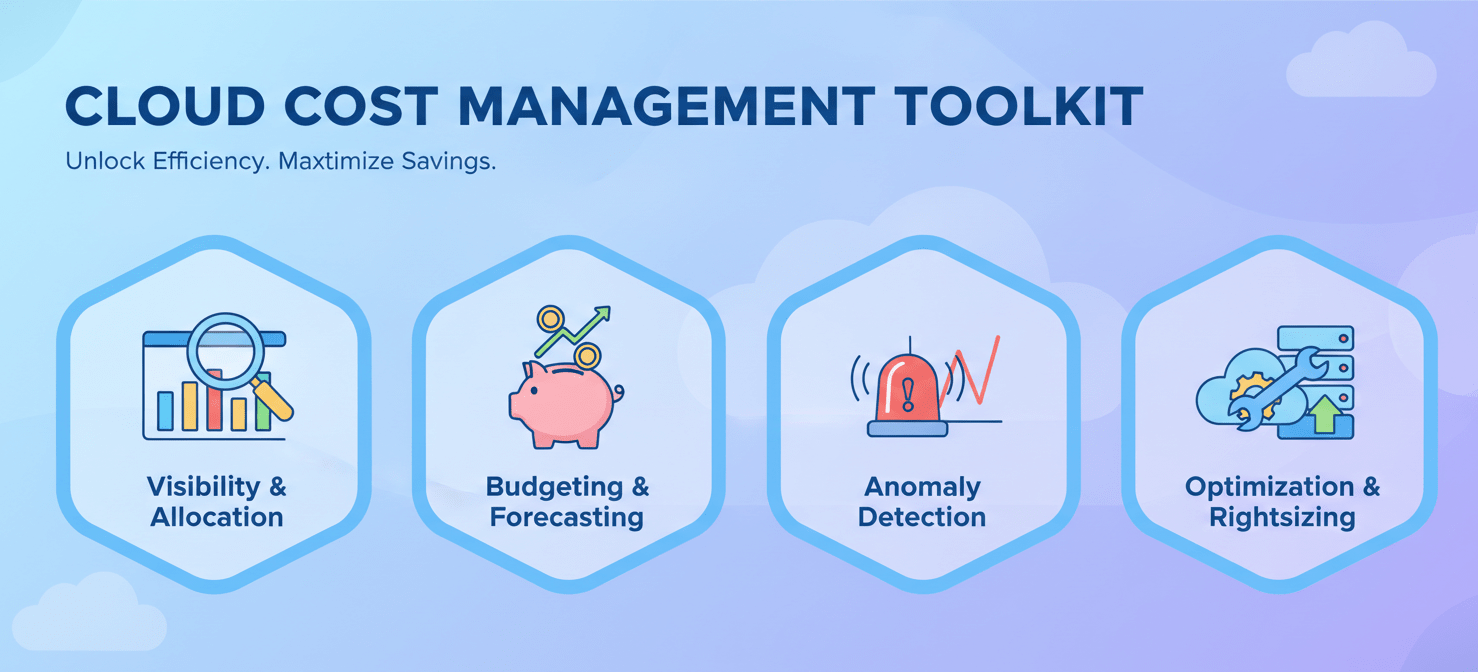
When evaluating cloud cost management software, certain core features are non-negotiable for achieving true visibility and control. These capabilities form the foundation of an effective FinOps practice.
Cost Visibility and Allocation
The most fundamental feature is the ability to see exactly where your money is going. A good tool will ingest and normalize billing data from all your cloud providers (AWS, Azure, GCP) into a single, unified dashboard. This provides a consolidated view of your entire cloud footprint.
Beyond simple aggregation, look for robust cost allocation capabilities. This means the tool can attribute every line item of your bill to a specific team, project, product feature, or business unit. This is often achieved through resource tagging, but advanced tools can also allocate shared costs or untagged resources using business rules and usage metrics.
Budgeting and Forecasting
Effective cloud financial management tools move beyond reactive analysis to proactive planning. They should allow you to set budgets for different teams or projects and configure alerts that automatically notify you when spending approaches or exceeds those thresholds.
Furthermore, look for AI- and machine learning-powered forecasting. By analyzing historical usage data, these tools can predict future spending with a high degree of accuracy, helping you avoid budget surprises and plan with confidence.
Anomaly Detection
Sudden cost spikes are a common headache, often discovered only after the monthly invoice arrives. Anomaly detection is a critical feature that uses machine learning to monitor your spending patterns and automatically flag unusual activity in real-time. This allows your team to investigate and remediate issues—like a misconfigured service or a resource leak—before they have a significant financial impact.
Optimization and Rightsizing Recommendations
A top-tier tool doesn’t just show you what you’re spending; it tells you how to spend less. It should continuously analyze your resource utilization to identify waste and provide actionable recommendations. Common recommendations include:
- Rightsizing: Identifying over-provisioned virtual machines or databases and suggesting smaller, cheaper instances that match the actual workload performance needs.
- Idle Resource Cleanup: Flagging “zombie” resources like unattached storage volumes or inactive load balancers that can be safely deleted.
- Commitment Management: Recommending the purchase of Reserved Instances (RIs) or Savings Plans for predictable, long-running workloads to take advantage of significant discounts over on-demand pricing.
How to Choose the Right Cloud Financial Management Tools for Your Business
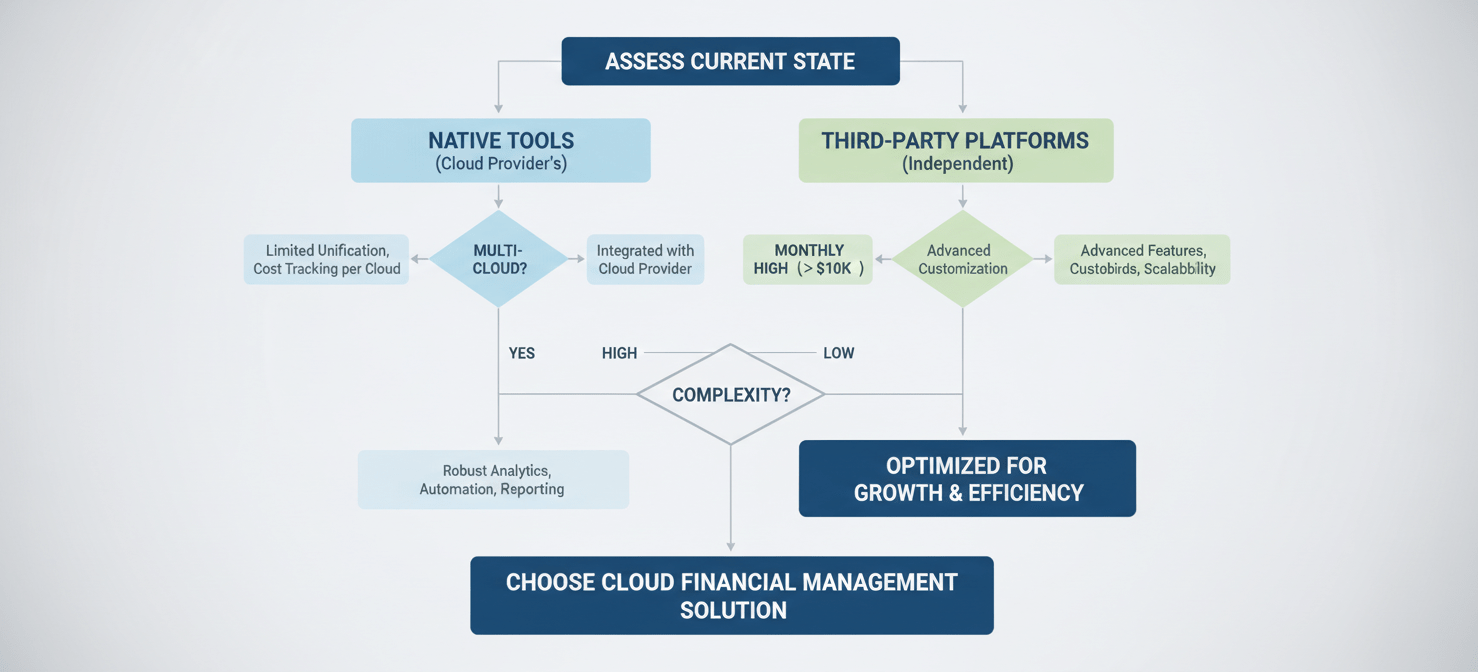
Selecting the right tool depends on your organization’s size, cloud maturity, and specific challenges. There is no single “best” platform for everyone. Instead, use a structured approach to find the best fit.
Assess Your Current State
First, understand your primary pain points.
- Are you struggling with basic visibility? If you can’t even tell which team is spending what, start with a tool focused on cost allocation and reporting.
- Is your problem waste and inefficiency? If you have visibility but costs are still too high, prioritize a tool with strong optimization and rightsizing recommendations.
- Do you operate in a multi-cloud environment? Ensure the tool provides robust, native support for all of your cloud providers.
- What is your monthly cloud spend? Organizations spending less than $50,000 per month may find the native tools from their cloud provider sufficient, while larger spends often justify a dedicated third-party platform.
Start with Native Cloud Provider Tools
All major cloud providers offer a suite of free cost management tools. These are excellent starting points and may be all your team needs, especially in the early stages of your cloud journey.
- AWS Cost Management: Includes tools like AWS Cost Explorer for visualizing spend, AWS Budgets for setting alerts, and AWS Cost Anomaly Detection.
- Microsoft Cost Management: Available in the Azure portal, it provides cost analysis, budgets, alerts, and recommendations to optimize Azure resources.
- Google Cloud Cost Management: Offers features like billing reports, budget alerts, and a recommender engine that provides insights to reduce costs on GCP.
Evaluate Third-Party Platforms
As your cloud environment grows in complexity, you may outgrow the native tools. Third-party cloud cost management software often provides more advanced features, such as:
- Unified Multi-Cloud Dashboards: A single pane of glass for all cloud and even SaaS spending.
- Advanced Cost Allocation: More sophisticated rules for allocating shared and untagged costs.
- Automated Optimization: Some tools can automatically execute savings actions, such as purchasing and exchanging RIs or shutting down non-production environments off-hours.
- Kubernetes Cost Visibility: Specialized capabilities to break down container costs by namespace, label, or deployment, which is a common blind spot for native tools.
When evaluating these platforms, consider factors like ease of integration, the quality of their recommendations, and whether their primary focus aligns with your biggest challenges—be it visibility, optimization, or governance.
Top 5 Cloud Cost Management Tools on the Market
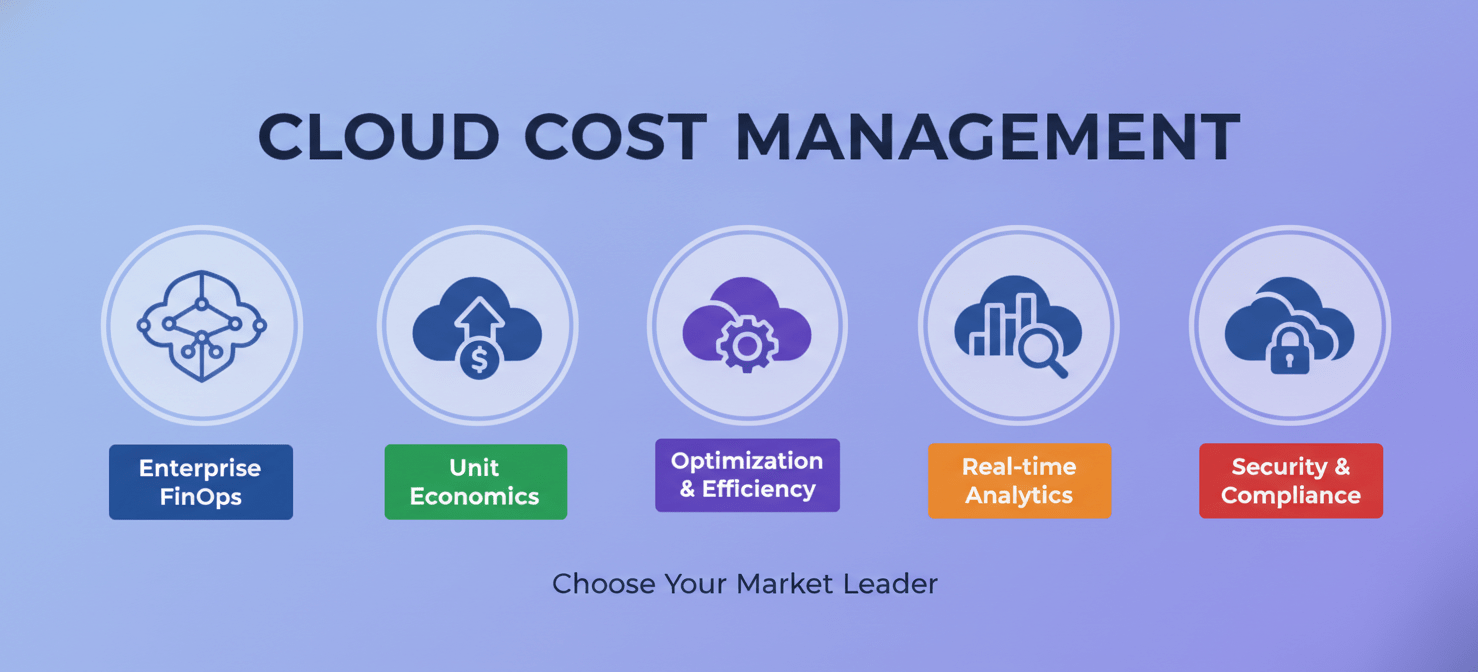
The market for cloud financial management tools is crowded, with solutions catering to different needs. Here are five of the leading platforms widely recognized in 2026.
1. IBM Cloudability (formerly Apptio Cloudability)
A long-standing leader in the enterprise space, Cloudability is known for its strong multi-cloud financial governance capabilities. It excels at cost allocation, chargeback, and showback, making it a favorite among centralized FinOps and finance teams who need to translate technical cloud usage into clear business reports.
- Best for: Large enterprises with complex, multi-cloud environments and mature FinOps practices requiring detailed financial reporting and governance.
- Key Features: Advanced cost allocation, business mapping, budgeting and forecasting, and robust RI and Savings Plan management.
2. CloudHealth (by Broadcom/VMware)
CloudHealth is another enterprise-grade platform that provides comprehensive visibility and policy-driven governance across multi-cloud and hybrid environments. It helps organizations manage costs, improve resource utilization, and ensure security and compliance.
- Best for: Organizations that need to manage cost policies and savings plans at scale across a diverse set of cloud and on-premises assets.
- Key Features: Multi-cloud visibility, policy and governance automation, security posture management, and detailed optimization recommendations.
3. CloudZero
CloudZero positions itself as a cloud cost intelligence platform, focusing on mapping cloud spend to specific business outcomes. It’s particularly strong at providing granular, unit-level cost insights (e.g., cost per customer, per feature, or per deployment) without relying solely on perfect tagging.
- Best for: SaaS and software-driven companies that need to understand the “why” behind their cloud spend and connect it directly to engineering decisions and business metrics.
- Key Features: Unit cost analysis, real-time anomaly detection, Kubernetes cost allocation, and engineering-centric workflows.
4. Flexera One
Flexera One offers a broad IT management solution that includes strong cloud financial management capabilities. It provides visibility across hybrid IT environments, helping organizations optimize spending from the data center to the cloud.
- Best for: Enterprises seeking a single platform to manage and optimize their entire IT estate, including on-premises software, SaaS, and multi-cloud infrastructure.
- Key Features: Hybrid IT discovery and visibility, automated cost optimization, and governance workflows.
5. Finout
Finout is a modern FinOps platform designed for complex, multi-cloud environments that include Kubernetes, SaaS, and AI workloads. Its key differentiator is a “MegaBill” data layer that consolidates all costs and allows for retroactive virtual tagging to allocate previously untagged expenses.
- Best for: Tech-forward companies with complex, multi-layered stacks who need granular, business-contextual cost allocation across every part of their environment.
- Key Features: Unified cost visibility across cloud and SaaS, virtual tagging for 100% cost allocation, unit economics, and AI-powered anomaly detection.
Best Practices for Implementing a Cloud Cost Management Strategy
Deploying a tool is just one step. To achieve sustained savings and financial control, you must embed cost awareness into your operational culture.
Establish a FinOps Culture
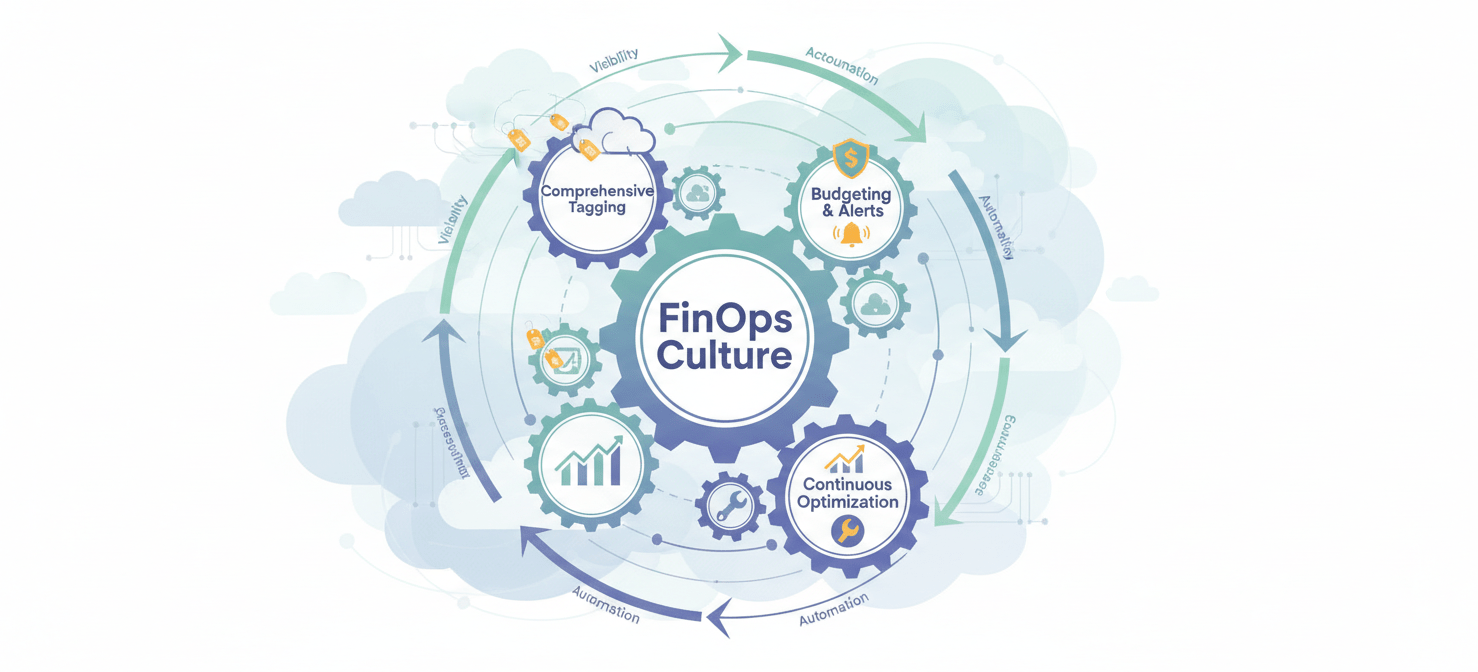
FinOps is the cultural practice of bringing finance, technology, and business teams together to master the unit economics of the cloud. It’s about shared ownership. Create a cross-functional team responsible for cloud cost management. This team should define standards for tagging, set budgets, and review spending regularly. The goal is to empower engineers to make cost-aware decisions without slowing down innovation.
Enforce Comprehensive Tagging
A consistent and enforced tagging strategy is the cornerstone of cost visibility. Tags are metadata labels you assign to cloud resources, allowing you to categorize them by project, team, environment, or application. Aim for at least 90% tagging compliance. Use policy automation tools to enforce tagging at the time of resource creation, preventing untagged assets from ever entering your environment.
Implement Continuous Optimization
Cost optimization is not a one-time project; it’s an ongoing process.
- Rightsize Regularly: Continuously analyze utilization metrics and resize over-provisioned resources.
- Automate Cleanup: Create automated scripts or use tool features to find and terminate idle resources, such as development environments left running over the weekend.
- Manage Commitments Strategically: Use tools to analyze your baseline usage and maximize your coverage with RIs and Savings Plans, which can offer discounts of up to 70% compared to on-demand rates.
- Optimize Storage: Not all data is created equal. Implement lifecycle policies to automatically move infrequently accessed data to cheaper, archival storage tiers.
Set Budgets and Automate Alerts
Use your cost management tool to set spending budgets for each team or project. Configure automated alerts to notify stakeholders when costs are trending higher than expected. This creates a crucial feedback loop, enabling teams to take corrective action before a minor overage becomes a major budget problem.
The Future of Cloud Cost Management
The discipline of cloud cost management is evolving rapidly, driven by new technologies and increasing cloud complexity. The next frontier is moving beyond simple visibility and manual recommendations toward intelligent automation.

AI and machine learning are becoming central to these platforms. They are no longer just for detecting anomalies but are now used for more accurate forecasting, predictive rightsizing recommendations, and even automating the purchase and management of commitment portfolios. We are also seeing the rise of “FinOps agents”—AI assistants that can not only detect waste but also investigate the root cause and orchestrate remediation through tools like Jira or Slack.
Furthermore, as organizations adopt more complex services like Kubernetes, serverless functions, and specialized AI/ML platforms, the need for more granular and context-aware cost allocation will grow. The tools that succeed will be those that can demystify the costs of these shared, abstracted services and tie them directly to business value.
In conclusion, gaining control over your cloud spending is no longer an optional exercise; it is a critical business function. The complexity and dynamic nature of the cloud demand a dedicated strategy supported by robust cloud cost management tools. By focusing on visibility, fostering a culture of cost accountability, and leveraging automation, you can transform your cloud bill from a source of anxiety into a predictable and optimized investment. The right tools provide the data, but a commitment to continuous improvement turns that data into durable savings. After all, the only thing worse than a surprisingly high cloud bill is not knowing why it happened in the first place.
If you’re ready to transform your cloud spending into a predictable, optimized investment, we invite you to explore our solution; you can easily start a free trial to experience its capabilities firsthand or book a demo for a personalized walkthrough.
 7-day free trial