




The rise of cloud applications has transformed how your teams work, but it has also introduced significant security challenges. Employees often adopt new software and services without IT approval, a practice known as “shadow IT.” This creates blind spots where sensitive data can be exposed. However, a focused strategy of cloud MFA enforcement provides a powerful layer of defense, ensuring that even unapproved applications are protected from unauthorized access. By requiring multiple forms of verification, you can drastically reduce the risk posed by these hidden services.
Key takeaways
- Shadow IT, the use of unapproved apps and services, now accounts for 30-40% of IT spending in large enterprises.
- Implementing multi-factor authentication (MFA) can block up to 99.9% of account compromise attacks, securing both sanctioned and unsanctioned cloud services.
- A 4-step approach involving discovery, policy creation, tool implementation, and user education can effectively enforce MFA across your cloud environment.
- Beyond technology, fostering a security-aware culture is crucial for long-term success in mitigating shadow IT risks.
What Is Shadow IT (and Why Is It a Problem)?
Shadow IT refers to any hardware, software, or cloud service used on a company network without the knowledge or approval of the IT department. This isn’t usually malicious. Instead, employees often turn to familiar tools like personal cloud storage (Dropbox, Google Drive), messaging apps (Slack, WhatsApp), or project management software (Trello, Asana) to be more productive.

The problem is that these unsanctioned assets exist outside of your organization’s security controls. When your IT team is unaware of an application, they cannot apply security policies, monitor for threats, or ensure data is handled correctly. This creates significant risks.
Key Risks of Unchecked Shadow IT
- Increased Data Breach Risk: Unsanctioned applications may lack proper security measures, making them easy targets for attackers. In fact, 83% of IT professionals report that employees store company data on unapproved cloud services.
- Compliance Violations: Many industries have strict data handling regulations, such as GDPR or HIPAA. Using non-compliant shadow IT solutions for sensitive data can lead to heavy fines and legal trouble.
- Lack of Visibility and Control: Without visibility, your security team cannot manage who has access to what data. This makes it nearly impossible to revoke access when an employee leaves the company or to detect suspicious activity.
- Inefficient IT Spending: Organizations often end up paying for multiple, redundant services when different teams independently adopt their own tools. Shadow IT can account for a staggering 30% to 40% of IT spending in large companies.
How Cloud MFA Enforcement Reduces Shadow IT Risks
Multi-factor authentication (MFA) is a security process that requires users to provide two or more verification factors to gain access to an account or application. These factors typically include something you know (a password), something you have (a smartphone or hardware token), and something you are (a fingerprint or facial scan).
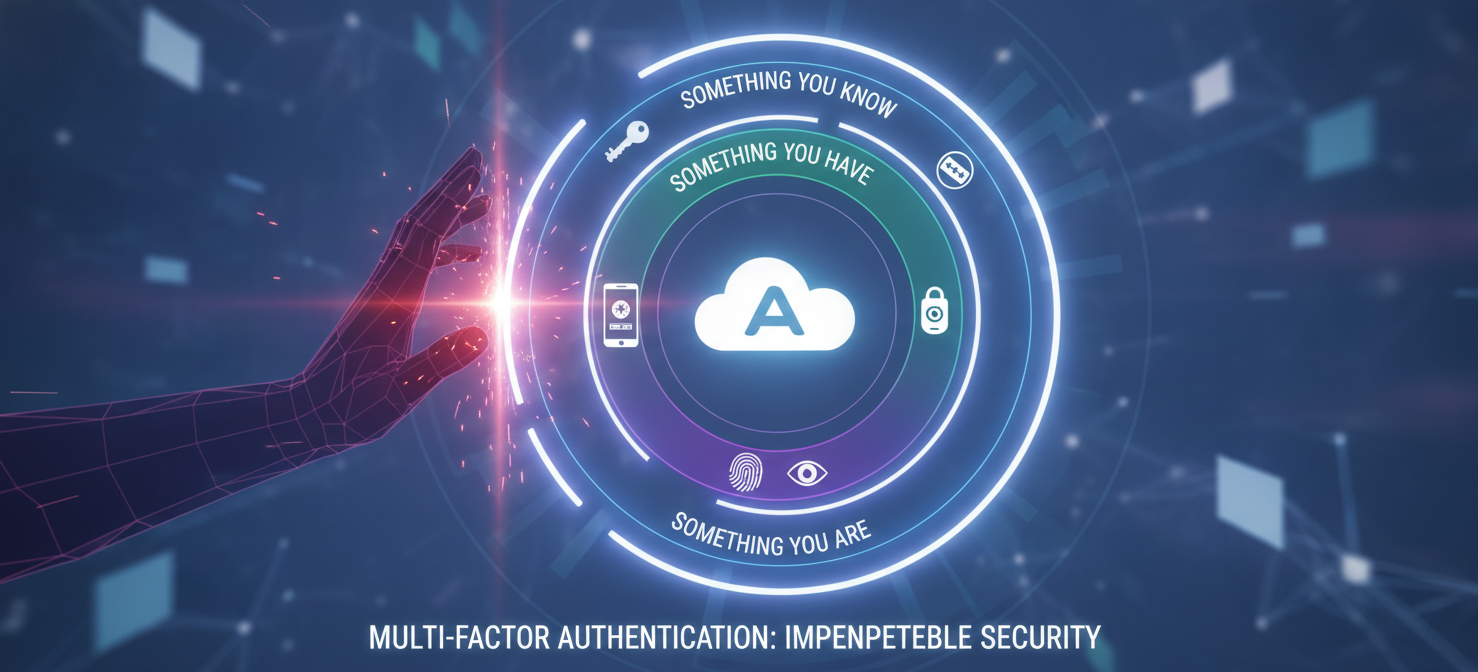
By enforcing MFA on cloud services, you create a critical security layer that protects accounts even if passwords are stolen. This is particularly effective against the dangers of shadow IT. Even if an employee creates an account on an unsanctioned platform, a cloud MFA enforcement strategy ensures that access remains protected.
Here’s how it helps:
- Prevents Unauthorized Access: The core benefit of MFA is that it makes it significantly harder for attackers to compromise an account. Even with a valid password, they are stopped by the second authentication factor.
- Secures Data on Unsanctioned Platforms: When employees use unapproved cloud storage or collaboration tools, they often store sensitive company data there. MFA acts as a safeguard, ensuring that only verified users can access that information, regardless of where it resides.
- Mitigates Password-Related Risks: Many data breaches stem from weak or reused passwords. MFA reduces this dependency on passwords alone, providing robust protection against common attacks like phishing and credential stuffing.
Implementing Cloud MFA Enforcement: A 4-Step Approach
A successful cloud MFA enforcement strategy requires more than just turning on a switch. It involves a thoughtful, phased approach to discover shadow IT, define policies, and deploy the right tools without disrupting productivity.
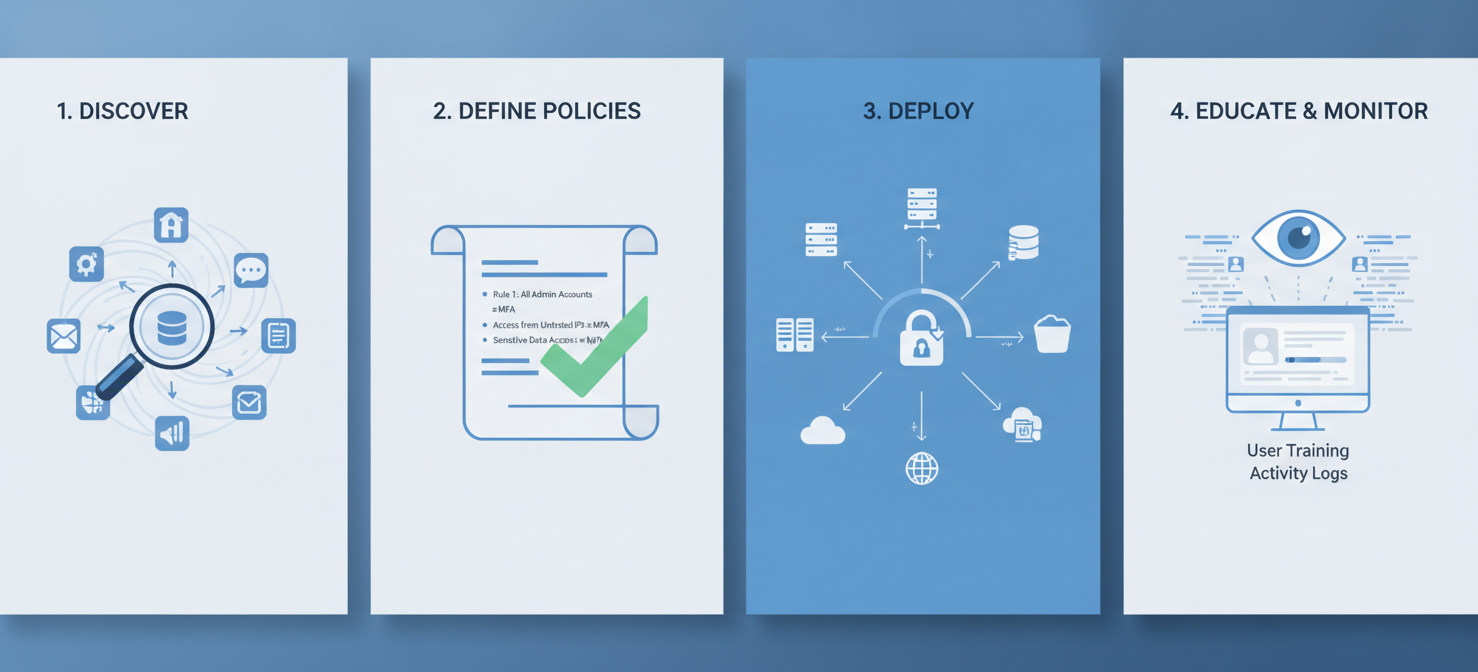
Step 1: Discover and Assess
You cannot secure what you don’t know exists. The first step is to gain visibility into all the cloud applications being used across your organization. Tools like a Cloud Access Security Broker (CASB) can discover shadow IT by monitoring network traffic and identifying connections to cloud services. Once you have a complete inventory, you can assess the risk level of each application and prioritize your enforcement efforts.
Step 2: Define Clear Policies
Next, create clear and consistent security policies. Your policies should define which applications require MFA and under what conditions. For example, you might enforce MFA for all cloud applications or only for those that handle sensitive data. Modern Identity and Access Management (IAM) systems allow for the creation of Conditional Access policies, which can trigger MFA based on factors like user location, device health, or sign-in risk.
Step 3: Deploy and Integrate
With policies in place, the next step is to deploy your MFA solution. Start with a pilot group of users to test the process and gather feedback before a full rollout. Choose user-friendly authentication methods like push notifications to mobile apps to encourage adoption. Your MFA solution should integrate with a central IAM system or identity provider (IdP) to ensure consistent enforcement across all applications, both sanctioned and unsanctioned.
Step 4: Educate and Monitor
Finally, user education is critical. Explain to your teams why MFA is being implemented and how it protects both them and the company. Provide clear instructions and support during the rollout. After deployment, continuously monitor MFA activity and system logs. This helps you detect suspicious login attempts and ensure your policies are working as intended.
Choosing the Right Tools for Cloud MFA Enforcement
Several technologies are essential for discovering shadow IT and enforcing MFA across a distributed cloud environment.
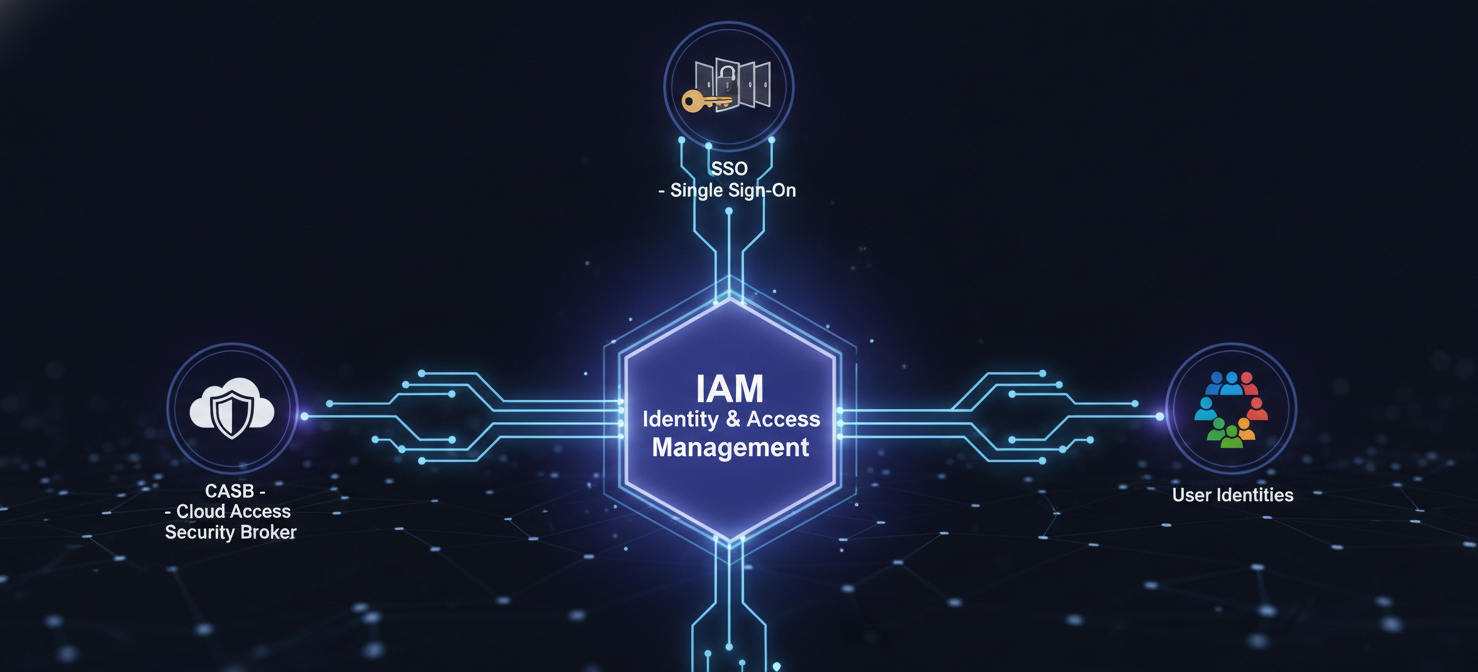
- Identity and Access Management (IAM): A modern IAM solution serves as the central hub for managing user identities and access policies. It allows you to create and enforce access rules, including MFA requirements, for a wide range of applications.
- Cloud Access Security Broker (CASB): A CASB is a powerful tool for discovering shadow IT and enforcing security policies on cloud services. It sits between your users and cloud providers, giving you visibility and control over data and applications, even those not officially sanctioned by IT.
- Single Sign-On (SSO): SSO solutions improve user experience by allowing employees to log in to multiple applications with a single set of credentials. When combined with MFA, SSO ensures that this convenient access is also highly secure.
Beyond Enforcement: Creating a Security-Aware Culture
Technology alone is not enough. To truly reduce the risks of shadow IT, you need to build a strong, security-aware culture. This means shifting from a purely restrictive mindset to one that enables employees to work securely and efficiently.

Start by getting leadership commitment. When executives prioritize security, it sends a powerful message throughout the organization. Furthermore, provide continuous training that is relevant and engaging. Instead of just listing rules, use real-world examples to show employees how their actions can impact security.
Finally, make it easy for employees to do the right thing. If the official, sanctioned tools are difficult to use, employees will naturally seek alternatives. By providing user-friendly, secure applications that meet their needs, you can reduce the temptation to turn to shadow IT. When employees understand the “why” behind security policies and feel like partners in protecting the organization, they become your strongest line of defense.
Conclusion
Shadow IT is not a problem that can be solved by simply blocking applications. Employees will always find new tools to enhance their productivity. Instead of fighting a losing battle, a proactive strategy of cloud MFA enforcement allows you to embrace this reality securely. By discovering unsanctioned applications and wrapping them with a non-negotiable layer of authentication, you regain control. This approach transforms MFA from a simple login requirement into a strategic tool that mitigates one of the most persistent risks in the modern cloud landscape. Ultimately, you can’t stop every shadow, but you can certainly make sure they have to knock twice.
If you’re ready to transform your shadow IT risks into controlled assets, explore how our platform works by choosing to start a free trial, or for a tailored walkthrough of its capabilities, you can book a demo with our team.
 7-day free trial