




That incredibly low monthly price for web hosting can seem like a fantastic deal. However, as many website owners discover, the initial price is often just the beginning of the story. The web hosting industry has a reputation for using attractive introductory offers to draw in customers, only for the total cost to climb significantly higher than anticipated. Understanding and identifying potential hosting provider hidden fees is crucial to creating a predictable budget and avoiding the frustration of overpaying for essential services. These unexpected charges can turn an affordable plan into a significant expense over time.
Key takeaways
- Renewal rates can be shocking. Many hosts increase prices by 200-500% after the initial promotional period ends. A plan advertised at $2.99/month could renew at $17.99/month or more.
- “Free” often means “free for the first year.” This applies to crucial features like domain names and SSL certificates, which can add $20 to $100 annually to your bill upon renewal.
- Essential services are frequently sold as add-ons. Expect to pay extra for daily backups, professional email accounts, and website security scans, which are rarely included in basic plans.
- Read the fine print on at least 3 key areas. Before purchasing, always verify the renewal prices for your hosting plan, domain name, and any included SSL certificates to understand the true long-term cost.
The Lure of the Low Price: Deconstructing the Initial Offer
The most common tactic in the web hosting industry is the deeply discounted introductory offer. Providers advertise a very low monthly rate that only applies to your first billing cycle, which is often a one- to three-year term that you must pay for upfront. The problem arises at renewal when the price reverts to the “regular” rate, which can be several times higher than the promotional price.
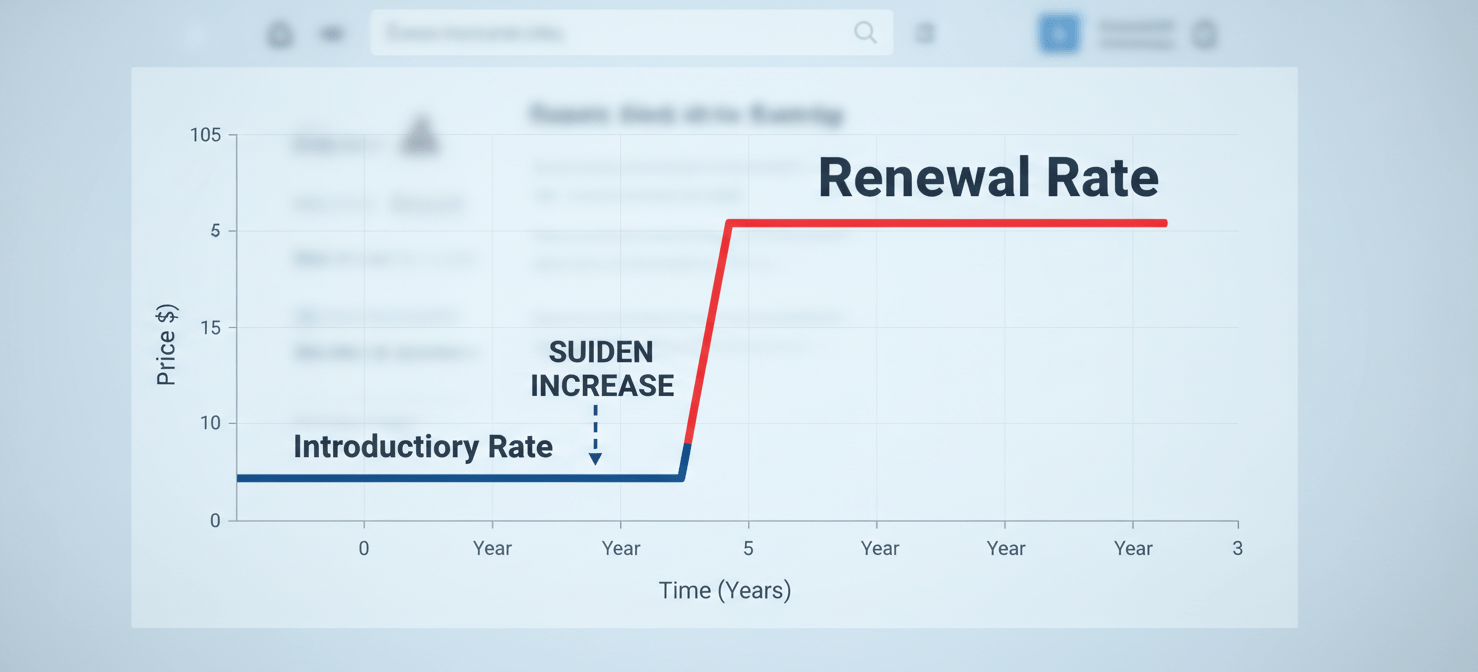
For example, a shared hosting plan might be advertised at $3.99 per month for the first three years. However, upon renewal, that same plan could jump to $9.99 per month or more. Some providers are even more aggressive; SiteGround’s StartUp plan, for instance, can jump from a low introductory rate to a renewal price of $17.99 per month. This business model relies on the fact that many customers will not notice the increase until it’s too late, or they will find the process of migrating to a new host too daunting to undertake.
The “Free” Domain Name Catch
Another common practice is offering a free domain name for the first year. While this seems like a great perk, it’s a classic example of a future hidden cost. Domain registration and web hosting are separate services, even if they are bundled together. After the first year, you will be required to pay a domain renewal fee, which is often inflated compared to standalone domain registrars. A domain that was free for the first year might renew at $18 to $22 annually, whereas a dedicated registrar might only charge $10 to $14 for the same .com domain.
This strategy creates a dependency. Your domain is tied to your hosting account, making it more complicated to move to a different provider if you are unhappy with the renewal costs. While transferring a domain is always possible, the perceived hassle is often enough to keep customers locked into higher-priced plans.
Common Hosting Provider Hidden Fees to Watch For
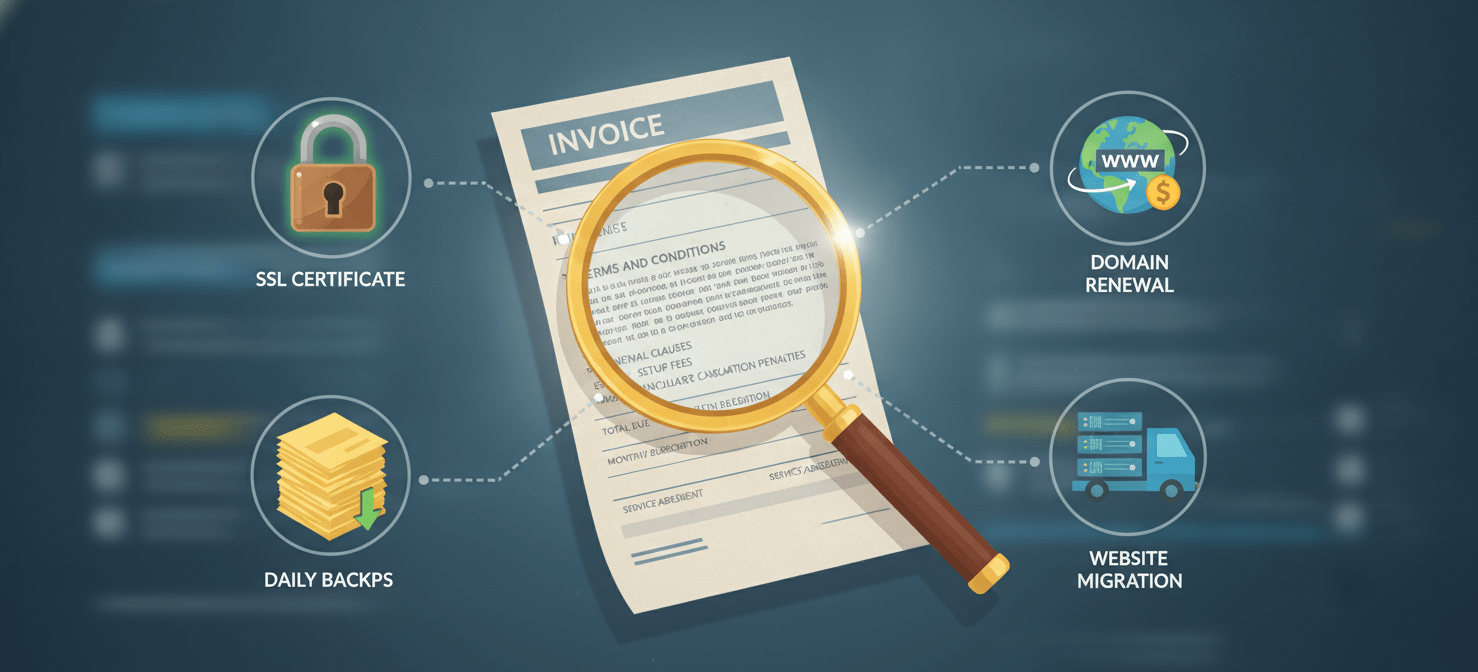
Beyond the headline price, a variety of fees can appear on your invoice. These charges are for services that many users assume are included but are often treated as optional, premium features. Being aware of these common hosting provider hidden fees is the first step toward avoiding them.
SSL Certificate Costs
An SSL certificate is non-negotiable for any modern website; it encrypts data between your server and a visitor’s browser and is essential for security and SEO. Many hosts advertise a “free SSL,” but this is often a basic, single-domain certificate that may not cover all your needs. In some cases, the free offer is only for the first year.
If you need to secure multiple subdomains (a Wildcard SSL) or multiple distinct domains, you will almost certainly have to pay. The costs for premium SSL certificates, such as those with Organization Validation (OV) or Extended Validation (EV), can range from around $50 to over $300 per year. Some providers, like GoDaddy, have been known to charge as much as $79.99 per year for a basic SSL after the promotional period.
Backup and Restoration Fees
You might assume that your hosting provider is regularly backing up your website data. While most do, the service offered in basic plans is often minimal. Backups might be taken weekly or monthly, not daily, and accessing them can come at a cost.
Many hosts charge a one-time fee to restore your site from one of their backups. Furthermore, if you want automated daily backups with a simple one-click restore feature, this is typically a premium add-on. For example, Bluehost offers a backup service called CodeGuard starting at an additional $2.99 per month. Without this, you could be left with an outdated backup or face a hefty fee in an emergency.
Website Migration Fees
If you are moving an existing website to a new host, the migration process can be a source of unexpected costs. While many hosting providers offer free migration to attract new customers, this service often comes with limitations.
A host might offer to migrate one website for free but charge for additional sites. Migrations from non-standard control panels or complex setups are also likely to incur a fee, often billed at an hourly rate. These fees can range from a flat rate of around $150 for a single site to hourly charges for more complex jobs. If you don’t confirm the terms of the migration service beforehand, you could face a surprise bill before your site is even live on the new server.
Beyond the Basics: Add-ons That Inflate Your Bill
Many hosting plans are stripped down to the bare essentials to achieve an attractive entry-level price. As a result, functionalities that are critical for running a professional website are often sold as separate add-ons. These extras can quickly double or triple your monthly hosting cost.

Professional Email Hosting
While some hosting packages include email accounts, the features are often very basic. If you need more storage, better security, or integrations with tools like Google Workspace, you will have to pay. For example, a professional email address linked to your domain might cost an additional $2 to $8 per month, per user. For a small team of five, this can add over $150 per year to your expenses just for email services.
Enhanced Security Features
Basic hosting plans typically come with a minimal level of security. Advanced features like a Web Application Firewall (WAF), malware scanning and removal, and DDoS protection are almost always premium add-ons. A service like SiteLock, which scans for malware, is a common upsell during the checkout process and can add another $3 to $30 per month to your bill. Neglecting these services can leave your site vulnerable, but the costs can add up significantly over the course of a year.
SEO Tools and Performance Boosters
During sign-up, you will likely be offered a variety of tools designed to improve your website’s performance and search engine ranking. These can include premium Content Delivery Networks (CDNs), advanced caching tools, or SEO plugins. While some of these tools can be valuable, many are overpriced versions of services you could configure yourself for less. For instance, Bluehost offers an add-on for Yoast SEO Premium, a popular WordPress plugin, which adds another monthly charge to your hosting bill.
How to Proactively Identify and Avoid Unexpected Hosting Charges
The best way to manage your hosting costs is to be proactive. By carefully researching and asking the right questions before you commit to a provider, you can avoid most of the common financial pitfalls.

Read the Fine Print (Especially Renewal Rates)
Before you enter your credit card information, find the provider’s page that details their renewal rates. Reputable companies will have this information available, though it may not be prominently displayed. Compare the introductory price to the renewal price for the specific plan you are considering. If a plan renews at 300% of the initial cost, you need to factor that into your long-term budget. Also, check the renewal costs for your domain name and any “free” SSL certificates.
Differentiate Between “Needs” and “Wants”
During the checkout process, hosting providers will present you with a long list of optional add-ons. Carefully evaluate each one. Do you really need automated daily backups right now, or can you manage with a manual backup plugin for a while? Is the provider’s SEO toolkit essential, or can you use free alternatives like Google Search Console? By being disciplined and only selecting the services you absolutely need at launch, you can keep your initial and ongoing costs under control.
Consider Separating Your Services
While bundling your domain and hosting with one provider is convenient, it’s not always the most cost-effective strategy. Registering your domain with a dedicated registrar like Namecheap or Porkbun can save you money on renewal fees and give you more flexibility if you decide to switch hosts later. Similarly, you can often find better deals on services like email hosting and security by purchasing them from specialized providers rather than through your web host.
What to Do If You’re Already Overpaying
If you are already stuck in a hosting plan with high renewal fees, you still have options. Don’t assume you have to accept the inflated costs.

First, contact your hosting provider’s support or billing department before your renewal date. Ask if they can extend your introductory rate or offer a loyalty discount. Many providers would rather offer a discount than lose a customer entirely, so a polite inquiry can often lead to a better price.
If negotiation doesn’t work, your best option is to migrate to a new host. Look for providers that offer transparent, fixed-rate pricing or have a smaller gap between their introductory and renewal rates. Many hosts also offer free migration services to make the process easier. While it requires some effort, moving your site can save you hundreds of dollars over the next few years. The short-term inconvenience is often well worth the long-term savings.
Conclusion
The world of web hosting is filled with tempting offers that can quickly lead to buyer’s remorse. The key to avoiding this is to look past the promotional price and understand the total cost of ownership. By being aware of the common hosting provider hidden fees, from steep renewal price hikes to costly add-ons for essential services, you can make a much more informed decision.
Always do your homework. Read the renewal terms, question the value of every upsell, and don’t be afraid to separate your services to get the best deal. A cheap hosting plan is only a good value if it stays that way. Otherwise, you’re just signing up for a future headache and an unexpectedly large bill. Your website is too important to be at the mercy of a pricing model designed to catch you off guard.
Ready to find a hosting solution that prioritizes transparency and predictable costs? You can easily explore a new provider by starting a free trial to experience their clarity firsthand, or book a demo to discuss your specific needs with their team.
 7-day free trial