



That recurring calendar alert for your Mobile Device Management (MDM) license renewal can feel like a budget headache waiting to happen. In a world of tightening IT spend, every line item is under scrutiny. Therefore, simply stating that the MDM is “necessary for security” often isn’t enough to get the renewal signed off without questions. A data-driven approach is essential to justify the cost and demonstrate its value. This is your guide to building a solid business case for your MDM license renewal.
Key takeaways
- An effective MDM can increase operational efficiency by up to 20% by automating tedious tasks and reducing IT support tickets.
- Justifying the renewal requires a four-step process: assess current usage, calculate the total cost of ownership (TCO), quantify the return on investment (ROI), and highlight the risks of non-renewal.
- The cost of not having an MDM can be significant, with potential expenses from data breaches, compliance fines, and lost productivity.
- Frame the renewal not as a cost, but as an investment in security, efficiency, and operational continuity.
Assess Your Current MDM Usage and Needs
Before you can justify the cost, you need a clear picture of how your organization uses the MDM platform. Start by gathering data. First, determine how many devices are currently enrolled. Are they corporate-owned, bring-your-own-device (BYOD), or a mix? Next, identify which features your team actively uses. Are you leveraging automated device enrollment, application management, security policy enforcement, or remote wipe capabilities?
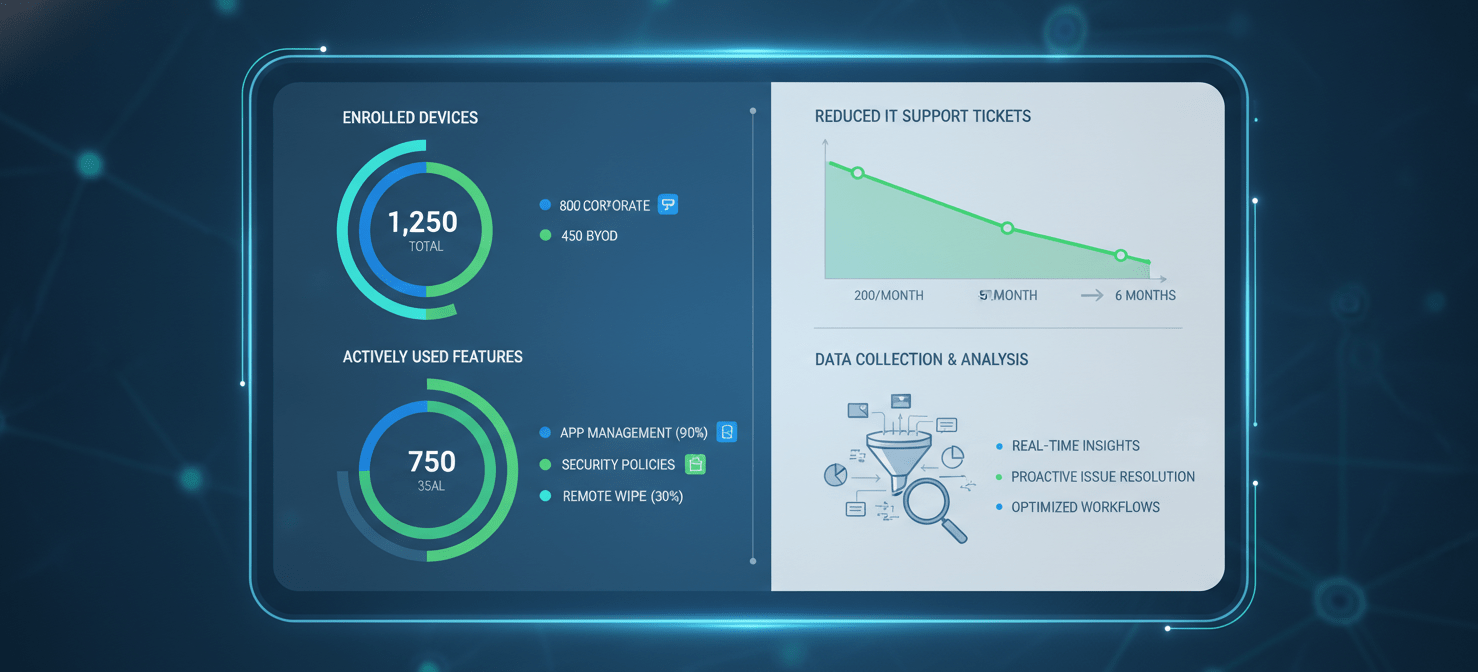
Furthermore, talk to your IT support team. Analyze support ticket data to see how the MDM reduces the burden on your helpdesk. For example, automated configurations and remote troubleshooting can significantly cut down on the time spent manually setting up or fixing devices. This initial assessment provides the foundational data for the rest of your business case.
Calculate the Total Cost of Ownership (TCO)
The license fee is only one part of the equation. To present an accurate financial picture, you must calculate the Total Cost of Ownership (TCO). This includes all direct and indirect costs associated with the MDM solution.

Direct and Indirect Costs
Direct costs are the straightforward expenses. This includes the subscription or license fee itself. It also covers any costs for implementation, initial setup, and specialized training for your IT staff.
Indirect costs, while less obvious, are equally important. Consider the time your IT team spends managing and maintaining the MDM platform. This includes tasks like creating policies, monitoring for compliance, and generating reports. While these are necessary activities, they represent staff hours that should be factored into the overall cost.
Quantify the ROI of Your MDM Solution
With your usage data and TCO calculated, you can now demonstrate the return on investment (ROI). This is where you translate the benefits of the MDM into tangible financial figures. The goal is to show that the money saved and the risks avoided outweigh the license cost.
Savings from Increased Efficiency
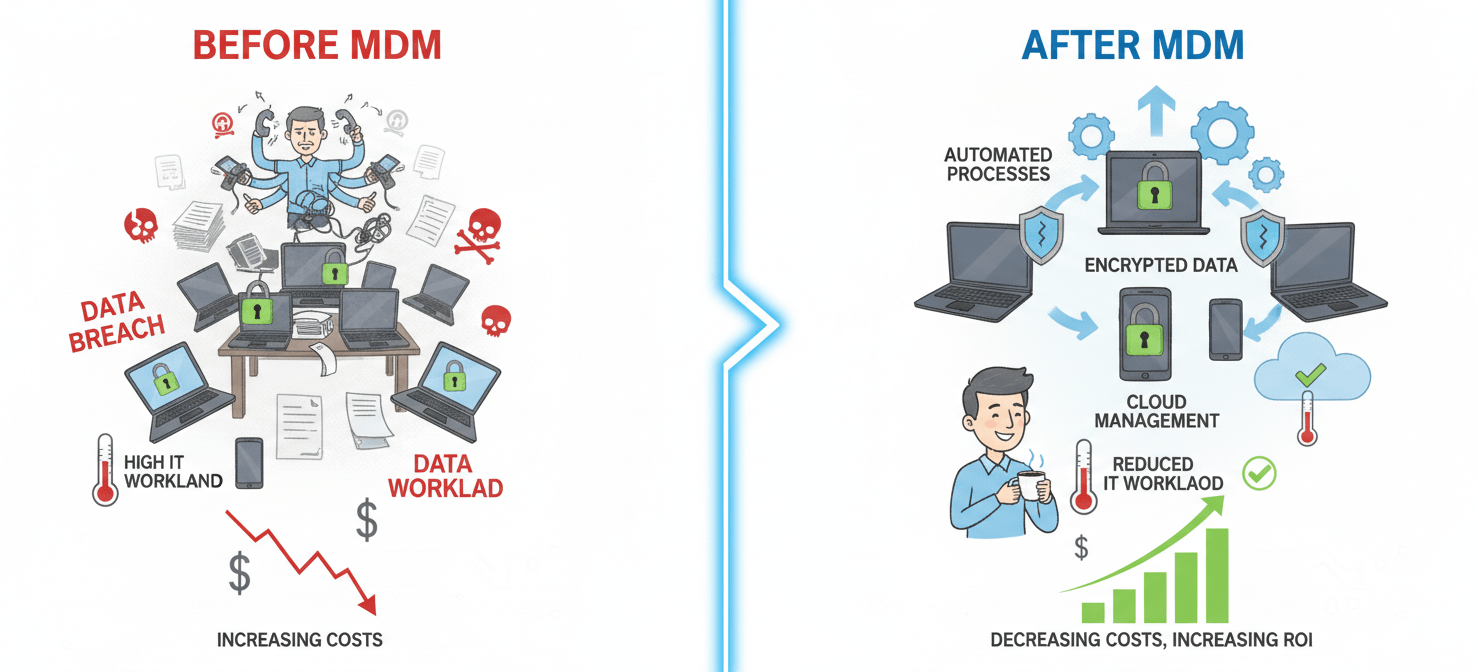
An MDM solution automates many time-consuming tasks, freeing up your IT team for more strategic initiatives. Calculate the time saved on manual device configuration, software updates, and troubleshooting. For instance, if your MDM saves an IT administrator five hours per week and their hourly rate is $50, that’s a savings of $13,000 per year. Automating tasks like OS updates and app installations across the entire fleet with a single click saves significant time and ensures consistency.
Cost Avoidance Through Enhanced Security
The security features of an MDM are one of its most critical selling points. A lost or stolen device without remote wipe capabilities is a significant data breach risk. The average cost of a data breach can be substantial, not to mention the reputational damage. By enforcing security policies like strong passcodes, data encryption, and the ability to remotely lock or erase a device, the MDM acts as a crucial insurance policy. This is a powerful argument, especially in industries with strict regulatory compliance requirements.
Highlight the Risks of Non-Renewal
After showcasing the positive ROI, the next step is to outline the consequences of not renewing the license. This isn’t about fear-mongering; it’s about presenting a realistic picture of the potential downsides. This part of the discussion addresses the “what if we just cancel it?” question head-on.
Without an MDM, your organization would face significant security vulnerabilities. Devices would lack centralized security policies, making them more susceptible to malware and unauthorized access. Furthermore, the IT team’s workload would increase dramatically as they would have to manage, update, and secure each device manually. This leads to decreased productivity for both IT staff and the end-users who may experience longer downtime. Finally, for organizations in regulated industries, the lack of an MDM can lead to non-compliance and hefty fines.
Present a Data-Driven Business Case for Your MDM License Renewal
Now it’s time to bring everything together into a compelling business case. Your presentation to decision-makers should be clear, concise, and focused on the data you’ve gathered. Start with a summary of your findings, including the TCO and ROI calculations. Use clear charts and graphs to visualize the cost savings and efficiency gains.

When discussing the “is Intune license worth it” question or any other SaaS renewal decision, frame it in terms of value, not just cost. Emphasize that the MDM is not just an IT tool but a business enabler that supports a secure and productive mobile workforce. Be prepared to answer questions about alternative solutions, but use your research to demonstrate why the current solution remains the most cost-effective and suitable option for your organization’s specific needs.
In conclusion, justifying your MDM license renewal requires a shift from a cost-based conversation to a value-based one. By thoroughly assessing your usage, calculating the true cost and return on investment, and clearly articulating the risks of non-renewal, you can build a powerful, data-driven argument. This approach transforms the renewal from a routine expense into a strategic investment in your organization’s security and efficiency. Ultimately, a well-managed MDM platform is less of a cost center and more of a silent, diligent employee working 24/7 to keep your mobile fleet secure and productive.
To ensure you’re always making the most informed decisions about your technology investments, consider exploring how Binadox can help. You can try Binadox free to get started or book a demo for a personalized walkthrough of its capabilities.
 7-day free trial