



Choosing the right AWS pricing model for your EC2 instances can feel like a high-stakes decision, directly impacting your cloud spending. Both Reserved Instances (RIs) and Savings Plans (SPs) offer significant discounts over On-Demand pricing, but they operate on different commitment models. Understanding the core differences in the reserved instance vs savings plan debate is crucial for optimizing costs without sacrificing necessary flexibility. This article breaks down how each model works, their ideal use cases, and how to decide which is the better fit for your team’s EC2 workloads.
Key takeaways
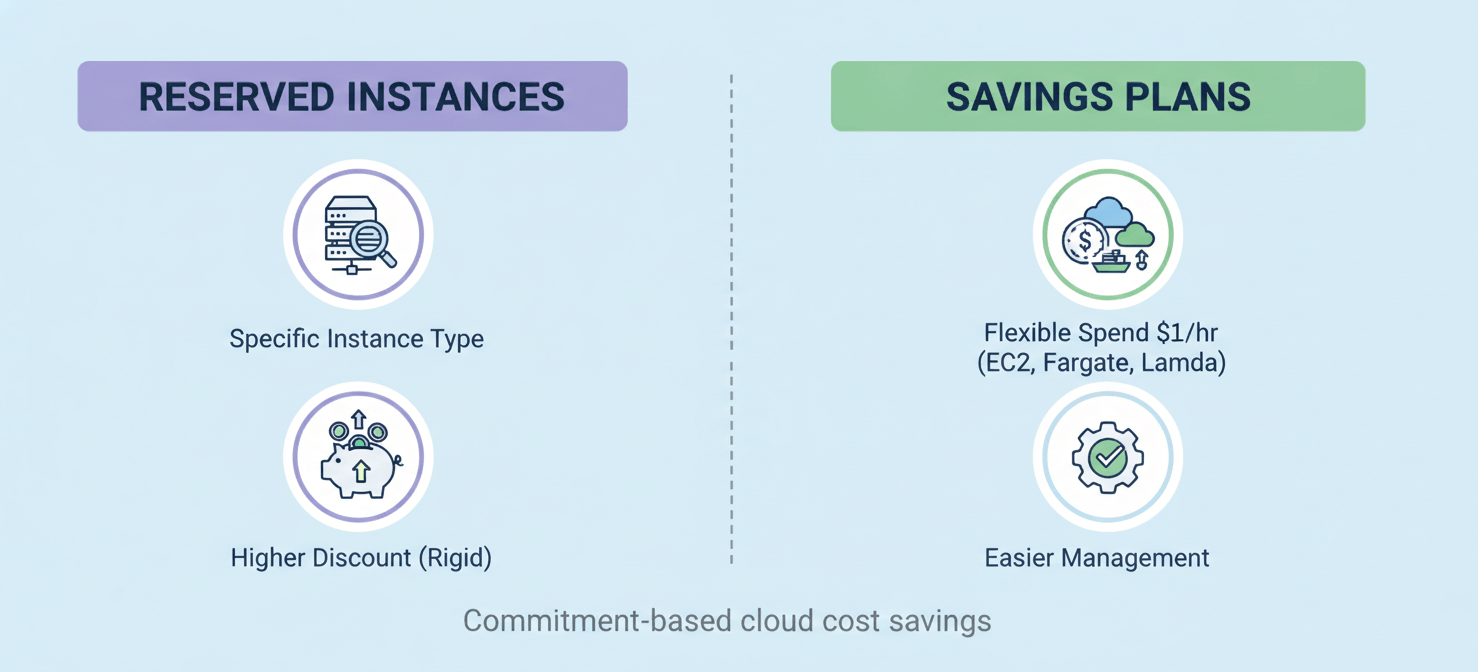
- Flexibility vs. Discount: Savings Plans offer greater flexibility by committing to a dollar/hour spend, while Standard Reserved Instances offer the highest potential discount (up to 72%) for a commitment to a specific instance family.
- Commitment Type: Savings Plans are a commitment to a consistent hourly spend ($/hour), whereas Reserved Instances are a commitment to use a specific instance configuration.
- Coverage: Compute Savings Plans are the most versatile, applying discounts automatically across EC2, Fargate, and Lambda, regardless of region or instance family. RIs only cover EC2 usage.
- Capacity Reservation: Standard and Convertible RIs can provide a capacity reservation in a specific Availability Zone, which Savings Plans do not.
What Are Reserved Instances?
A Reserved Instance (RI) is not a physical server but a billing discount applied to your account. In exchange for committing to a specific EC2 instance configuration for a one- or three-year term, you receive a significant discount compared to On-Demand rates. This commitment is highly specific: you define the instance family (e.g., m5), instance size (e.g., xlarge), AWS Region, operating system, and tenancy. If your active EC2 usage matches these attributes, the discount is applied automatically.

Types of Reserved Instances
There are two main types of RIs to consider, each offering a different balance of discount and flexibility.
- Standard RIs: These offer the deepest discounts, potentially up to 72% off On-Demand prices. However, they are the most rigid. You cannot change the instance family, OS, or region after purchase. Standard RIs are best for workloads that are extremely stable and predictable. If your needs change, you can attempt to sell your Standard RI on the AWS Reserved Instance Marketplace.
- Convertible RIs: These provide a lower discount (up to 66%) but allow you to exchange the reservation for one with different attributes, such as a new instance family or operating system, as long as the new RI is of equal or greater value. This makes them suitable for workloads that might evolve over the commitment term.
What Are Savings Plans?
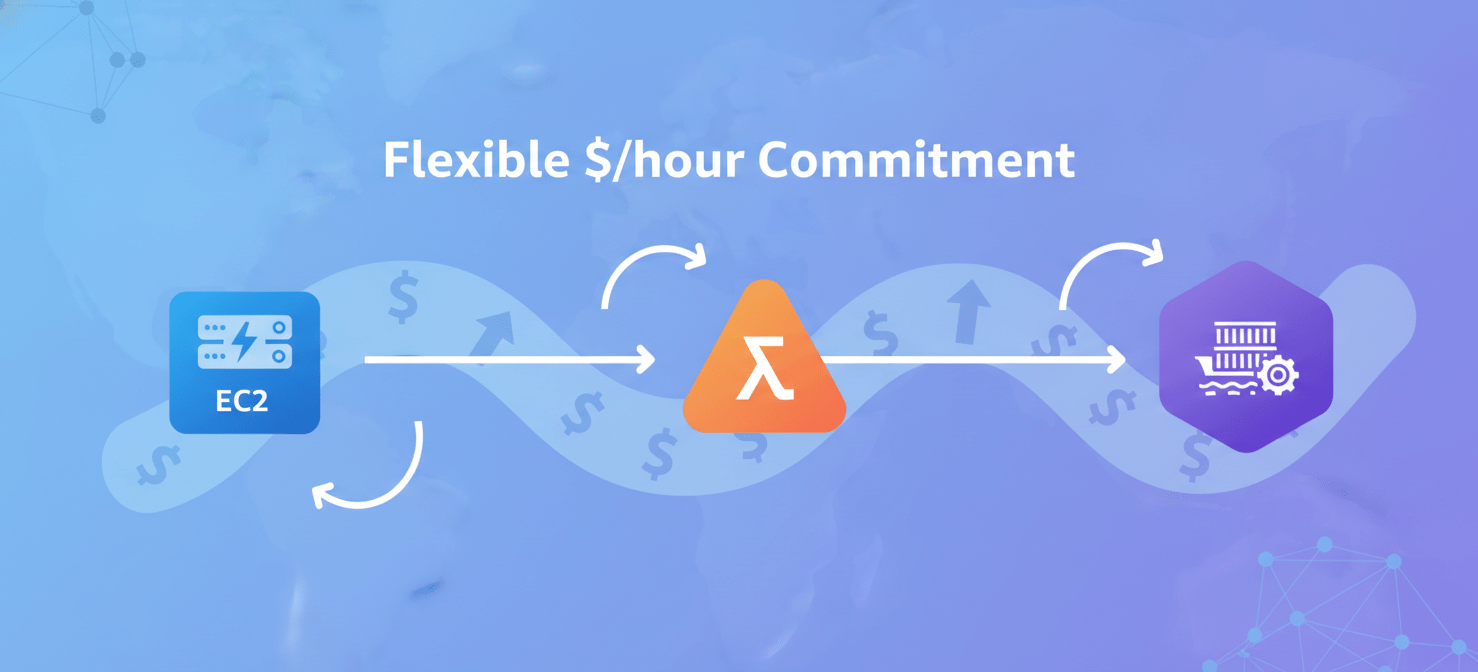
Introduced as a more flexible alternative to RIs, Savings Plans also offer lower prices in exchange for a one- or three-year usage commitment. The fundamental difference is the nature of the commitment. Instead of committing to a specific instance configuration, you commit to spending a certain dollar amount per hour on compute usage. Any usage up to your committed hourly spend is covered by the Savings Plan discount. Usage beyond that is billed at the standard On-Demand rate.
Types of Savings Plans
AWS offers two primary types of Savings Plans, each catering to different needs for flexibility and savings.
- EC2 Instance Savings Plans: This plan offers the deepest discounts, up to 72% (the same as Standard RIs), but with more flexibility. You commit to a specific instance family in a particular region (e.g., c6g in us-east-1). However, the discount automatically applies to any size, operating system, or tenancy within that family and region. This is ideal if you know you’ll stick with an instance family but want the freedom to right-size your instances.
- Compute Savings Plans: Offering the ultimate flexibility, Compute Savings Plans provide discounts of up to 66%. The discount automatically applies to any EC2 instance usage globally, regardless of instance family, size, region, OS, or tenancy. Furthermore, it also covers usage on AWS Fargate and AWS Lambda, making it perfect for dynamic environments or those using a mix of compute services.
Reserved Instance vs Savings Plan: A Head-to-Head Comparison
When evaluating AWS RI vs SP, the best choice depends entirely on your workload’s predictability and your need for flexibility. Let’s compare them directly across several key factors.
Flexibility
Savings Plans are the clear winner in terms of flexibility. A Compute Savings Plan follows your usage wherever it goes—across instance families, regions, and even to other services like Fargate and Lambda. An EC2 Instance Savings Plan allows you to change instance sizes within a family. RIs, particularly Standard RIs, are rigid; changing your instance family means losing the discount.
Discount Potential
For the absolute highest discount on a specific, unchanging workload, a Standard Reserved Instance offers savings of up to 72%. EC2 Instance Savings Plans match this discount potential. However, the realized savings often depend more on utilization. A slightly less discounted but fully utilized Compute Savings Plan will save more money than a deeply discounted but underused Standard RI.
Management Overhead
Savings Plans are simpler to manage. You set your hourly spend commitment, and AWS automatically applies the discount to eligible usage. Reserved Instances require more hands-on management. You must ensure your running instances precisely match the RI specifications. Convertible RIs require you to manually perform exchanges if your needs change.
Capacity Reservation
This is a key area where RIs have a distinct advantage. A Standard or Convertible RI purchased for a specific Availability Zone (a zonal RI) provides a capacity reservation. This guarantees you can launch that specific instance type even when capacity is constrained. Savings Plans do not include a capacity reservation.
When to Choose Reserved Instances
Despite the flexibility of Savings Plans, Reserved Instances remain the superior choice in a few specific scenarios:
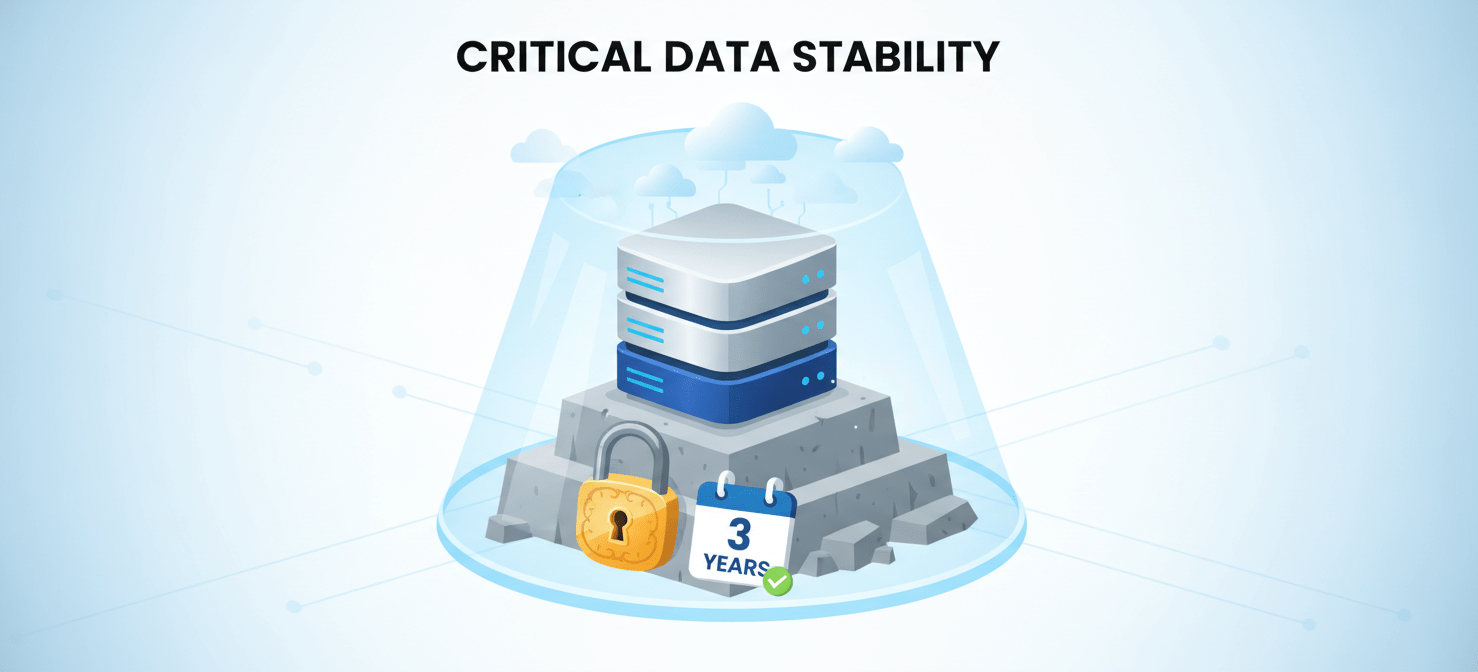
- Maximum Savings on Stable Workloads: If you have a workload with extremely predictable, long-term needs (e.g., a database or legacy application that will run on the same instance type for 3+ years), a 3-year, All Upfront Standard RI will provide the maximum possible discount.
- Guaranteed Capacity is Critical: For mission-critical applications where the ability to launch specific instances in a particular Availability Zone is non-negotiable, the capacity reservation offered by a zonal RI is essential.
- Resale Option is Desired: If your plans change unexpectedly, Standard RIs can be sold on the RI Marketplace, allowing you to recoup some of the cost. Savings Plans cannot be sold.
When to Choose Savings Plans
For most modern, dynamic cloud environments, Savings Plans are the recommended and more practical option.
- Your Workloads Are Evolving: If your team frequently right-sizes instances, adopts new instance families, or migrates between regions, a Compute Savings Plan provides continuous discount coverage without needing manual changes.
- You Use Fargate or Lambda: If your architecture includes serverless components like AWS Fargate or Lambda, only a Compute Savings Plan can provide discount coverage for that usage.
- Simplicity is a Priority: Savings Plans are a “set it and forget it” model. This reduces management overhead and the risk of leaving a purchased discount unused because of a minor configuration change.

Conclusion
The “reserved instance vs savings plan” decision is not about finding a single winner but about aligning the pricing model with your operational reality. Reserved Instances are powerful tools for deep savings on predictable, static workloads and are the only way to secure a capacity guarantee. However, their rigidity can turn into wasted spend if your infrastructure needs change. For most teams, Savings Plans offer a much better balance. They provide comparable savings with far greater flexibility, automatically adapting to changes in instance size, family, and even compute service. Before committing to either, analyze your past usage with AWS Cost Explorer. For stable, predictable baselines, an RI might offer the edge. For everything else, a Savings Plan is likely the more prudent, flexible, and ultimately cost-effective choice.
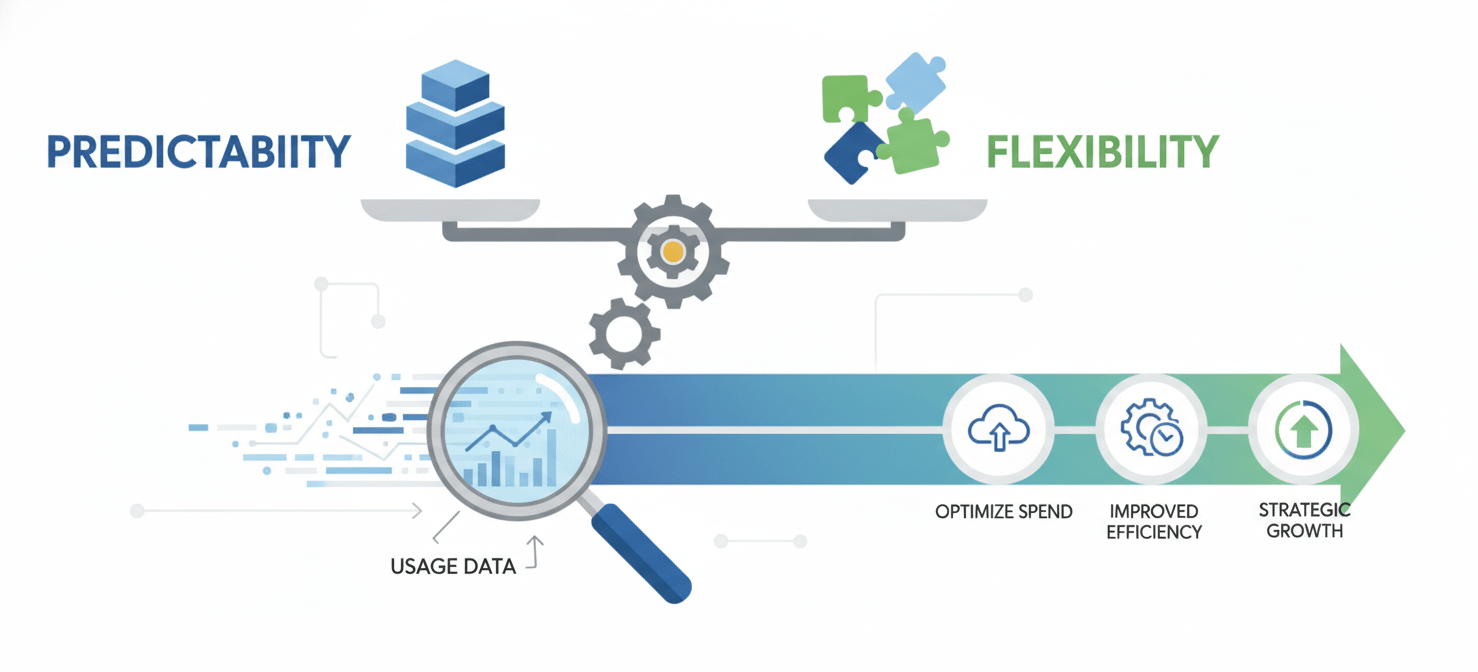
To confidently navigate these complex choices and ensure optimal cloud spend, discover how Binadox can streamline your cost management; you can explore our platform with a free trial or see a personalized demonstration of its capabilities.
 7-day free trial