



Managing software licenses with spreadsheets is a common practice, but it’s often a losing battle. As your organization grows, so does the complexity of its software portfolio. Before long, that once-manageable spreadsheet becomes a tangled web of outdated information, leading to wasted spending and compliance risks. A dedicated software license tracking tool provides the clarity and automation needed to regain control. Instead of manually updating rows and columns, you can automate discovery, monitor usage, and receive timely alerts for renewals, turning a reactive chore into a proactive strategy.
Key takeaways
- Manual tracking in spreadsheets can lead to significant overspending; companies can reduce software costs by up to 30% in the first year of implementing a software asset management tool.
- A dedicated tool automates key tasks like license discovery, usage monitoring, and renewal alerts, saving countless hours.
- Effective software license management involves three main steps: centralizing inventory, optimizing usage, and planning for renewals.
- Look for features like automated discovery, a centralized dashboard, usage analytics, and integration capabilities in a software license tracking solution.
The Hidden Costs of Manual Software License Tracking
Relying on spreadsheets for software license tracking might seem cost-effective initially, but the hidden costs quickly add up. These manual systems are prone to human error, creating significant financial and operational risks. Without a clear, automated view of your software assets, your organization is likely losing money and exposing itself to unnecessary danger.
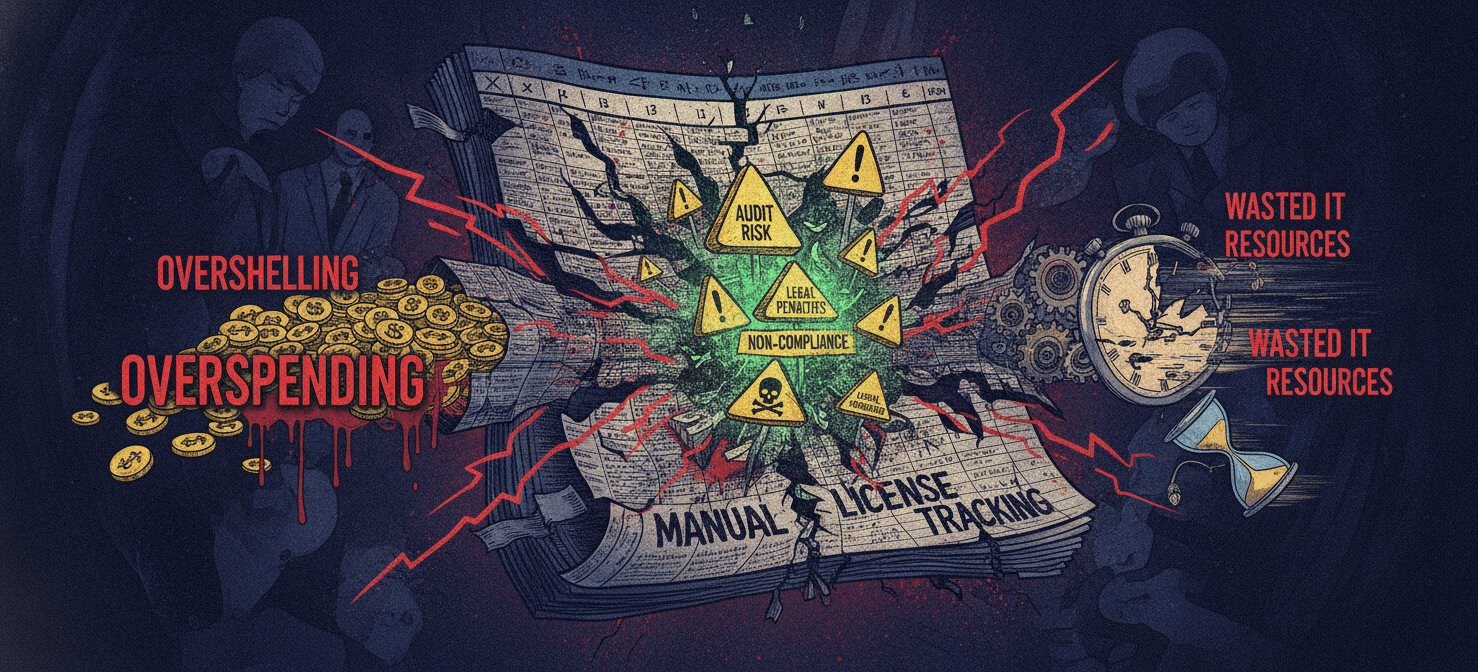
First, there’s the issue of overspending. When you don’t know what software is installed or how it’s being used, you inevitably pay for licenses that are no longer needed. This includes “shelfware”—software that is purchased but never deployed—and redundant applications serving the same purpose across different departments. Furthermore, failing to track renewal dates often leads to automatic renewals at unfavorable terms or last-minute purchases at inflated prices. This reactive approach to software renewal tracking prevents any opportunity for strategic negotiation.
Next, consider the compliance risks. Software vendors conduct audits to ensure customers are adhering to their licensing agreements. If an audit reveals non-compliance—for instance, more users than licenses—the penalties can be severe. These fines can range from thousands to millions of dollars, not to mention the reputational damage that comes with it. A spreadsheet offers no reliable way to track different license types (per user, per device, concurrent) or their specific terms, making it nearly impossible to guarantee compliance.
Finally, manual tracking is a significant drain on IT resources. Your team spends valuable hours chasing down purchase orders, cross-referencing installation records, and manually updating spreadsheets. This is time that could be spent on strategic initiatives that drive business value. As a result, the tedious nature of manual tracking leads to an outdated and unreliable software license tracking database, defeating its own purpose.
What to Look For in a Software License Tracking Tool
Choosing the right software license tracking tool is about finding a solution that replaces manual effort with intelligent automation. The goal is to move beyond simple inventory and gain actionable insights into your software environment. An effective tool provides a single source of truth, helping you optimize costs, ensure compliance, and streamline operations.
Core Features of an Effective Solution
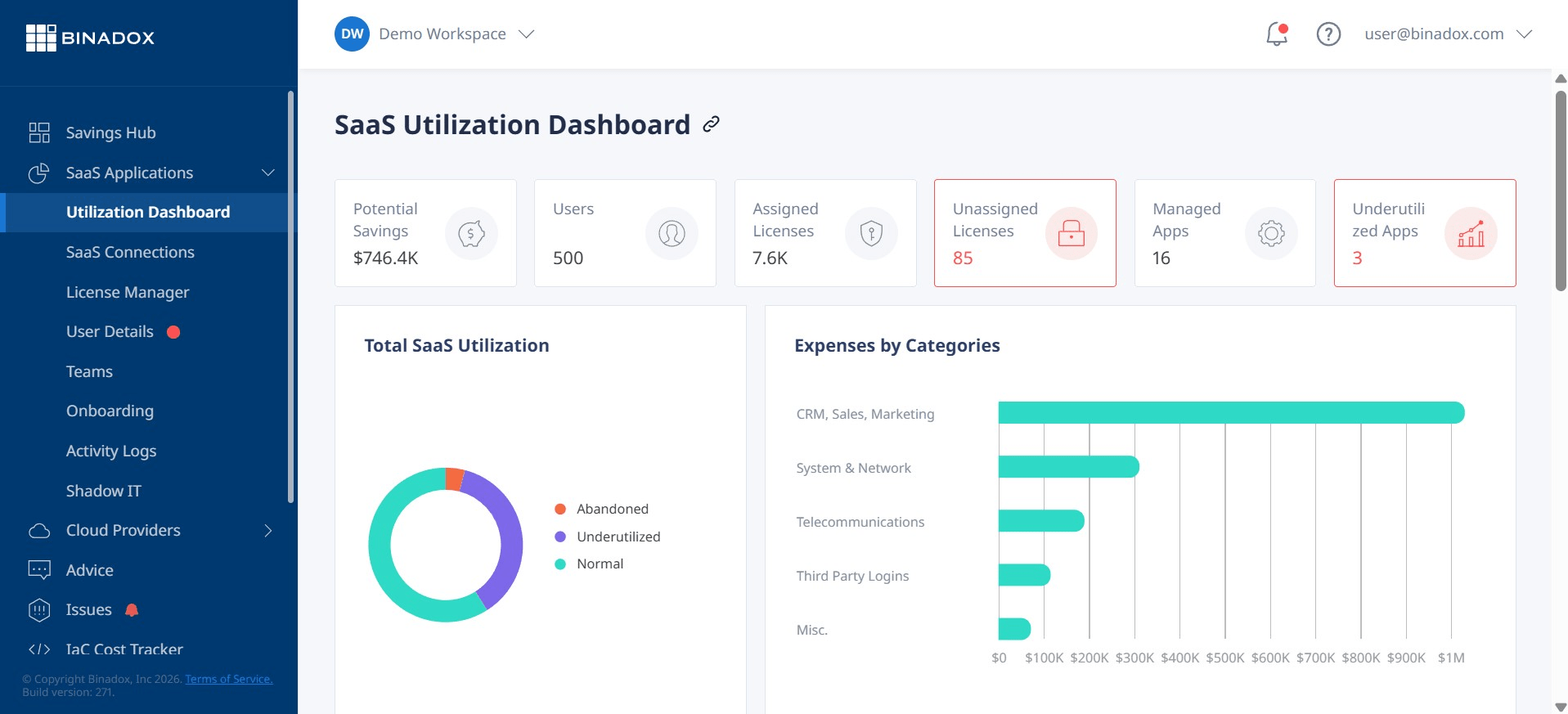
A robust platform should offer several key features. First, look for automated discovery and inventory. The tool should be able to scan your network automatically to find all installed software, eliminating blind spots and the need for manual data entry. This creates a comprehensive and always-current inventory of your assets.
Second, a centralized dashboard is essential. It should present a clear overview of all your licenses, including purchase dates, renewal deadlines, costs, and assigned users. This allows you to see your entire software landscape at a glance. In addition, look for robust reporting and analytics. The ability to generate reports on license usage, spending trends, and compliance status is critical for making informed decisions. For example, usage analytics can identify underutilized licenses that can be harvested and reallocated, directly reducing software spend.
Finally, consider integration capabilities. The tool should integrate with other IT systems, such as IT service management (ITSM) and procurement platforms. This creates a more connected and efficient IT ecosystem, where software asset data can be leveraged across different functions. Proactive alerts for upcoming renewals and potential compliance issues are another must-have, ensuring you never miss a critical deadline.
How to Implement a Software License Management Strategy
Adopting a software license tracking tool is the first step; integrating it into a broader strategy ensures long-term success. An effective software license management (SLM) strategy is a continuous process, not a one-time project. It involves creating clear policies, defining roles, and leveraging your new tool to its full potential.
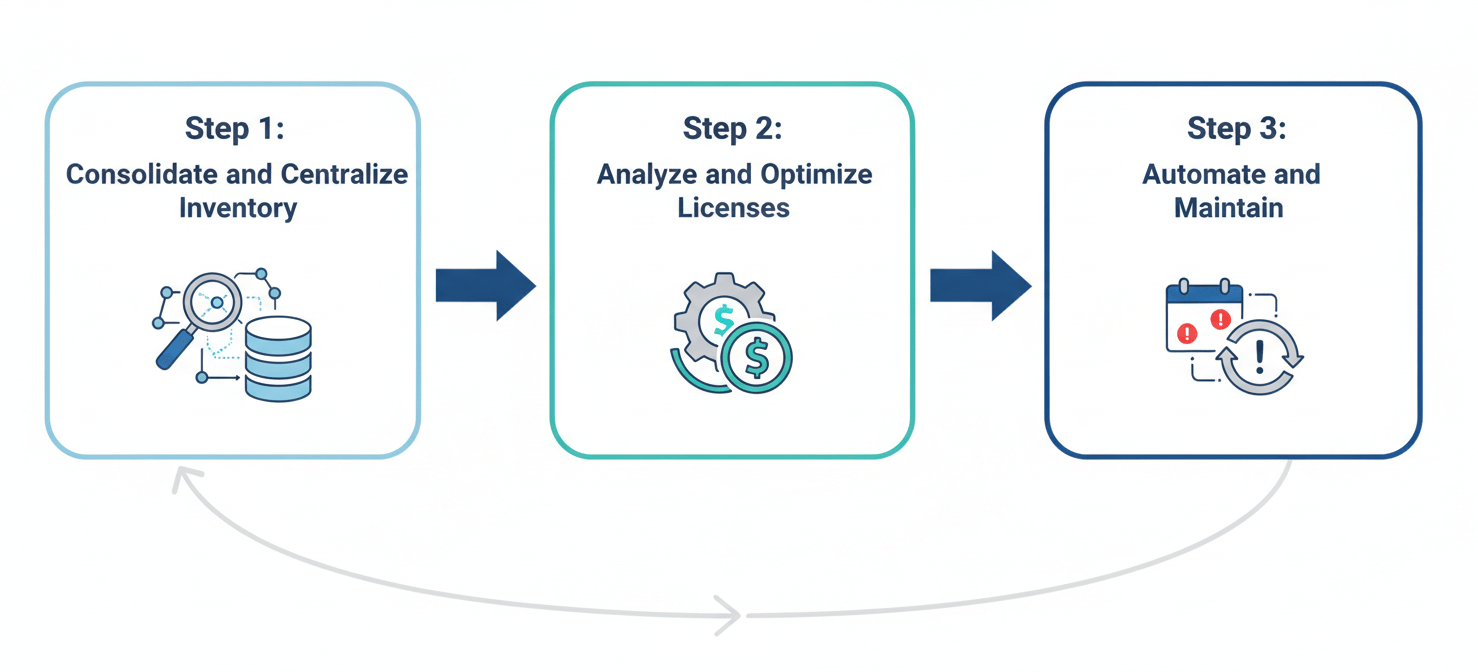
Step 1: Consolidate and Centralize Your Inventory
The initial phase is to get a complete picture of your software assets. Use your tool’s automated discovery features to scan every device on your network, from servers to laptops. This process will likely uncover software you didn’t know you had. Once the data is collected, centralize it within your software license tracking database. This involves uploading all existing license agreements, purchase orders, and entitlement information. The result should be a single, reliable record of every software asset your organization owns and its corresponding license.
Step 2: Analyze and Optimize Your Licenses
With a complete inventory, you can begin the optimization process. Use the tool’s analytics to identify opportunities for cost savings. Start by identifying unused or underutilized software. These licenses can be reclaimed and redeployed to new users, avoiding the need for new purchases. Next, look for redundant applications where multiple software titles serve the same function. Consolidating these onto a single standard can lead to significant savings through volume discounts. This is also the time to review your license agreements. Ensure you are using the correct license type for each application and user, as misalignment can lead to overspending or non-compliance.
Step 3: Automate and Maintain
The final step is to establish an ongoing process for managing your software assets. Configure your tool to send automated alerts for all upcoming contract and license renewals. This gives your team ample time—ideally 90 days—to review usage, assess future needs, and negotiate favorable terms with vendors. You should also establish clear policies for software requests, approvals, and deployment. By integrating your software license tracking tool with your IT service desk, you can automate this workflow, ensuring that every new piece of software is properly licensed and tracked from day one.
Conclusion
Clinging to spreadsheets for software license management is an exercise in futility. It’s an outdated method that introduces unacceptable levels of risk and cost into a modern organization. The errors, wasted hours, and compliance vulnerabilities inherent in manual tracking are not just minor inconveniences; they are significant business liabilities. A dedicated software license tracking tool provides the necessary automation and centralized control to manage these complex assets effectively. By moving beyond spreadsheets, you’re not just buying a new piece of software; you are adopting a strategy that protects your budget, secures your operations, and frees your IT team to focus on what truly matters. The choice isn’t whether to manage your software licenses, but whether you’ll continue doing it badly.
To move beyond the liabilities of manual tracking and truly gain control over your software assets, you can easily try Binadox free or book a demo to experience how a dedicated tool can transform your operations.
 7-day free trial