



As digital commerce grows, so does the risk of financial loss from bad actors. For businesses, this threat is significant, with U.S. companies losing an average of 9.8% of their revenue to fraud. Effective fraudulent transaction detection is no longer optional; it’s a core business necessity. Understanding the signs of a fraudulent payment and implementing robust prevention strategies are critical to protecting your revenue and maintaining customer trust. This article provides a practical guide to identifying suspicious activities and building a strong defense against payment fraud.
Key takeaways
- For every dollar lost to fraud, U.S. merchants incur an average cost of $4.61 when accounting for fees, operational costs, and lost merchandise.
- Implementing a multi-layered security approach that combines employee training, clear internal processes, and advanced technology can significantly reduce your risk.
- AI-powered fraud detection tools can analyze thousands of data points in real-time to identify and block suspicious transactions before they are completed.
- Regularly reviewing and updating your fraud prevention strategies is crucial, as fraudsters constantly evolve their tactics.
Common Red Flags of a Fraudulent Transaction
Spotting suspicious transactions early is the first line of defense. While fraudsters’ methods are always changing, certain behaviors and transaction characteristics frequently indicate a problem. Your team should be trained to recognize these warning signs.
Inconsistent Order Information
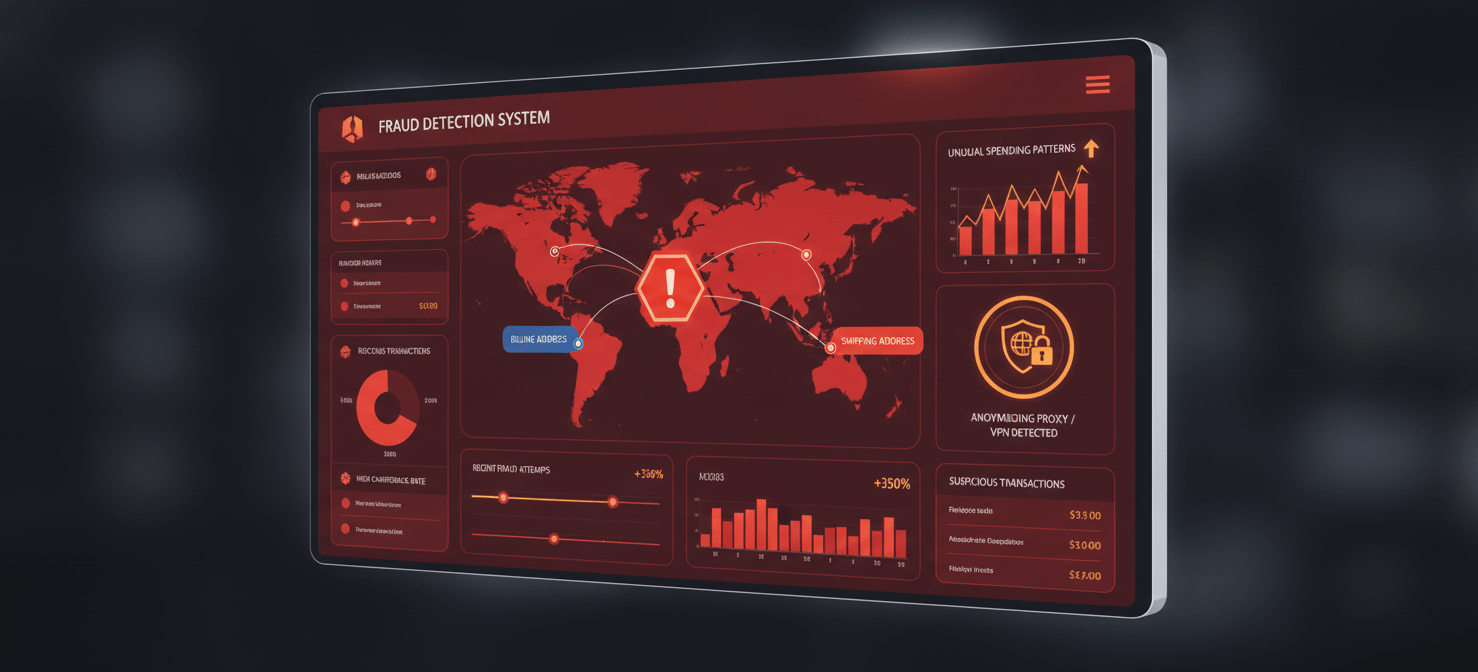
One of the most common red flags is mismatched information. For example, pay close attention when a customer’s shipping address is different from their billing address, especially if the locations are unusually far apart. An IP address that doesn’t align with either the billing or shipping address is another significant indicator of potential fraud. While there are legitimate reasons for these discrepancies, they warrant a closer look.
Unusual Customer and Transaction Behavior
Sudden changes in purchasing habits can signal a compromised account. Be wary of unusually large orders or a rapid series of smaller purchases made in a short time. Fraudsters often test stolen card numbers with small transactions before attempting a larger one. Another tactic is a “velocity attack,” where a fraudster attempts many transactions quickly from one account or IP address. Also, customers who seem overly eager to complete a sale without regard to product details or price, or who request last-minute changes to the shipping address after the order is placed, should raise suspicion.
Suspicious Technical Details
The technical data associated with a transaction can reveal a lot. For instance, transactions made through anonymizing proxies or VPNs are often used by fraudsters to hide their location. The use of a newly created email address or one from a free, temporary service can also be a red flag. Furthermore, multiple orders from different credit cards but a single device or IP address strongly suggest fraudulent activity.
Proactive Strategies for Payment Fraud Prevention
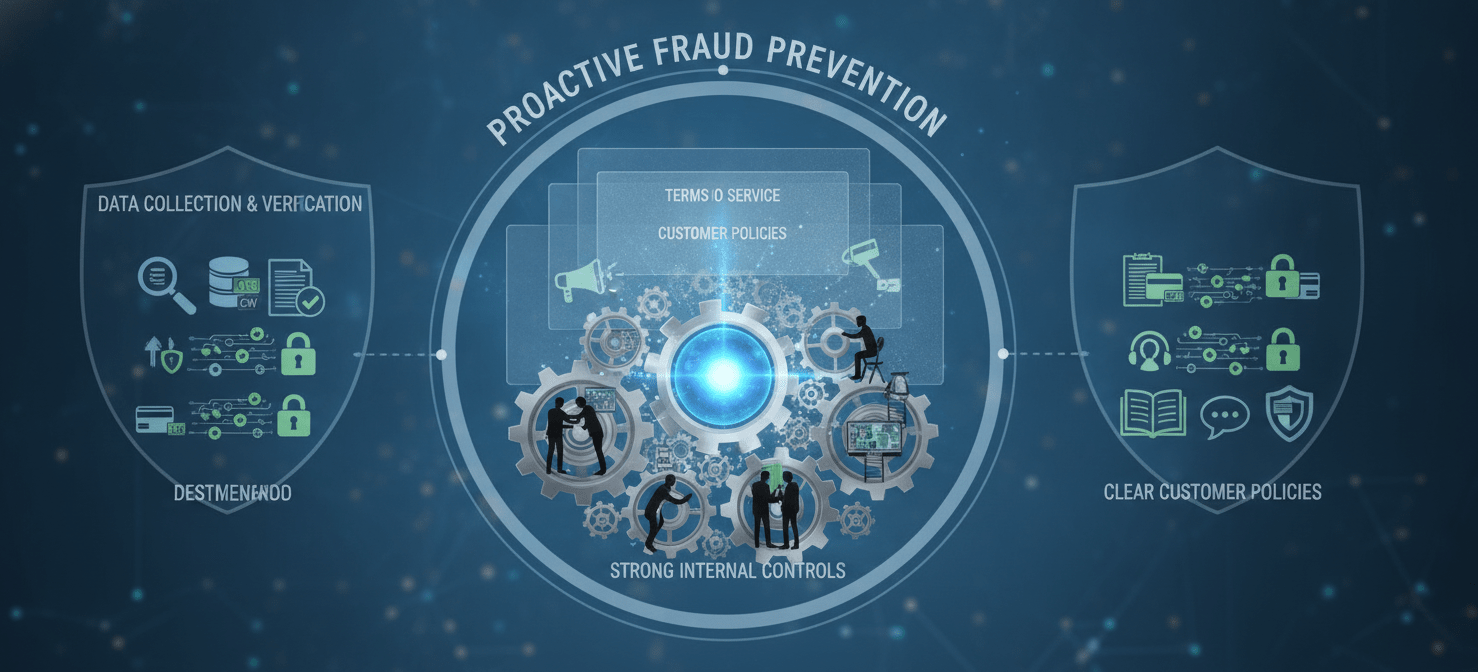
A reactive approach to fraud is a losing battle. Instead, you should build a proactive framework of policies and procedures to prevent fraudulent transactions before they happen. This involves a combination of smart internal controls and clear customer-facing policies.
Strengthen Internal Controls
Strong internal processes are foundational to payment fraud prevention. A key practice is the segregation of duties, which ensures that no single person controls a financial transaction from beginning to end. For example, the employee who authorizes payments should not be the same one who processes them. It’s also wise to implement dual control for payments, requiring two individuals to approve any fund transfer. Additionally, conducting thorough background checks on employees who will have financial responsibilities can help prevent internal fraud.
Implement Clear Customer Policies
Transparency with your customers can prevent misunderstandings that sometimes lead to chargebacks. Make your customer service contact information easy to find on your website. Clearly state your refund, cancellation, and terms of service policies and require customers to agree to them before completing a purchase. For physical goods, always use shipping services that provide tracking information and delivery confirmation. This helps protect your business from false claims of non-delivery.
Collect and Verify Customer Data
Collecting comprehensive information during checkout is a simple yet effective fraud prevention measure. Always require the full billing address and the Card Verification Value (CVV). An Address Verification Service (AVS) check compares the numeric parts of the billing address with the card issuer’s records, while a CVV match confirms the customer has the physical card. While not foolproof, mismatches in this data are strong indicators of fraud.
Leveraging Technology for Fraudulent Transaction Detection
While manual review is important, technology is essential for scaling your fraudulent transaction detection efforts. Modern tools use advanced analytics and artificial intelligence to spot complex fraud patterns in real-time.

AI and Machine Learning Systems
Artificial intelligence (AI) and machine learning (ML) have become indispensable in the fight against fraud. These systems analyze vast datasets, learning the patterns of normal customer behavior to identify anomalies that suggest fraud. For example, an AI model can analyze signals like transaction time, location, amount, device fingerprint, and IP address to generate a risk score for each transaction. This allows you to automatically block high-risk payments or flag them for manual review.
Behavioral Analytics and Biometrics
Behavioral analytics tools monitor how a user interacts with your website or app, analyzing things like typing speed, mouse movements, and device orientation. This creates a unique behavioral profile for each user, making it harder for fraudsters to impersonate them even if they have stolen login credentials. Furthermore, the use of biometric authentication, such as fingerprint or facial recognition, is growing as a highly secure method for verifying identity.
Geolocation and IP Intelligence
Geolocation tools can identify where a transaction is originating from by analyzing the device’s IP address. This helps in spotting high-risk transactions, such as those coming from locations with a history of fraudulent activity or those that don’t match the customer’s stated address. These tools can also detect the use of proxies or VPNs, which are often employed by criminals to mask their true location.
Responding to a Suspected Fraudulent Transaction
Even with the best prevention measures, some suspicious transactions will inevitably get through. Having a clear and efficient response plan is critical to minimizing losses.
Immediate Action Steps
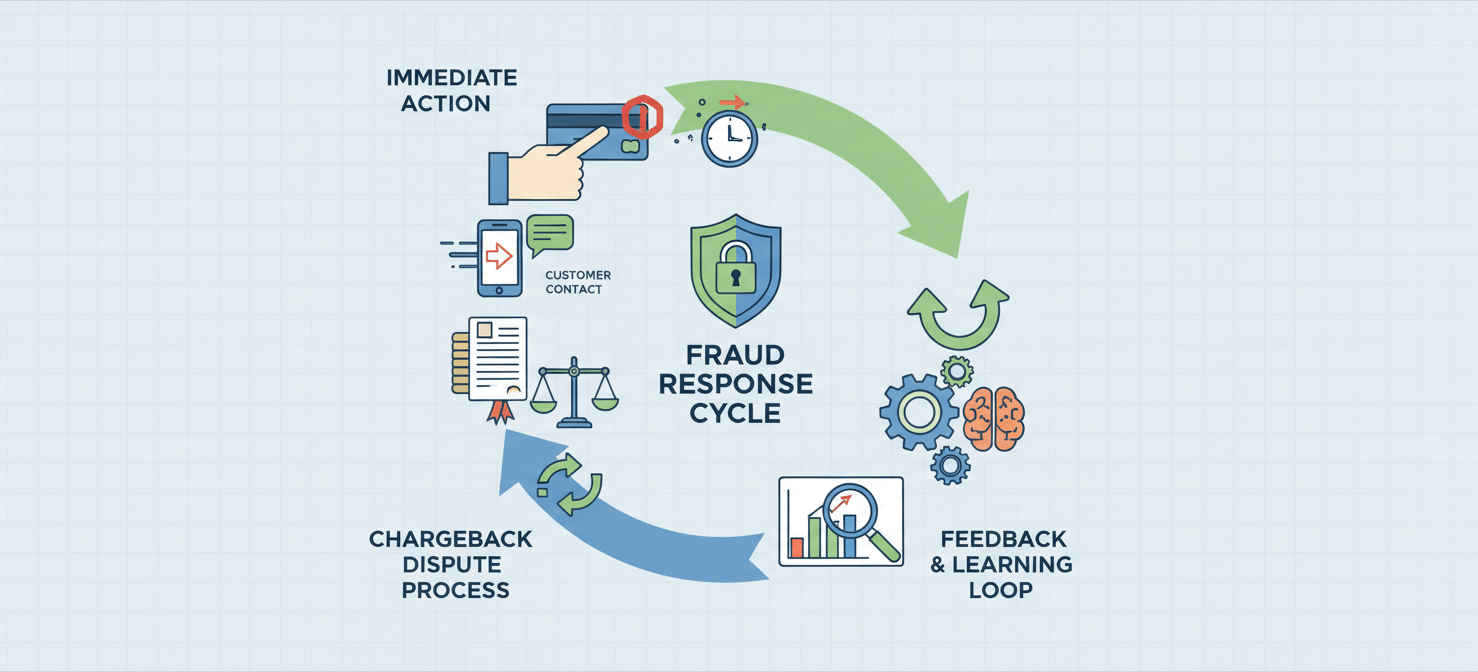
When your fraud detection system flags a transaction, your team needs to act quickly. The first step is often to place a temporary hold on the order and attempt to contact the customer for verification. Use the contact information provided in the order, but also try to find an alternative contact method to ensure you’re speaking with the legitimate cardholder. If you cannot verify the order or are confident it is fraudulent, cancel the transaction and issue an immediate refund to prevent a chargeback.
The Chargeback Dispute Process
If a fraudulent transaction results in a chargeback, you still have an opportunity to recover the funds. The dispute process, known as representment, allows you to submit evidence to the card-issuing bank to prove the transaction was legitimate. This evidence can include AVS and CVV results, shipping confirmations, and any communication with the customer. However, the odds are not in the merchant’s favor, with issuers winning about 75% of cases. Only about 60% of merchants even bother to dispute chargebacks, often due to the time and resources required.
Learning and Adapting
Every fraud attempt is a learning opportunity. Analyze the characteristics of fraudulent transactions to identify new patterns and trends. Use this information to update your fraud detection rules and retrain your team. For example, if you notice a spike in fraud from a specific country or involving a particular product, you can adjust your rules to be more stringent for those scenarios. Continuously adapting your strategies is the only way to stay ahead of sophisticated fraudsters.
Conclusion
Protecting your business from financial loss requires a vigilant and multi-faceted approach to fraudulent transaction detection. There is no single solution that will stop all fraud. Instead, an effective strategy combines sharp human oversight, clear internal policies, and sophisticated technology. By understanding the red flags, implementing proactive prevention measures, and having a clear plan for responding to suspicious activity, you can significantly reduce your vulnerability. Ultimately, managing fraud is not just about preventing loss; it’s about building a secure and trustworthy environment for your customers, which is a much more valuable asset than any single transaction.
To strengthen your defenses and build a more secure environment, we invite you to experience Binadox’s capabilities with a free trial or arrange a personalized demonstration of our fraud detection solutions.
 7-day free trial