




As a founder or CTO, your focus is on a single critical metric: runway. Every decision, from hiring to marketing spend, is weighed against its impact on your cash burn. Yet, a significant and often overlooked expense category is quietly draining resources: your Software-as-a-Service (SaaS) stack. Without a deliberate strategy for startup saas management, these recurring subscriptions create a drag on your finances, shortening the time you have to find product-market fit. This isn’t just about cutting costs; it’s a strategic imperative for survival and growth.
Key takeaways
- Slash Redundancy: Systematically audit your SaaS stack to identify overlapping tools and unused licenses, which can often cut 15-20% of your software spend immediately.
- Centralize and Control: Implement a 4-step lifecycle management process: Discover, Rationalize, Optimize, and Automate.
- Negotiate Everything: Never accept the list price. Leverage timing, competitive offers, and usage data to negotiate better terms on every contract, especially during renewals.
Why Your SaaS Stack is Quietly Eating Your Runway
In the early stages, speed is everything. Your teams adopt tools that solve immediate problems, often with a company credit card and little oversight. A design tool here, a project management app there—it all seems minor. However, this decentralized approach leads to a phenomenon known as SaaS sprawl. Before you know it, you’re paying for three different project management tools, multiple analytics platforms, and dozens of single-purpose utilities.

This isn’t just about duplicate functionality. It’s about paying for “shelfware”—licenses that are assigned but unused. It’s about auto-renewals for tools your team abandoned months ago. The average company uses over 100 SaaS applications, a number that can quickly get out of hand in a fast-moving startup. This uncontrolled spending directly reduces your runway, forcing you to raise funds sooner or make painful cuts elsewhere.
The Hidden Costs of Unmanaged SaaS
Beyond the direct subscription fees, poor SaaS management introduces other significant costs:
- Security Risks: Unvetted applications, often called “Shadow IT,” create security vulnerabilities. When employees sign up for services without IT approval, they may use insecure passwords or grant broad data access, putting sensitive company and customer information at risk.
- Operational Inefficiency: When teams use different tools for similar functions, collaboration suffers. Data becomes siloed, creating friction and wasting valuable engineering and operational time trying to sync information.
- Compliance Headaches: Regulations like GDPR and CCPA have strict rules about data handling. Unmanaged SaaS tools can easily lead to non-compliance, resulting in hefty fines and reputational damage.
Step 1: Discover and Audit Every Subscription
You cannot control what you cannot see. The first step in effective startup saas management is to create a comprehensive inventory of every single subscription your company pays for. This process requires a forensic approach to your finances.
Building Your SaaS Inventory
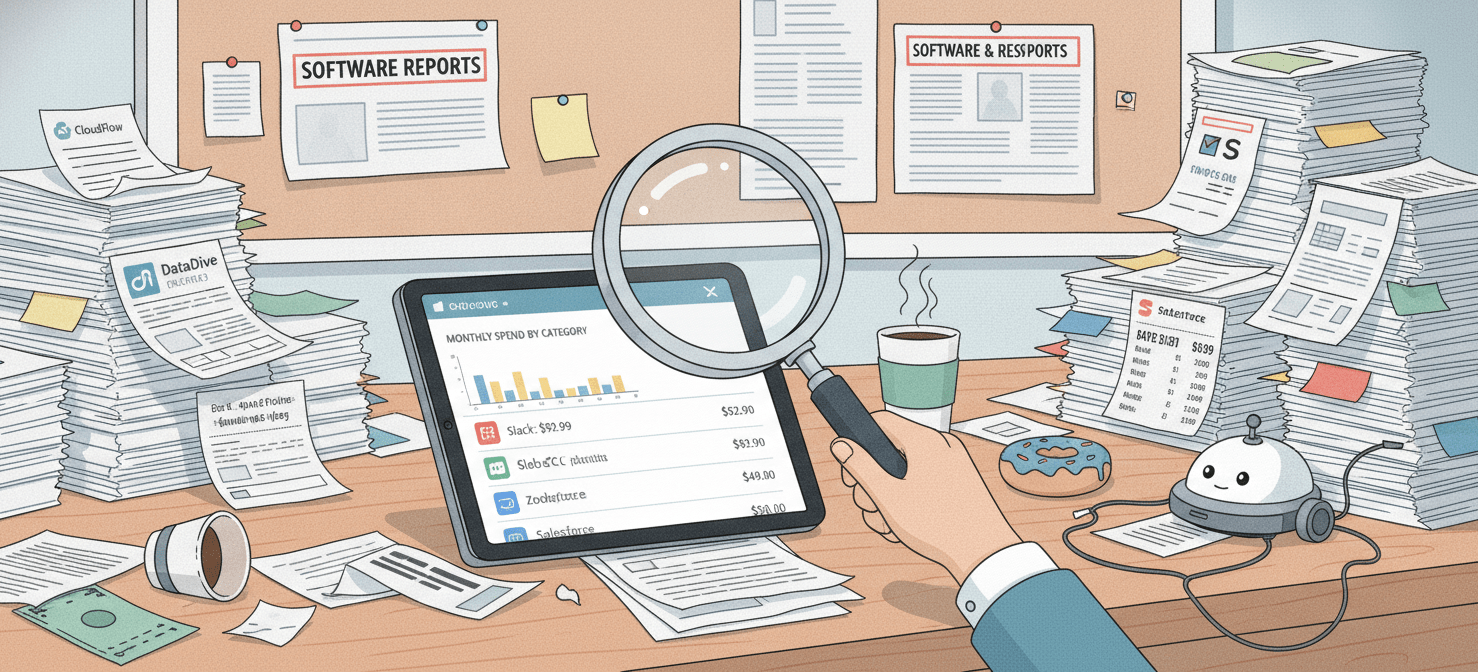
First, consolidate all spending records. Scour credit card statements, accounting software, and expense reports. Look for any recurring software payments. For each subscription found, document the following in a central spreadsheet or a dedicated SaaS management platform:
- Tool Name & Vendor: The specific application.
- Owner: The internal team or individual who “owns” the tool.
- Users & License Count: How many seats are you paying for?
- Cost: Price per user, billing frequency (monthly/annual), and total cost.
- Renewal Date: This is critical. Note the date and, more importantly, the notification deadline for cancellation or changes.
- Contract Terms: Note any auto-renewal clauses or price increase caps.
Once you have this raw data, the next step is to validate it with your team leads. They can confirm if the tools are still in active use and who is using them. This discovery phase will almost certainly uncover surprises, from forgotten trial accounts that converted to paid plans to tools purchased by former employees that are still being billed.
Step 2: Rationalize and Right-size Your SaaS Stack
With a complete inventory, you can now move from discovery to decision-making. The goal is to eliminate waste by identifying redundancies and reclaiming unused licenses. This is where you transition from managing startup expenses as a chore to a strategic cost-control measure.

Eliminate Redundant Applications
Group your inventoried tools by function: project management, CRM, marketing automation, code repositories, etc. It’s common for startups to find they have multiple applications serving the same core purpose. For example, you might be paying for Asana, Trello, and Jira across different teams.
Engage your team leads to standardize on a single tool for each function. The decision shouldn’t be based on cost alone; consider which tool best integrates with your core systems and meets the functional needs of the majority of users. Consolidating tools not only cuts subscription costs but also reduces operational complexity and improves cross-team collaboration.
Reclaim and Reallocate Unused Licenses
Next, focus on license utilization. Many SaaS tools offer admin dashboards that show user activity. Systematically review every paid seat. Are there licenses assigned to employees who have left the company? Are there active employees who haven’t logged in for over 90 days?
These inactive licenses represent pure waste. Work with your team leads to de-provision these accounts immediately. Instead of letting them sit idle, create a process for reallocating them to new hires or team members with a demonstrated need. This “license harvesting” is a simple but powerful way to maximize the value of every dollar you spend on software.
Step 3: Optimize and Negotiate Contracts
Never assume the price on the website is the final price. SaaS vendors, especially those targeting B2B, often have significant pricing flexibility. Approaching renewals and new purchases with a clear negotiation strategy is a core discipline of effective startup saas management.

Leverage Data and Timing
Your audit data is your primary source of leverage. If you can show a vendor that only 60% of your purchased licenses are actively used, you have a strong case for reducing your seat count at renewal.
Timing is also crucial. Sales representatives are most motivated to offer discounts at the end of a quarter or fiscal year when they are trying to hit their quotas. Start renewal conversations at least 90 days before the contract expires. This gives you ample time to evaluate alternatives and prevents the vendor from using the deadline as leverage against you.
Key Negotiation Levers
When you enter a negotiation, focus on more than just the per-seat price. Consider these other levers:
- Contract Term: Vendors often offer discounts for multi-year agreements. If the tool is critical to your operations, a longer-term contract can lock in savings. However, be cautious about locking yourself into a tool that you may outgrow.
- Billing Cycle: Paying annually instead of monthly can often unlock a discount of 10-20%. This is a simple way to reduce costs if your cash flow allows for the upfront payment.
- Service-Level Agreements (SLAs): For critical tools, negotiate specific terms for uptime guarantees and support response times.
- Renewal Caps: Negotiate a cap on future price increases, such as limiting annual increases to 3-5%, to ensure cost predictability.
Always be prepared to walk away. Having a viable alternative (your BATNA, or Best Alternative to a Negotiated Agreement) is your strongest negotiating position.
Step 4: Automate and Secure Your Management Process
A one-time audit provides immediate savings, but a continuous, automated process prevents SaaS sprawl from creeping back in. The final step is to establish a system for managing the entire SaaS lifecycle, from procurement to offboarding.

Implement a Centralized Procurement Workflow
Establish a formal process for requesting and approving new software. All requests should be funneled through a single point of contact or a small committee (e.g., the CTO and Head of Finance). This workflow should ensure that any new tool is evaluated for:
- Functional Overlap: Does it duplicate a tool we already have?
- Security & Compliance: Has it been vetted by your security lead?
- Integration: How does it fit into our existing tech stack?
- Cost-Benefit: Is the ROI clear and justifiable?
This process doesn’t need to be bureaucratic. For a small team, it can be as simple as a checklist in a shared document. The goal is to move from reactive, decentralized purchasing to proactive, strategic adoption.
Automate Onboarding and Offboarding
Integrate your SaaS management with your HR processes. When a new employee joins, a standardized process should grant them access to a pre-defined set of core applications. More importantly, when an employee leaves, a clear offboarding checklist must include the immediate de-provisioning of all their SaaS accounts. This is not just a cost-saving measure; it is a critical security practice to prevent unauthorized access to company data.
Conclusion
Managing your SaaS stack is not an administrative task to be delegated and forgotten; it is a core financial and operational discipline. For a founder or CTO, every dollar saved on an unnecessary software license is another dollar extending your runway, giving your team more time to build, sell, and win. By moving from chaotic adoption to a deliberate system of discovery, rationalization, and control, you can turn a significant cost center into a streamlined, efficient asset. Effective startup saas management isn’t about depriving your team of the tools they need to succeed. It’s about ensuring every tool you pay for is delivering a clear return, pushing you closer to your next milestone instead of just burning cash. The stack you build should be a foundation for growth, not an anchor.
To transform your SaaS stack from a runway drain into a strategic asset, a dedicated management platform is essential. You can gain immediate control and extend your financial runway when you start with Binadox, and we invite you to book a personalized demonstration to see the impact firsthand.
 7-day free trial