



Integrating Large Language Models (LLMs) into your applications can unlock powerful new capabilities, but it also introduces a new kind of operational expense: token costs. Unlike flat-rate software subscriptions, LLM usage is typically billed per “token,” a unit of data processed by the model. Without a clear understanding of how these costs accumulate, your budget can quickly spiral out of control. This is where using an LLM token cost calculator becomes an essential practice for any team building with AI. It provides a necessary framework to estimate LLM costs, turning unpredictable expenses into a manageable forecast.
Key takeaways
- Tokens are the core unit of cost. An LLM processes text in chunks called tokens, and providers bill for both the tokens you send (input) and the tokens the model generates (output).
- Output tokens cost more. Expect to pay 2-5 times more for the tokens an LLM generates compared to the tokens you send in your prompt.
- Calculators provide essential estimates. By pasting your text into a calculator, you can see the token count and get an immediate cost estimate across different models before you make an API call.
- Four key factors influence final costs. Your choice of model, the length of your input and output, and the complexity of your prompts are the primary drivers of your final bill.
What Are “Tokens” and Why Do They Matter for Cost?
Before you can forecast costs, you need to understand what you’re paying for. LLMs don’t process text as words or characters; they use “tokens.” A token is a common sequence of characters the model has learned from its training data. It can be a whole word like “apple,” a part of a word like “app,” or even just a punctuation mark.
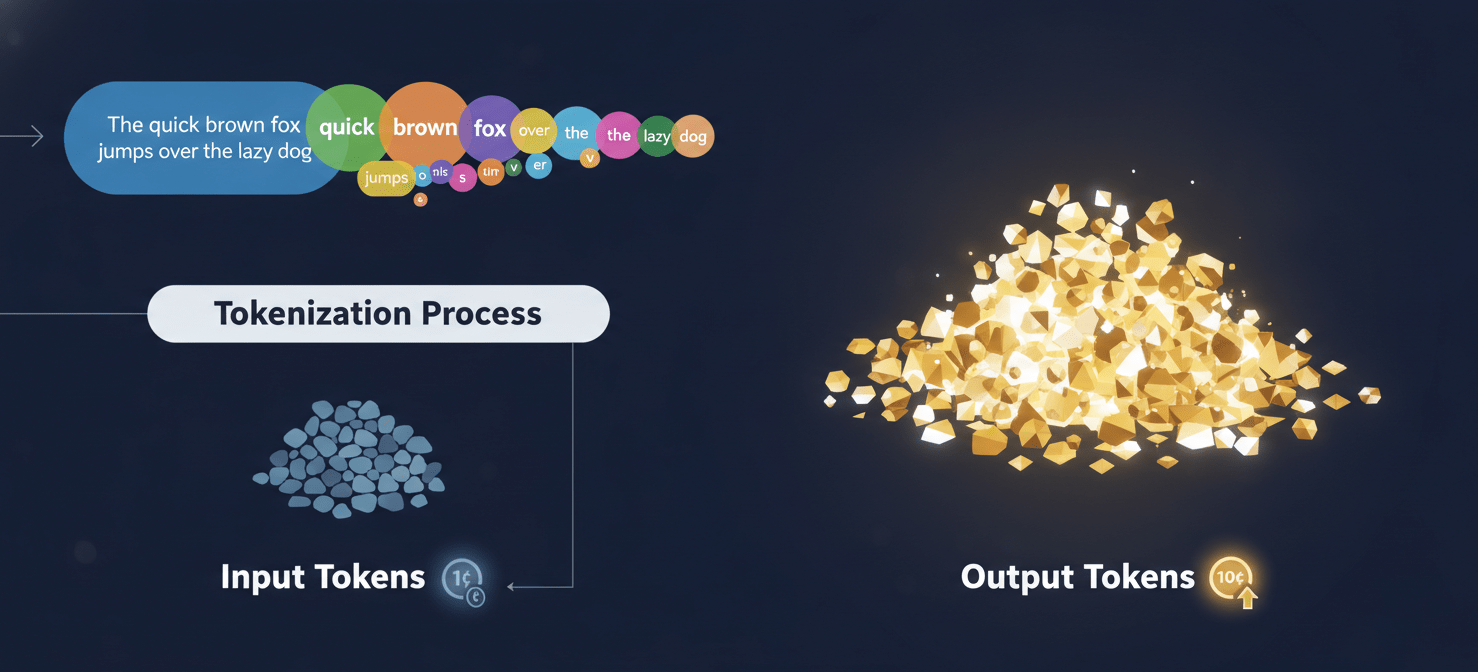
On average, for English text, 1,000 tokens is roughly equivalent to 750 words. This relationship is the foundation of LLM pricing. API providers like OpenAI set prices per million tokens, and they charge separately for input (the data you send to the model) and output (the data the model sends back).
This distinction is critical because output tokens are almost always more expensive than input tokens. Generating a response requires significantly more computational effort than simply reading a prompt. As a result, the length and complexity of the model’s answer will have a much larger impact on your final bill than the length of your initial query.
How to Use an LLM Token Cost Calculator
An LLM token cost calculator is a straightforward tool designed to bring predictability to your spending. These tools allow you to paste in a sample of the text you plan to send to an LLM—be it a user prompt, a document for summarization, or a code snippet.
The process is typically simple:
- Paste your text. Input the prompt or document you want to analyze into the calculator.
- Review the token count. The tool will instantly show you how many tokens your text contains. Many calculators use the same tokenization methods as the models themselves, giving you a precise count.
- Estimate the cost. Based on the token count, the calculator will display the estimated cost for processing that input across various popular models. You can then specify an expected output length to see the total estimated cost for a single API call.
Using a calculator before you start development or during prompt engineering helps you make informed decisions. You can compare the OpenAI token pricing for a powerful model against a more budget-friendly alternative to see if the trade-off in capability is worth the savings.
Factors That Influence Your Final LLM Costs
While a calculator provides a great starting point, several factors can influence the actual costs you incur. Understanding these variables is key to accurate forecasting and effective budget management.
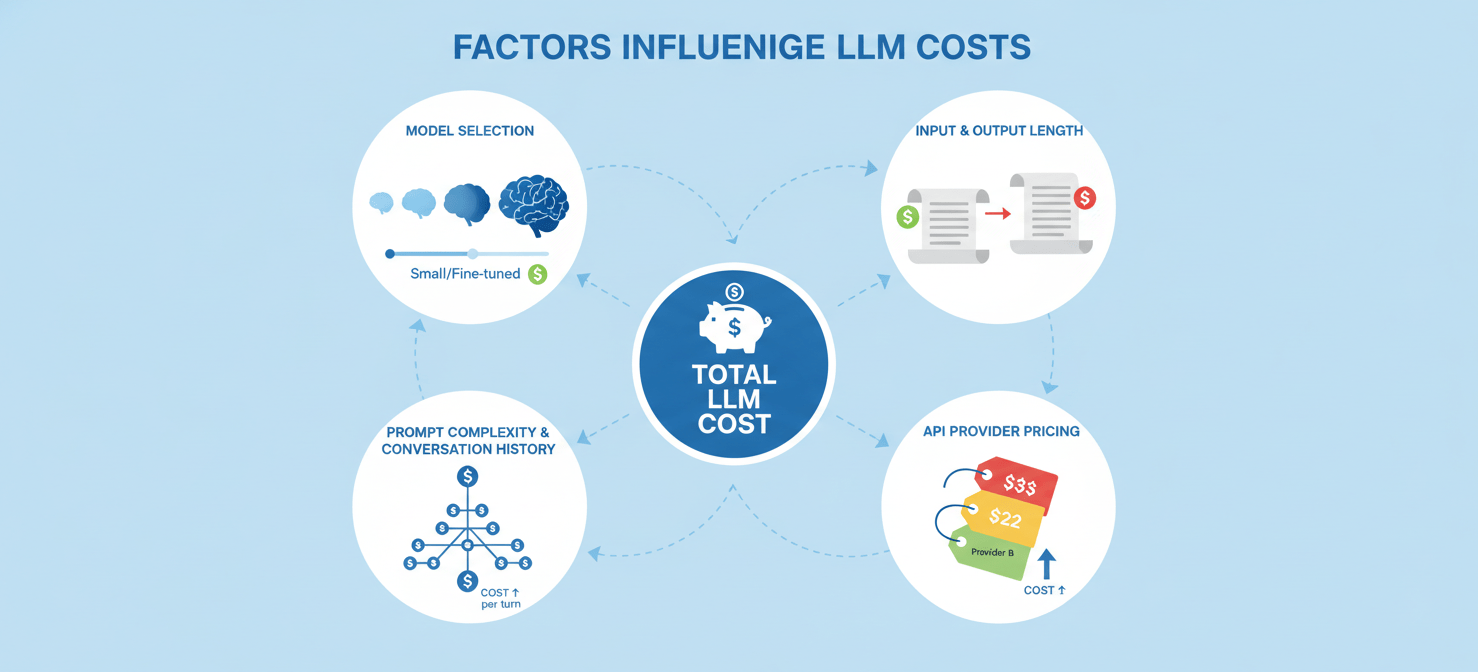
Model Selection
The single biggest factor affecting your costs is the model you choose. More advanced, “frontier” models are significantly more expensive than smaller, more specialized ones. For many common tasks, a less powerful model can produce identical results for a fraction of the price. It’s crucial to match the model’s capability to the complexity of the task at hand.
Input and Output Length
The number of tokens in both your prompts and the model’s responses directly impacts your bill. Long, detailed system prompts that are sent with every API call can become a major recurring expense. Similarly, verbose, multi-paragraph answers will cost far more than concise, direct ones. Optimizing your prompts to be as efficient as possible is a core strategy for cost control.
Prompt Complexity and Conversation History
The structure of your interactions with an LLM also plays a role. For example, in a multi-turn chatbot conversation, the entire history is often sent with each new message. This means that each turn costs more than the last, as the input token count grows steadily. Failing to manage this conversational context is a common reason for unexpectedly high bills.
Beyond Calculators: Advanced Strategies for Cost Management
Once you have a baseline forecast, you can implement more advanced strategies to actively manage and reduce your LLM spending.
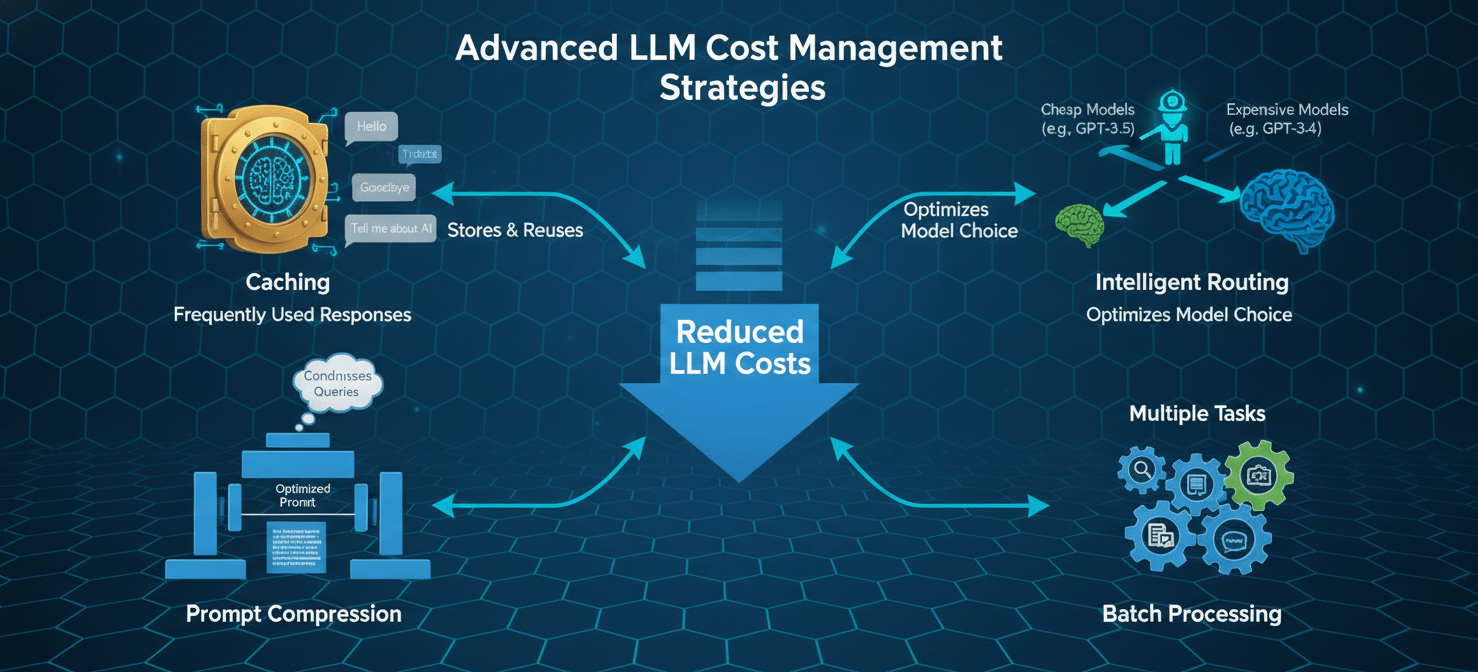
- Caching: For frequently asked questions or repeated prompts, caching the responses can eliminate redundant API calls and dramatically lower costs. Some providers even offer cheaper pricing for cached inputs.
- Intelligent Routing: Not all queries require the most powerful model. You can implement a routing system that sends simple requests to cheaper models and reserves the expensive, high-performance models for complex tasks. This approach can lead to savings of 60-90% without a noticeable drop in quality.
- Prompt Compression: Techniques exist to reduce the size of your prompts by removing unnecessary tokens while preserving the core instructions. This directly lowers your input token costs for every call you make.
- Batch Processing: If your tasks don’t require an immediate response, some providers offer significant discounts (up to 50%) for processing requests in batches.
By combining forecasting with these optimization techniques, your team can build powerful AI features without risking a budget blowout.
Conclusion
Relying on LLMs without a clear view of the associated costs is like navigating without a map. The expenses can accumulate in unexpected ways, driven by factors like verbose outputs and accumulating chat histories. An LLM token cost calculator provides the initial bearings, offering a clear estimate based on the fundamental unit of LLM work: the token. By understanding how tokens translate to cost, you can move from reactive budget management to proactive financial planning. Ultimately, using an LLM token cost calculator isn’t just about predicting a number; it’s about making deliberate, cost-effective decisions in how you design and deploy your AI-powered applications.
Ultimately, using an LLM token cost calculator isn’t just about predicting a number; it’s about making deliberate, cost-effective decisions in how you design and deploy your AI-powered applications. To truly optimize your LLM spending and move beyond basic forecasting, you might explore how to start free with Binadox for comprehensive oversight, or perhaps book a demo to see its full capabilities firsthand.
 7-day free trial