



Master Data Management (MDM) platforms are critical infrastructure, but their costs can be opaque and difficult to attribute. As organizations invest heavily in creating a single source of truth for their data, the spend on these platforms often grows without the same financial scrutiny applied to cloud infrastructure. This is where a FinOps approach becomes essential. Applying a collaborative, data-driven framework to manage this spend transforms it from a fixed overhead into a measured, value-driven investment. For FinOps leads and cost analysts, implementing FinOps for MDM platforms is the key to unlocking visibility, accountability, and efficiency. It shifts the conversation from “How much does the platform cost?” to “What business value are we getting for our spend, and how can we optimize it?”
Key takeaways
- Visibility First: You cannot optimize what you cannot see. The first step is to break down the MDM platform’s monolithic invoice into granular cost components.
- Showback Before Chargeback: Before implementing a full chargeback model, use showback to build awareness and validate your allocation logic. This gives teams visibility into their consumption without immediate budget impact.
- Optimize Usage, Not Just Price: While negotiating a better per-seat price is useful, the biggest savings often come from reclaiming unused licenses and right-sizing user roles, which can reduce waste by up to 30%.
- Connect to Business Value: The ultimate goal is to tie MDM costs to business outcomes. Develop unit economic KPIs, such as “cost per master record” or “cost per data domain,” to measure efficiency.
Why Your MDM Platform Needs a FinOps Strategy
MDM platforms, whether on-premises or SaaS, often present a unique challenge for cost allocation. Unlike granular cloud services, MDM costs are frequently bundled into large, annual contracts with pricing models based on user seats, data volume, or data domains. This makes it difficult to attribute expenses to the specific business units, projects, or products that derive value from the master data.

Without a FinOps strategy, this lack of visibility leads to several predictable problems:
- The “Tragedy of the Commons”: When the MDM platform is treated as a free, centralized resource, no single team has an incentive to use it efficiently. This leads to over-provisioning of user licenses, creation of low-value data domains, and unchecked data volume growth.
- Inaccurate Budgeting and Forecasting: A single, large invoice for the entire platform makes it nearly impossible to forecast future costs accurately. As new business units onboard or data volumes grow, the central IT budget absorbs the impact, often leading to surprise overruns.
- No Connection to Business Value: Without proper allocation, you cannot measure the platform’s ROI. You know the total cost, but you cannot connect that cost to the revenue-generating activities it supports. This makes it difficult to justify continued investment or expansion.
A FinOps approach addresses these issues by creating a culture of accountability. It brings together finance, IT, and business teams to make data-driven decisions about MDM spend, ensuring that every dollar is aligned with a clear business objective.
Step 1: Gaining Visibility into MDM Costs
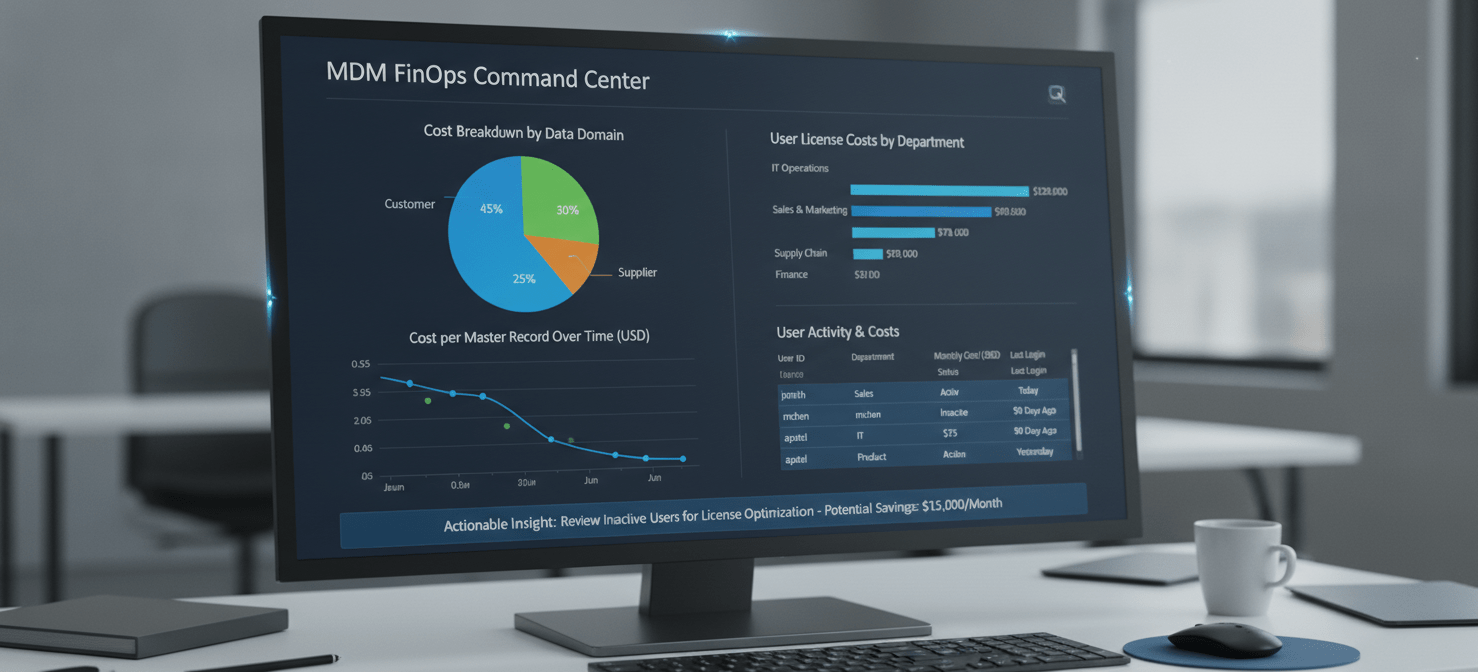
The first phase in any FinOps practice is to “Inform.” For an MDM platform, this means deconstructing the vendor invoice and mapping it to internal consumption data. Your goal is to move from a single line item in the budget to a detailed dashboard that answers who is using the platform, what they are using it for, and how much that usage costs.
Deconstructing the Invoice
Start by identifying the primary cost drivers in your MDM contract. Most MDM pricing models are based on a combination of factors:
- User-Based Licensing: Costs are tied to the number of named or concurrent users. These can range from $500 to $3,000 per user annually, depending on their roles (e.g., data steward vs. read-only analyst).
- Data Volume/Record Count: Pricing scales with the number of master data records (e.g., customers, products) being managed.
- Data Domains: Some vendors charge based on the number of distinct data domains (e.g., Customer, Supplier, Product) configured in the system.
- Deployment Model: An on-premises deployment carries infrastructure and maintenance costs, while a SaaS model bundles these into the subscription fee.
Work with your procurement and IT teams to get a clear breakdown of these contractual components. This is your foundational cost data.
Building an Attribution Dashboard
Once you understand the cost structure, you need to map it to usage. This requires pulling data from the MDM platform’s administrative console or API. The key metrics to track are:
- Active vs. Inactive Users: Who is actually logging in? Many organizations find a significant percentage of assigned licenses are unused.
- Usage by Business Unit/Department: Tag users and data domains with metadata that maps them to specific cost centers.
- Record Count per Domain: Track the growth of master records within each data domain.
Combine this usage data with your cost data to build a dashboard in your tool of choice (e.g., Power BI, Tableau). This dashboard should provide a clear view of MDM spend allocated by department, project, and user role.
Step 2: Allocating MDM Spend with Precision
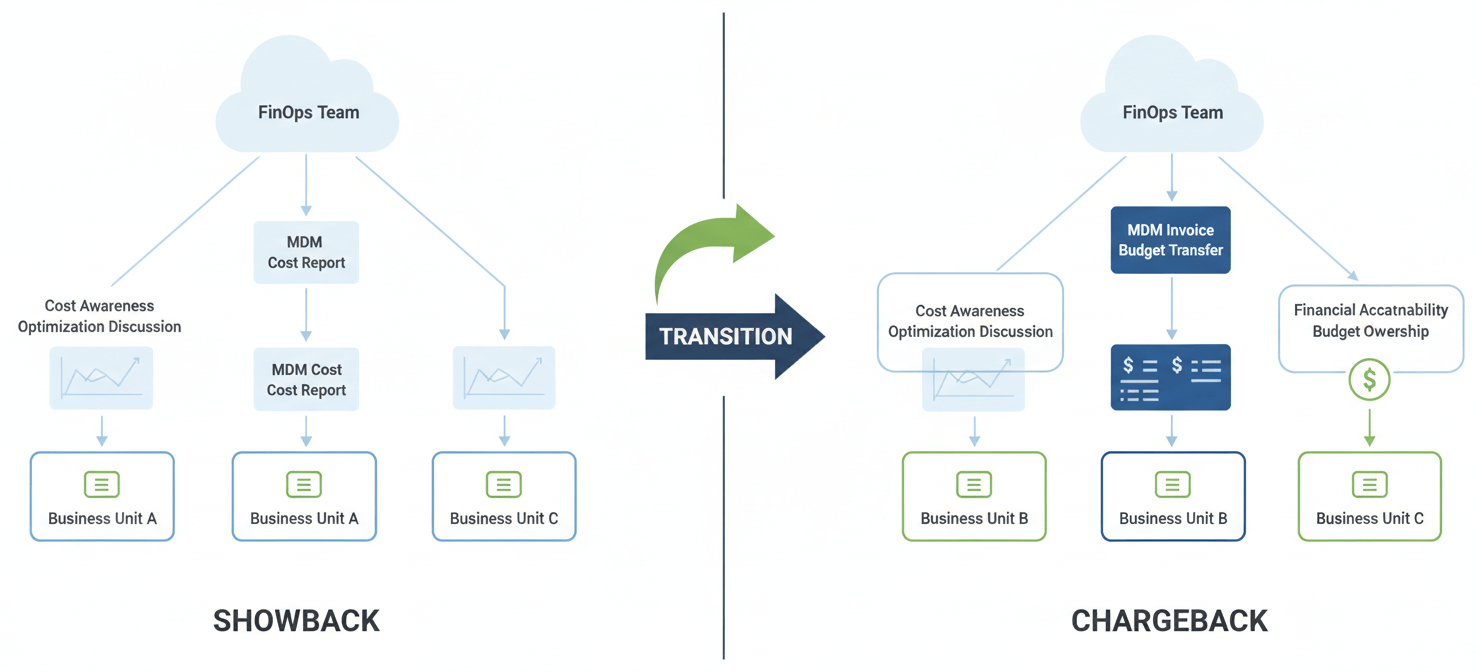
With clear visibility, the next step is to implement a formal cost allocation model. The two primary models in FinOps are showback and chargeback.
Starting with Showback
Showback is an informational model where you report costs to business units without actually transferring funds. It is the ideal starting point for MDM cost allocation because it builds awareness and allows you to refine your allocation logic without causing budgetary friction.
Your showback report should be simple and clear. For each business unit, it should detail:
- Number of active user licenses and their associated cost.
- Percentage of master data records they own and the allocated cost.
- A comparison of their consumption trends over time.
The goal of showback is to start a conversation. When a department head sees that their team is responsible for 25% of the MDM platform’s cost, they are more likely to engage in discussions about optimizing that usage.
Maturing to Chargeback
Chargeback is the process of formally billing departments for their consumption. This model creates direct financial accountability. According to the FinOps Foundation, chargeback sends expenses to a department’s P&L, making them responsible for budgeting for their usage.
Before implementing chargeback, ensure your allocation model is accurate and defensible. You will need clear, automated reporting and a process for handling disputes. A common approach is to use a hybrid allocation model:
- Direct Costs: User licenses are charged directly to the business units that own them.
- Shared Costs: Costs associated with the core platform, data domains, and infrastructure are allocated proportionally based on a key metric like headcount or record count.
Transitioning to chargeback solidifies the principle that the MDM platform is not a free resource. It forces teams to make conscious trade-offs between the value they get from master data and the cost of creating and maintaining it.
Step 3: Optimizing MDM Usage and Licensing
Allocation creates accountability, which in turn drives optimization. Once teams are aware of their MDM spend, they become motivated to reduce it. As a FinOps analyst, your role is to provide them with the data and tools to do so effectively. This is where you can apply SaaS FinOps principles directly.
Reclaiming Unused Licenses
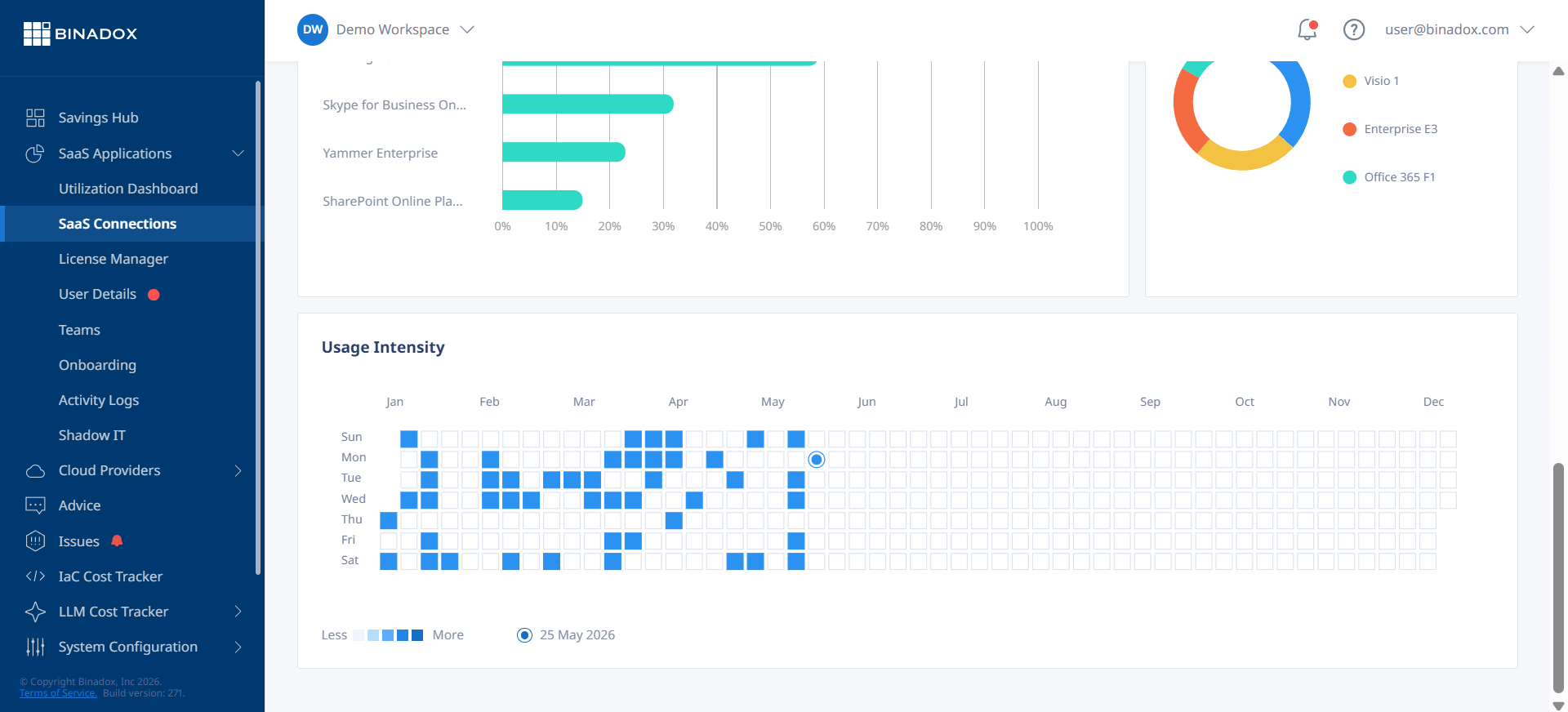
One of the most significant sources of waste in SaaS and MDM platforms is “shelfware”—licenses that are paid for but never used. Regularly run reports to identify users who have not logged into the MDM platform in the last 90 days. Work with department heads to de-provision these licenses and reallocate them or remove them from your next contract renewal. Automating this process can lead to immediate and substantial cost savings.
Right-Sizing User Roles
Not all MDM users are created equal. A data steward who actively creates and edits master records requires a full-featured (and expensive) license. However, a business analyst who only needs to view the data can often use a less expensive, read-only license.
Analyze usage patterns to identify users who are in roles that exceed their actual needs. For example, if a user with a full data steward license has not made any edits in the past six months, they are a prime candidate for a downgrade. This process of right-sizing ensures you are not paying for features that are not being used.
Establishing Governance for New Demand
Optimization is not just about cutting existing costs; it is also about controlling future growth. Work with IT and business leaders to establish a governance process for onboarding new users and data domains.
This process should require a clear business case for any new request. For example, before a new data domain is created, the requesting team should have to define the business value it will generate and accept the associated costs in their budget. This prevents the uncontrolled sprawl of data and ensures that the platform’s growth is directly tied to strategic priorities.
Conclusion: Applying FinOps for MDM platforms
Treating your MDM platform as an unmanaged, centralized cost is a relic of an older IT model. In an era of data-driven decision-making, the platform is a critical asset whose costs must be understood, allocated, and optimized just like any other part of your tech stack. By applying the core FinOps principles of visibility, accountability, and continuous optimization, you can transform your MDM spend from a black box into a transparent, efficient investment.
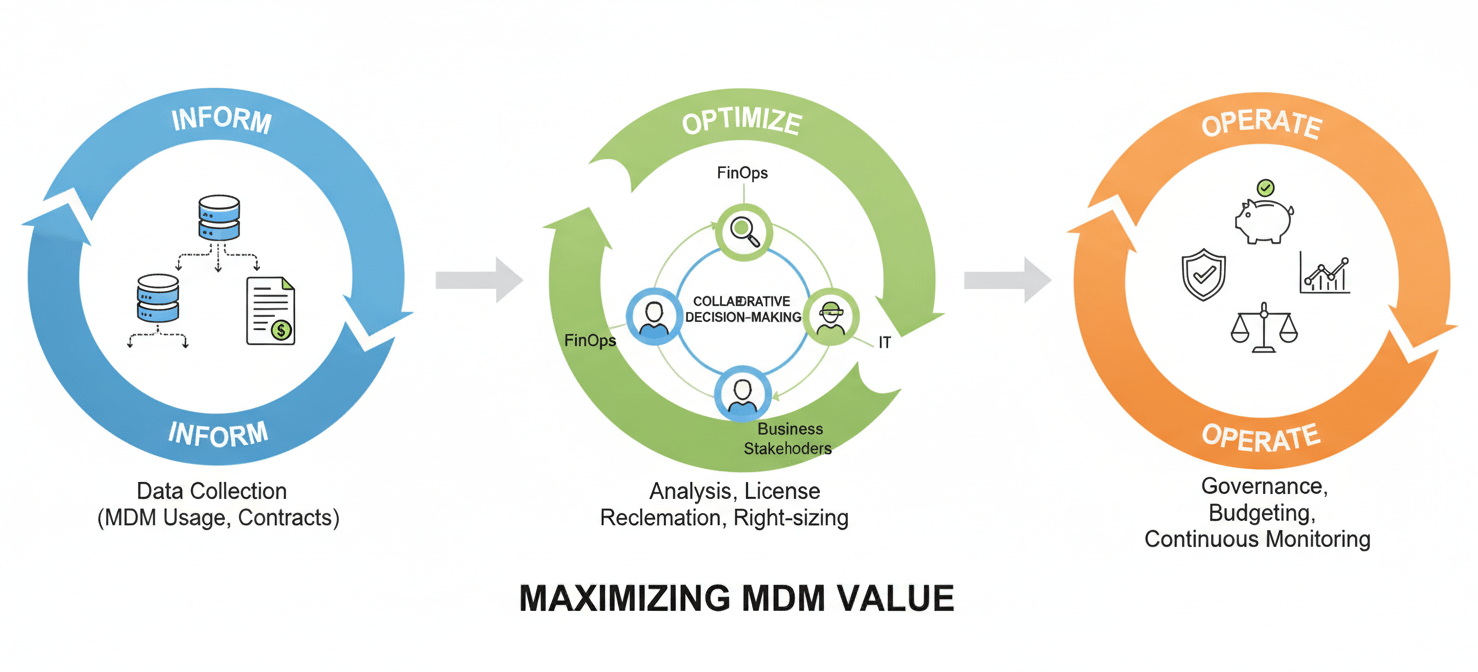
The process is straightforward: first, gain visibility by breaking down your costs and mapping them to usage. Next, build accountability through a carefully planned rollout of showback and, eventually, chargeback. Finally, drive optimization by reclaiming unused licenses, right-sizing user roles, and governing new demand. Implementing FinOps for MDM platforms is not just about saving money; it is about ensuring that your organization’s single source of truth is delivering maximum business value for every dollar spent. After all, unmeasured value is often just another name for unmanaged cost.
If you’re ready to bring this level of financial clarity and optimization to your MDM platform, you can explore Binadox’s capabilities with a complimentary period or connect with our team for a personalized walkthrough.
 7-day free trial