



The rise of hybrid and multi-cloud environments gives your teams incredible flexibility. However, it also creates complexity. When employees find official IT processes too slow, they often adopt their own solutions, from cloud storage to project management apps. This phenomenon, known as “shadow IT,” introduces significant security and cost challenges. The good news is that you can regain control. By implementing modern hybrid cloud monitoring tools, you can discover unsanctioned assets, understand their purpose, and bring them back into a managed, secure framework.
Key takeaways
- Shadow IT is pervasive and costly. In large enterprises, shadow IT can account for 30% to 40% of all technology spending.
- Visibility is the first step to control. You cannot manage what you cannot see; the core function of monitoring tools is to provide a single, unified view across all environments.
- A 4-step strategy can eliminate most risks. By discovering, assessing, consolidating, and governing, you can systematically tame shadow IT without stifling innovation.
- The goal is alignment, not just elimination. Shadow IT often signals unmet needs. The right approach is to bring valuable tools into a managed state, not just block them.
What Is Shadow IT (and Why Is It a Problem)?
Shadow IT refers to any hardware, software, or cloud service used for business purposes without the IT department’s explicit knowledge and approval. This isn’t usually malicious. More often, employees are simply trying to be more productive. They might use a personal cloud storage account to share large files or adopt a project management tool because the official one is cumbersome.
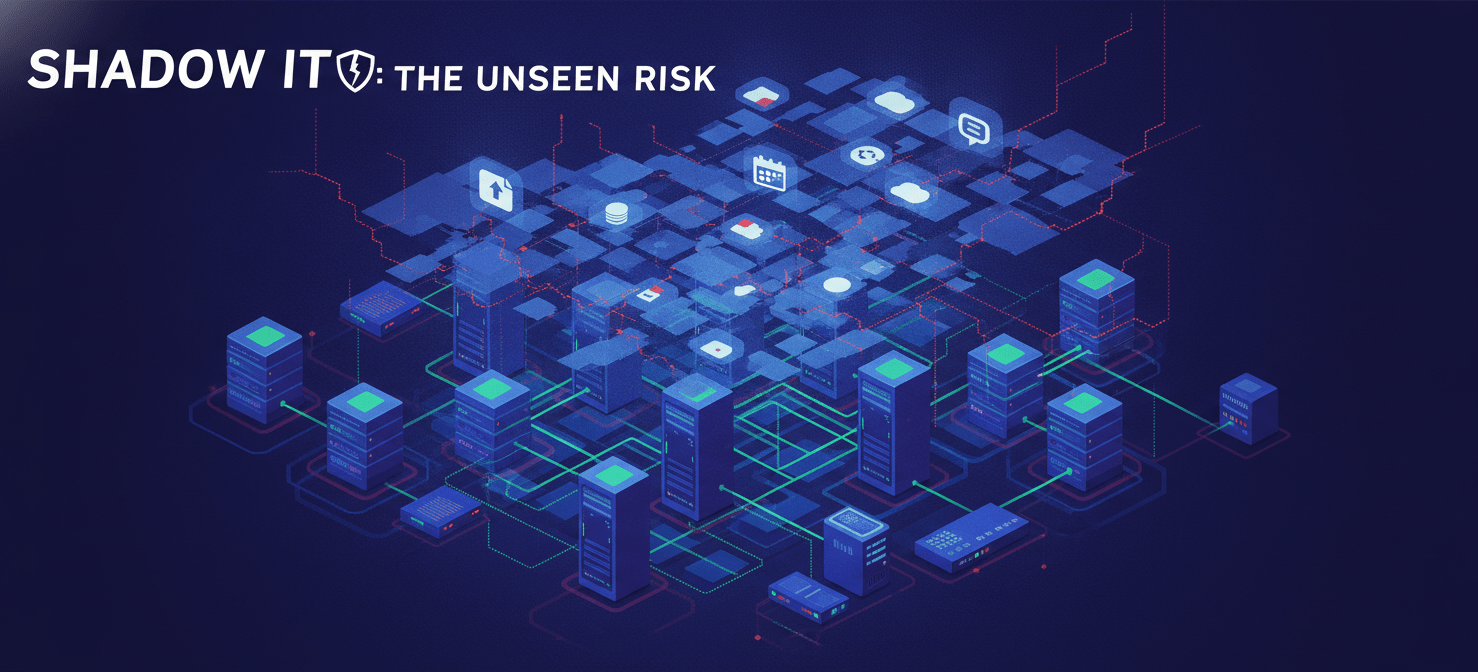
While born from good intentions, shadow IT creates serious risks:
- Security Gaps: Unsanctioned applications and devices aren’t protected by your organization’s security protocols. This expands your attack surface and makes it easier for vulnerabilities to go undetected.
- Data Breaches: When employees store company data on personal or unvetted cloud services, the risk of data loss and leakage skyrockets. In fact, 83% of IT professionals report that employees store company data on unsanctioned cloud services.
- Compliance Violations: Regulations like GDPR and HIPAA have strict data handling requirements. Using unapproved tools can lead to non-compliance, resulting in hefty fines and legal trouble.
- Wasted Costs: Shadow IT often leads to redundant software subscriptions and wasted license fees. Different teams might pay for separate tools that perform the same function, inflating costs without centralized oversight.
- Operational Inefficiency: Unsanctioned tools rarely integrate with core business systems, creating data silos and fragmented workflows. This can disrupt productivity and make it difficult to get a clear view of business operations.
How Hybrid Cloud Monitoring Tools Help Tame Shadow IT
You can’t protect what you can’t see. This is the core challenge of shadow IT. Hybrid cloud monitoring tools provide the necessary visibility to bring these hidden assets out of the shadows. They offer a single pane of glass to oversee all applications, infrastructure, and services, whether they are on-premises or in a public cloud.

Here’s how these tools specifically address the problem:
- Unified Visibility: Instead of juggling multiple dashboards for different environments, a unified monitoring platform consolidates data from all sources. This gives you a complete inventory of every device, application, and cloud service accessing your network.
- Automated Discovery: Modern monitoring tools automatically scan your network and cloud environments to discover all connected assets. This continuous discovery process identifies unauthorized software and services as soon as they appear.
- Behavioral Analytics: By establishing a baseline of normal activity, these tools can detect anomalies that may indicate shadow IT usage. For example, unusual data flows to an unknown cloud service can trigger an alert for investigation.
- Cost Management: By identifying all active cloud services and applications, you can spot redundancies and consolidate subscriptions. This helps eliminate wasted spending on overlapping tools.
Key Features to Look for in Hybrid Cloud Monitoring Tools
When evaluating hybrid cloud monitoring tools, focus on capabilities that directly address the challenges of a distributed and often chaotic IT landscape. Not all monitoring solutions are created equal, especially when it comes to managing shadow IT.
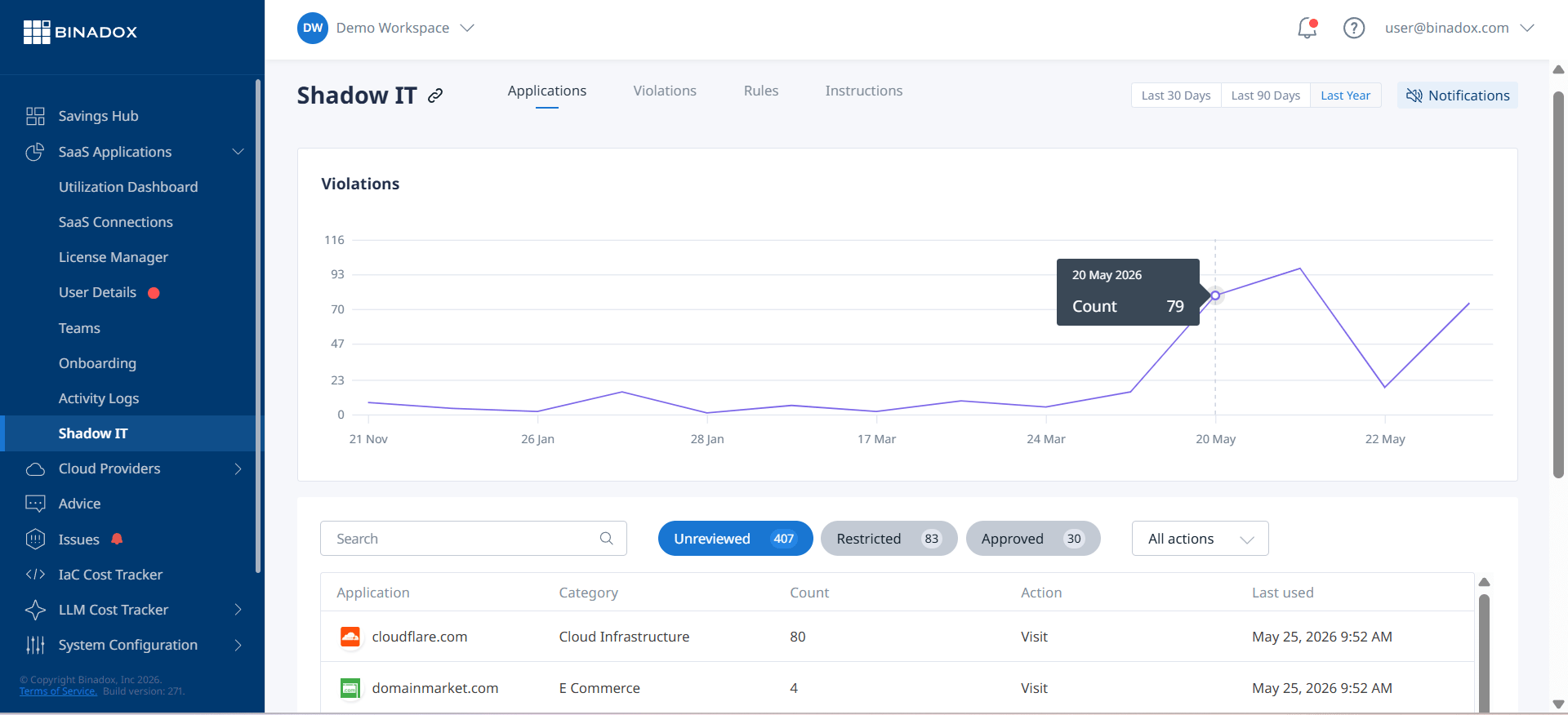
Comprehensive Discovery and Asset Inventory
The foundation of taming shadow IT is knowing what’s out there. Your chosen tool must be able to automatically discover and catalog every asset across your entire hybrid environment. This includes virtual machines, containers, serverless functions, and, most importantly, all SaaS applications being used. Look for tools that can analyze network traffic and integrate with identity providers to build a complete and continuously updated inventory.
A Single, Correlated View
Managing shadow IT requires seeing how unsanctioned services interact with your approved systems. A tool that offers a “single pane of glass” is essential. It should consolidate metrics, logs, and traces from both on-premises and cloud environments into one unified dashboard. This allows you to trace issues and data flows end-to-end, even when they cross from your data center to a public cloud and back.
Anomaly Detection and Proactive Alerting
Static alerts are no longer enough. You need a tool that uses machine learning to understand normal behavior and proactively alert you to deviations. This could be an unexpected spike in data transfer to an unrecognized IP address or a new application consuming an unusual amount of resources. These alerts help you spot and investigate potential shadow IT before it becomes a significant risk.
Security and Compliance Monitoring
Effective tools don’t just monitor performance; they also monitor for security and compliance gaps. Look for features that can generate audit-ready reports for regulations like GDPR, HIPAA, or PCI DSS. The tool should help you enforce security policies by identifying misconfigurations and unauthorized access across all discovered assets.
A 4-Step Strategy to Consolidate Cloud Accounts and Eliminate Shadow IT
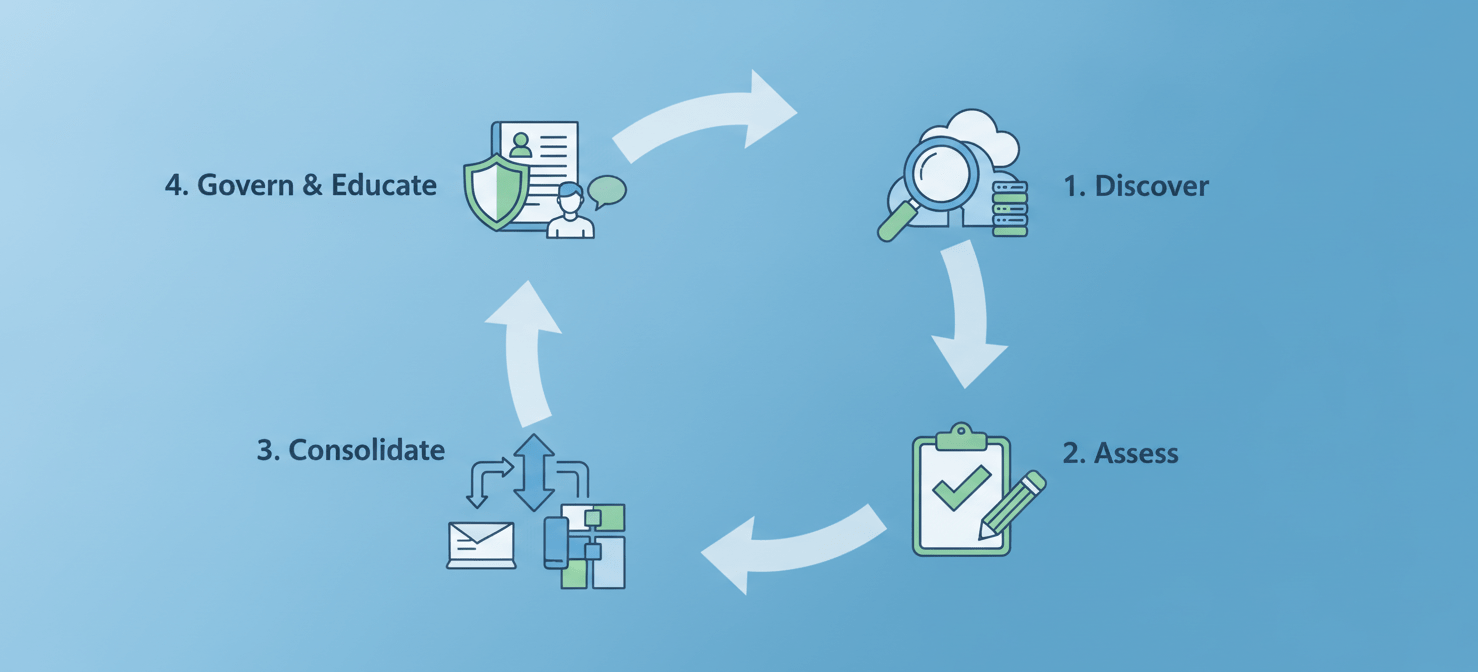
Once you have the right tools in place, you can adopt a systematic approach to rein in shadow IT. This multi-cloud shadow IT strategy focuses on visibility, rationalization, and governance.
Step 1: Discover and Inventory Everything
The first step is to use your hybrid cloud monitoring tool to create a comprehensive inventory of all applications, services, and infrastructure. Let the tool run and map out everything that is communicating on your network. The goal is to get a complete picture of both sanctioned and unsanctioned assets. Don’t be surprised by what you find; the average company has far more unknown cloud services than known ones.
Step 2: Assess and Analyze
With a complete inventory, you can begin assessing the purpose and risk of each discovered asset. For each unsanctioned application, ask:
- What business need does it solve?
- Who is using it?
- What kind of data is it accessing or storing?
- Does it comply with your security and data governance policies?
This analysis helps you understand why teams are turning to shadow IT. Often, it highlights gaps in your official toolset or cumbersome internal processes.
Step 3: Consolidate and Standardize
Armed with this knowledge, you can start to consolidate cloud accounts and applications. Where you find multiple teams using different tools for the same purpose (e.g., three different project management apps), choose a single, standardized solution that meets everyone’s needs. Migrating users to a sanctioned, centrally managed tool reduces costs, improves security, and simplifies support. This also presents an opportunity to negotiate better enterprise-level contracts with vendors.
Step 4: Govern and Educate
Finally, establish clear governance policies for technology procurement and usage. Create a streamlined process for employees to request and get approval for new tools. This makes it easier for them to follow the rules than to go around them. In addition, educate your teams on the risks associated with shadow IT. When employees understand the security and compliance implications, they are more likely to be partners in maintaining a secure environment.
Conclusion
Shadow IT is not a problem to be solved with a bigger hammer. It’s a symptom of unmet business needs and friction in IT processes. Attempting to simply block every unsanctioned app is a losing battle that stifles the very innovation it aims to protect. Instead, the path forward lies in visibility and partnership. By using hybrid cloud monitoring tools, you can turn the lights on, see what’s really happening across your entire estate, and begin a productive conversation with your teams.
The goal is to transform your multi-cloud shadow IT strategy from one of prohibition to one of guided adoption. Discover the tools your teams find valuable, assess their risks, and bring the best ones into a secure, managed framework. This approach allows you to consolidate cloud accounts, reduce wasted spend, and close dangerous security gaps. Ultimately, taming shadow IT isn’t about regaining absolute control; it’s about building a more resilient, efficient, and collaborative technology ecosystem.
If you’re ready to bring clarity to your IT landscape, you can experience the power of comprehensive discovery for free, or easily schedule a 15-minute demo to see how our tools can specifically address your challenges.
 7-day free trial