



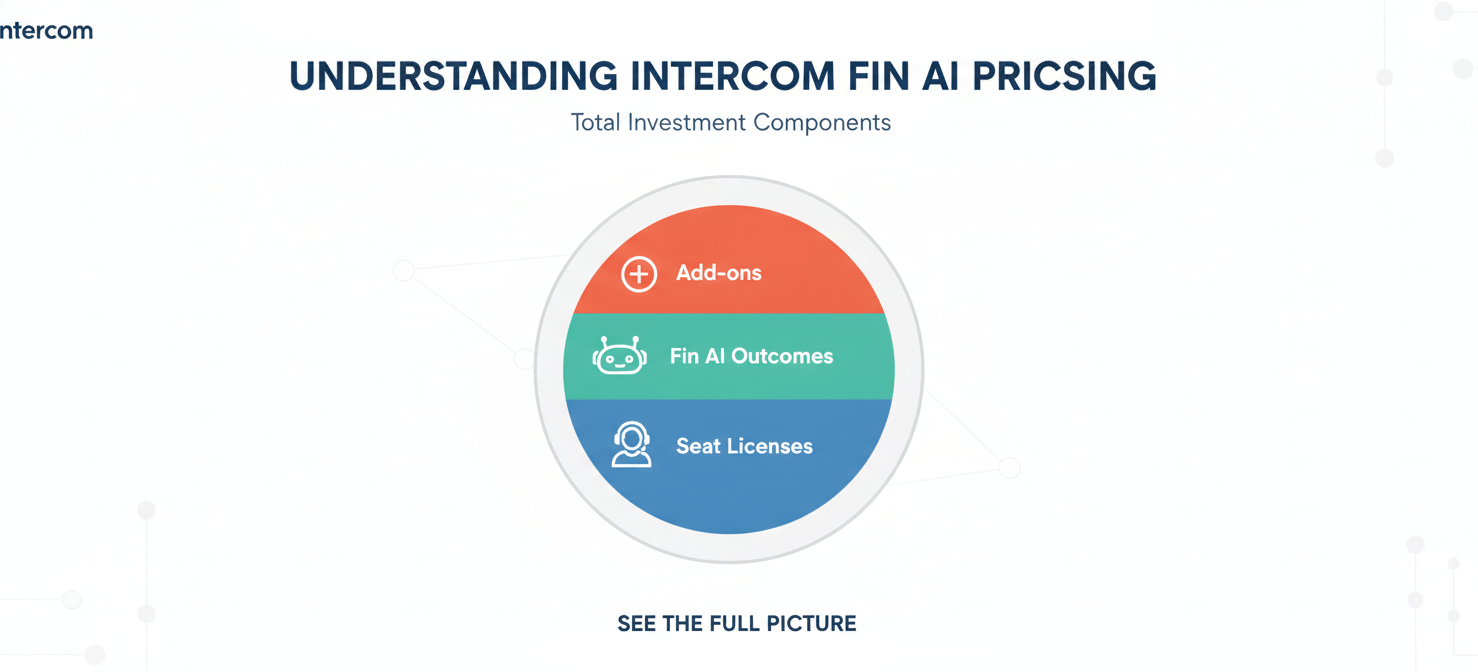
Understanding the true cost of a new software tool can be challenging, especially when the pricing model has multiple layers. Intercom, a major player in the customer service software space, has shifted to an AI-first approach with its chatbot, Fin. This move has also changed its pricing structure. If you’re considering this tool, a clear breakdown of the Intercom Fin AI pricing is essential for making an informed decision. The final bill is a combination of per-seat licenses for your human agents and a separate, usage-based fee for the AI’s activity.
Key takeaways
- Intercom’s pricing combines a per-seat fee for human agents with a usage-based cost for its AI chatbot, Fin.
- The Fin AI Agent is billed separately at $0.99 per successful outcome, on top of your monthly seat plan.
- Seat prices vary across three main tiers—Essential, Advanced, and Expert—with annual billing offering a discount.
- Your total monthly cost can fluctuate significantly based on the number of AI resolutions, making budget predictability a key consideration.
Understanding Intercom’s Core Pricing Structure
Before diving into the specifics of the AI, it’s important to grasp Intercom’s foundational pricing. The model is built on a per-seat basis, meaning you pay for each human agent who needs full access to the platform. This cost varies depending on the plan you choose.
Intercom offers three primary tiers for its Customer Service Suite:
- Essential Plan: This entry-level plan is designed for smaller teams and solo founders. It includes core features like the live chat messenger, a shared team inbox, a basic ticketing system, and a public help center.
- Advanced Plan: Aimed at growing teams, this tier adds more sophisticated automation tools. It includes everything in the Essential plan, plus features like a workflow automation builder, multiple team inboxes, and round-robin assignment for incoming queries.
- Expert Plan: This top-tier plan is for larger organizations with more complex needs. It builds on the Advanced plan with enterprise-level features such as SSO, HIPAA support, and workload management tools.
Pricing for these plans is offered on both a monthly and an annual basis, with the annual option providing a notable discount. For example, the Essential plan might cost $39 per seat on a monthly plan, but that drops to $29 per seat when billed annually.
The Heart of the Matter: Intercom Fin AI Pricing
This is where the pricing model becomes more dynamic. Access to the Fin AI Agent is included in every plan, but its usage is not free. Instead of a flat fee, Intercom charges on a per-outcome basis.
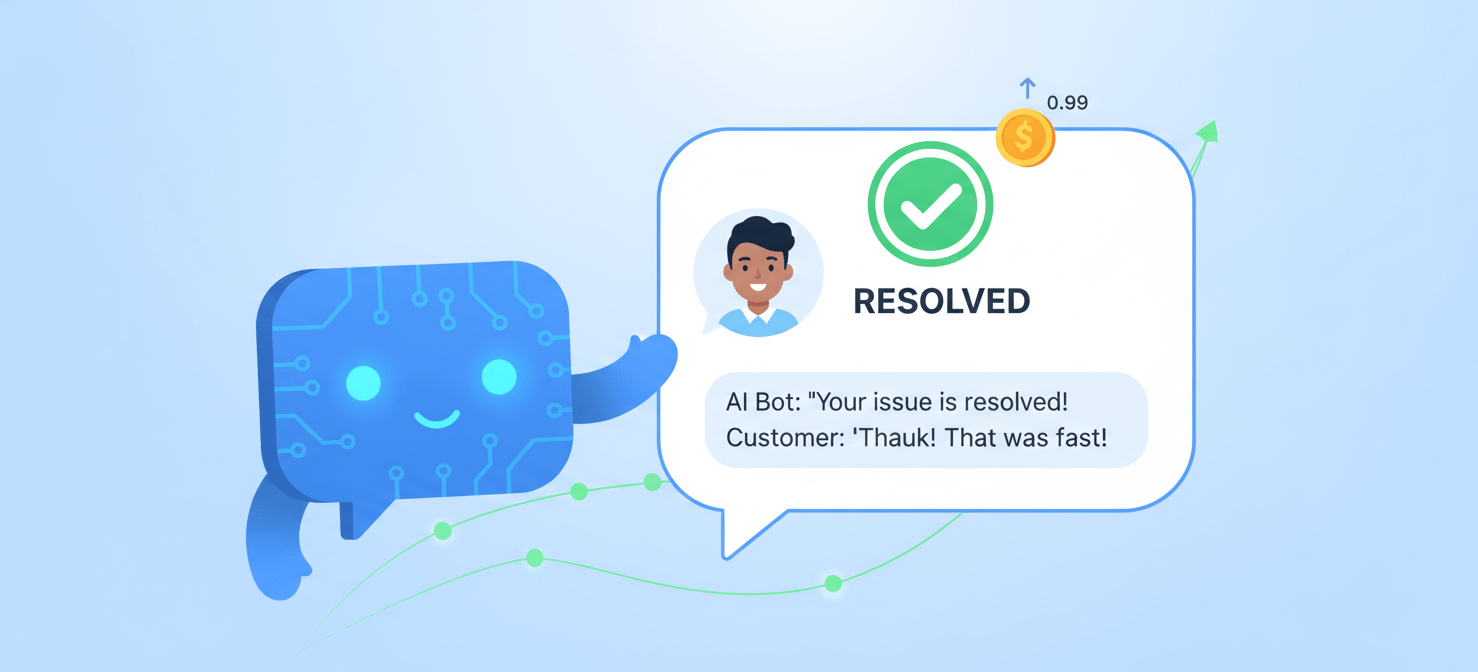 .99 charge per resolution. This visual explains how Intercom charges only when Fin successfully handles an issue without human intervention.” class=”wp-image-20865″/>
What is a “Successful Outcome”?
Intercom Fin AI cost is calculated at $0.99 per successful outcome. An “outcome” is counted when Fin resolves a customer’s issue without needing to escalate to a human agent. This can happen in a few ways:
- The customer explicitly confirms their issue is resolved.
- The customer disengages from the conversation after Fin provides an answer, which is considered an “assumed resolution.”
- Fin successfully completes a pre-configured workflow or procedure.
It’s important to note that you are only charged once per conversation, even if Fin answers multiple questions within that single interaction. Furthermore, if Fin cannot resolve the issue and has to hand the conversation over to a human agent, you are not charged for that outcome.
This pay-for-performance model means your costs will scale directly with how much work the AI is successfully handling. For teams with high conversation volumes, these outcome-based fees can quickly become a significant portion of the monthly bill, sometimes even exceeding the cost of the seat licenses.
Factoring in the Add-Ons and Extras
Beyond the core seat plans and the Intercom per conversation pricing for Fin, several optional add-ons can affect your total investment. These are not required but offer enhanced functionality for teams that need it.
Common add-ons include:
- Fin AI Copilot: This is a separate AI assistant designed to help your human agents. It functions within the inbox to increase agent efficiency. This comes at an additional per-agent monthly fee.
- Pro Add-On: This provides deeper analytics and reporting features, such as conversation analysis and custom scorecards, for a flat monthly fee that includes a set number of conversations.
- Proactive Support Plus: For teams focused on outbound messaging, this add-on includes tools for creating product tours, surveys, and multi-step message campaigns. It comes with a monthly fee that includes a specific number of outbound messages.
- Additional Channels: While standard messaging is included, using channels like SMS and WhatsApp incurs additional usage-based fees.
These add-ons can substantially increase the total cost. For instance, a mid-sized team on the Advanced plan using Copilot and handling a moderate number of Fin resolutions could see their actual monthly bill be two to three times higher than the base seat price alone.
Is the Intercom Fin AI Cost Worth It for Your Team?
Determining the value of Intercom’s AI hinges on your specific needs and support volume. The platform remains a powerful tool for customer support, especially for teams looking for an all-in-one solution that combines a helpdesk, messenger, and AI agent.
Scenarios Where It Makes Sense
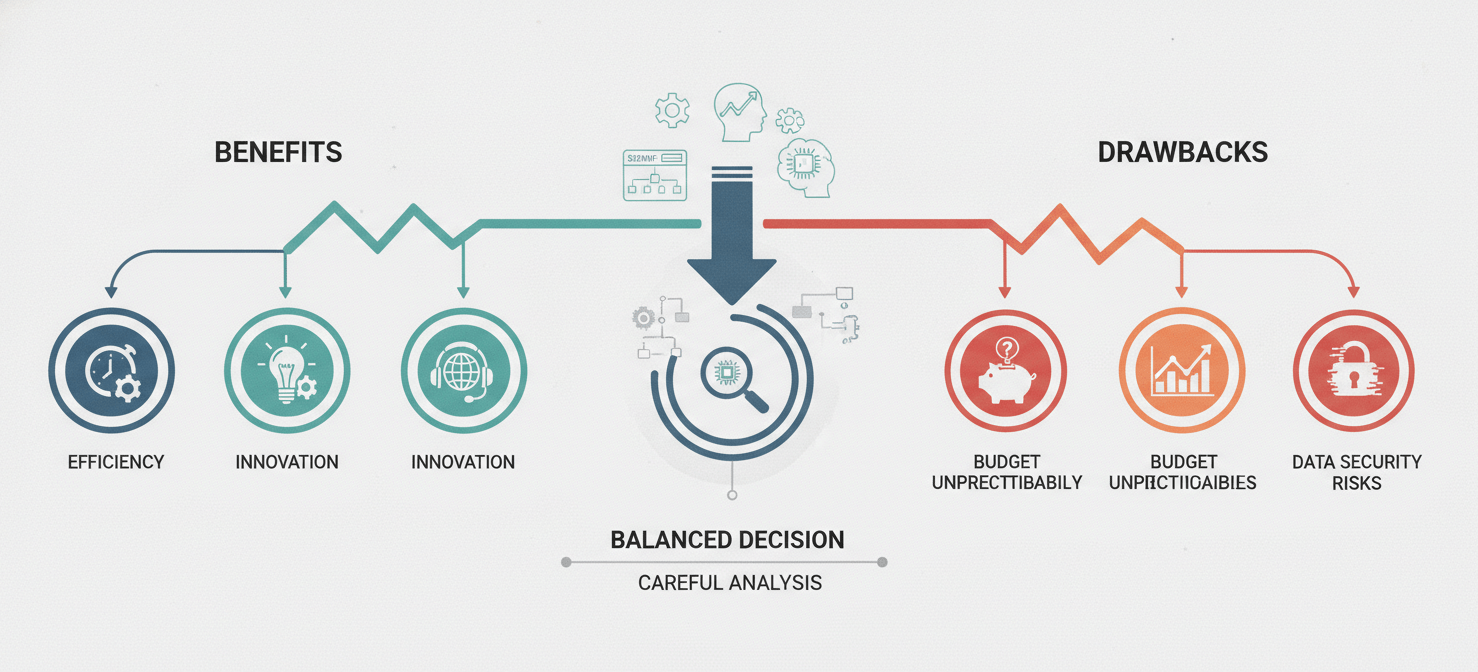
- High-Volume Support Teams: If your team is overwhelmed with repetitive, easy-to-answer questions, Fin can provide significant value by deflecting a large portion of this volume. The $0.99 per resolution might be far cheaper than the cost of a human agent’s time for the same task.
- Teams Focused on Automation: The Advanced and Expert plans offer robust workflow builders. When combined with Fin, you can create powerful, automated processes for handling complex customer journeys, which can lead to greater efficiency and a better customer experience.
- 24/7 Support Needs: For businesses that need to offer round-the-clock support but lack the staff for it, Fin can act as the first line of defense, resolving issues instantly at any time of day.
Potential Drawbacks to Consider
- Budget Predictability: The usage-based model for Fin makes it difficult to predict monthly costs, which can be a challenge for teams with strict budgets. A sudden spike in customer inquiries can lead to a surprisingly high bill.
- Cost at Scale: While the per-resolution cost seems low, it can add up quickly. A team handling thousands of resolutions per month will see a substantial line item for Fin alone, potentially making it more expensive than some competitors who bundle AI features into their plans.
- Complexity of “Resolution”: The concept of an “assumed resolution” means you could be charged even if the customer simply abandoned the chat without getting a satisfactory answer. This requires careful monitoring of Fin’s performance to ensure you’re getting real value.
Conclusion
The Intercom Fin AI pricing model is a departure from traditional, purely seat-based software subscriptions. It’s a hybrid approach that directly ties a portion of your cost to the AI’s success in resolving customer issues. The transparency of the $0.99 per outcome fee is commendable, but it places the burden on you to forecast your usage accurately. The ultimate decision of whether it’s worth the cost depends less on the sticker price of the seat plans and more on a realistic calculation of your potential AI resolution volume. For some, it will be a cost-effective automation engine; for others, the variable nature of the billing will be a bridge too far. The key is to analyze your support conversation data and run the numbers before committing.
Given the intricate nature of AI pricing, understanding your true spend is crucial; you can gain clarity by starting your free Binadox trial to optimize your cloud costs or book a demo to see how it works.
 7-day free trial