



Software-as-a-Service (SaaS) has moved from a line item to a strategic pillar of modern business operations. However, its decentralized and often unmanaged growth presents a significant challenge to financial governance. For CFOs and procurement leaders, the proliferation of SaaS applications can lead to budget overruns, redundant spending, and a lack of clear visibility into total cost of ownership (TCO). Effective forecasting becomes difficult when departmental “shadow IT” and auto-renewing subscriptions obscure the true financial picture. This is where dedicated saas management software emerges not as another IT tool, but as a critical component of the financial tech stack, designed to impose order on the chaos and deliver a measurable return on investment.
Key takeaways
- Organizations waste a significant portion of their SaaS budget, with some reports indicating that over half of all purchased SaaS licenses go unused.
- A SaaS management platform can reduce software spend by up to 30% through license optimization, vendor consolidation, and renewal management.
- Implementing a SaaS management tool provides the data-driven leverage needed for more effective contract negotiations and predictable forecasting.
- Centralized visibility helps mitigate security and compliance risks associated with unvetted, employee-purchased applications.
The Hidden Costs of Unmanaged SaaS
The convenience of SaaS—easy sign-ups, monthly subscriptions, and department-level purchasing—is also its primary financial risk. Without centralized oversight, these individual purchases accumulate into a significant, unmanaged expense category. The average company now utilizes hundreds of SaaS applications, creating a complex and often redundant portfolio. This “SaaS sprawl” introduces several hidden costs that directly impact the bottom line.

Redundant Applications and License Waste
It is common for different departments to independently purchase applications with overlapping functionality. For instance, the marketing team might use one project management tool while the engineering team uses another. The average company has multiple duplicative applications for functions like project management and team collaboration. This redundancy means paying for the same capability multiple times.
Furthermore, license underutilization is a major source of waste. More than half of paid SaaS licenses are often unused or underutilized. This waste stems from over-provisioning during initial purchase, purchasing for headcount growth that doesn’t materialize, and failing to de-provision licenses when employees leave the company or change roles. This represents a direct and avoidable drain on capital.
The Auto-Renewal Trap
A significant majority of SaaS contracts, around 90%, are set to auto-renew. Vendors design these agreements for continuity, often requiring a 30 to 90-day notice to prevent renewal. Without a centralized system to track these dates, finance and procurement teams frequently miss the narrow window to cancel or renegotiate. This results in being locked into another year for a tool that may no longer be needed or is over-licensed, often with a built-in price increase. Missed renewals can erase months of potential savings.
Shadow IT and Compliance Risks
When employees purchase software without approval from IT or finance, it’s known as “shadow IT.” This practice is widespread, with some studies suggesting it accounts for a substantial portion of SaaS spending. These unvetted applications create significant financial and security risks. From a budget perspective, they represent un-forecasted expenses that disrupt financial planning. From a compliance standpoint, these tools may not meet data security standards, exposing the organization to potential breaches and regulatory fines.
How SaaS Management Software Delivers Financial Control
A dedicated saas software management platform addresses these challenges by transforming SaaS from an uncontrolled expense into a managed, optimized portfolio. It provides a single source of truth for all software subscriptions, enabling finance and procurement teams to regain control over spending, forecasting, and vendor relationships.
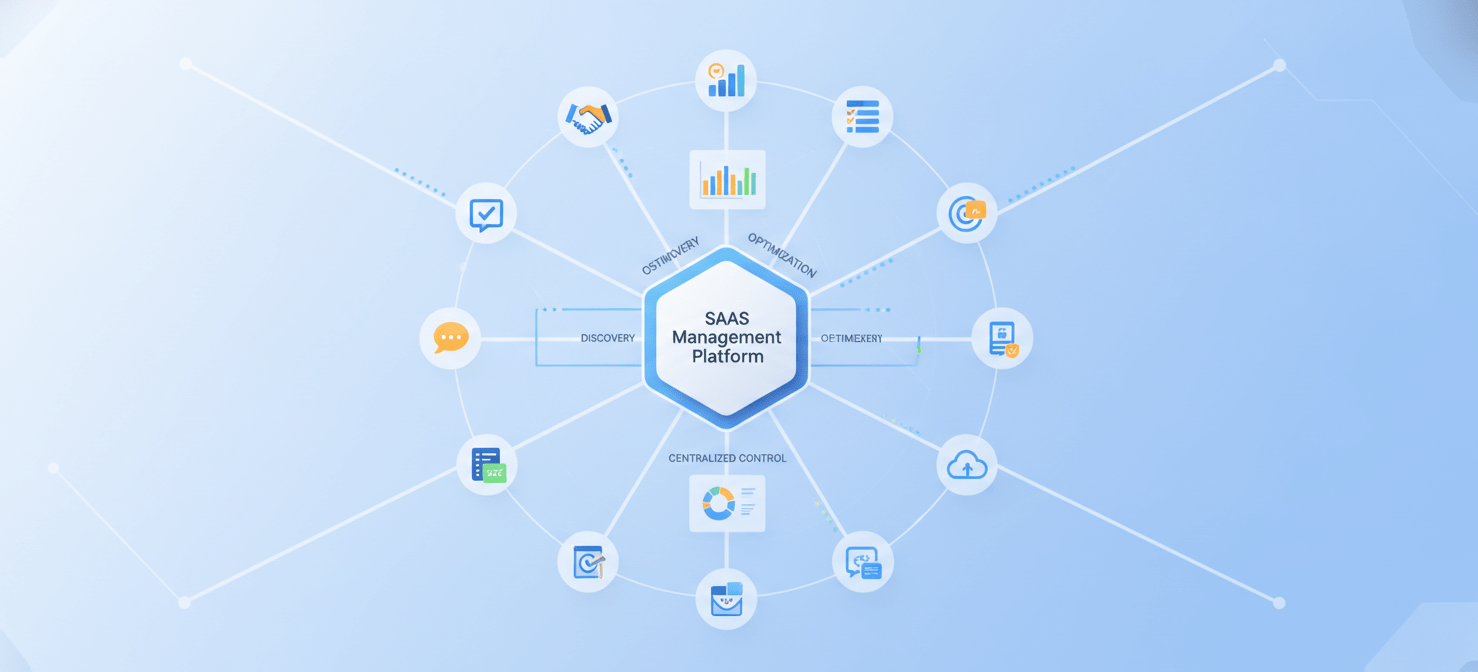
The core function of these platforms is discovery. By integrating with financial systems, single sign-on (SSO) providers, and direct API connections, they create a comprehensive inventory of every application in use, including shadow IT. This complete visibility is the foundation for financial control.
Once applications are discovered, the platform tracks spending by department, vendor, and user. This granular data allows you to see precisely where the budget is going. You can identify redundant applications, spot opportunities for consolidation, and analyze license usage to eliminate waste. This process of rightsizing licenses based on actual usage is a primary driver of immediate cost savings.
Furthermore, these tools centralize contract management. All renewal dates, contract terms, and notice periods are tracked in a single dashboard. Automated alerts ensure that your procurement team has ample time to evaluate each subscription before the renewal deadline, providing the leverage needed to negotiate better terms or terminate unnecessary contracts.
Calculating the ROI of a SaaS Management Platform
The business case for a SaaS management platform rests on its ability to generate a clear and compelling return on investment. The ROI is calculated by comparing the total cost of the platform (subscription fees, implementation) against the financial gains it delivers.
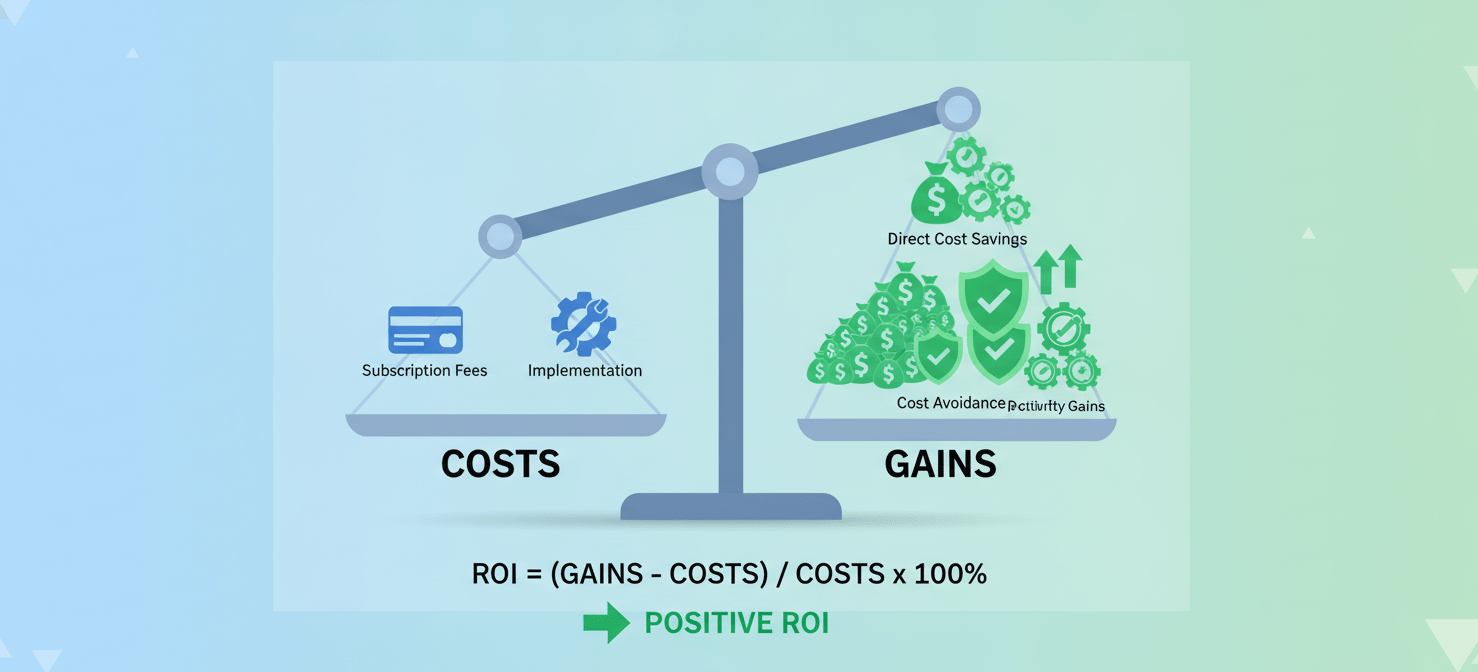
The formula is straightforward: ROI = [(Total Financial Gains – Total Costs) / Total Costs] x 100
Quantifying the Gains
Financial gains come from several key areas:
- Direct Cost Savings: This is the most immediate return. It includes money saved from eliminating redundant applications, de-provisioning unused licenses, and downgrading over-licensed users. If a platform helps you identify and cut $150,000 in wasted annual spend, that is a direct, hard-dollar return.
- Cost Avoidance: This category includes savings from negotiating better renewal terms and preventing unwanted auto-renewals. By using utilization data as leverage, your team can often negotiate lower per-seat pricing or avoid contractual price increases. Preventing a single large, unnecessary enterprise contract from auto-renewing can often pay for the platform subscription itself.
- Productivity and Efficiency Gains: While harder to quantify, these “soft” returns are significant. Automating the manual work of tracking SaaS spend in spreadsheets frees up your finance and IT teams for more strategic activities. Centralized management streamlines procurement and budget analysis, reducing administrative overhead.
To build a credible forecast, start by baselining your current estimated SaaS spend. Apply a conservative waste percentage based on industry benchmarks—even 15-20% of total spend is a realistic target for initial savings. This provides a tangible savings figure to weigh against the platform’s cost.
Key Features for Financial Oversight
When evaluating a saas management software solution, finance and procurement leaders should prioritize features that provide direct financial control and insight.
Discovery and Spend Visibility
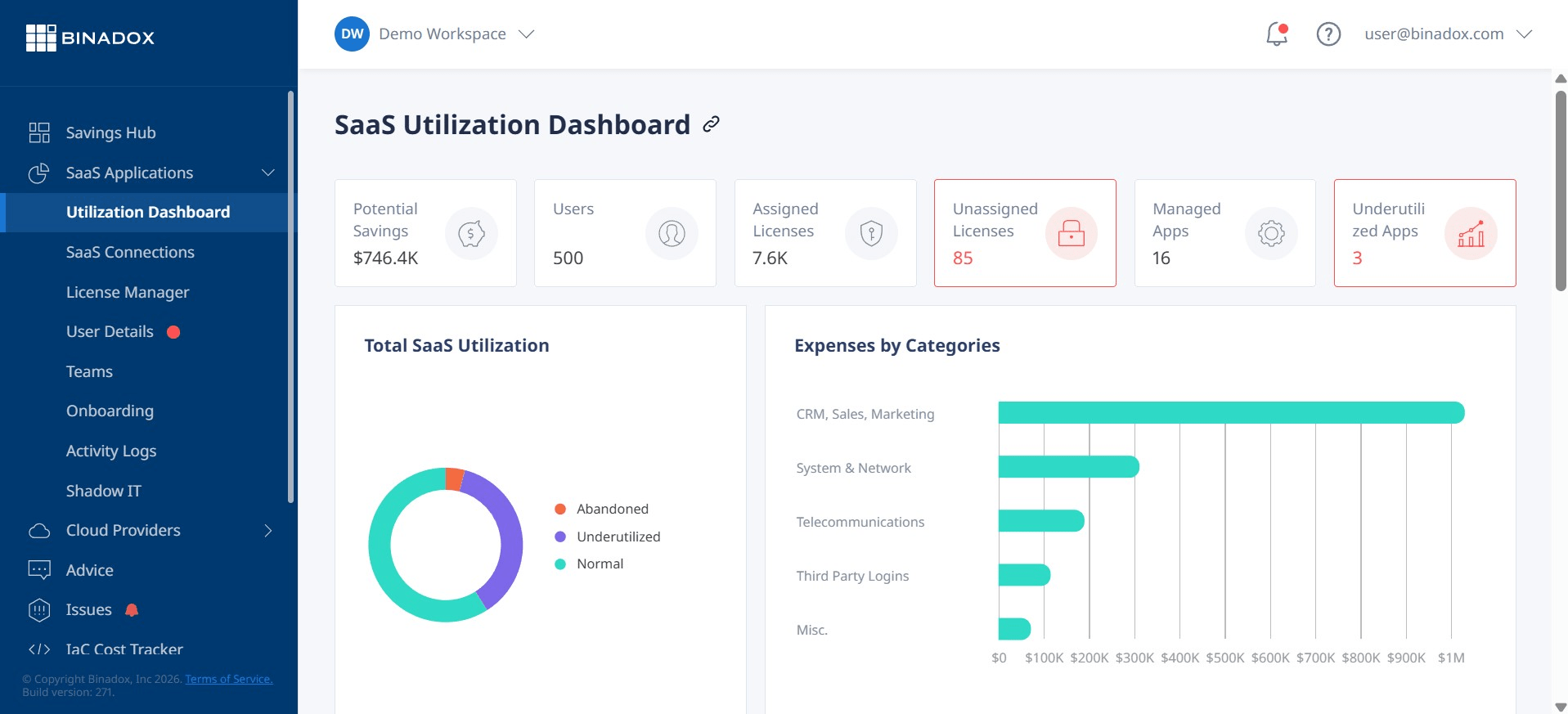
The platform must be able to create a comprehensive inventory of all SaaS applications, including those purchased outside of official channels. Look for robust integrations with accounting software (e.g., NetSuite, QuickBooks), expense management systems, and SSO providers. The dashboard should provide a clear, real-time view of SaaS spend categorized by department, vendor, and application type. This visibility is crucial for accurate budgeting and forecasting.
License Management and Optimization
The ability to track license utilization is non-negotiable. The system should identify inactive licenses, underutilized seats, and opportunities to move users to lower-cost subscription tiers. This feature is the engine for eliminating waste. It provides the concrete data needed to confidently de-provision licenses and right-size contracts at renewal.
Contract and Renewal Management
A centralized repository for all SaaS contracts is essential. The platform must track key dates, including renewal deadlines and notice periods, and provide automated alerts. This proactive approach prevents missed renewals and gives your team the time needed to prepare for negotiations. Look for features that store contract documents and highlight key terms like auto-renewal clauses and price escalation caps.
Integrating SaaS Management with Your Financial Tech Stack
To maximize value, a saas subscription management tool should not operate in a silo. Its power is amplified when integrated with the core systems your finance team already uses.
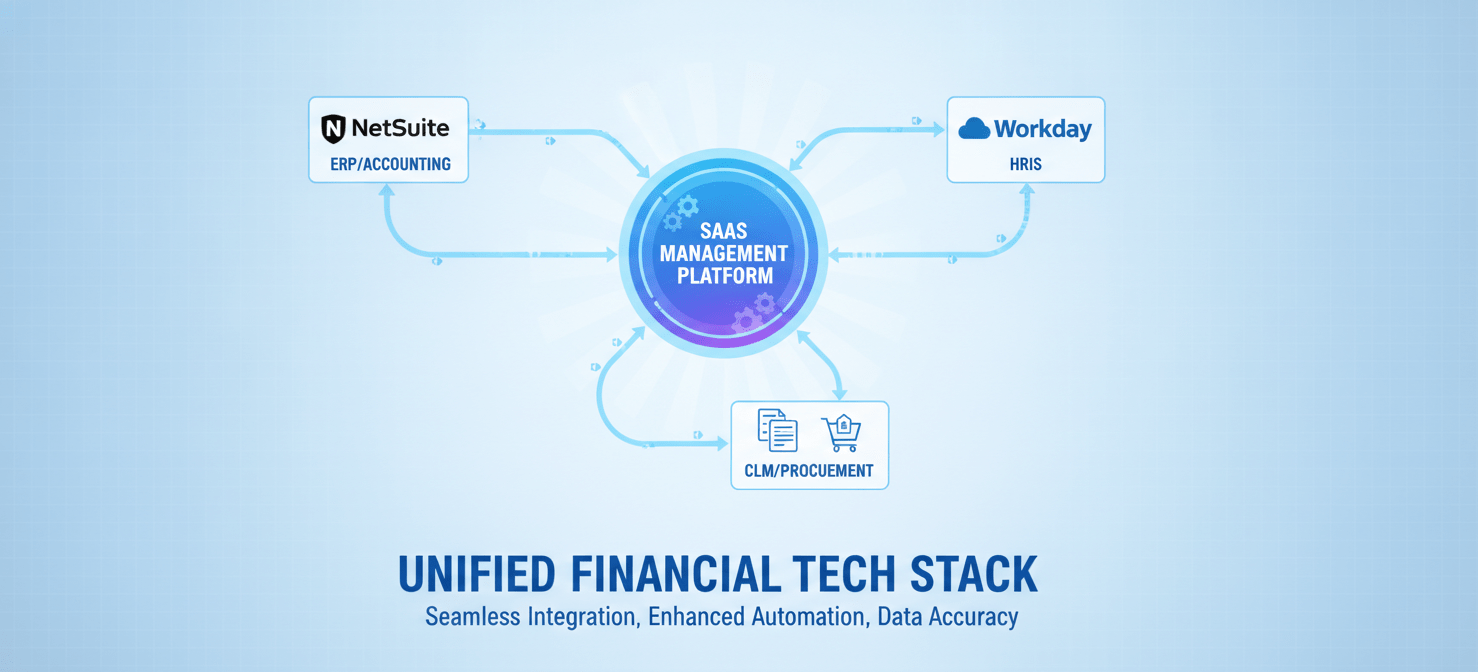
Integration with your Enterprise Resource Planning (ERP) or accounting system is fundamental. This allows for the automatic reconciliation of SaaS invoices and expenses, providing a complete and accurate picture of software spending. It eliminates the manual effort of cross-referencing credit card statements and invoices with departmental budgets.
Connecting the platform to your Human Resources Information System (HRIS) automates the employee lifecycle management for SaaS. When a new employee is hired, the system can trigger workflows to provision necessary software licenses. More importantly, when an employee leaves, it can automatically de-provision their access, immediately cutting costs and closing a potential security gap.
Finally, integration with procurement and contract lifecycle management (CLM) systems creates a seamless workflow from purchase request to renewal. This ensures that all new SaaS purchases are vetted, tracked, and managed centrally from day one, preventing the growth of new shadow IT.
Conclusion
In an environment where SaaS spending continues to grow, treating it as an unmanaged operational expense is no longer viable. The financial leakage from unused licenses, redundant applications, and surprise renewals represents a significant, and entirely correctable, drag on profitability. A lack of visibility translates directly to a lack of control over a major budget category.
Implementing a dedicated saas management software platform is a direct response to this challenge. It provides the visibility, data, and automation necessary to transform SaaS chaos into a well-managed, optimized portfolio. For the CFO, this isn’t about adding another piece of software; it’s about acquiring a critical financial governance tool. The ROI is clear, measurable, and swift, driven by direct cost savings and improved forecasting accuracy. Ultimately, managing SaaS is not an IT problem to be solved, but a financial discipline to be mastered.
To truly transform SaaS from an unmanaged expense into a strategic asset, gain the financial clarity and control your organization deserves. You can easily explore its capabilities by trying our platform for free, or for a tailored walkthrough, simply arrange a personalized demonstration with our team.
 7-day free trial