



Committing to AWS Reserved Instances (RIs) is a fantastic way to lower your cloud bill, often by up to 72% compared to On-Demand pricing. But what happens when your needs change? A project gets canceled, your team refactors an application, or you simply overestimated your usage. Suddenly, you’re paying for capacity you don’t need, and those savings evaporate. If you’re stuck with unused AWS reserved instances, you have better options than just letting them drain your budget. This guide will walk you through the practical steps to modify your RIs or sell them to recoup your costs.
Key takeaways
- Two Main Options: Your primary paths for dealing with unused RIs are to either modify them to fit current needs or sell them on the AWS RI Marketplace.
- Modification is Flexible (to a point): You can often change an RI’s Availability Zone, network platform, or even instance size within the same family at no extra cost.
- Selling Has Rules: Only Standard RIs can be sold, and they must have at least one month remaining on their term. AWS also charges a 12% service fee on the sale price.
- Not All RIs Are Equal: Convertible RIs offer more flexibility to be exchanged but cannot be sold on the marketplace.
First, What Are Reserved Instances (RIs) Again?
Before diving into solutions, let’s quickly recap what RIs are. A Reserved Instance isn’t a physical instance but rather a billing discount applied to your account. In exchange for committing to a specific instance type (like m5.large) in a particular region for a one- or three-year term, AWS gives you a significant discount on the hourly rate.
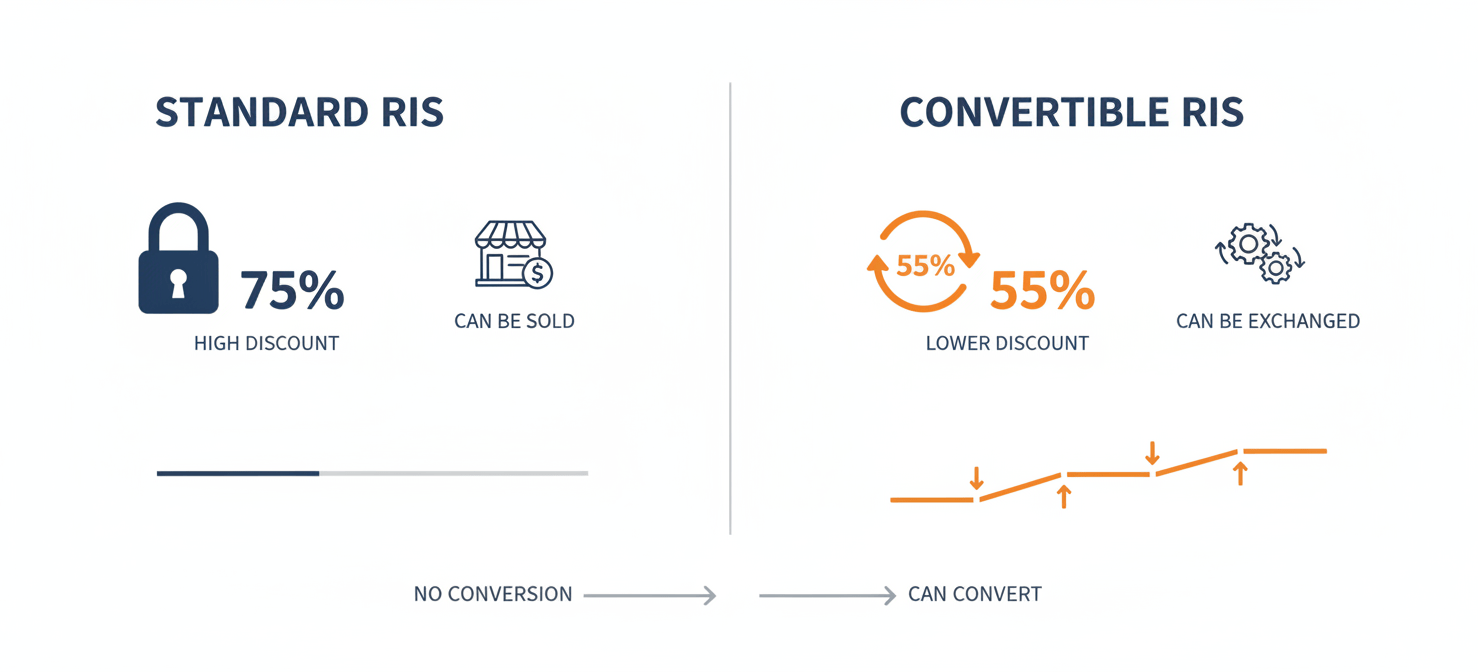
There are two main types of RIs:
- Standard RIs: These offer the highest discount but are less flexible. You can’t change the instance family, operating system, or tenancy. However, you can sell them on the marketplace.
- Convertible RIs: These provide a lower discount but allow you to exchange them for another RI with different attributes, as long as the new one is of equal or greater value. This makes them a good fit for workloads that might evolve. Importantly, you cannot sell Convertible RIs.
Why Do Reserved Instances Go Unused?
Even with careful planning, it’s common for RIs to become underutilized. Several scenarios can lead to this situation:
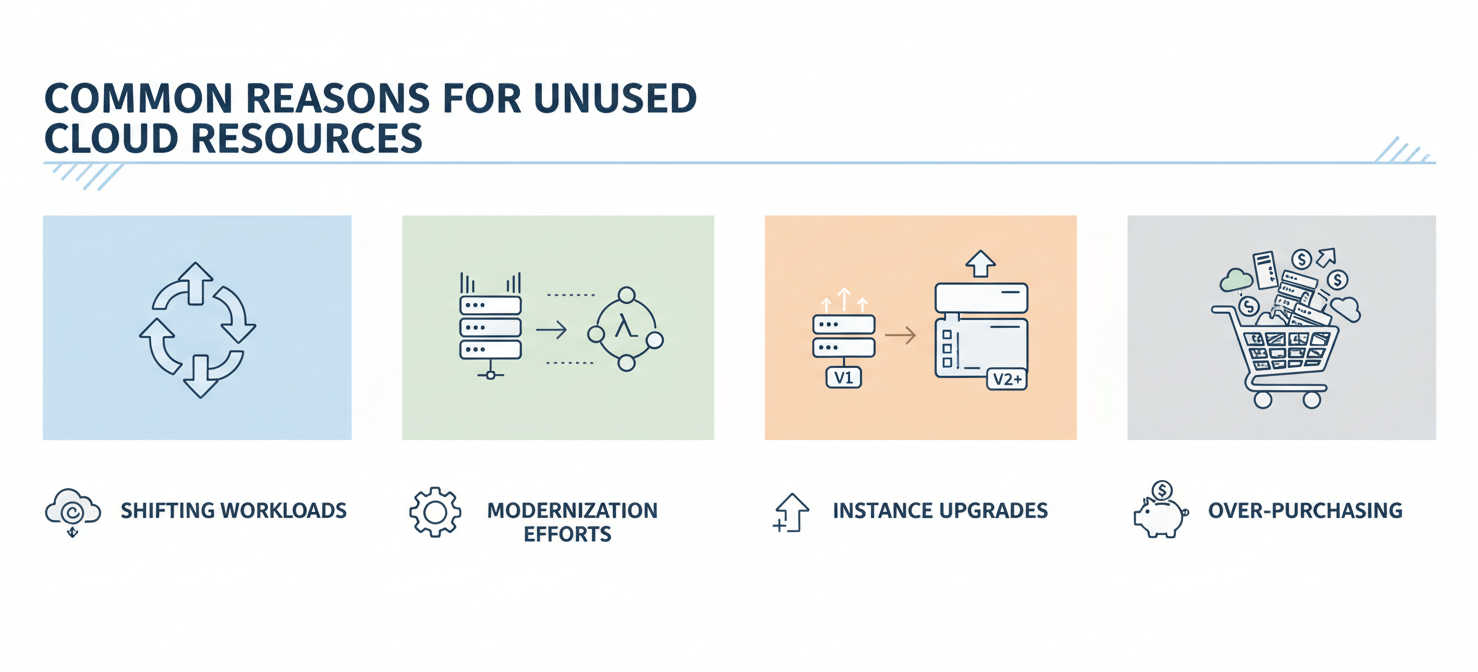
- Shifting Workloads: A project that required a fleet of compute-optimized instances might be decommissioned, leaving you with unneeded C5 RIs.
- Modernization Efforts: Your team might re-architect an application to run on smaller instances, or even move to a serverless model, making your original RIs obsolete.
- Instance Upgrades: AWS frequently releases new and more powerful instance generations. You might want to migrate to a newer family for better performance, stranding your older-generation RIs.
- Simple Over-purchasing: Sometimes, initial forecasts are just too optimistic, and you end up with more reserved capacity than your applications actually consume.
Whatever the reason, paying for an unused commitment is a financial drain. Fortunately, you have a couple of solid options to fix it.
Option 1: Modify Your RIs to Match Your Current Needs
Before you rush to sell, check if you can modify your existing RIs. This is often the simplest and fastest solution. AWS allows for several types of modifications for Standard RIs at no additional cost.
Instance Size Flexibility
One of the most useful features is instance size flexibility. For regional Linux/UNIX RIs with shared tenancy, the discount automatically applies to different instance sizes within the same family.
Here’s how it works: AWS uses a system of “normalization factors” to apply the discount. For example, a reservation for one c4.8xlarge instance can apply to two c4.4xlarge instances or even sixteen c4.large instances. This happens automatically, so if you have unused larger RIs, they might already be covering smaller instances in the same family. You can use AWS Cost Explorer to see how these benefits are being applied.
Other Modifications
Beyond size flexibility, you can also request to:
- Move an RI to a different Availability Zone within the same region.
- Change the network platform from EC2-Classic to VPC (or vice-versa, if your account supports it).
These modifications can be submitted through the AWS Management Console. Keep in mind that you can only modify active RIs that are not currently listed for sale.
Option 2: Sell Your Unused AWS Reserved Instances on the Marketplace
If modification isn’t enough to align your RIs with your usage, your next best option is to sell them. The AWS RI Marketplace is a platform that allows customers to list their unneeded Standard RIs for sale to other AWS users.
This can be an effective way to recoup some of your initial investment. However, there are important rules and limitations to be aware of.
Marketplace Eligibility and Rules
Not every RI can be sold. To list an RI on the marketplace, you must meet several criteria:
- RI Type: Only Standard RIs are eligible. Convertible RIs cannot be sold.
- Ownership: You must have owned the RI for at least 30 days.
- Remaining Term: The RI must have at least one month left in its term.
- Bank Account: You must have a U.S. bank account to receive disbursements.
- Sales Limits: Sellers are limited to $50,000 in sales per year.
- Discount Programs: As of early 2024, RIs purchased through certain discount programs (like an Enterprise Discount Program) may not be eligible for resale.
AWS also charges a service fee of 12% of the total upfront price for each RI sold on the marketplace.
A Step-by-Step Guide to Selling on the AWS RI Marketplace
If your RIs meet the eligibility criteria, the process to sell them is straightforward.
- Register as a Seller: The first time you sell, you’ll need to complete a seller registration process. This involves providing your U.S. bank account information for disbursements and completing a tax interview.
- Select the RIs to Sell: From the EC2 Dashboard in the AWS Management Console, navigate to “Reserved Instances.” Select the specific RIs you want to list.
- Set Your Price: You will need to specify the number of instances you’re selling and set the one-time upfront price. You cannot change the hourly price, which is determined by the original RI purchase. Pricing is key; look at what other similar RIs are listed for to remain competitive. Underpriced listings tend to sell faster.
- List and Wait: After you confirm the listing, your RI will appear on the marketplace. You retain the benefit of the RI until it is sold. When a buyer purchases it, AWS will notify you via email.
- Get Paid: Once the sale is complete and AWS receives payment from the buyer, the funds (minus the 12% service fee) will be transferred to your bank account. This typically happens within 1-3 business days.
What If You Can’t Sell Your RIs?
Sometimes, you may not be able to sell your RIs. This could be because they are Convertible RIs, you don’t have a U.S. bank account, or there’s simply no demand for the specific instance type you’re selling. In this situation, your options are more limited but not nonexistent.
First, double-check modification options. Could an unused m5.4xlarge RI cover the cost of several smaller m5.large instances your team is using? Instance size flexibility is a powerful tool.
Second, use this as a learning opportunity for future commitments. Tools like AWS Cost Explorer and AWS Trusted Advisor can provide recommendations based on your historical usage to help you make more accurate RI purchases in the future. For workloads with uncertain futures, consider Convertible RIs or AWS Savings Plans, which offer greater flexibility than Standard RIs, even if the discount is slightly lower.
Conclusion
Having unused AWS reserved instances feels like throwing money away, but it doesn’t have to be a total loss. By first exploring all possible modifications—especially taking advantage of instance size flexibility—you can often repurpose your commitment to match your current infrastructure. If that fails, the AWS RI Marketplace provides a viable exit ramp for Standard RIs, allowing you to recoup a significant portion of your costs. The key is to be proactive. Regularly review your RI utilization, understand your options, and don’t let a sunk cost continue to sink your cloud budget. After all, an unused server in the cloud is just as wasteful as an empty one in a data center, only quieter.
To ensure you’re always optimizing your cloud commitments and avoiding future waste, you can easily start your free Binadox trial to gain immediate insights into your usage, or if you prefer a guided approach, book a demo to discuss how our platform can specifically address your organization’s unique challenges.
 7-day free trial