



Employees are turning to generative AI to automate tasks, analyze data, and generate content, often outside the view of IT and security teams. This unmanaged use of AI tools, known as “Shadow AI,” introduces significant risks, including data leakage and compliance violations. Effective shadow AI discovery is therefore the first step toward mitigating these risks and harnessing AI’s benefits safely. It requires a deliberate strategy to uncover which tools your teams are using, what data they are sharing, and where the potential blind spots are.
Key takeaways
- Unseen Risks are Everywhere: Shadow AI is more than just unapproved software; it creates untraceable decision-making processes and can expose sensitive company data to third-party models without oversight.
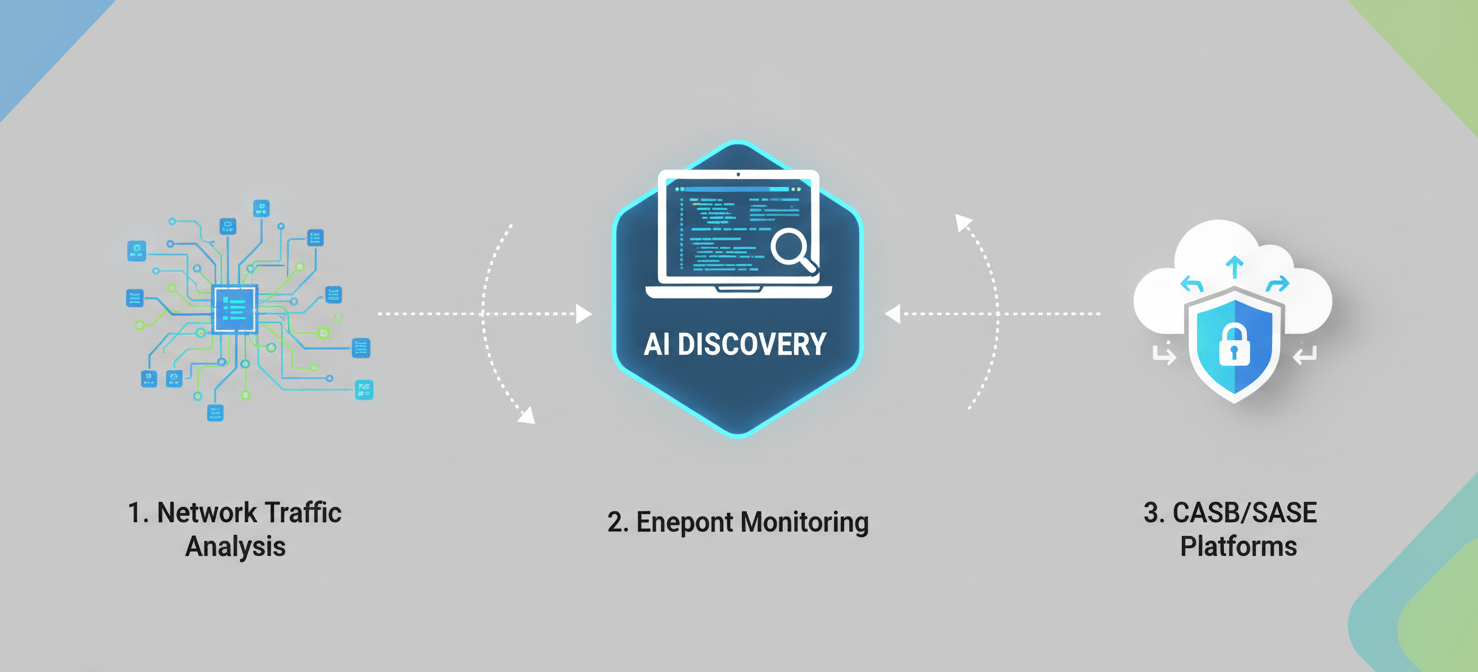
- Discovery is a 3-Pronged Approach: Finding unmanaged AI requires a combination of network traffic analysis, endpoint monitoring, and insights from Cloud Access Security Brokers (CASBs).
- Blocking Isn’t Enough: A successful strategy involves not just finding and blocking tools, but also establishing a clear corporate AI policy that guides employees on safe and productive AI use.
- From Discovery to Governance: The ultimate goal is to turn visibility into control, managing risks while still allowing teams to innovate with approved and vetted AI technologies.
The Risks of Unmanaged AI Usage
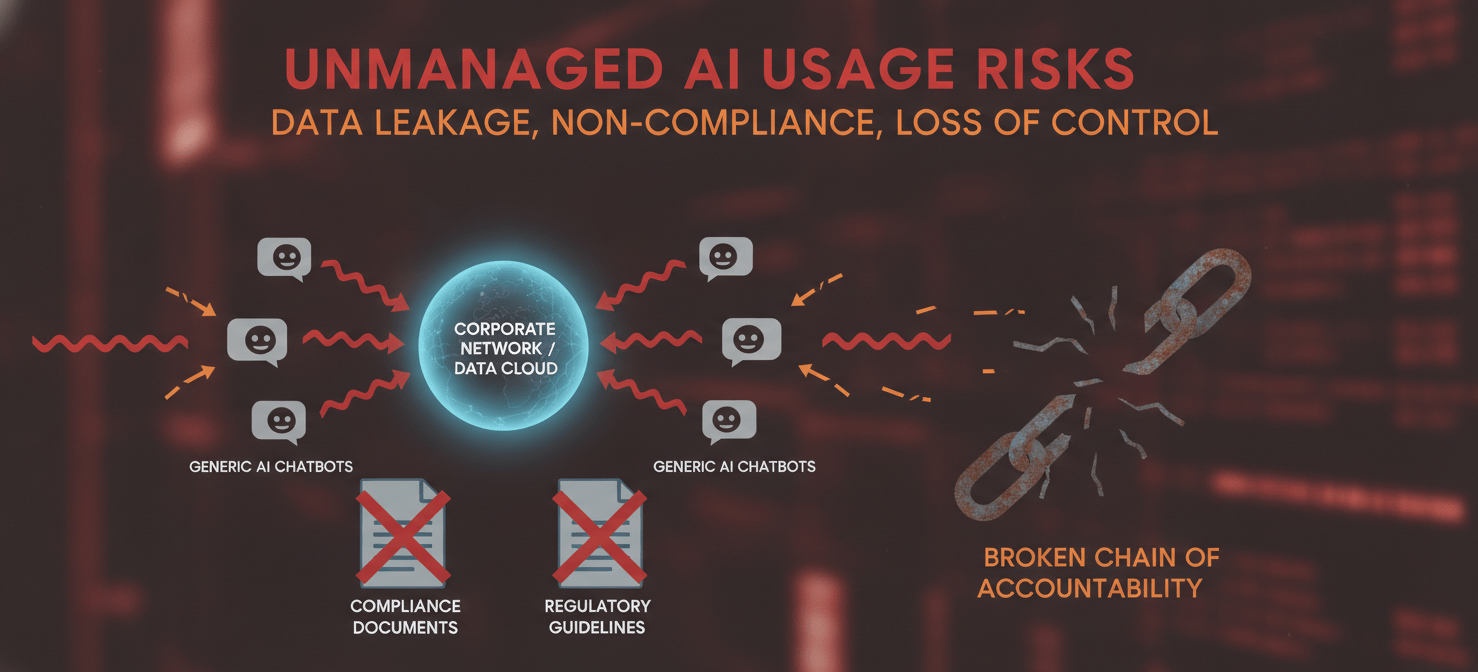
Shadow AI is the next evolution of shadow IT, but the risks are substantially greater. While shadow IT often involves unsanctioned access or infrastructure, shadow AI concerns the unauthorized use of AI tools that can directly process, retain, and learn from your corporate data. When employees use unapproved AI, they may inadvertently expose sensitive information, creating security and compliance blind spots.
Data Leakage and IP Contamination
The most immediate risk is data exfiltration. Every time an employee pastes proprietary code, customer lists, or confidential strategic documents into a public AI tool, that data can be stored and used for model training by a third party. This creates a significant risk of intellectual property contamination and data leakage. In fact, one report noted that data loss prevention (DLP) incidents related to generative AI increased by more than 2.5 times, accounting for 14% of all DLP events.
Compliance and Legal Violations
Unmanaged AI tools rarely come with enterprise-grade security or compliance guarantees. Using them to handle customer or employee data can lead to violations of regulations like GDPR and CCPA. Furthermore, if an AI tool produces biased or inaccurate output that influences business decisions—such as in hiring or marketing—the organization may face legal liability without a clear audit trail to defend its actions.
Lack of Accountability and Oversight
When AI-driven decisions are made using unvetted tools, accountability disappears. If a flawed, AI-generated analysis leads to a poor business outcome, there is no way to trace the data inputs or the model’s reasoning. This creates a dangerous gap in governance, where critical business processes rely on untraceable, black-box systems.
Methods for Shadow AI Discovery
To manage unapproved ChatGPT usage and other forms of shadow AI, you first need to see it. A comprehensive discovery strategy combines multiple technical approaches to create a complete picture of AI usage across the organization.
Network Traffic Analysis
Analyzing your network traffic is a foundational method for identifying communications with known AI platforms. By monitoring data flows, you can spot connections to the APIs and domains of popular generative AI services.
Modern Network Traffic Analysis (NTA) tools increasingly use machine learning to establish a baseline of normal network behavior and then flag anomalies. This can help detect connections to new or less common AI tools that might not be on a predefined blocklist. Furthermore, some advanced solutions can even analyze encrypted traffic metadata to identify suspicious patterns without full decryption, preserving privacy while enhancing security.
Endpoint Monitoring
Employees often access AI tools directly through web browsers on their work devices. Endpoint monitoring solutions, such as lightweight agents installed on laptops and desktops, provide direct visibility into this activity. These tools can track application usage, browser activity, and even file uploads to web-based AI applications. This method is effective at catching browser-based AI tools and desktop applications like Ollama or LM Studio that might run locally but still pose a risk.
CASB and SASE Platforms
Cloud Access Security Brokers (CASBs) are essential for shadow AI discovery. Positioned between users and cloud services, a CASB can identify the cloud applications your employees are using, including AI tools. Many CASB vendors maintain extensive databases of known applications, scoring them for risk and allowing you to enforce policies.
These platforms are often part of a broader Secure Access Service Edge (SASE) architecture, which unifies network and security services. A SASE solution can discover unsanctioned SaaS and AI tools by analyzing the traffic it routes, providing a centralized dashboard to see who is using which tools and apply controls.
Establishing a Corporate AI Policy
Discovering shadow AI is only half the battle; the next step is to govern its use. A clear and practical corporate AI policy is crucial for guiding employees, mitigating risks, and fostering responsible innovation. Trying to simply block all AI tools is often ineffective, as employees will find workarounds. A better approach is to establish guardrails that enable safe usage.
Key Components of an Effective AI Policy
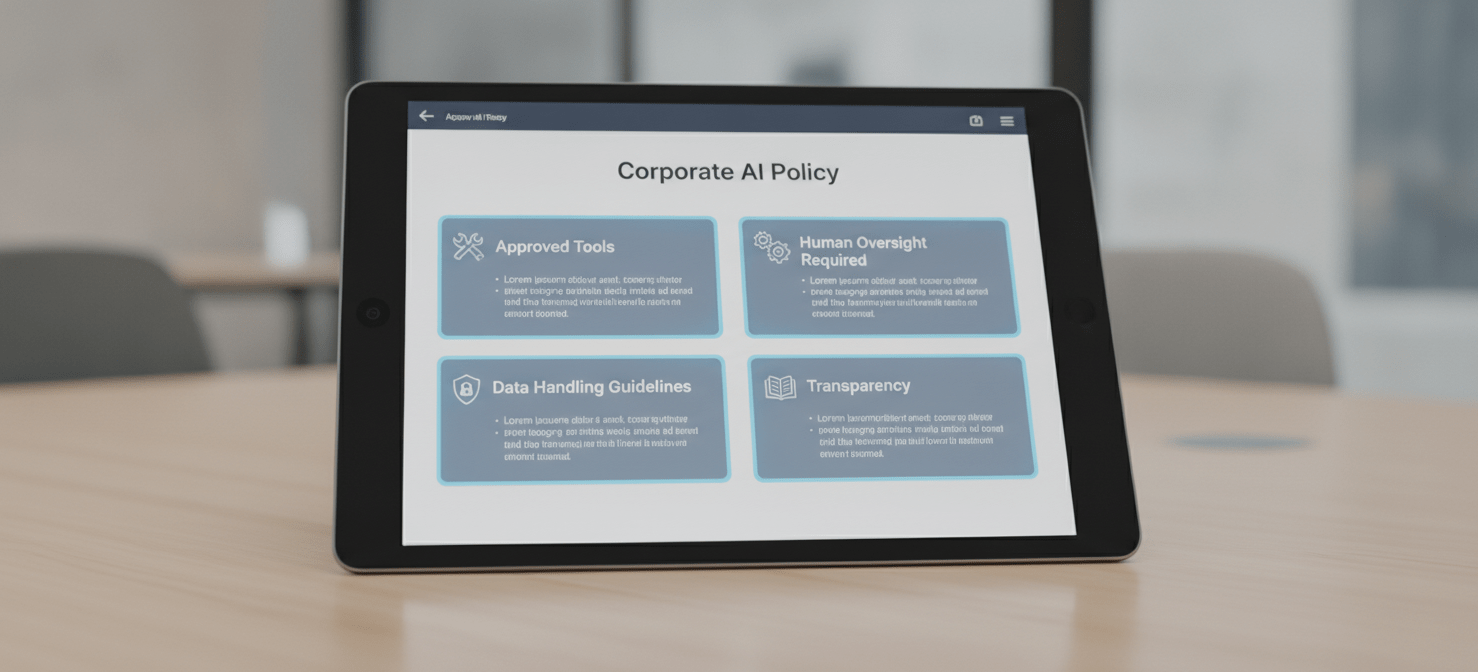
An effective policy should be developed with input from IT, legal, HR, and security teams and should clearly define the following:
- Scope and Objectives: Clearly state the purpose of the policy and which AI tools, platforms, and use cases it covers.
- Approved and Prohibited Tools: Maintain a list of vetted and approved AI tools that employees are encouraged to use. Equally, list tools that are explicitly forbidden due to security or privacy concerns.
- Data Handling Guidelines: This is the most critical section. Prohibit employees from entering confidential, proprietary, or personally identifiable information into public or unapproved AI models. Provide concrete examples of what constitutes sensitive data.
- Requirement for Human Oversight: Mandate that all AI-generated output must be reviewed by a human for accuracy, bias, and appropriateness before being used in official work. The human user is ultimately accountable for the final work product.
- Disclosure and Transparency: Specify when employees must disclose the use of AI in their work, both internally and externally.
Communication and Training
A policy is only effective if employees know it exists and understand it. Therefore, you must invest in training sessions to educate your team on the risks of shadow AI and the guidelines for proper usage. This builds confidence and helps create a culture of responsible AI use rather than one of fear or restriction.
Managing and Governing Discovered AI Usage
Once you have visibility into AI usage and a policy in place, the final step is to implement ongoing governance and management. This involves a continuous cycle of monitoring, assessing, and refining your approach.
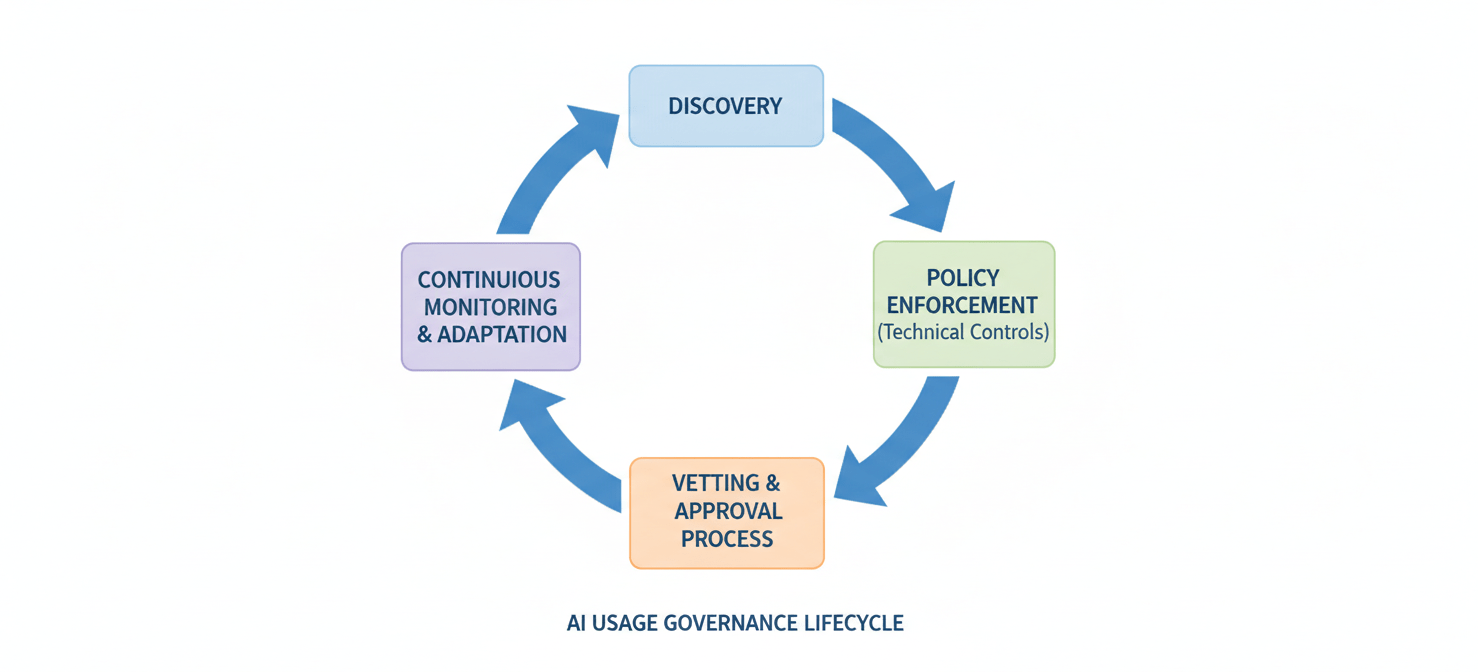
Implement Technical Controls
Use your discovery tools to enforce your corporate AI policy. For example, your CASB or SASE platform can be configured to:
- Block high-risk applications: Prevent access to AI tools that do not meet your security standards.
- Coach users in real-time: When an employee attempts to access a restricted tool, a notification can pop up to educate them on the policy and direct them to an approved alternative.
- Prevent sensitive data uploads: Configure Data Loss Prevention (DLP) rules to inspect data being sent to AI websites and block uploads containing sensitive keywords or patterns.
Create a Vetting and Approval Process
Employees will inevitably want to use new AI tools that could benefit the business. Instead of defaulting to “no,” establish a formal process for employees to request and have new AI tools reviewed and approved by an oversight committee. This allows your organization to adapt and adopt new technologies safely.
Monitor and Adapt Continuously
The AI landscape is evolving rapidly. Therefore, your approach to managing it must be dynamic. Continuously monitor for new shadow AI applications and review your policies and approved tool lists quarterly. Regular audits and reporting will help you understand adoption trends and refine your governance strategy over time.
Conclusion
Tackling unmanaged LLM usage begins with a commitment to shadow AI discovery. Ignoring the problem is no longer an option, as the risks of data exposure and compliance failures are too significant. By combining network analysis, endpoint monitoring, and CASB platforms, you can gain the visibility needed to understand your organization’s AI footprint. However, discovery is just the starting point. True governance comes from pairing that visibility with a clear, practical corporate AI policy that empowers employees to innovate safely. The goal isn’t to eliminate AI, but to bring it out of the shadows and manage it intelligently. After all, the only thing worse than knowing employees are pasting company secrets into a chatbot is not knowing it’s happening at all.
To gain the essential visibility and control over your organization’s AI footprint, you can begin using Binadox at no cost to manage these challenges, or for a deeper dive into its capabilities, consider scheduling a personalized demonstration.
 7-day free trial