



As a FinOps lead or cost analyst, you are under constant pressure to translate sprawling cloud and software spend into a clear, actionable financial picture. The endless cycle of reconciling invoices, chasing down untagged resources, and explaining budget variances after the fact is both exhausting and inefficient. Effective vendor cost management requires moving beyond this reactive posture. It demands a proactive, data-driven approach that embeds financial accountability directly into your operational and engineering workflows. This playbook outlines a three-phase journey from reactive chaos to proactive control, focusing on the metrics, processes, and decisions that matter most to your team: accurate cost allocation, predictable forecasting, and maximizing the business value of every dollar spent.
Key takeaways
- Unify Data First: Before you can optimize, you must unify. Consolidate disparate vendor billing, usage, and contract data into a single, normalized view to create a reliable foundation for all FinOps activities.
- Establish Clear Ownership: Drive accountability by implementing a rigorous cost allocation and tagging strategy. Aim to have at least 90% of all taggable resources properly allocated to a specific business unit, project, or cost center.
- Automate Governance: Manual oversight doesn’t scale. Use automated policies to enforce tagging, identify idle resources, and manage commitment-based discounts, turning reactive clean-up into proactive governance.
- Negotiate from Strength: Leverage granular usage data to enter contract negotiations with a clear understanding of your consumption patterns, needs, and waste, shifting the conversation from price-taking to strategic value alignment.
The Vicious Cycle of Reactive Vendor Cost Management
For many organizations, vendor cost management is a fundamentally reactive process. The monthly cloud bill arrives, often riddled with surprises, triggering a scramble to understand the drivers of overspend. This cycle is characterized by several key pain points that directly impact your ability to forecast accurately and control budgets.
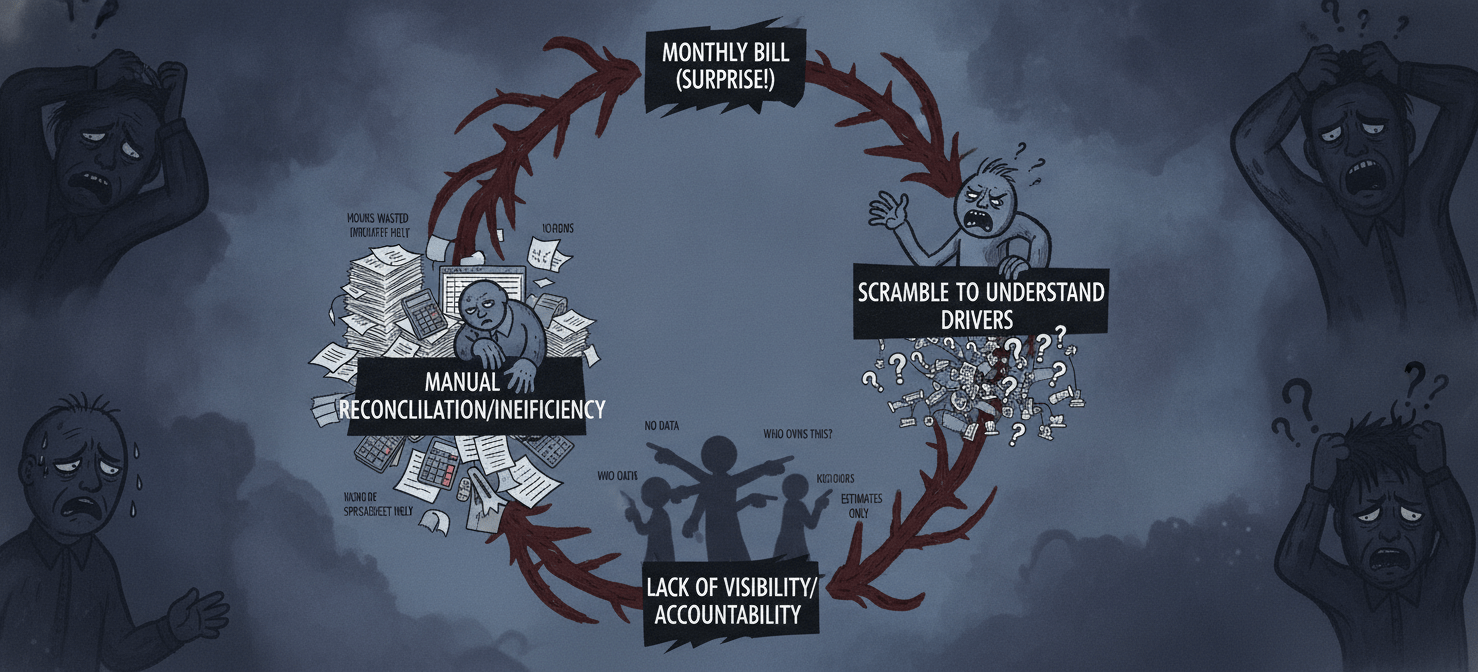
First, there is a pervasive lack of visibility. When costs are fragmented across multiple vendors, accounts, and services, it becomes nearly impossible to get a holistic view of spending. This is compounded by complex billing data; cloud invoices can contain thousands of line items, with pricing models that are granular and constantly in flux. Without a way to normalize this data, you are left trying to reconcile apples and oranges, making accurate showback and chargeback a significant challenge.
Second, this poor visibility leads directly to a lack of accountability. When resources are not properly tagged or assigned to specific teams or projects, costs become “everybody’s problem and nobody’s problem.” This is a common failure point; most organizations report tagging compliance between 60-80%, leaving a significant chunk of spend unallocated and difficult to manage. The result is orphaned resources, budget overruns, and an inability to connect spending to specific business outcomes.
Finally, the entire process is manual and inefficient. Your team spends valuable time exporting CSVs, manipulating spreadsheets, and chasing down engineers for context instead of focusing on strategic analysis and optimization. This reactive, manual approach not only fails to control costs effectively but also creates friction between finance and engineering, undermining the collaborative culture that is essential for a successful FinOps practice.
Phase 1: Unify and Normalize Vendor Data
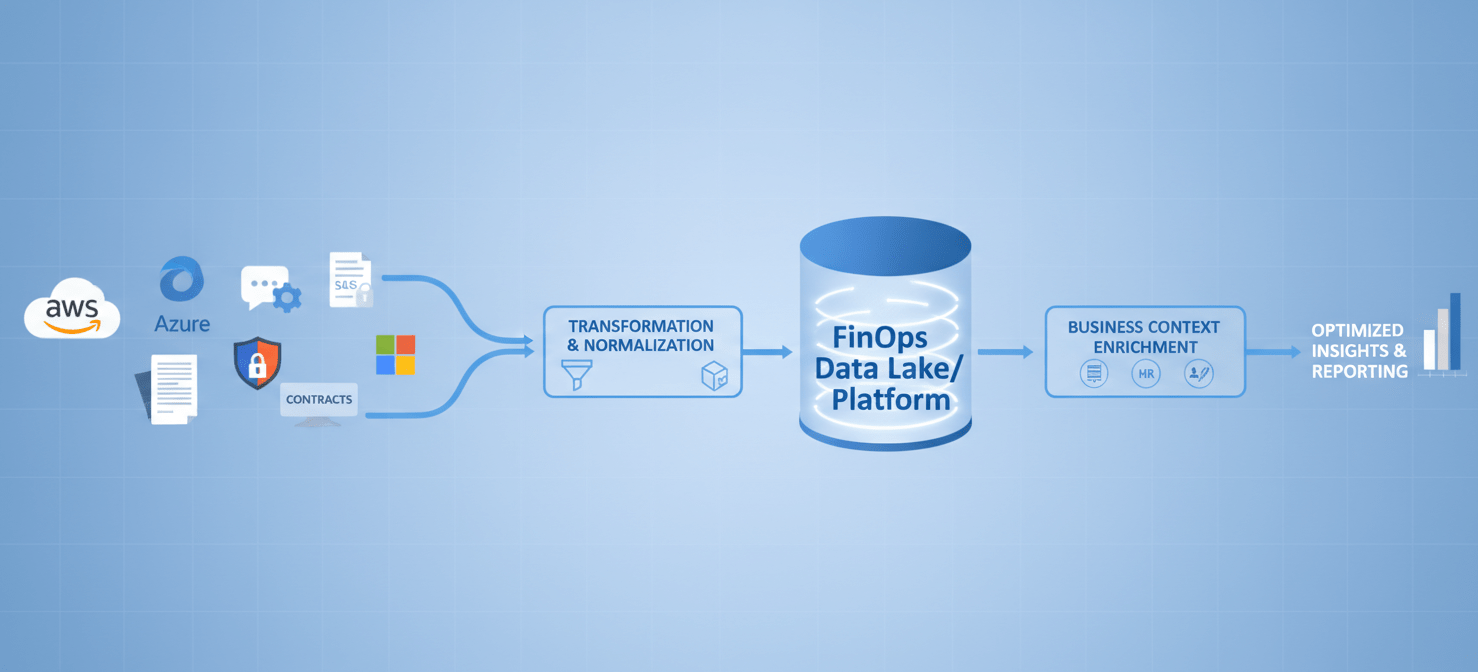
You cannot optimize what you cannot see. The foundational step in any proactive vendor cost management strategy is to create a single, unified source of truth for all your cost and usage data. This involves aggregating information from disparate sources and normalizing it into a consistent format that allows for meaningful analysis and accurate allocation.
Consolidate All Cost and Usage Streams
Your technology spend is likely spread across multiple cloud providers (AWS, Azure, GCP), SaaS applications, and other third-party vendors. Each of these providers has its own unique billing structure, API, and data format. The first task is to pull all of this information into a central repository, such as a cloud data warehouse or a dedicated FinOps platform.
This process should be automated to ensure the data is always current. Manual data pulls are not only time-consuming but also prone to errors that can undermine the credibility of your cost allocation and reporting. The goal is to have a system where all cost and usage data, regardless of the source, is ingested and updated automatically.
Normalize Data for True Comparability
Once the data is consolidated, the next critical step is normalization. This involves transforming the raw billing data from each vendor into a standardized format. For example, you might standardize naming conventions for services, regions, and usage types. This allows you to perform “apples-to-apples” comparisons across different providers and services.
A key part of this process is mapping the data to a common model that reflects your business structure. This means aligning cost data with your organization’s cost centers, business units, and product lines. This business context is what transforms raw billing data into actionable financial insights, enabling accurate chargeback and showback.
Enrich Data with Business Context
The final step in this phase is to enrich the normalized data with additional business context. This can include information from your CMDB, contract management system, or HR directory. For example, you can enrich the data with contract renewal dates, negotiated discount rates, and resource owner information.
This enriched data set becomes the foundation for all subsequent FinOps activities. It provides the detailed, context-rich information needed to build accurate attribution dashboards, track KPIs, and make informed, data-driven decisions about vendor spend.
Phase 2: Establish a FinOps Vendor Management Practice
With a unified and normalized data foundation in place, you can now establish the core processes of a proactive FinOps vendor management practice. This phase is about creating the systems and cultural loops that drive visibility, accountability, and continuous optimization.
Implement a Rigorous Cost Allocation and Tagging Strategy
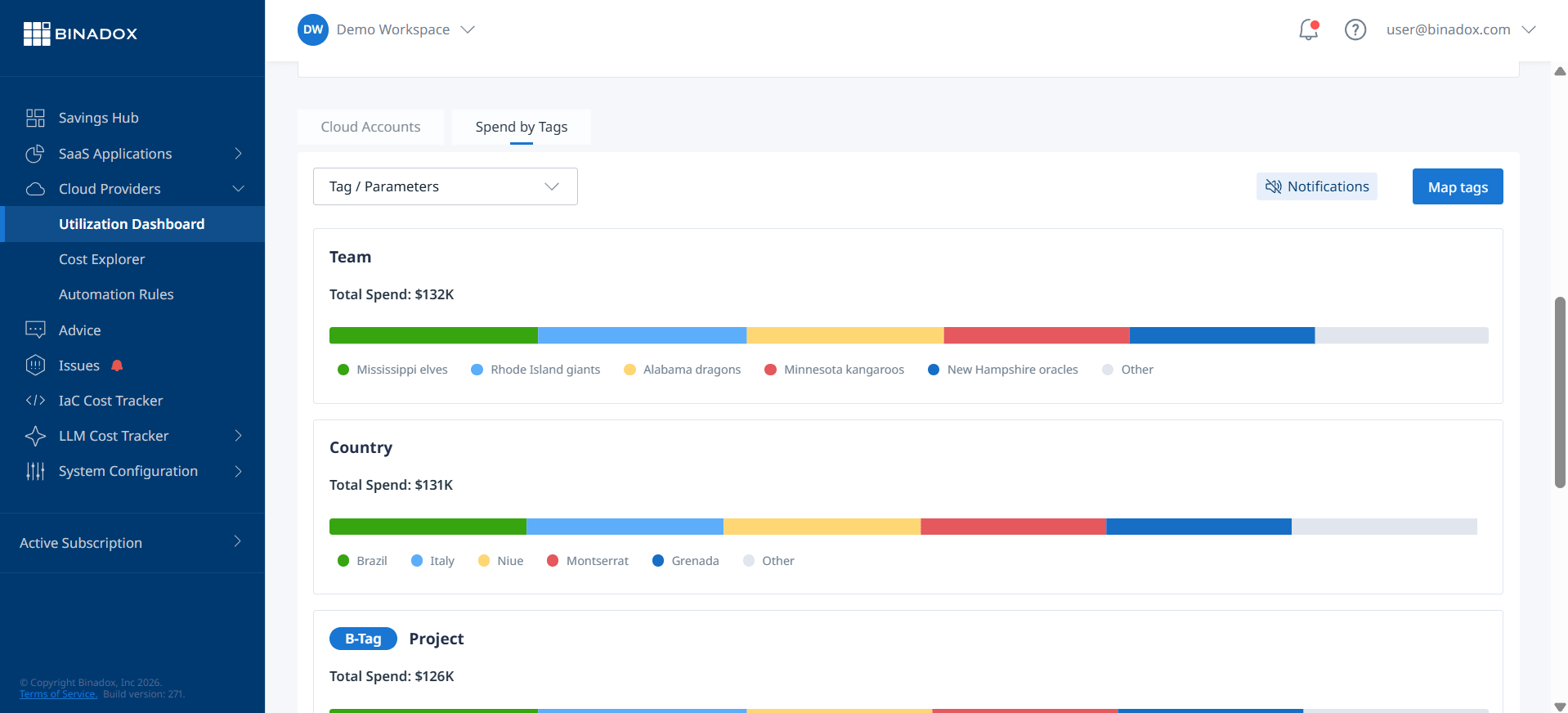
Accurate cost allocation is the bedrock of accountability. Every dollar of technology spend should be assigned to an owner. This requires a comprehensive and consistently enforced tagging strategy. Work with engineering teams to define a mandatory set of tags for all provisioned resources, such as cost-center, project, owner, and environment.
However, achieving 100% tagging compliance is often unrealistic, especially with legacy resources. This is where virtual tagging and allocation rules become critical. Use your unified data platform to create rules that allocate untagged or shared costs based on other available data points, such as resource names or account structures. Your primary KPI here should be the percentage of spend that is fully allocated. Aim for a consistent rate of 90% or higher.
Develop Actionable Dashboards and KPIs
Raw data is not insight. To make cost data meaningful for different stakeholders, you need to translate it into role-specific dashboards and KPIs.
- For Engineering Leads: Dashboards should focus on operational efficiency metrics like resource utilization rates, idle resource counts, and cost per workload. These metrics empower engineers to see the financial impact of their technical decisions in near real-time.
- For Finance and Business Leaders: Reports should highlight budget variance, forecast accuracy, and unit cost metrics (e.g., cost per customer or cost per transaction). These KPIs connect cloud spend directly to business value and financial performance.
- For the FinOps Team: Your dashboards need to provide a holistic view, tracking KPIs like commitment-based discount coverage, the percentage of spend allocated, and the effective savings rate from optimization efforts.
These dashboards should be self-service and readily accessible, fostering a culture where everyone has visibility into the costs they are responsible for.
Automate Anomaly Detection and Budget Alerts
Proactive management means catching cost spikes before they show up on the monthly invoice. Implement automated anomaly detection systems that monitor spending patterns and flag unusual increases in real-time. These alerts should be sent directly to the teams responsible for the resources in question, enabling them to investigate and remediate issues quickly.
In addition, establish automated budget alerts that notify cost center owners when their spending approaches or exceeds their forecast. This creates a crucial feedback loop, moving cost conversations from a reactive, end-of-month review to a proactive, in-flight process of course correction.
Phase 3: Drive Proactive Optimization and Negotiation
With strong visibility and accountability established, the final phase focuses on leveraging your data and processes to actively optimize costs and negotiate more effectively with vendors. This is where your FinOps practice transitions from cost management to value optimization.

Systematize Rightsizing and Waste Reduction
A significant portion of cloud waste comes from idle or overprovisioned resources. Studies suggest this figure can be as high as 30% of total cloud spend. Your unified data provides the insights needed to systematically identify these inefficiencies.
Create regular, automated processes to:
- Identify and decommission idle resources: This includes unattached storage volumes, idle load balancers, and virtual machines with low CPU utilization.
- Rightsize overprovisioned instances: Analyze performance metrics to match instance types and sizes to actual workload demands.
- Implement automated scheduling: Power down non-production environments during off-hours and weekends to avoid paying for resources that are not in use.
These actions represent some of the quickest wins in a software cost optimization playbook and should be a continuous, automated part of your practice.
Optimize Commitment-Based Discounts
Leveraging commitment-based discounts like AWS Savings Plans or Azure Reserved Instances can be one of the most effective ways to reduce your cloud bill, often by 40-70% on compute costs. However, managing these commitments effectively is a complex forecasting challenge.
Use your historical usage data to model future consumption and make informed decisions about commitment purchases. The goal is to maximize your discount coverage for steady-state workloads while minimizing the risk of underutilization. Track your commitment coverage and utilization rates as key performance indicators, and regularly review and adjust your portfolio as your usage patterns change.
Leverage Data for Strategic Vendor Negotiations
Armed with granular, unified data on your consumption, you can enter vendor negotiations from a position of strength. Traditional software contract negotiation often puts the buyer at a disadvantage. However, with detailed usage data, you can shift the dynamic.
Before a contract renewal, your team should:
- Analyze actual usage: Understand precisely which features are being used, by whom, and how often. This allows you to avoid paying for shelfware or unnecessary license tiers.
- Identify waste: Pinpoint underutilized licenses or redundant services that can be eliminated or consolidated.
- Benchmark against alternatives: Use your normalized data to compare the cost-effectiveness of different vendors or solutions.
- Model future needs: Project future consumption based on your product roadmap and business forecasts to negotiate a contract that aligns with your growth.
This data-driven approach allows you to negotiate terms based on the actual value you receive, not just the vendor’s list price. You can push for more favorable pricing models, cap annual maintenance cost increases, and ensure that service level agreements (SLAs) are clearly defined and enforceable.
Conclusion
Moving from a reactive to a proactive stance on vendor cost management is not a one-time project; it is a fundamental shift in culture and process. It requires treating cloud and software spend not as a fixed overhead to be reconciled, but as a variable input to be actively managed and optimized. By unifying your data, establishing clear ownership, and leveraging automation, you can break the vicious cycle of monthly budget surprises. This playbook provides a structured path to transform your FinOps practice from a team of financial accountants into a strategic partner that drives efficiency and maximizes the business value of every technology investment. Ultimately, effective vendor cost management ensures that your budget is funding innovation, not inefficiency.
To truly transform your FinOps practice and ensure every dollar funds innovation, not inefficiency, a dedicated platform can help you achieve this proactive control. You can explore its capabilities by starting your free Binadox trial today, or learn more about it by scheduling a demonstration.
 7-day free trial