



For a founder or CTO, every dollar of runway counts. You make decisions based on ROI, and your tech stack is no exception. While Intercom is a powerful customer communication platform, its pricing can be a significant line item for an early-stage startup. The per-seat costs, combined with usage-based fees for its AI features, can quickly escalate as your team and customer base grow. This reality has many leaders searching for affordable Intercom alternatives for startups that deliver the core functionality needed to engage customers without draining the balance sheet.
This article breaks down the most viable, cost-effective options for your team. It focuses on tools that provide the essential features for customer support and engagement while respecting the financial constraints of a startup. You’ll find a clear path to making a pragmatic decision that extends your runway and equips your team for growth.
Key takeaways
- Pricing models matter: Many alternatives offer flat-rate or lower per-seat pricing, providing more predictable monthly costs compared to Intercom’s layered model.
- Focus on core features: For most startups, a shared inbox, live chat, and a basic knowledge base are the highest-impact features. You can often find these in tools at a fraction of Intercom’s cost.
- AI is accessible: You don’t need to pay enterprise prices for AI. Several alternatives offer capable AI chatbots and agent-assist tools with more startup-friendly pricing.
- Free tiers can be powerful: Some platforms provide genuinely useful free plans that can support a startup through its earliest stages, allowing you to defer costs until you’ve hit key growth milestones.
Why Startups Are Seeking Intercom Alternatives
The primary driver for seeking alternatives is cost management. Intercom’s pricing structure, while offering value, often creates unpredictable expenses that are difficult for a startup to forecast. The model typically involves a base subscription fee per seat, which can start at $29-$39 per user per month for the most basic plan. However, the features most startups need, like automation and advanced reporting, are often in higher-tiered plans that cost significantly more.

Furthermore, Intercom’s AI features, like its Fin AI Agent, are billed on a per-resolution basis, often at $0.99 per successful outcome. For a growing startup, this usage-based pricing can lead to a surprise bill at the end of the month, directly impacting your burn rate. When you’re meticulously managing cash flow to maximize runway, this lack of cost predictability is a major liability.
In contrast, many alternatives offer simpler, more transparent pricing. Some charge a flat monthly fee for a set number of users, while others have lower per-seat costs without the added usage fees for core features. This predictability allows you to budget effectively and allocate resources to other critical areas like product development and market acquisition.
Top 5 Affordable Intercom Alternatives for Startups
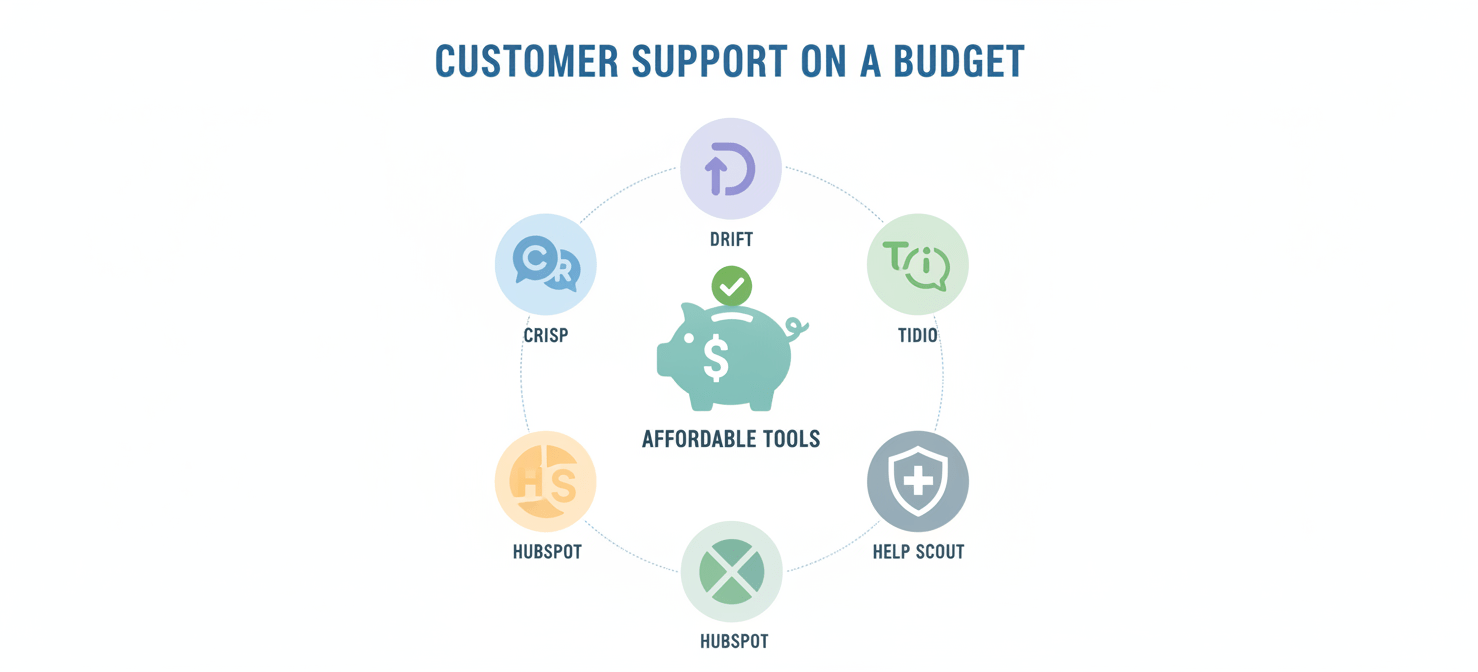
Finding the right tool requires balancing features with your budget. The following platforms are strong contenders that provide excellent value for early-stage companies.
1. Crisp
Crisp stands out with its unique “per-workspace” pricing model, which is highly attractive for growing teams. Instead of charging per user, Crisp offers plans that include a generous number of seats for a flat monthly fee. For example, their Essentials plan includes 10 seats for a predictable price, making it one of the most cost-effective options as you scale your support team.
The platform consolidates a shared inbox, live chat, a knowledge base, and basic CRM functionalities into one dashboard. This all-in-one approach simplifies your tech stack, reducing both cost and administrative overhead. While its most advanced AI features are reserved for higher tiers, the core offering is robust enough for most startups’ needs.
- Pricing: Offers a free plan with 2 seats. Paid plans with more features and seats start at $45/month per workspace.
- Best for: Startups that anticipate team growth and want predictable, flat-rate pricing.
2. Tidio
Tidio is another excellent option, particularly for startups in the e-commerce space, due to its easy integration with platforms like Shopify. It offers a compelling free plan that includes live chat and a limited number of chatbot conversations, making it a great entry point.
The platform is known for its user-friendly interface and a visual chatbot builder that allows you to create automated workflows without writing any code. While its pricing can become more complex with add-ons for AI (Lyro) and increased conversation limits, the initial paid tiers are very accessible.
- Pricing: A permanent free plan is available. Paid plans start at around $29/month per seat, with separate costs for the Lyro AI add-on.
- Best for: Early-stage startups, especially in e-commerce, that need a simple-to-use live chat and startup AI chatbot.
3. Help Scout
Help Scout is designed for teams that prioritize a human touch in their customer interactions. It functions like a shared inbox, making it incredibly intuitive for teams accustomed to email. The platform avoids the complexity of traditional ticketing systems, focusing instead on collaborative, personal conversations.
Its pricing is a straightforward per-user model that is significantly more affordable than Intercom’s. Help Scout also offers a knowledge base tool (Docs) and a live chat widget (Beacon) that integrates seamlessly. For startups that need a solid, no-frills customer support tool without the high cost, Help Scout is a leading choice.
- Pricing: Plans start at $25 per user/month. They also offer a startup program with a significant discount for the first year.
- Best for: Teams that want a simple, email-centric shared inbox and value transparent, per-seat pricing.
4. HubSpot Service Hub
For startups already using HubSpot’s free CRM, adding the Service Hub is a logical and cost-effective step. HubSpot offers a suite of free tools that includes ticketing, live chat, and a shared inbox, which can be powerful enough for many early-stage companies.
The true advantage of HubSpot is its integration. All your customer data and interactions are unified in one platform, providing a single source of truth for your marketing, sales, and support teams. As you grow, you can upgrade to paid tiers to unlock more advanced automation and reporting features. This scalability makes it a safe bet for the long term.
- Pricing: Offers a generous set of free tools. Paid “Starter” plans provide more features at an accessible price point.
- Best for: Startups that want an integrated CRM, sales, and support platform and can leverage the powerful free-tier offerings.
5. Drift
While often perceived as an expensive, enterprise-focused tool, Drift is a powerful conversational marketing platform that can be a strategic choice for B2B startups focused on lead generation. It excels at engaging website visitors in real-time and converting them into qualified leads for your sales team. However, its entry-level pricing is significantly higher than other alternatives on this list, typically starting around $2,500 per month.
For startups with a clear B2B focus, sufficient funding, and a high average contract value (ACV), the ROI from Drift can justify the cost. Its advanced targeting and chatbot playbooks are designed to turn your website into a meeting-generation machine.
- Pricing: Custom-quoted, with entry-level plans reportedly starting at $2,500/month.
- Best for: Well-funded B2B startups focused on pipeline generation and sales acceleration, where the high cost can be justified by the potential ROI.
Key Features to Look for in a Cost-Effective Customer Support Tool
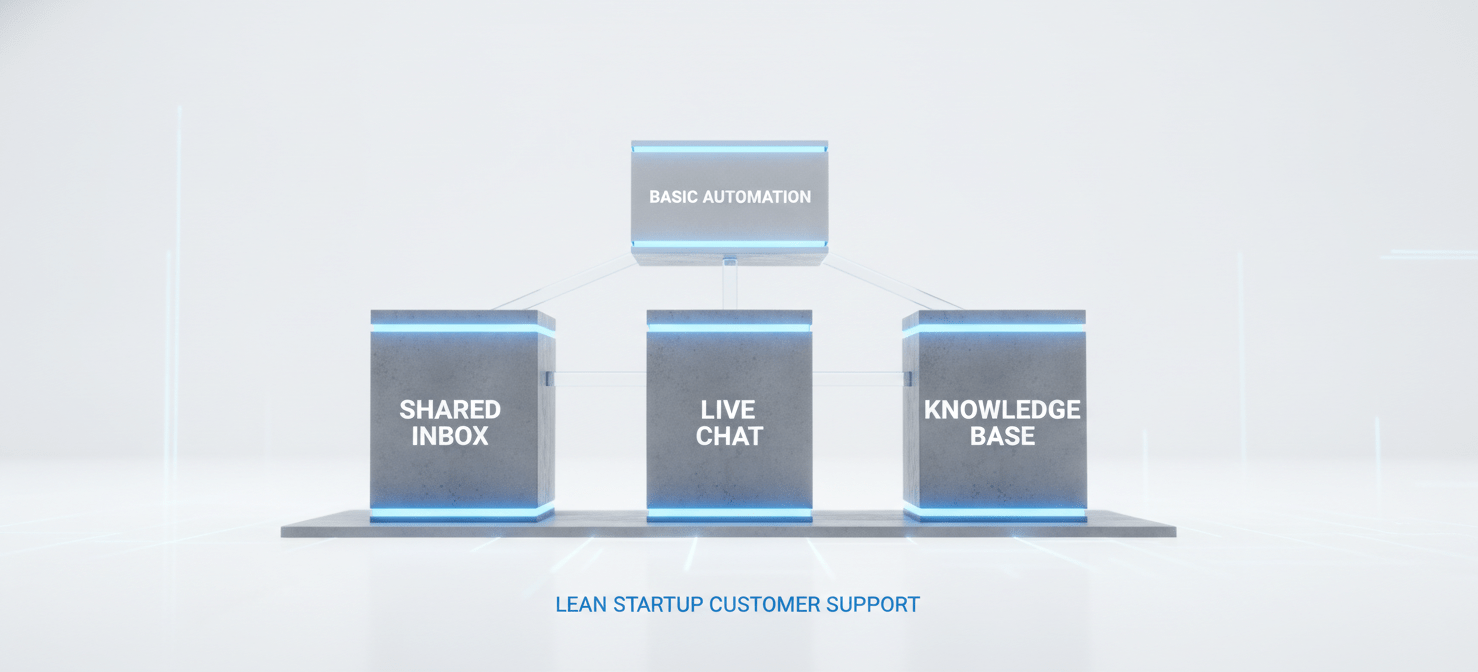
When evaluating alternatives, it’s easy to get distracted by long feature lists. For a lean startup, focus on the functionality that will have the most immediate impact on your team’s efficiency and your customers’ experience.
Essential Functionality
- Shared Inbox: This is non-negotiable. Your team needs a centralized place to manage all customer conversations, whether they come from email, chat, or social media. It prevents duplicate responses and ensures no customer query falls through the cracks.
- Live Chat: The ability to engage with customers and prospects directly on your website is crucial. It allows for real-time problem-solving and can significantly boost conversion rates. Look for a chat widget that is customizable and easy to install.
- Knowledge Base: A self-service knowledge base is one of the most effective ways to reduce your support volume. By empowering customers to find their own answers, you free up your team to focus on more complex issues.
- Basic Automation: Simple automation rules can save your team a significant amount of time. This could include routing chats to the right team member, sending automated replies, or using simple chatbots to collect initial information from a customer.
How to Choose the Right Intercom Alternative for Your Startup
Making the right choice comes down to a clear-eyed assessment of your team’s needs and financial realities. Follow this simple framework to guide your decision.
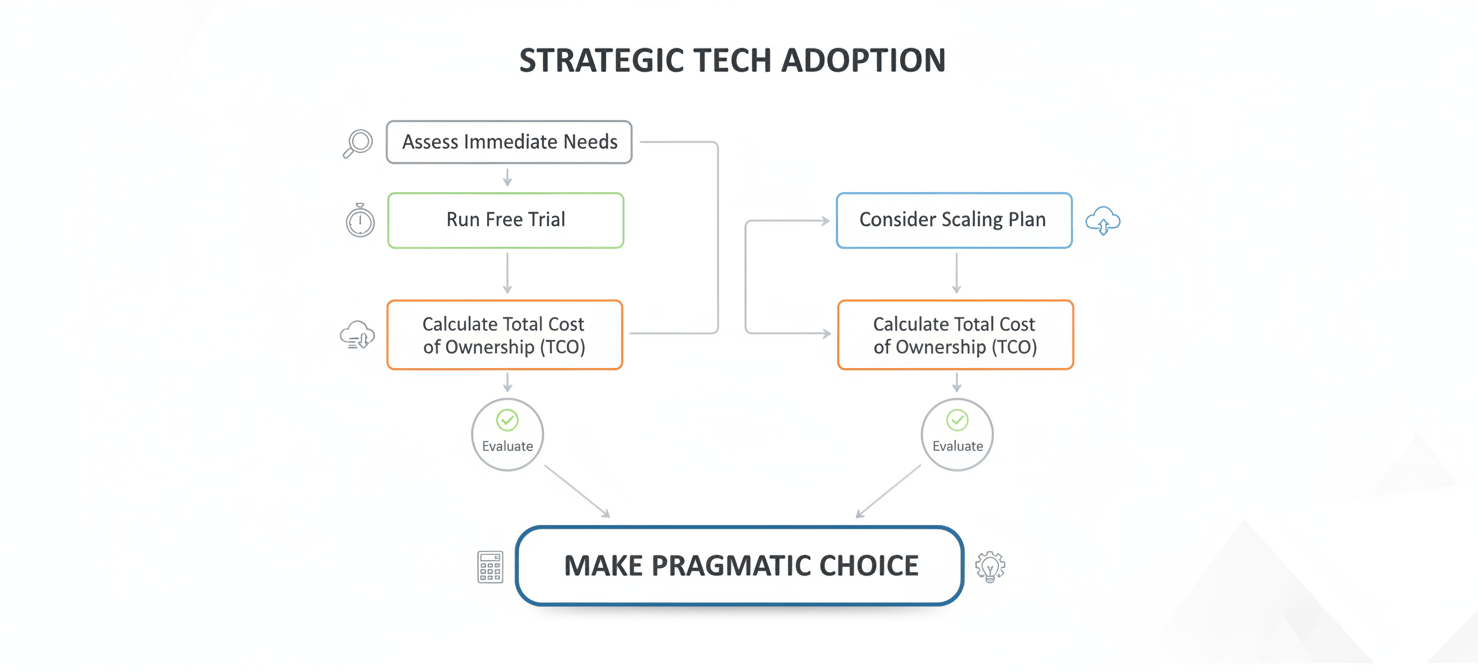
First, assess your immediate needs. Don’t pay for features you won’t use for another year. Is your primary goal to reduce your email backlog, or is it to proactively engage website visitors? Your answer will point you toward either a shared inbox-focused tool like Help Scout or a chat-centric one like Tidio.
Second, consider your scaling plan. If you expect to hire several support team members in the next six months, a platform with flat-rate pricing like Crisp might be more economical than a per-seat model. Conversely, if your team will remain small, a lower per-seat cost could be the better option.
Third, run a trial. Nearly every platform offers a free trial or a free plan. Use it. Set up the tool and have your team use it to handle real customer inquiries for a week. This is the only way to truly understand if the workflow fits your team’s process and if the interface is intuitive.
Finally, calculate the total cost of ownership (TCO). Look beyond the sticker price. Factor in any add-on fees for AI features, conversation limits, or necessary integrations. The cheapest base plan isn’t always the most affordable solution once your usage scales.
Conclusion
Choosing a customer communication platform is a critical decision that directly impacts both your customer experience and your financial runway. While Intercom sets a high bar for functionality, its pricing model is not always aligned with the lean financial reality of an early-stage company. The good news is that the market is filled with powerful and affordable Intercom alternatives for startups.
By focusing on your core requirements—a shared inbox, effective live chat, and a self-service knowledge base—you can find a tool that meets your needs at a fraction of the cost. Platforms like Crisp, Tidio, and Help Scout offer predictable pricing and the essential features to build strong customer relationships. The key is to make a pragmatic choice based on your current needs and budget, not on an enterprise-level feature set you don’t yet require. Your goal is to extend your runway, and choosing the right, cost-effective customer support tool is a smart step in that direction.
To make the most pragmatic choice for your startup, ensuring both effective customer engagement and a healthy runway, we encourage you to arrange a personalized walkthrough of potential solutions or begin your complimentary Binadox experience to see its benefits firsthand.
 7-day free trial