



For finance and procurement leaders, public cloud spending often feels like a moving target. Unpredictable, consumption-based billing complicates forecasting and makes budget adherence a significant challenge. However, a structured approach to aws savings plan financial modeling can transform this operational headache into a strategic financial advantage. By committing to a consistent amount of compute usage for a one- or three-year term, you can secure significant discounts compared to On-Demand pricing. This isn’t just about cost-cutting; it’s about converting variable operational expenditures into predictable, manageable costs, thereby improving forecast accuracy and boosting your return on investment.
Key takeaways
- A well-structured financial model can help you achieve savings of up to 72% on AWS compute workloads.
- The core process involves four key stages: analyzing historical usage, selecting the right plan type, modeling commitment levels, and measuring ongoing ROI.
- Effective modeling transforms cloud spend from a volatile operating expense into a predictable, strategic investment.
- Focus on aligning commitment terms with long-range forecasts to maximize savings without sacrificing necessary flexibility.
The Strategic Value of AWS Commitment Discounts
From a financial leadership perspective, the primary value of AWS Savings Plans lies in their ability to introduce predictability into cloud expenditure. Instead of reacting to monthly invoices, you can proactively manage a significant portion of your AWS budget. This shift from reactive to proactive financial management is crucial for accurate forecasting and resource allocation. Therefore, the conversation moves from “How much did we spend?” to “How can we optimize our committed spend for maximum ROI?”.
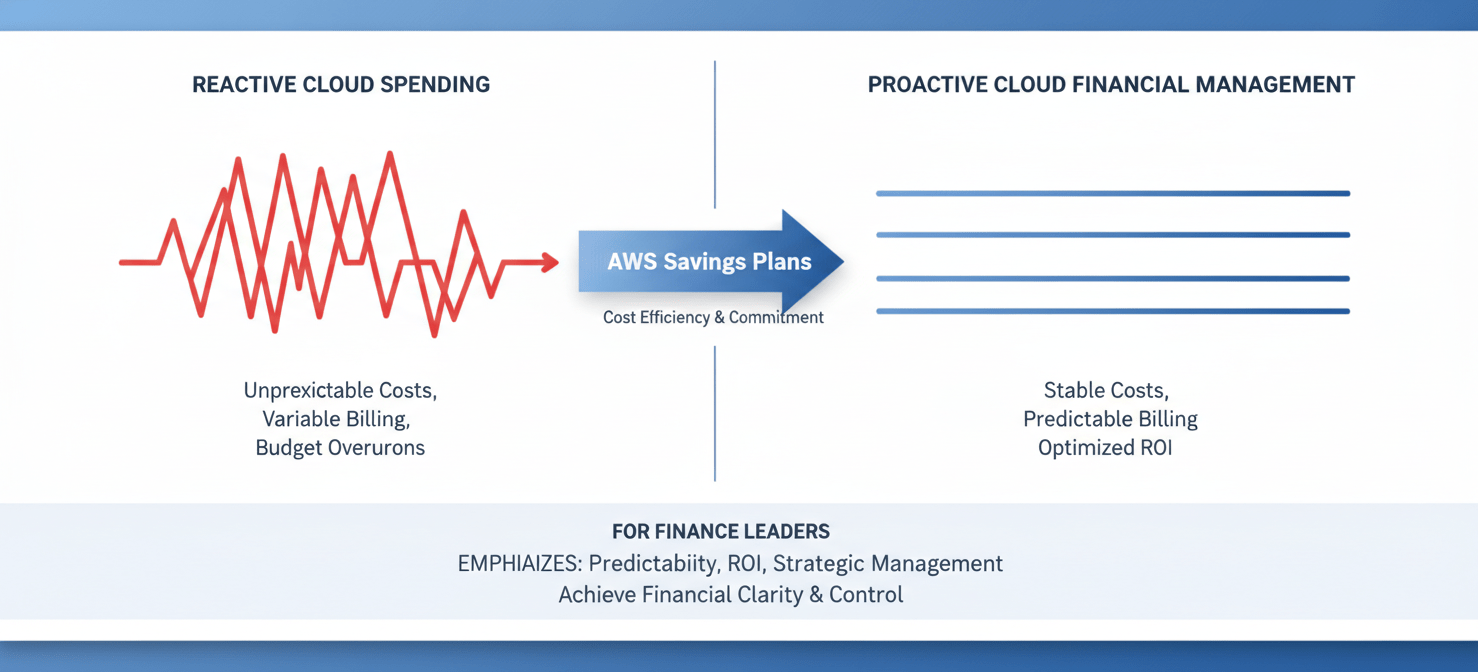
The direct financial benefit is, of course, substantial. AWS offers significant discounts in exchange for a commitment to a certain level of hourly spend. For example, a three-year term with all upfront payment offers the highest discount rate. This model allows you to lock in savings, directly impacting your bottom line and improving the total cost of ownership (TCO) for cloud infrastructure. Furthermore, this predictability simplifies vendor management and contract negotiation, as you are dealing with a more stable cost structure. As a result, your team can focus on strategic financial planning rather than monthly invoice reconciliation.
AWS Savings Plan Financial Modeling: A CFO’s Framework
Effective AWS Savings Plan financial modeling is a cyclical process, not a one-time task. It requires a clear framework to ensure your commitments align with evolving business needs and usage patterns. For your finance team, this means establishing a repeatable methodology for analysis and decision-making.
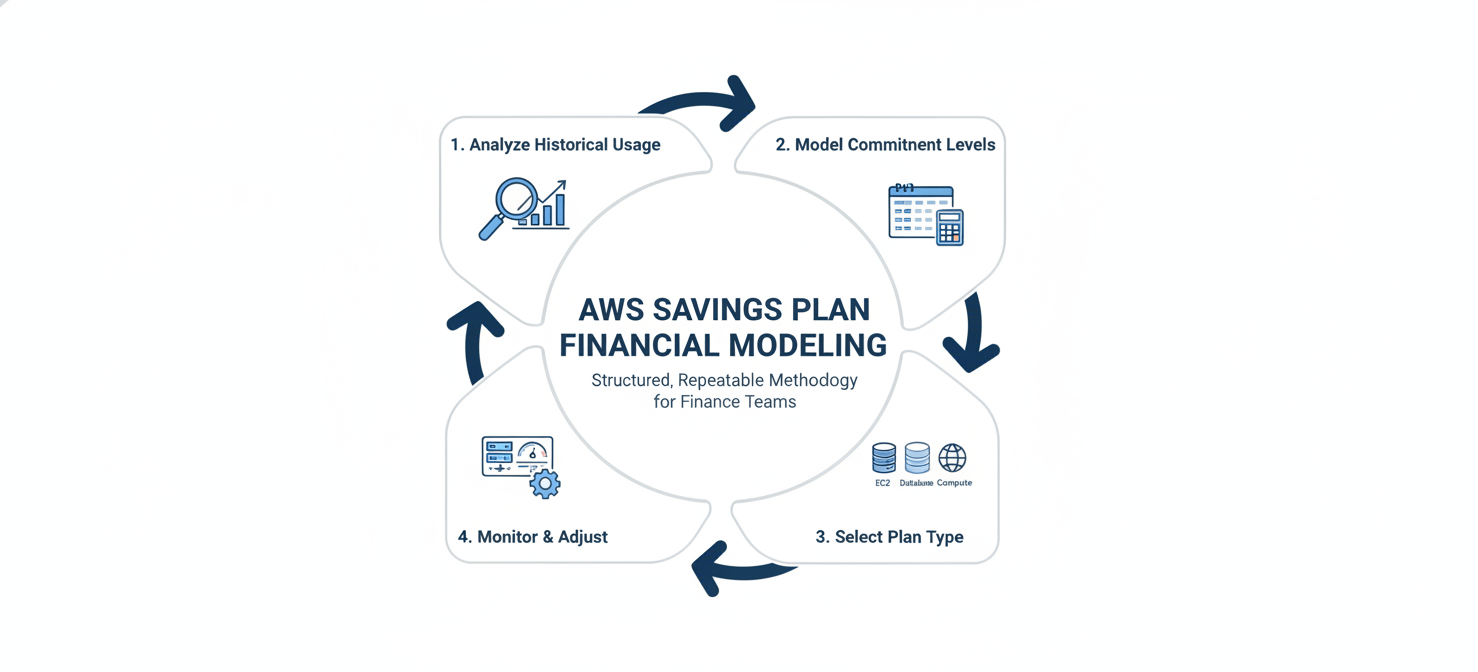
First, you must establish a baseline. This involves a thorough analysis of at least the last 30 to 60 days of your company’s historical AWS usage data. Tools like AWS Cost Explorer are invaluable here, providing detailed breakdowns of compute spend across different services and instance types. The goal is to identify a stable, predictable portion of your usage that represents a safe level for a long-term commitment.
Next, you need to model the commitment itself. This is where you evaluate the trade-offs between different Savings Plans, term lengths (one vs. three years), and payment options (All Upfront, Partial Upfront, No Upfront). Each combination presents a different ROI profile. For instance, a three-year, all-upfront commitment yields the highest savings but requires significant capital outlay and reduces flexibility. Your model should quantify these differences, allowing for an informed decision based on your organization’s capital strategy and risk tolerance.
Finally, the framework must include ongoing monitoring and adjustment. After purchasing a Savings Plan, you must track its utilization and effective savings rate. This ensures the commitment is delivering the expected value. If utilization is consistently low, it may signal a need to adjust future commitments. Conversely, consistently high on-demand spending alongside a fully utilized plan indicates an opportunity to increase your commitment level and capture more savings.
Key Inputs for Your Financial Model
An accurate financial model is built on reliable data. Garbage in, garbage out. To build a credible forecast for your AWS commitment discount ROI, your team needs to gather and analyze several key inputs. These inputs provide the foundation for making a financially sound commitment.
Historical Usage Analysis
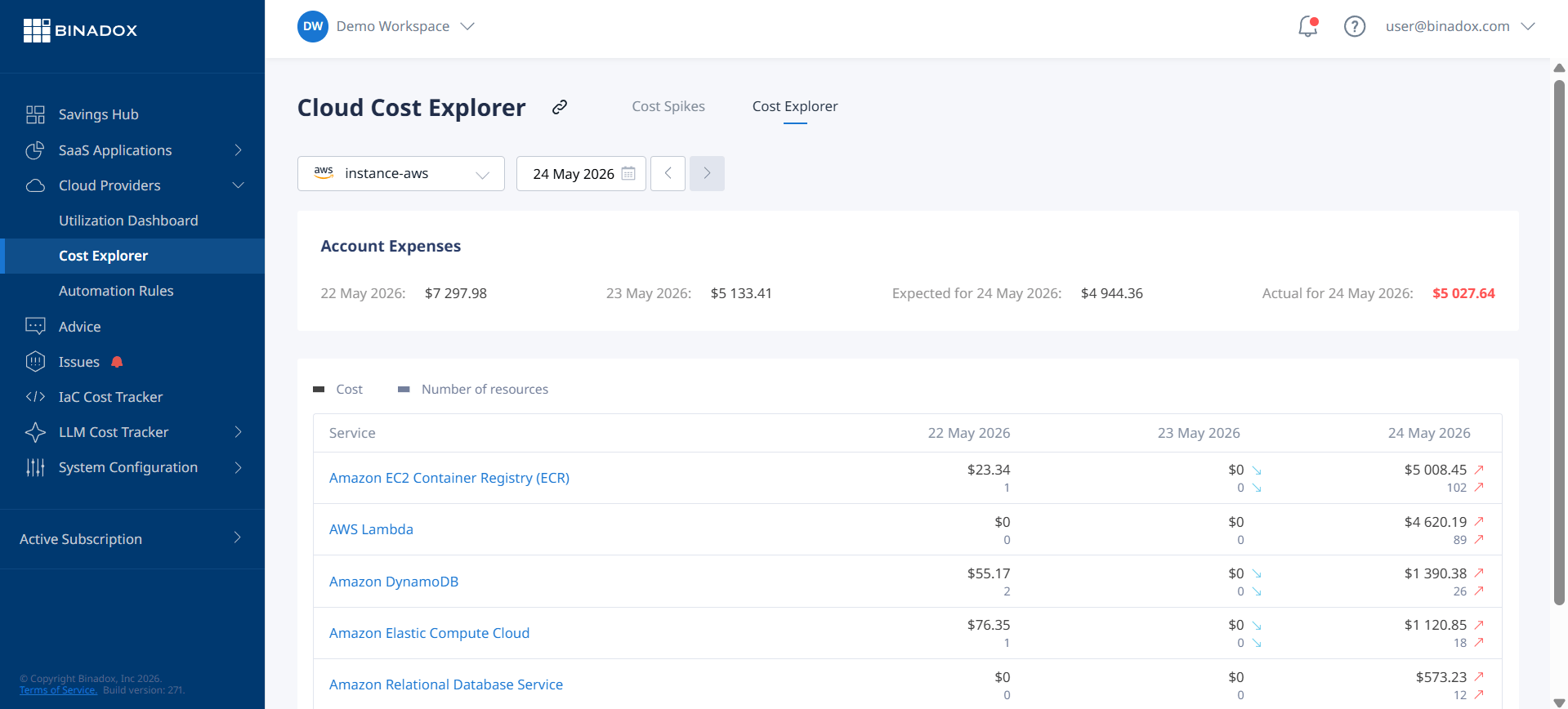
The most critical input is your historical compute spend. Using AWS Cost Explorer, you should analyze at least the past 60 days to identify your lowest sustained hourly spend. This “low-water mark” is often the safest starting point for a commitment, as it represents usage that is highly likely to continue. Look at usage across EC2, Fargate, and Lambda, as Compute Savings Plans apply broadly to these services. Filtering by instance family, region, and usage type will provide the granularity needed to make precise decisions.
Business and Technical Forecasts
Historical data only tells part of the story. You must overlay this data with forward-looking assumptions from business and engineering stakeholders. Is a major new product launching? Is the company planning to enter a new market? Are engineering teams planning to migrate to a different instance type? These qualitative inputs are essential for adjusting your baseline commitment. For example, if a large-scale migration to ARM-based Graviton processors is planned, an EC2 Instance Savings Plan for a specific x86 instance family would be a poor choice.
Plan and Payment Options
Your model must also account for the different financial characteristics of the available plans.
- Term Length: One-year plans offer more flexibility, while three-year plans provide deeper discounts. Your model should calculate the break-even point and the total savings for each term.
- Payment Option: All Upfront, Partial Upfront, and No Upfront options affect cash flow differently. The All Upfront option is a capital expenditure that delivers the highest ROI, whereas the No Upfront option keeps the spend as a predictable operating expense. Your model should reflect these cash flow implications based on your company’s financial strategy.
Modeling Different Scenarios: Flexibility vs. Deeper Discounts
Not all commitments are created equal. AWS provides different types of Savings Plans, each offering a unique balance between discount potential and operational flexibility. Your financial model should compare these scenarios to determine the optimal mix for your organization’s specific needs.
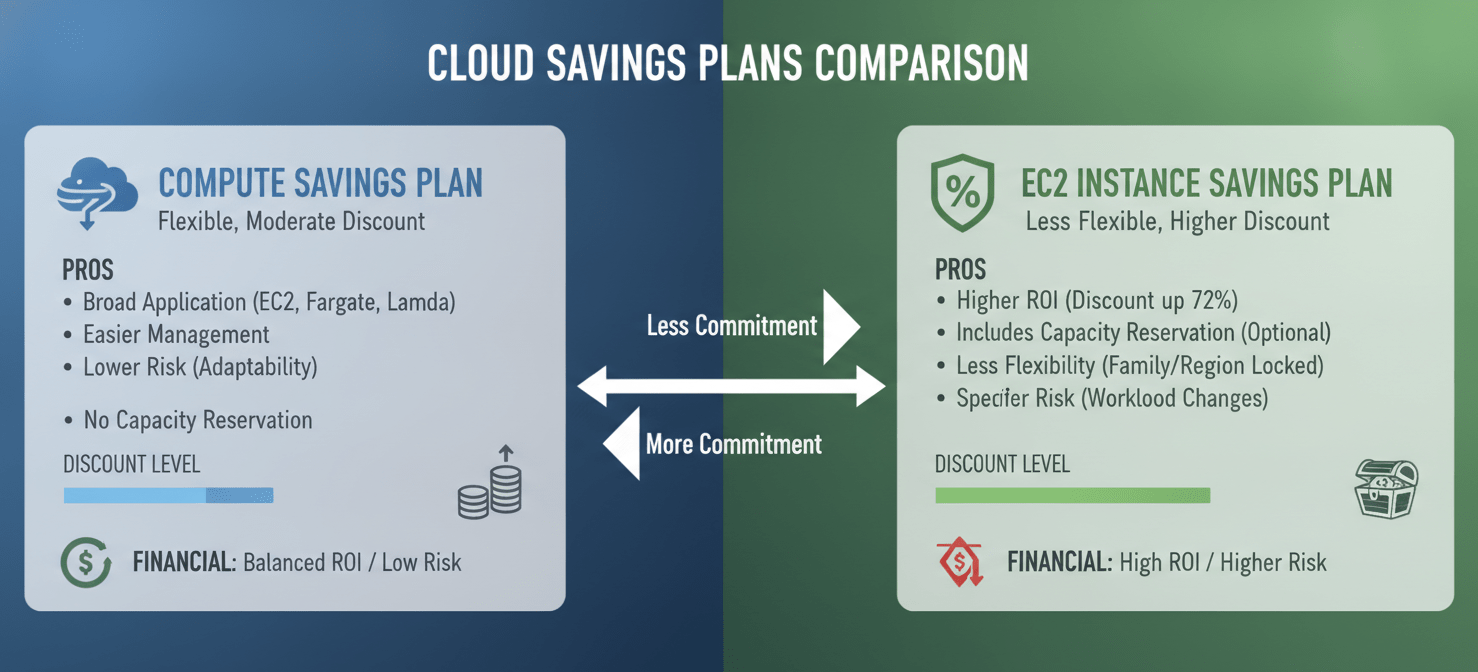
The most flexible option is the Compute Savings Plan. This plan automatically applies discounts to EC2 instance usage regardless of instance family, size, OS, tenancy, or AWS Region. It also applies to Fargate and Lambda usage. This flexibility is ideal for organizations with dynamic infrastructure, where development teams frequently experiment with different instance types. The trade-off is a slightly lower discount rate compared to more restrictive plans.
For organizations with highly stable, predictable workloads, the EC2 Instance Savings Plan offers the highest savings—up to 72%. However, this requires a commitment to a specific instance family within a particular region (e.g., m5 in us-east-1). This lack of flexibility means that if your engineering teams decide to migrate away from that instance family, the savings are lost. Therefore, this option is best suited for legacy applications or workloads with a very stable, long-term architecture.
Your financial model should quantify the risk and reward of each approach. For example, you can model a scenario where you cover 70% of your baseline usage with a flexible Compute Savings Plan and an additional 20% of highly stable usage with an EC2 Instance Savings Plan. This hybrid approach often provides a balanced portfolio, maximizing your AWS commitment discount ROI while retaining the agility to innovate.
Measuring and Reporting on AWS Commitment Discount ROI
Once you’ve executed a Savings Plan, the task shifts to governance and performance measurement. For finance and procurement, it’s essential to track the realized value of these commitments and report on their ROI to stakeholders. This ensures accountability and informs future purchasing decisions.
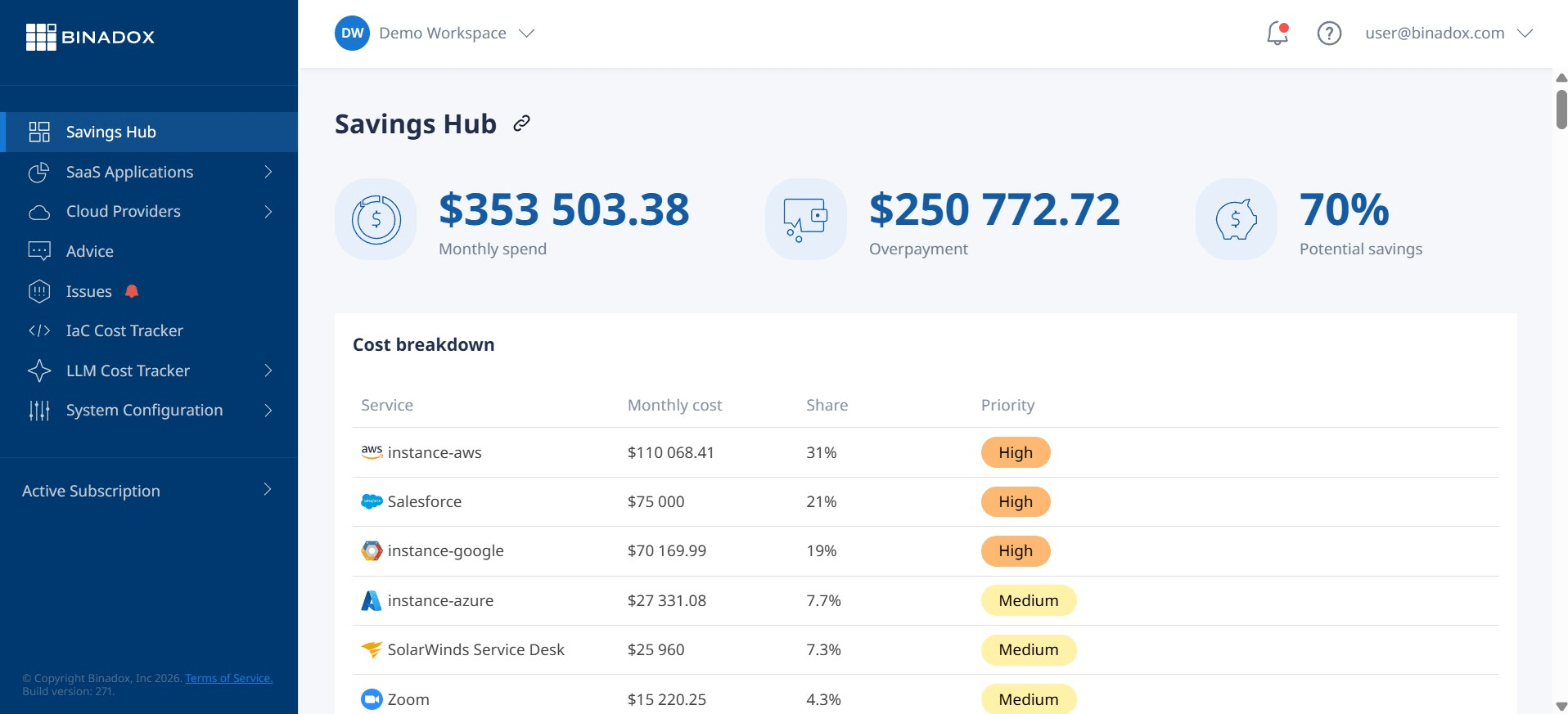
The primary KPI is the Effective Savings Rate. This metric compares your actual spend under the Savings Plan to what you would have spent on-demand for the same usage. It provides a clear, quantifiable measure of the program’s success. In addition, you must monitor the Utilization Rate of your Savings Plans. AWS provides reporting tools that show how much of your hourly commitment is being used. Consistently low utilization (e.g., below 90%) indicates that your commitment may be too high, and you are paying for capacity you are not using.
Reporting should be clear and concise, tailored to a financial audience. A simple dashboard can track key metrics:
- Total Committed Spend vs. On-Demand Equivalent
- Net Savings (Monthly and Annually)
- Savings Plan Utilization Percentage
- Uncovered On-Demand Spend (identifying opportunities for additional savings)
This data-driven approach provides the necessary oversight to manage your AWS spend effectively. It also demonstrates the financial acumen of your team in managing a complex, consumption-based resource. As a result, you can confidently justify current and future commitments, proving that cloud cost management is under firm financial control.
Conclusion
Ultimately, managing cloud spend is no different from managing any other significant corporate expense. It demands rigor, forecasting, and a clear-eyed focus on return on investment. Treating AWS Savings Plans as a simple IT procurement task is a missed opportunity. Instead, by implementing a robust aws savings plan financial modeling framework, you transform a volatile expense into a predictable, optimized component of your budget. The process requires collaboration between finance and technology teams, but the payoff is substantial: improved budget accuracy, lower TCO, and a stronger grip on your organization’s cloud financials. The goal isn’t just to buy a discount; it’s to execute a deliberate financial strategy where every committed dollar is working as hard as it can. Anything less is just leaving money on the table.

To confidently transform your cloud spend into a predictable, strategic asset, explore how our solution can help you achieve these savings with a free trial, or for a personalized walkthrough of its capabilities, you can book a demo with our experts.
 7-day free trial