



Amazon Web Services (AWS) offers powerful tools for managing your cloud spending, and Savings Plans are a cornerstone of that strategy. However, simply purchasing a Savings Plan is not a guarantee of maximum value. To truly capitalize on these discounts, your team needs robust cloud cost optimization solutions that address how you choose, manage, and monitor these commitments. Without a deliberate strategy, you risk overcommitting to usage that never materializes or under-committing and leaving significant savings on the table. This article explores the strategies and tools necessary to transform your AWS Savings Plans from a simple discount instrument into a dynamic part of your financial governance framework.
Key takeaways
- AWS Savings Plans offer discounts up to 72% but require careful management to avoid waste from underutilization.
- Effective optimization involves a 4-step cycle: rightsizing resources before committing, automating commitment management, continuously monitoring utilization, and using anomaly detection to catch unexpected spending.
- Compute Savings Plans provide flexibility across regions and services like EC2, Fargate, and Lambda, making them ideal for dynamic workloads.
- Leveraging AI-driven tools can automate the complex analysis needed for forecasting, rightsizing, and anomaly detection, significantly improving savings outcomes.
Understanding AWS Savings Plans and Their Challenges
AWS Savings Plans are a flexible pricing model that provides lower prices compared to On-Demand rates in exchange for a commitment to a consistent amount of usage, measured in dollars per hour, for a one- or three-year term. Once you commit, AWS automatically applies the discounted rates to your eligible usage up to your commitment amount each hour. Any usage beyond that is billed at the standard On-Demand rates. This model was introduced as a more adaptable alternative to EC2 Reserved Instances (RIs), which lock you into specific instance configurations.
Types of AWS Savings Plans
AWS offers different types of Savings Plans, each designed to balance savings with flexibility.
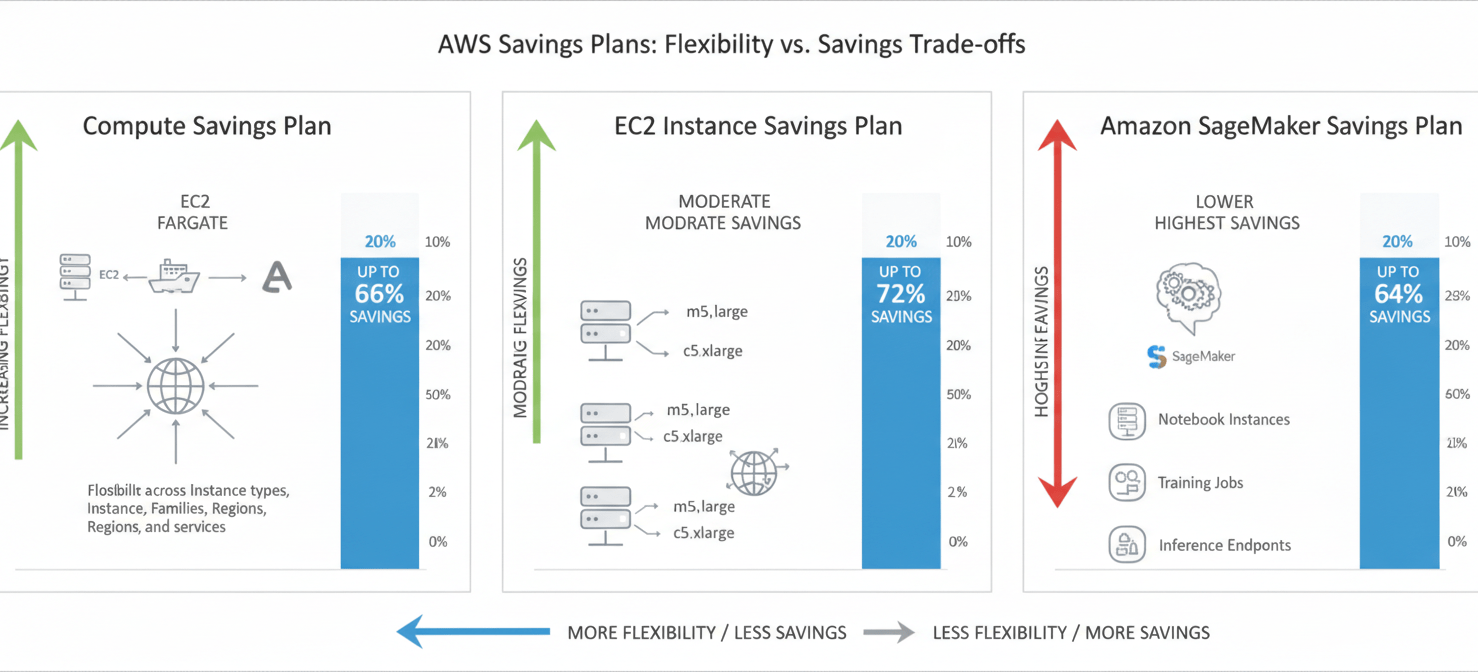
- Compute Savings Plans: These are the most flexible option, offering discounts of up to 66%. They automatically apply to EC2 instance usage regardless of instance family, size, region, operating system, or tenancy. Furthermore, they also cover usage for AWS Fargate and AWS Lambda, making them an excellent choice for organizations with evolving architectures or those shifting workloads between different compute services.
- EC2 Instance Savings Plans: This option provides the deepest discounts, with potential savings of up to 72%. However, this comes with a trade-off in flexibility. You must commit to a specific EC2 instance family within a particular AWS region (e.g., m5 in us-east-1). While you retain flexibility across instance size (like moving from c5.xlarge to c5.2xlarge), operating system, and tenancy within that family and region, the plan will not apply if you switch to a different instance family or region.
- Amazon SageMaker Savings Plans: Tailored specifically for machine learning workloads, these plans offer up to 64% savings on Amazon SageMaker usage. They apply across various SageMaker components, providing a cost-effective solution for teams heavily invested in ML development and deployment.
Common Management Challenges
While Savings Plans offer significant benefits, they also present several management challenges that can erode their value if not properly addressed.
The most significant challenge is accurately forecasting future usage to determine the right commitment level. In a dynamic cloud environment where development teams are constantly modernizing applications and rightsizing resources, usage patterns can fluctuate significantly. If you overcommit based on peak usage that later declines, you are left paying for a commitment that goes unused each hour—a situation known as “unused commit.” Conversely, under-committing out of caution means a larger portion of your usage is billed at higher On-Demand rates, leaving potential savings unrealized.
Another challenge arises during architectural shifts. If your team is planning a migration from EC2 instances to a serverless architecture with AWS Lambda, a long-term EC2 Instance Savings Plan could become stranded, applying to a shrinking pool of resources. The pressure to show immediate cost reductions can often lead to hasty commitments based on current-state analysis without accounting for future modernization plans. This misalignment between financial planning and engineering roadmaps is a common source of waste. Finally, the management overhead itself can be a hurdle. Tracking expirations, analyzing utilization reports, and deciding on renewals requires dedicated attention and expertise, which can be a burden for teams without a dedicated FinOps function.
The Role of Automation and AI in Cloud Cost Optimization Solutions
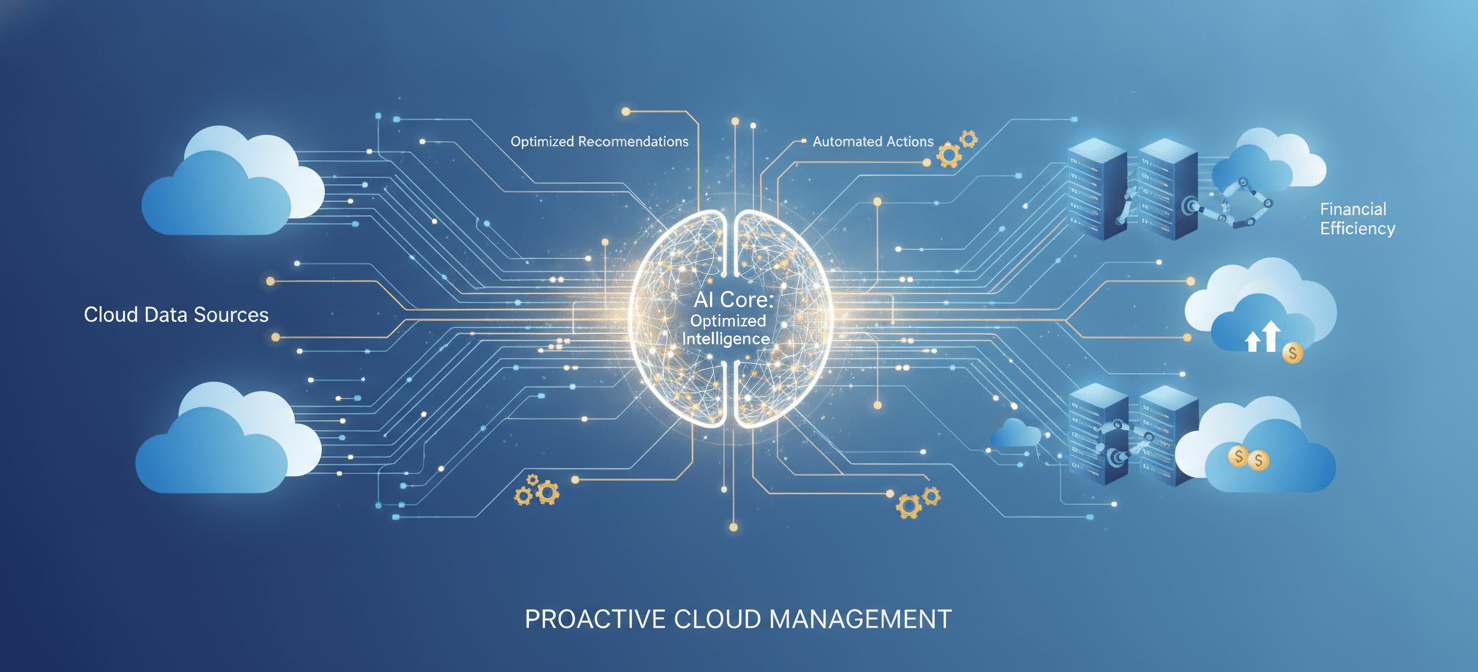
Managing cloud costs manually with spreadsheets and reactive analysis is no longer viable in complex, dynamic environments. The sheer volume of usage data, the variety of service pricing models, and the speed at which resources are provisioned and decommissioned demand a more sophisticated approach. This is where automation and artificial intelligence (AI) become essential components of modern cloud cost optimization solutions. They shift cost management from a reactive, manual exercise to a proactive, data-driven strategy.
Predictive Analytics for Commitment Planning
One of the most powerful applications of AI in this domain is predictive analytics for cost forecasting. AI and machine learning (ML) algorithms can analyze vast amounts of historical usage data to identify trends, seasonal patterns, and growth trajectories with a high degree of accuracy. This allows your team to move beyond simple historical averages and generate more reliable forecasts of future cloud consumption.
For example, an AI-powered tool can distinguish between stable, predictable baseline usage and volatile, spiky demand. This insight is critical for Savings Plan decisions. The stable baseline is the ideal candidate for a one- or three-year commitment, as you can confidently predict that this level of usage will be consistent. The volatile portion, however, is better served by On-Demand pricing or Spot Instances to avoid the risk of paying for unused commitments. By using AI to model various infrastructure configurations and forecast future costs, you can make smarter, data-backed decisions about how much to commit and for how long.
Autonomous Optimization and Anomaly Detection
Beyond forecasting, AI enables autonomous optimization by learning from performance data and making real-time adjustments. This can include automatically scaling resources up or down based on real-time demand, ensuring that you only pay for the capacity you need at any given moment. While this relates more to overall resource management, it directly impacts the baseline usage that informs Savings Plan commitments.
Furthermore, ML algorithms are exceptionally effective at detecting cost anomalies. A traditional budget alert only triggers when spending crosses a predefined, static threshold. An AI-driven anomaly detection system, however, learns your normal spending patterns and can flag a deviation even if the total spend is still within budget. For instance, it could detect a sudden, unexpected spike in data transfer costs that might indicate a misconfiguration or an inefficient process. By catching these issues early, your team can investigate and remediate them before they lead to significant budget overruns, ensuring the financial health of your cloud operations. This proactive monitoring provides a crucial layer of financial governance.
Rightsizing and Resource Scheduling: Foundational Best Practices
Before you even consider purchasing a Savings Plan, you must first ensure your underlying resources are correctly provisioned. Committing to a discount on a wasteful resource only makes the waste cheaper; it doesn’t eliminate it. Rightsizing is the process of matching your instance types and sizes to your actual workload performance and capacity needs. It is one of the most effective cloud cost optimization best practices and a foundational step for any successful Savings Plan strategy.
The Rightsizing Process: From Analysis to Action
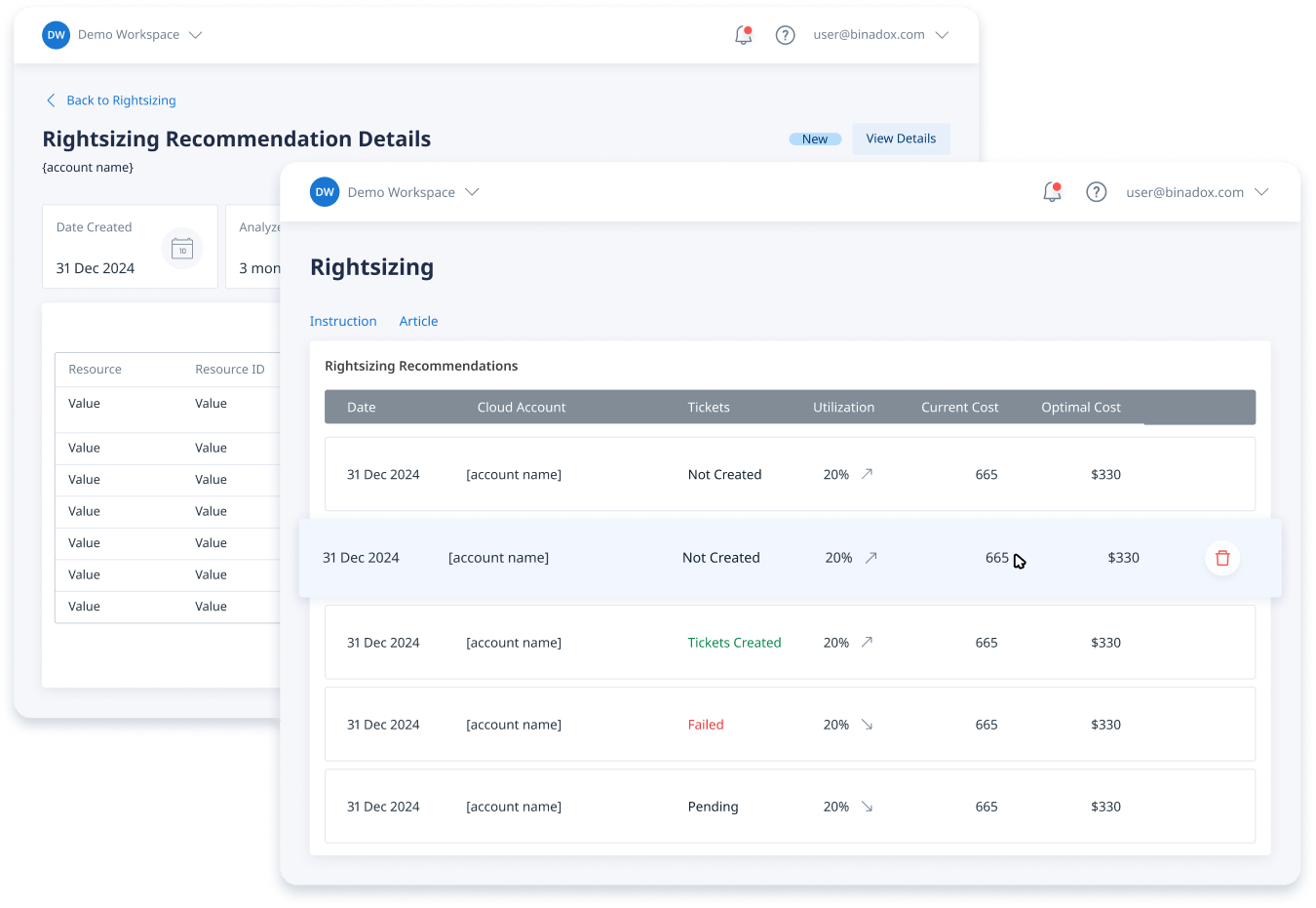
The rightsizing process begins with gathering and analyzing performance data over a meaningful period, typically at least two to four weeks, to capture regular usage patterns. Key metrics to monitor include CPU utilization, memory utilization, disk I/O, and network throughput. Tools like Amazon CloudWatch provide much of this data, though memory utilization requires the installation of the CloudWatch Agent.
A common rule of thumb is that if an instance’s maximum CPU and memory usage remains below 40% over a four-week period, it is a strong candidate for downsizing. For example, moving from a c4.8xlarge to a c4.4xlarge instance could cut the cost of that resource in half. The goal is to eliminate overprovisioning, where you pay for capacity that sits idle.
When rightsizing, it’s important to consider not just the size but also the instance family. A workload might be better served by a memory-optimized or compute-optimized instance family rather than a general-purpose one. AWS Compute Optimizer is a native tool that uses machine learning to analyze your configuration and utilization history to recommend optimal AWS resources.
Implementing Changes Safely
Making changes to production environments always carries some risk. Therefore, it’s crucial to approach rightsizing methodically.
- Start with non-production environments: Test the impact of resizing in development or staging environments first to ensure performance is not negatively affected.
- Prioritize based on impact: Identify the areas of largest spend to find where rightsizing can deliver the biggest savings and the best return on your time investment.
- Use a safe deployment strategy: For stateless applications behind a load balancer, the safest method is to launch a new, smaller instance and gradually shift traffic. For stateful instances, the process typically involves stopping the instance, modifying its type, and restarting it, which should be done during a planned maintenance window.
Resource Scheduling for Non-Production Environments
Another foundational practice is resource scheduling, which primarily involves shutting down resources that are not in continuous use. Development, testing, and staging environments are often prime candidates for this practice, as they are typically only needed during business hours.
Simply stopping an EC2 instance is not enough, as you will continue to be charged for any attached Amazon EBS volumes. The best practice is to terminate the instance and its associated resources entirely when they are not needed for extended periods. For predictable schedules, you can use services like AWS Auto Scaling to automatically schedule instances to turn on and off. This simple act of turning off idle instances is one of the easiest ways to cut cloud waste and ensure your Savings Plan commitments are directed toward resources that deliver continuous value.
Monitoring, Reporting, and Anomaly Detection
Purchasing a Savings Plan is not a “set it and forget it” activity. To maximize value and prevent waste, you must continuously monitor your commitments and overall cloud spend. Effective monitoring provides the visibility needed to understand how your plans are being applied, identify opportunities for further optimization, and catch unexpected costs before they escalate. This is a core tenet of the AWS Well-Architected Framework’s Cost Optimization Pillar, which emphasizes the need for expenditure and usage awareness.
Key Metrics: Utilization and Coverage
AWS provides dedicated reports within AWS Cost Explorer to help you track the performance of your Savings Plans. Understanding two key metrics is essential for effective analysis:
- Utilization: This metric shows you what percentage of your Savings Plan commitment you are actually using. The goal is to keep utilization at or as close to 100% as possible. If your utilization is consistently below 100%, it means you are paying for a commitment that is not being fully applied to your usage, resulting in wasted money.
- Coverage: This metric measures what percentage of your total eligible compute spend is covered by your Savings Plans. A low coverage rate indicates that a significant portion of your workload is running at more expensive On-Demand prices, highlighting a missed savings opportunity.
By regularly reviewing the Utilization and Coverage reports, your team can make informed decisions. For example, consistently high utilization and low coverage suggest that you have a stable workload and could safely increase your commitment to capture more savings. Conversely, low utilization is a red flag that your usage has dropped below your commitment level, requiring an investigation to understand why.
Using AWS Budgets and Cost Anomaly Detection
Beyond the specific Savings Plans reports, AWS offers broader tools for financial governance.
- AWS Budgets: This tool allows you to set custom budgets and receive alerts when your costs or usage exceed (or are forecasted to exceed) your defined thresholds. You can create budgets for total monthly costs, or you can get more granular by filtering by specific services, linked accounts, or cost allocation tags. This acts as a proactive guardrail to enforce spending limits.
- AWS Cost Anomaly Detection: This service uses machine learning to automatically identify unusual spending patterns. Unlike a budget, which triggers on a fixed threshold, anomaly detection establishes a dynamic baseline of your normal spending and alerts you to significant deviations. This is invaluable for catching unexpected cost spikes early, such as those caused by a deployment error or a misconfigured service, allowing for rapid investigation and remediation.
Properly implemented, these monitoring and reporting tools provide a continuous feedback loop. They help your team validate your Savings Plan strategy, ensure commitments align with real-world usage, and maintain financial control over your entire cloud environment.
Leveraging Third-Party Tools for Enhanced Savings
While AWS provides a solid suite of native tools for cost management, the complexity of large-scale cloud environments often necessitates more advanced capabilities. Third-party cloud cost management platforms can augment and enhance the native tools, providing deeper insights, greater automation, and a more holistic view of your cloud spend. These tools are essential for organizations looking to implement sophisticated cloud cost management and optimization strategies.
Centralized Visibility and Multi-Cloud Management
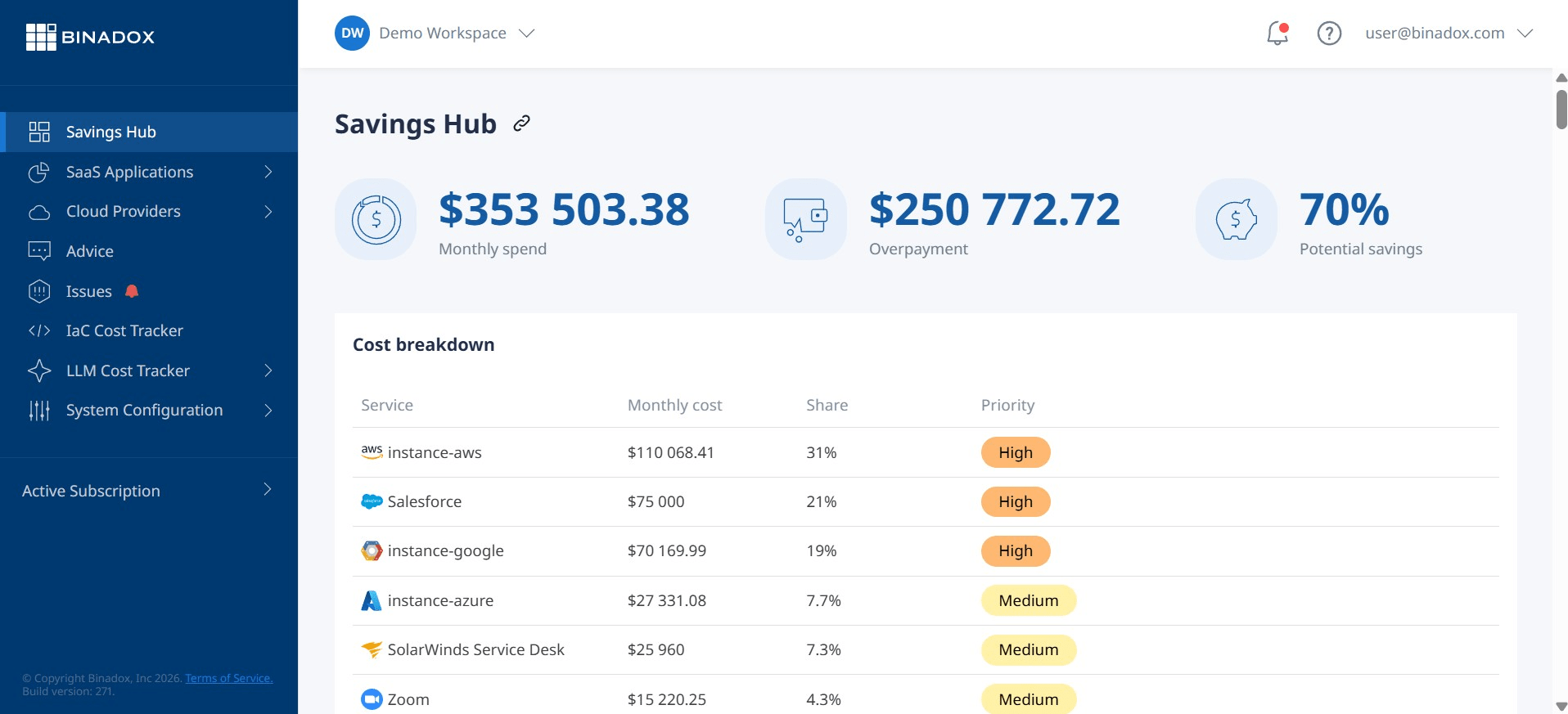
Many enterprises operate in a multi-cloud environment, using services from AWS, Azure, and Google Cloud. A significant advantage of many third-party tools is their ability to consolidate cost and usage data from all these providers into a single, unified dashboard. They normalize the different billing formats and pricing models, allowing your FinOps and engineering teams to analyze spending with a consistent framework.
This centralized visibility is crucial for effective governance. These platforms often provide advanced features for cost allocation, helping you attribute spending to specific projects, teams, or products even when resource tagging is incomplete or inconsistent. This granular showback and chargeback capability fosters accountability and empowers individual teams to manage their own costs effectively.
Advanced Analytics and Automated Recommendations
Third-party tools often incorporate more sophisticated AI and machine learning algorithms than native offerings, providing deeper and more actionable insights. These platforms can deliver highly accurate rightsizing recommendations that consider not just CPU and memory, but also workload patterns and performance requirements to suggest the most cost-effective instance types.
Furthermore, they can automate many of the complex processes associated with managing commitment portfolios like Savings Plans and Reserved Instances. For example, some tools can:
- Automate commitment purchasing: Analyze usage patterns to recommend and even execute the purchase of Savings Plans to match stable workloads.
- Dynamically adjust resource allocation: Continuously monitor workloads and automate scaling to ensure spending aligns with real-time usage.
- Provide “what-if” scenarios: Model the financial impact of architectural changes, such as migrating a workload to a different region or service, before the change is made.
By automating these complex analytical and management tasks, these platforms free up your engineering and finance teams to focus on strategic initiatives rather than manual cost management. They provide the intelligence and automation needed to fine-tune your cloud environment for maximum efficiency and savings.
Conclusion
Successfully managing AWS Savings Plans requires more than a one-time purchase; it demands a continuous, disciplined approach. The path to maximizing savings is paved with foundational best practices like rightsizing and resource scheduling, which ensure you aren’t committing to discounted waste. It is fortified by diligent monitoring of utilization and coverage metrics, which provide the feedback necessary to adjust your strategy. However, in today’s complex cloud environments, achieving true efficiency often requires the advanced capabilities of automation and AI.
These technologies transform forecasting from guesswork into a data-driven science and shift monitoring from a reactive chore to a proactive hunt for anomalies. Whether through native AWS services or specialized third-party platforms, integrating intelligent analysis is no longer a luxury. It is a core component of effective cloud cost optimization solutions. Ultimately, treating your Savings Plans as a dynamic portfolio to be actively managed—rather than a static discount to be passively applied—is what separates organizations that merely save some money from those that achieve genuine financial and operational excellence in the cloud. The tools are available; failing to use them is just leaving money on the table, an oversight no budget can afford for long.
If you’re ready to transform your AWS Savings Plans from a passive discount into a dynamic, optimized asset, we invite you to experience the difference by beginning a free trial of our cloud cost optimization solution, or you can schedule a personalized demonstration with our team to see how we can tailor a strategy for your specific needs.
 7-day free trial