



For many organizations, Kubernetes has become the standard for container orchestration, offering incredible scalability and flexibility. However, this power comes with a significant challenge: cost attribution. Unlike traditional cloud resources where you can map a virtual machine directly to a team, Kubernetes abstracts away the underlying infrastructure. This abstraction makes it difficult to understand which teams, applications, or features are driving your cloud spend. As a result, effective FinOps Kubernetes cost management is no longer a luxury but a critical discipline for controlling cloud expenses and ensuring engineering decisions are financially sound. Without a clear strategy, costs can escalate quickly, driven by overprovisioning, idle resources, and a lack of accountability.
Key takeaways:
- Shared Infrastructure Obscures Costs: In Kubernetes, multiple applications from different teams often share the same nodes, breaking the traditional one-to-one mapping of resources to costs.
- 100% Allocation is the Goal: A core principle of FinOps is to allocate every single dollar of your cluster spend, including shared services and idle capacity, to a specific owner.
- Start with Showback, Mature to Chargeback: Begin by providing cost visibility to teams (showback) to build awareness and validate your allocation model before implementing formal billing (chargeback).
- Rightsizing is a Continuous Process: Organizations can waste up to 35% of their cloud spend on inefficiencies like over-provisioned resources; continuous rightsizing based on actual usage is essential.
Why Kubernetes Cost Allocation is So Hard
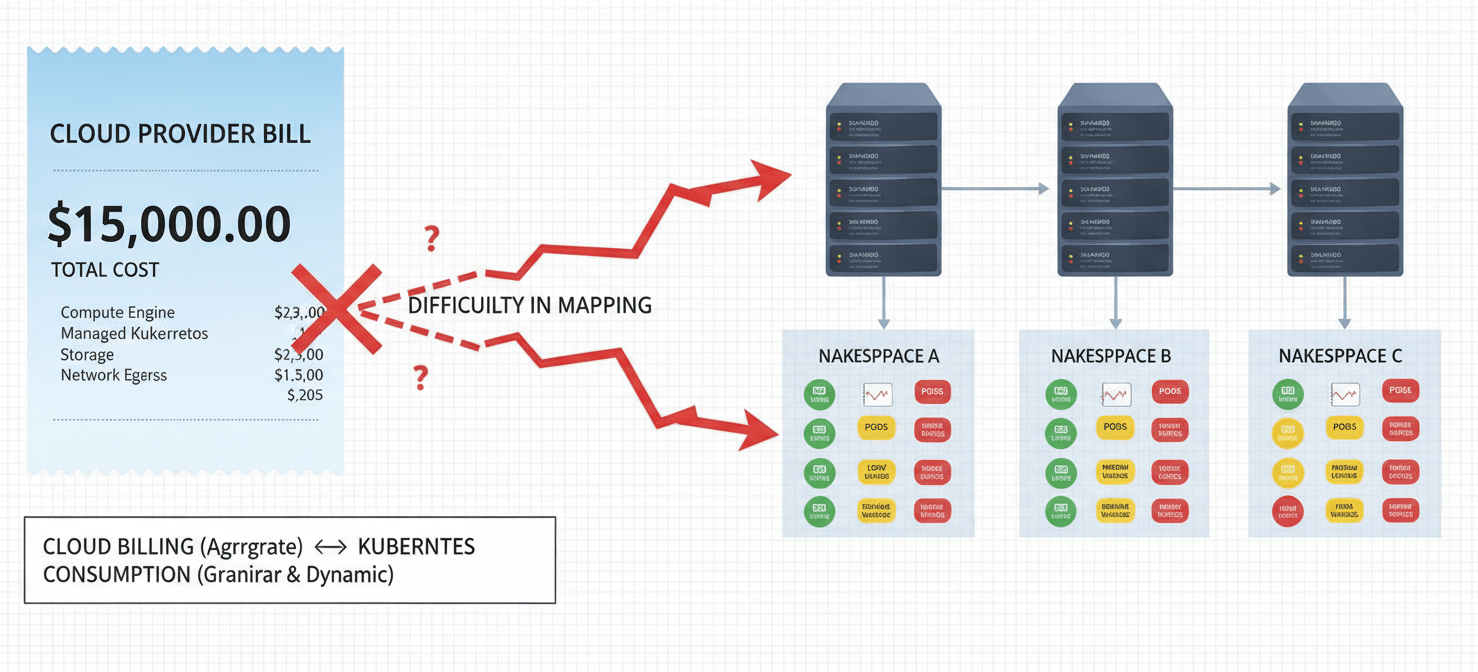
The core challenge of Kubernetes cost management stems from its design. Your cloud provider bills you for the worker nodes (the virtual machines), but your engineers work with Kubernetes objects like pods, deployments, and namespaces. This creates a fundamental disconnect between your bill and the actual resource consumption of your applications.
The Shared Resource Dilemma
In a typical Kubernetes cluster, hundreds of pods from various teams and applications can run on a single node. This multi-tenant nature makes it impossible to simply look at a cloud invoice and determine who is responsible for the cost. Shared resources like ingress controllers, monitoring tools, and logging pipelines further complicate attribution, as their costs must be distributed fairly across all the teams that benefit from them.
Dynamic and Ephemeral Workloads
Kubernetes workloads are highly dynamic. Pods can be created, destroyed, and rescheduled across different nodes in a matter of seconds. This constant churn makes it difficult to track resource usage over time. Furthermore, traditional tagging strategies often fail because it’s impractical to tag every short-lived container. This dynamic environment requires a more sophisticated approach to cost allocation that can keep up with the rapid pace of change.
The Problem of Idle Capacity
A significant portion of Kubernetes costs can come from idle or unallocated resources. This includes the unused CPU and memory on a node that has been provisioned but is not fully utilized by any workload. Deciding how to allocate the cost of this idle capacity is a common point of contention. Some organizations distribute it proportionally based on resource requests, while others assign it to a central platform budget. Regardless of the method, failing to account for idle costs leaves a significant blind spot in your financial reporting.
The Pillars of Effective FinOps Kubernetes Cost Management
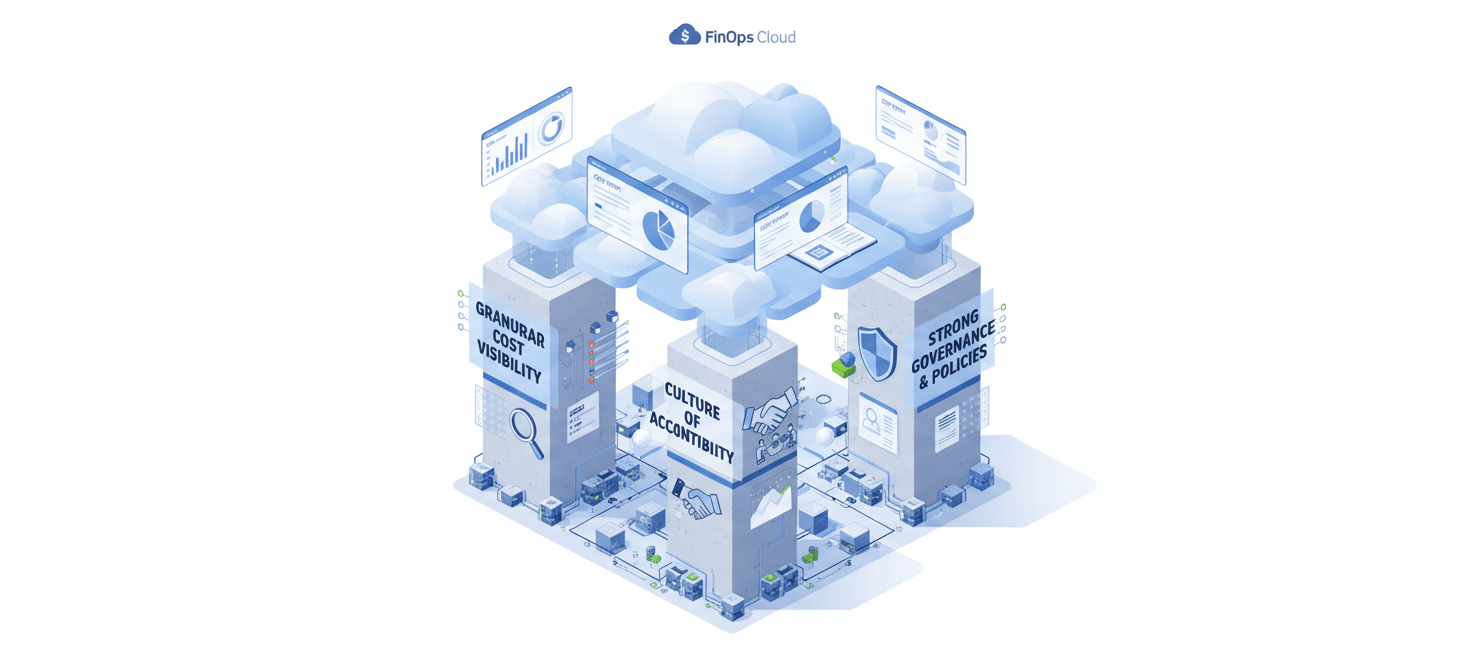
Successfully managing Kubernetes costs requires a structured approach grounded in FinOps principles. This involves creating visibility, fostering accountability, and enabling continuous optimization.
1. Achieve Granular Cost Visibility
You cannot optimize what you cannot see. The first and most critical step is to gain granular visibility into your Kubernetes spending. This means moving beyond the high-level figures on your cloud bill and breaking down costs by meaningful business contexts like team, application, or feature.
To achieve this, you need to combine two key data sources:
- Cloud Provider Billing Data: This is your source of truth for what you are being charged for the underlying infrastructure (e.g., EC2 instances, EBS volumes).
- Cluster-Level Usage Data: This data, often collected using tools like Prometheus, provides detailed metrics on the CPU and memory consumption of individual pods and containers.
By correlating these two datasets, you can accurately translate infrastructure costs into application-level spending.
2. Establish a Culture of Accountability
Visibility alone is not enough. To truly control costs, you need to create a culture of accountability where engineering teams take ownership of their cloud spending. This is where showback and chargeback models come into play.
- Showback: In a showback model, you provide teams with detailed reports on their resource usage and the associated costs. This is an informational approach designed to raise awareness and encourage more cost-conscious behavior without any actual financial transactions.
- Chargeback: Chargeback takes this a step further by formally billing each team or business unit for their resource consumption. This creates direct financial responsibility and provides a strong incentive for teams to optimize their usage.
Most organizations start with showback to validate their cost allocation methodology before moving to a full chargeback model.
3. Implement Strong Governance and Policies
To ensure consistency and accuracy in your cost allocation, it is essential to establish clear governance and policies. This starts with a standardized labeling and tagging strategy. By enforcing a consistent set of labels for every workload (e.g., team, application, environment), you create the necessary metadata to attribute costs accurately.
In addition to labeling, you should implement policies around resource requests and limits. These Kubernetes features allow you to define the amount of CPU and memory a container needs. Setting realistic requests and limits is crucial for both performance and cost efficiency.
Step-by-Step: Implementing a Kubernetes Chargeback Model
Implementing a chargeback model is a significant step towards mature FinOps practices. It requires careful planning and collaboration between finance, engineering, and platform teams.
Step 1: Define Your Allocation Strategy
Before you can charge back costs, you need a clear and defensible allocation strategy. This involves making decisions on several key points:
- Allocation Metric: Will you allocate costs based on resource requests or actual usage? Requests provide predictable billing but can lead to paying for unused capacity. Usage is more accurate but can be more volatile. A hybrid approach is often a good compromise.
- Shared Costs: How will you handle the cost of shared services and infrastructure? Common methods include proportional allocation (distributing costs based on each team’s share of overall consumption) or treating it as a platform overhead with a flat fee.
- Idle Costs: How will you account for idle capacity? As mentioned earlier, you can distribute it proportionally or assign it to a central budget.
It is crucial to agree on this methodology with all stakeholders before you begin reporting costs.
Step 2: Enforce Consistent Labeling
Your chargeback model is only as good as your data. Therefore, enforcing a consistent labeling strategy is non-negotiable. Use policy-as-code tools like Open Policy Agent (OPA) or Gatekeeper to ensure that every workload is deployed with the required labels for cost attribution. This automates compliance and prevents untagged resources from falling through the cracks.
Step 3: Start with Showback Reporting
Do not jump straight to chargeback. Begin by implementing a showback model to give teams visibility into their costs based on your chosen allocation strategy. This allows you to get feedback, refine your methodology, and build trust in the numbers. Schedule regular review meetings with team leads to discuss their spending and identify potential optimization opportunities.
Step 4: Transition to Chargeback
Once your showback model is stable and the data is trusted, you can transition to a formal chargeback process. This typically involves integrating with your company’s financial systems to handle the internal billing and budget transfers. Work closely with your finance department to ensure the process aligns with their accounting practices.
Tools and Platforms for Enhanced Kubernetes Cost Visibility
While it is possible to build a Kubernetes cost management solution in-house using open-source tools like Prometheus and Grafana, it requires significant engineering effort. Fortunately, a mature market of specialized tools has emerged to simplify this process.
Open-Source Solutions
- OpenCost: An open-source project, originally developed by Kubecost, that has become a CNCF sandbox project. It provides the core functionality for allocating costs in Kubernetes environments based on real-time usage data.
- Prometheus & Grafana: This combination is a powerful open-source solution for monitoring and visualization. You can use Prometheus to scrape detailed resource metrics from your clusters and Grafana to build dashboards that visualize costs by namespace, label, and other dimensions.
Commercial Platforms
Several commercial platforms offer comprehensive FinOps capabilities for Kubernetes, often including features like automated rightsizing recommendations, anomaly detection, and budget alerting. Popular options include:
- Kubecost: Now part of IBM, Kubecost is one of the most widely adopted tools for Kubernetes cost visibility and chargeback. It offers detailed cost allocation, optimization recommendations, and integrations with major cloud providers.
- CloudZero: This platform provides cost intelligence across multi-cloud environments, including detailed breakdowns of Kubernetes costs by cluster, namespace, and pod, even without perfect tagging.
- Vantage: Vantage offers multi-cloud cost visibility and reporting, with a strong integration for Kubernetes that helps teams understand their containerized spend in the context of their broader cloud infrastructure.
- Harness Cloud Cost Management: Part of the broader Harness software delivery platform, this module focuses on providing cost visibility and governance for engineering teams, with specific capabilities for Kubernetes.
Optimizing Kubernetes Usage for Continuous Cost Reduction
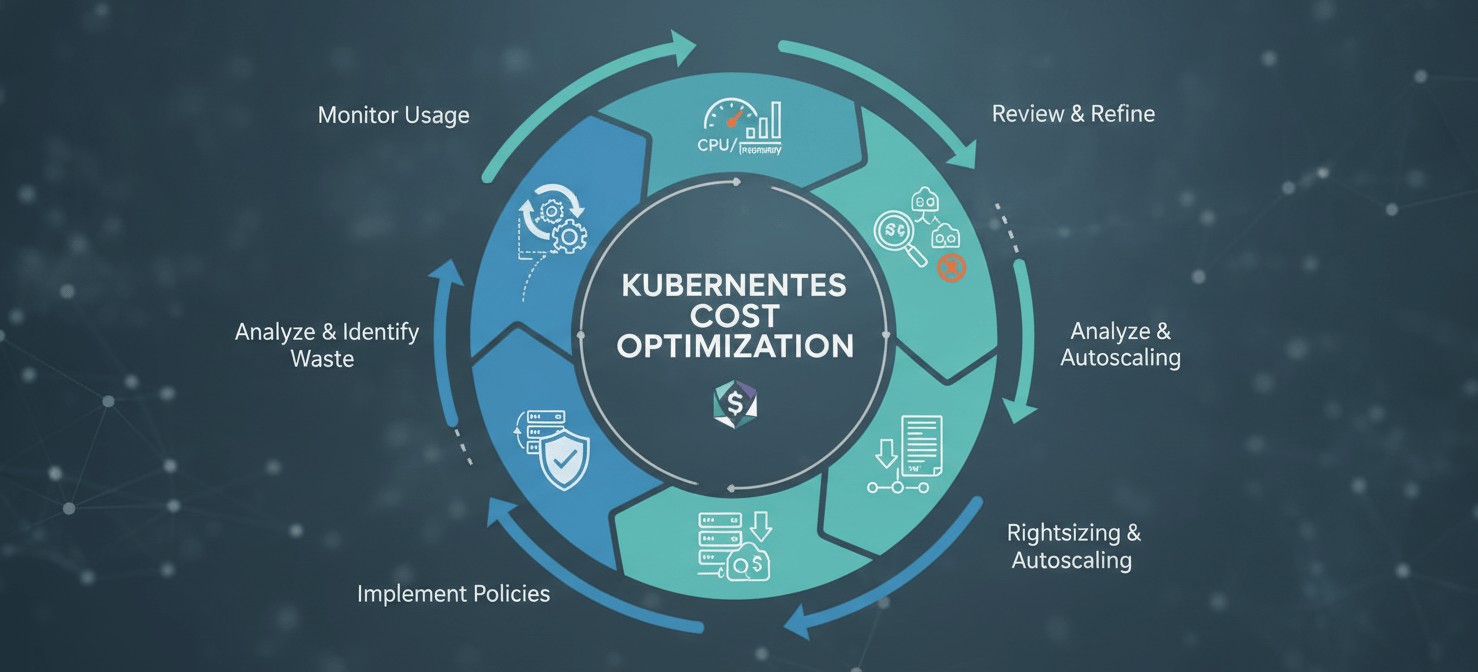
Gaining visibility and implementing chargeback are foundational, but the ultimate goal is to drive continuous cost optimization. This involves a combination of technical strategies and cultural practices.
Rightsizing and Resource Management
Over-provisioning is one of the biggest sources of waste in Kubernetes. Teams often request more CPU and memory than their applications actually need, “just in case.” Use the usage data from your monitoring tools to continuously rightsize resource requests and limits to match the actual needs of your workloads. This process, known as rightsizing, ensures you are not paying for resources you do not use.
Leveraging Autoscaling
Kubernetes provides several autoscaling mechanisms that can help you dynamically adjust resources based on demand, which is a key lever for cost optimization.
- Horizontal Pod Autoscaler (HPA): Automatically scales the number of pods in a deployment based on metrics like CPU utilization.
- Vertical Pod Autoscaler (VPA): Adjusts the CPU and memory requests of pods to match their actual usage.
- Cluster Autoscaler: Automatically adds or removes nodes from your cluster based on the overall resource demand.
Utilizing Spot Instances and Commitment Discounts
For workloads that are fault-tolerant, using spot instances can lead to dramatic cost savings—often up to 90% compared to on-demand prices. Additionally, for your stable, predictable workloads, take advantage of commitment-based discounts like AWS Savings Plans or Google Cloud’s Committed Use Discounts. A balanced strategy that combines on-demand, spot, and reserved instances is key to optimizing your compute spend.
Eliminating Waste
Finally, establish regular processes to identify and eliminate waste. This includes cleaning up unused resources like orphaned persistent volumes, shutting down development and testing environments during off-hours, and consolidating workloads onto fewer nodes to improve utilization (a practice known as bin packing).
Conclusion
Kubernetes introduces undeniable complexity to financial management. The abstraction that empowers developers simultaneously obscures costs from finance and operations teams, creating a gap where waste thrives. However, this challenge is not insurmountable. By applying the principles of FinOps, you can bridge this gap. The journey from opaque, aggregated cloud bills to granular, actionable cost insights requires a deliberate and structured approach. It begins with establishing visibility, progresses through creating accountability with showback and chargeback, and matures into a culture of continuous optimization. Effective FinOps Kubernetes cost management is not a one-time project but an ongoing discipline. It transforms cost from a reactive problem for the finance team into a proactive metric that engineering teams can own and improve, ensuring that the power of Kubernetes drives business value, not just a bigger cloud bill.
To truly master FinOps Kubernetes cost management, empowering your teams with granular, actionable insights is paramount. You can explore how Binadox simplifies this journey by trying out its capabilities or by scheduling a personalized demonstration to see its full potential.
 7-day free trial