



As an engineering manager, you own your team’s velocity, budget, and risk posture. Yet, the explosion of developer-led SaaS adoption creates a blind spot across all three. When any developer can subscribe to a new monitoring tool, code analysis platform, or API service with a credit card, your operational oversight diminishes. This decentralized approach, while empowering for individual developers, introduces significant costs and security vulnerabilities. Implementing a practical SaaS governance framework is no longer an IT-centric task; it is a core competency for engineering leaders focused on process ownership, team efficiency, and predictable outcomes.
Key takeaways
- Reduce Wasted Spend: A governance framework can help eliminate redundant tooling and unused licenses, which consume up to 25% of SaaS budgets on average.
- Strengthen Security Posture: By vetting all new tools, you mitigate the risk of “shadow IT,” which makes organizations five times more susceptible to cyber incidents.
- Improve Operational Efficiency: A 5-step governance process provides clear guardrails for tool acquisition, ensuring new software aligns with your existing stack and business goals without creating data silos.
- Empower Your Team: Governance isn’t about blocking tools; it’s about enabling developers to get the right tools quickly and safely, fostering a culture of accountability.
What is SaaS Governance and Why Does It Matter for Engineering?
SaaS governance is the system of policies and processes that organizations use to manage and control the acquisition, security, and lifecycle of their software-as-a-service applications. For engineering managers, this isn’t about bureaucratic red tape. Instead, it’s about creating a predictable, secure, and cost-effective environment for your developers. It provides a clear framework for decision-making, ensuring that every tool your team uses serves a strategic purpose and meets established standards for security and compliance.
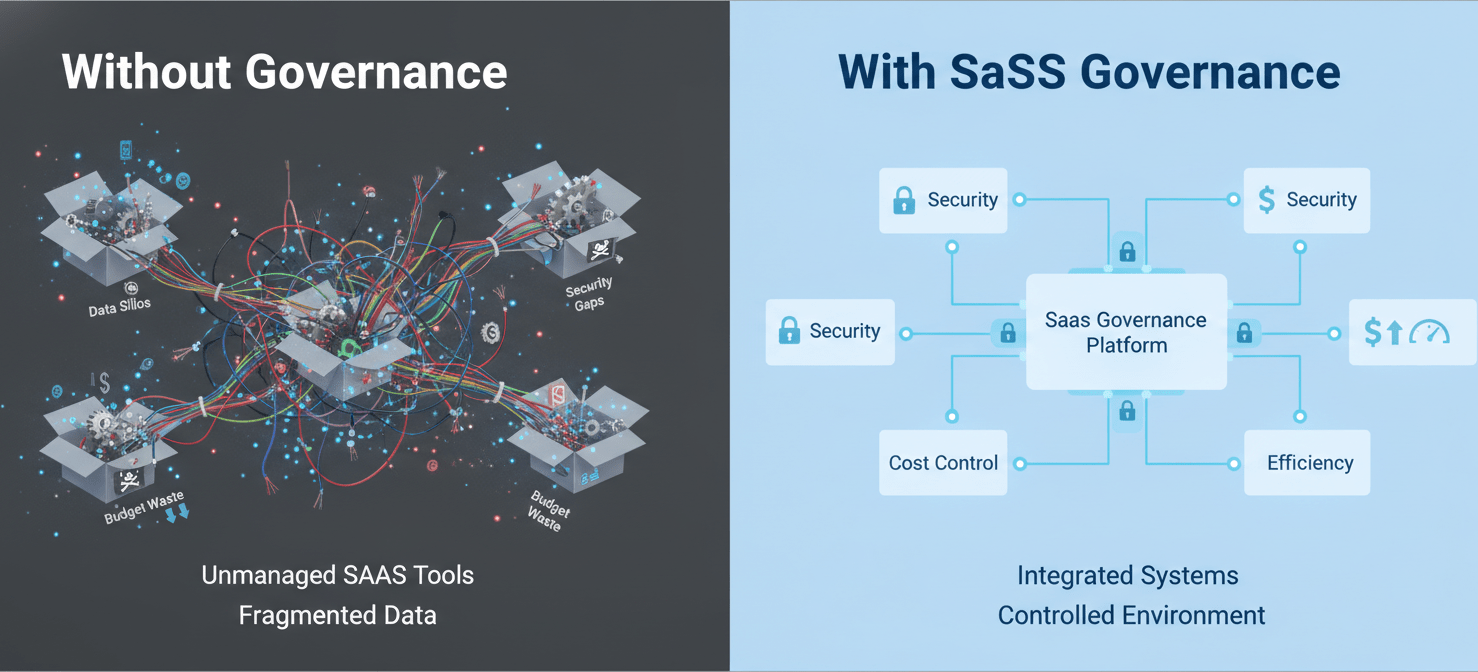
Without a deliberate approach to engineering SaaS management, you operate with incomplete information. You can’t accurately forecast your budget when subscriptions are hidden in expense reports. You can’t guarantee compliance with standards like SOC 2 or GDPR when developers can independently adopt tools that handle sensitive data. Furthermore, unmanaged tools often lead to data fragmentation, where critical information is scattered across disconnected systems, making it impossible to get a unified view of your operations.
Effective governance transforms this chaos into a well-defined process. It establishes clear ownership, defines the criteria for evaluating new tools, and creates a centralized inventory of your team’s software stack. This visibility is the foundation for optimizing costs, mitigating security risks, and ensuring that your technology investments directly support your team’s objectives.
The High Cost of Ad-Hoc SaaS Adoption
The “move fast and break things” ethos doesn’t apply to procurement and security. When developers acquire tools without oversight, the hidden costs and risks accumulate rapidly, directly impacting your key performance indicators.

Financial Drain and Budget Inefficiency
The most immediate impact is financial. Without a central view, you inevitably pay for redundant tools that solve the same problem. Multiple teams might purchase separate project management, CI/CD, or observability platforms, leading to overlapping functionality and wasted spend. Industry research shows that the average enterprise wastes approximately $18 million annually on unused or underutilized software.
This waste isn’t just about duplicate licenses. It includes the “context switching tax” your engineers pay when navigating a fragmented toolchain. One study estimated that a 12-person engineering team could lose over €400,000 per year in productivity due to the inefficiencies of juggling too many disconnected applications. These costs are rarely tracked but directly harm your team’s velocity and your budget’s effectiveness.
Security and Compliance Vulnerabilities
Unvetted SaaS applications, or “shadow IT,” represent a significant security threat. When an employee signs up for a new service with their work email, they may bypass critical security reviews. This creates several risks:
- Data Exposure: Unapproved tools might lack the necessary security controls, leaving sensitive code, customer data, or intellectual property vulnerable to breaches.
- Compliance Gaps: Applications that haven’t been reviewed for compliance with regulations like GDPR, HIPAA, or SOC 2 can create serious legal and financial liabilities.
- Increased Attack Surface: Every new SaaS application is another potential entry point for attackers. Inadequately secured tools or orphaned accounts from former employees can become vectors for data breaches.
Operational Drag and Data Silos
An ungoverned toolchain creates operational friction. When every developer or team picks their own tools, you end up with a collection of systems that don’t integrate. This leads to data silos, where valuable information is trapped within a specific application, invisible to the rest of the organization.
As a result, your team spends valuable engineering cycles building and maintaining brittle, one-off integrations just to make their tools work together. This is low-value work that distracts from core product development. Furthermore, it complicates onboarding for new hires, who must learn a complex and inconsistent set of tools, and it makes offboarding risky, as there is no central record of which systems a departing employee can access.
A 5-Step SaaS Governance Framework for Engineering Teams
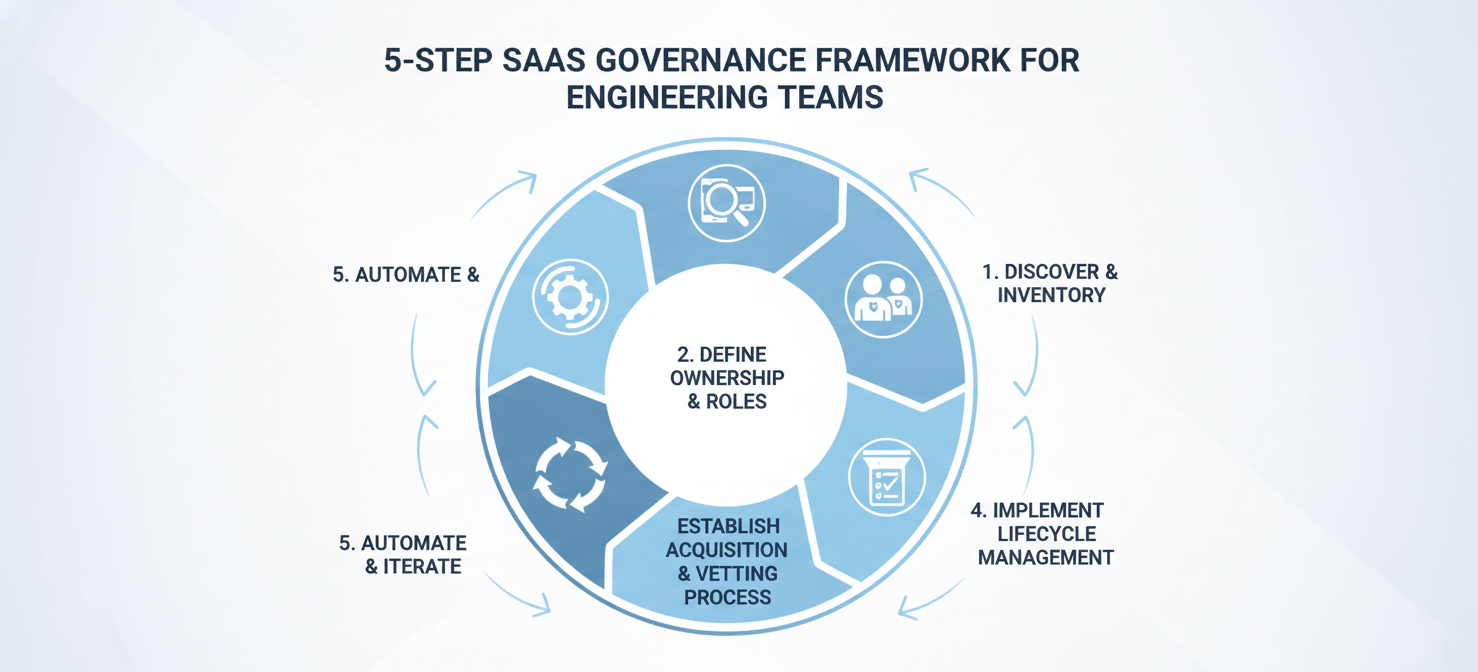
A successful developer tool governance model balances agility with control. It should empower your engineers to find and use the best tools for their jobs while providing the necessary guardrails to protect the organization. This 5-step framework provides a practical starting point.
Step 1: Discover and Inventory Your Existing SaaS Stack
You cannot govern what you cannot see. The first step is to create a comprehensive inventory of all SaaS applications currently in use by your engineering team. This includes everything from major platforms like GitHub and Jira to smaller, specialized tools that individuals may be expensing.
Start by reviewing expense reports, credit card statements, and accounts payable records. Collaborate with your IT and finance departments to identify recurring software subscriptions. Supplement this by surveying your team members about the tools they use daily. The goal is to create a single source of truth that details what you’re using, who is using it, and how much it costs.
Step 2: Define Ownership and Roles
Clear ownership is the cornerstone of accountability. For each tool in your inventory, assign a clear owner—typically the team lead or manager of the primary user group. This individual is responsible for managing the vendor relationship, tracking usage, and justifying the tool’s continued expense during budget reviews.
In addition, define the roles for the governance process itself. This typically involves creating a small, cross-functional review board that includes representatives from engineering, security, and finance. This group is responsible for evaluating all new SaaS requests against a predefined set of criteria.
Step 3: Establish a Clear Acquisition and Vetting Process
This is the core of your governance framework. Create a simple, transparent process for developers to request new tools. This process should not be a bureaucratic bottleneck; rather, it should be a streamlined workflow that quickly assesses a tool’s value and risk.
Your vetting process should evaluate each request against key criteria:
- Business Need: Does this tool solve a problem that isn’t already addressed by our existing stack?
- Functional Overlap: Does it duplicate the functionality of a tool we already pay for?
- Security and Compliance: Does the vendor meet our security standards? Have they completed a security review (e.g., SOC 2 Type II)?
- Integration: How well does it integrate with our existing systems, such as our identity provider (IdP) for single sign-on (SSO)?
- Total Cost of Ownership (TCO): What is the full cost, including subscription fees, implementation time, and maintenance overhead?
Step 4: Implement Lifecycle Management Policies
SaaS governance doesn’t end once a tool is approved. You need processes for managing the entire lifecycle of each application. This includes:
- Onboarding: Standardize the process for adding new users to an application, ensuring they are granted the appropriate level of access based on their role (principle of least privilege).
- Usage Reviews: The designated owner of each tool should conduct periodic reviews (e.g., quarterly) to ensure it is still providing value and that you are not paying for unused licenses.
- Offboarding: Implement a clear process for revoking access when an employee leaves the company. This is a critical security step that is often overlooked in decentralized environments.
Step 5: Automate and Iterate
Manual governance processes don’t scale. As your team grows, leverage automation to enforce your policies. Use a SaaS management platform (SMP) to automate the discovery of new tools, track usage, and manage licenses. Integrate your procurement process with communication tools like Slack to streamline new tool requests and approvals.
Finally, treat your governance framework as a living process. Solicit feedback from your developers. Are they finding the process too slow? Are the criteria for approval unclear? Continuously refine your framework to be as lightweight and effective as possible, ensuring it supports—rather than hinders—your team’s productivity.
Implementing Your SaaS Governance Framework
Rolling out a new process requires clear communication and a focus on demonstrating value. Frame the initiative not as a top-down mandate, but as a partnership with your developers to build a more efficient and secure engineering environment.

Start with Communication and Education
Begin by explaining the “why” behind the new framework. Share data on redundant spending or potential security gaps that you’ve identified. Help your team understand that the goal is not to restrict their choices, but to ensure that the tools they use are secure, cost-effective, and well-integrated. Create a central document or wiki page that clearly outlines the new process, the evaluation criteria, and the roles and responsibilities.
Focus on “Freedom within a Framework”
The most successful governance models empower employees rather than restricting them. The objective is to provide guardrails, not roadblocks. For example, you might pre-approve a list of recommended tools for common tasks like project management or code analysis. This gives developers a set of safe, vetted options they can adopt immediately without a formal review process, while still requiring a review for tools not on the list. This approach balances the need for autonomy with the organization’s need for control.
Measure and Report on Key Metrics
To demonstrate the value of your SaaS governance framework and secure ongoing buy-in, you need to track and report on key metrics. Focus on the outcomes that matter to your leadership and your team:
- Cost Savings: Track the reduction in spend from eliminating redundant tools and reclaiming unused licenses.
- Risk Reduction: Report on the number of new tools that have been through a security review and the percentage of your SaaS stack that is integrated with your SSO provider.
- Process Efficiency: Measure the time it takes to approve and provision a new SaaS application. Your goal should be to make the official process faster and easier than circumventing it.
By reporting on these metrics, you can clearly demonstrate how your governance efforts are contributing to a more efficient, secure, and financially responsible engineering organization.
Conclusion
The days of engineering teams operating as isolated islands of SaaS procurement are over. The costs are too high, and the risks are too significant. For an engineering manager, establishing a SaaS governance framework is a direct investment in operational maturity. It replaces chaotic, ad-hoc adoption with a deliberate, data-driven process that aligns your team’s tools with your strategic goals. This isn’t about adding bureaucracy; it’s about reclaiming control over your budget, securing your attack surface, and ensuring your engineers have the best—and safest—tools to do their jobs. Ultimately, good governance isn’t a barrier to speed; it’s the foundation for sustainable velocity.
To implement a robust SaaS governance framework and achieve sustainable velocity, you can easily create your free Binadox account to begin gaining immediate visibility, or if you’d prefer a personalized walkthrough, we encourage you to book a demo with our experts.
 7-day free trial