



Software as a Service (SaaS) has become the backbone of modern business operations, offering flexibility and power to teams of all sizes. However, this convenience comes at a price. Without a clear strategy, subscription costs can spiral out of control, leading to significant waste. Effective saas spend management is the process of tracking, controlling, and optimizing these recurring software costs. It ensures you get the maximum value from your investments by eliminating redundancy, rightsizing licenses, and cutting unnecessary expenditures.
Key takeaways
- Organizations with a dedicated SaaS governance strategy can save between 23-30% on their software spending.
- The first step in controlling costs is creating a complete inventory of every application in use, including those purchased without IT approval.
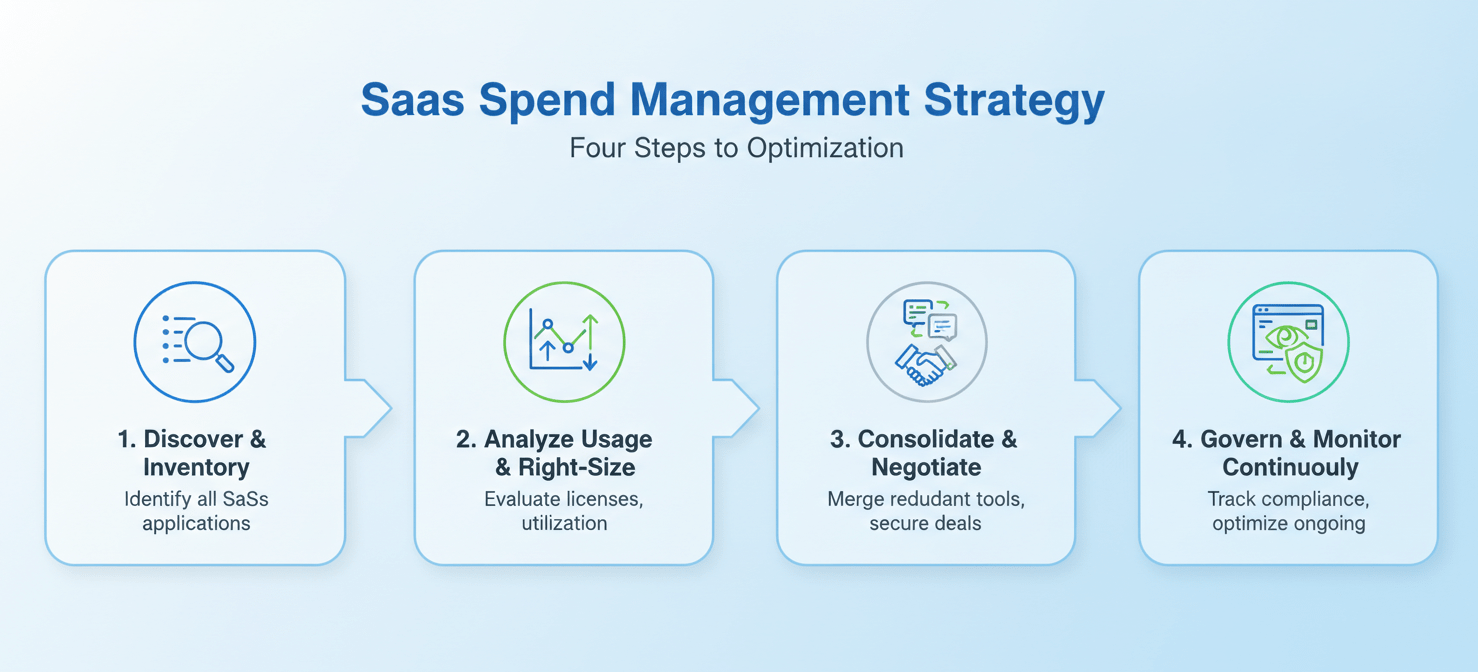
- A successful strategy involves a 4-step process: discovering all tools, rightsizing licenses based on actual usage, consolidating overlapping applications, and continuously monitoring spend.
- Automated SaaS management platforms provide the visibility and control needed to manage complex software portfolios at scale.
What Is SaaS Spend Management?
SaaS spend management is the systematic approach organizations use to monitor, manage, and optimize their spending on cloud-based software subscriptions. The primary goal is to reduce waste and ensure that every dollar spent on software contributes directly to business objectives. This involves more than just tracking expenses; it’s about understanding the entire lifecycle of your SaaS applications.
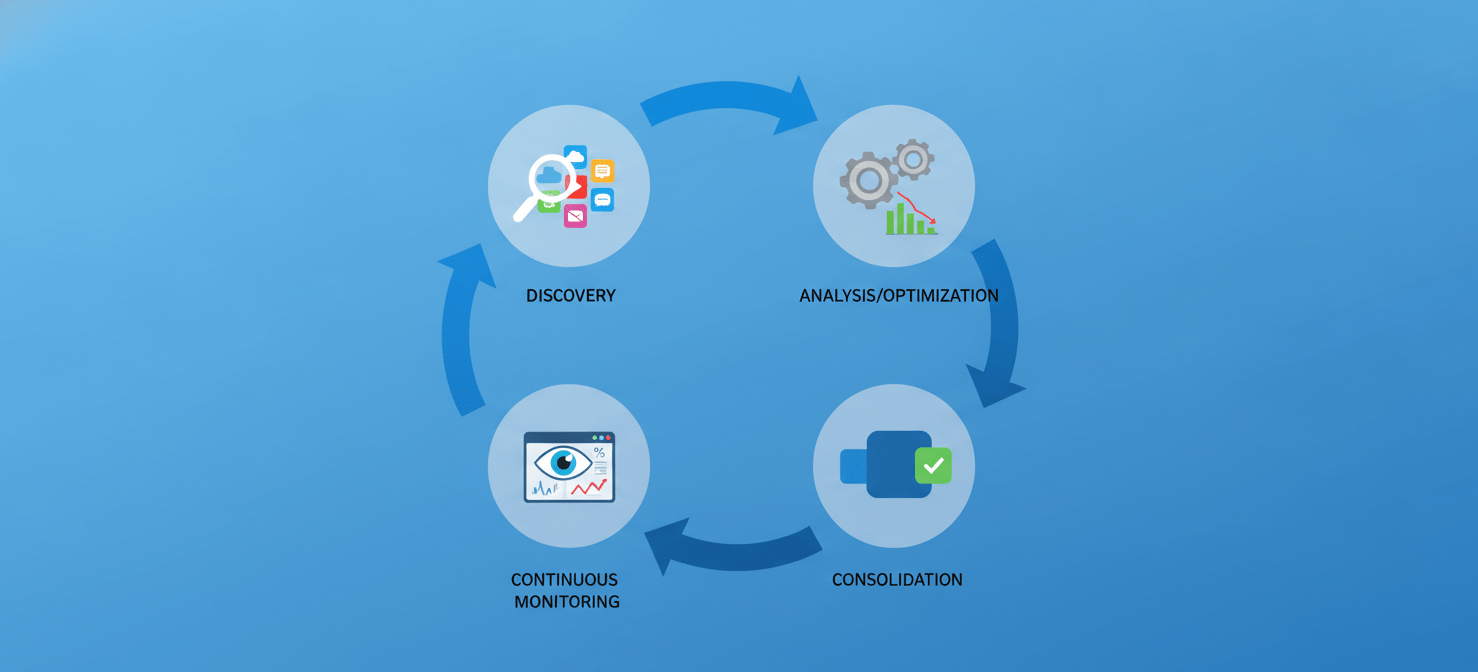
This practice requires a comprehensive view of what products are being used, who is using them, how they are being used, and whether they provide a sufficient return on investment. It’s a critical function for maintaining budgetary control and operational efficiency in an environment where software purchasing is often decentralized.
Why It’s More Than Just Cost-Cutting
While reducing costs is a major benefit, true SaaS spend management goes deeper. It’s about optimizing value. For example, by analyzing usage data, you might discover that a team is only using a fraction of the features in a premium software package. Downgrading to a lower-cost tier would save money without impacting productivity.
Furthermore, effective management enhances security and compliance. When employees purchase software without oversight (a practice known as “Shadow IT”), it can introduce significant security vulnerabilities. A centralized management process helps identify and mitigate these risks, ensuring all tools meet company standards.
Why Is Managing SaaS Spend So Difficult?
Managing SaaS spend is challenging for several reasons, most of which stem from a lack of visibility and decentralized purchasing. As companies grow, different departments often procure their own tools, leading to a fragmented and difficult-to-track software landscape.
The Rise of Shadow IT
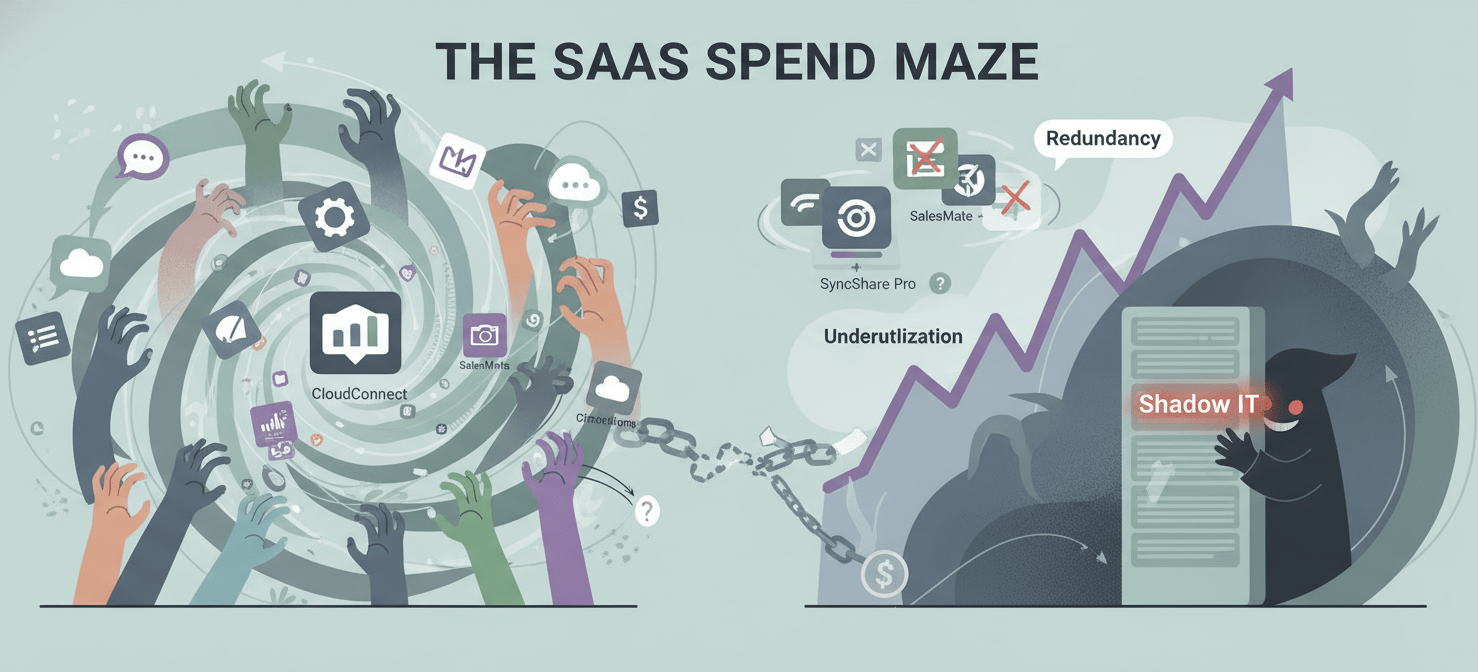
Shadow IT refers to technology and software used within an organization without the knowledge or approval of the IT or finance departments. This is a primary driver of uncontrolled SaaS spending. An employee might expense a new project management tool on a corporate card, and that recurring monthly charge can easily go unnoticed. This practice not only inflates costs but also creates security risks, as unvetted applications may not comply with data protection policies.
Redundancy and Overlapping Applications
Without a centralized view of all software subscriptions, it’s common for multiple teams to purchase different tools that serve the same function. For instance, the marketing team might use one project management tool while the engineering team uses another. This duplication of functionality leads to wasted resources and inefficient workflows. Consolidating these overlapping applications onto a single platform can lead to significant savings.
Underutilized and Unused Licenses
Companies frequently purchase more software licenses than they actually need, leading to substantial waste. A license might be assigned to an employee who rarely uses the software or remains active long after an employee has left the company. Identifying and reclaiming these underutilized or “orphaned” licenses is a key component of cost optimization. Defining what constitutes “inactive” usage, such as no logins within 30 days, can help you systematically identify these opportunities for savings.
How to Implement a SaaS Spend Management Strategy
Implementing a successful SaaS spend management strategy requires a structured, multi-step approach. It’s not a one-time project but an ongoing process of discovery, analysis, and optimization.
Step 1: Discover and Inventory All SaaS Applications
You cannot manage what you cannot see. The foundational step is to create a comprehensive inventory of every single SaaS application in use across your organization. This includes officially sanctioned tools as well as any shadow IT purchases. To do this, you’ll need to review multiple data sources:
- Expense reports and accounting records: Analyze credit card statements and employee expense reports to find recurring software charges.
- Single Sign-On (SSO) systems: Your SSO provider can show which applications users are accessing.
- Direct employee surveys: Ask team leaders and employees what tools they use regularly to do their jobs.
Step 2: Analyze Usage and Right-Size Licenses
Once you have a complete inventory, the next step is to analyze how each application is being used. The goal is to determine if you are paying for licenses or features that are not being utilized. Track key metrics like login frequency, feature adoption, and the last date of activity for each user.
This data will reveal opportunities to “right-size” your licenses. For users who only need basic functionality, you can downgrade them from premium tiers. For employees who have left the company or no longer need access, you can de-provision their licenses entirely and reallocate them to others.
Step 3: Consolidate and Negotiate
With a clear picture of your software portfolio and usage patterns, you can identify redundant applications. Group your tools by category (e.g., project management, communication, design) and compare their features and usage. Standardize on the best-fit tool for each category and eliminate the others.
This consolidation gives you greater leverage when negotiating with vendors. Armed with precise usage data, you can often secure better pricing, especially for long-term contracts or volume discounts. Don’t be afraid to walk into a renewal discussion prepared to show the vendor that you have done your homework.
Step 4: Govern and Monitor Continuously
SaaS spend management is not a one-and-done effort. You must establish ongoing governance to maintain control. Create a cross-functional team with stakeholders from IT, Finance, and Procurement to review SaaS spend regularly, perhaps on a quarterly basis.
Implement clear policies for procuring new software. This should include a centralized request and approval process to prevent new instances of shadow IT. Continuously monitor your SaaS stack to ensure compliance and identify new optimization opportunities as your business needs evolve.
The Role of SaaS Spend Management Software
For small companies, managing SaaS spend with spreadsheets might be feasible. However, as an organization grows, this manual approach quickly becomes unreliable and time-consuming. This is where saas spend management software, also known as SaaS management platforms (SMPs), becomes essential.
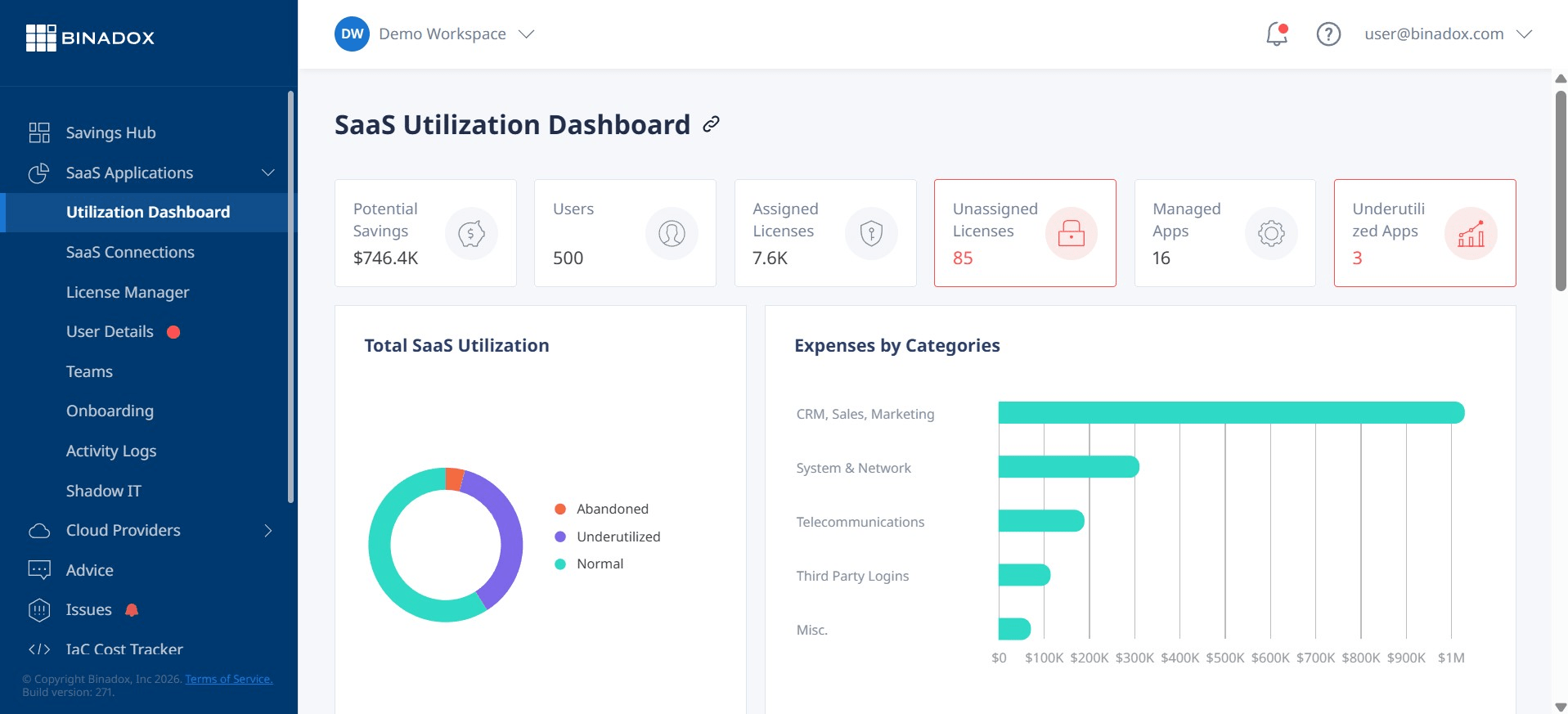
These tools automate the discovery, monitoring, and optimization process. They integrate with your finance and IT systems to provide a single, real-time dashboard of your entire software portfolio.
Centralized Visibility
The primary benefit of saas spend management tools is the centralized visibility they provide. Instead of hunting through spreadsheets and expense reports, you have a single source of truth for all your subscriptions, contracts, renewal dates, and costs. This complete view is the foundation for making informed decisions about your software stack.
Automated Discovery and Usage Tracking
SaaS management platforms automatically discover applications across your organization, including shadow IT. They track usage data in real-time, providing insights into which licenses are underutilized and where you can cut costs. This automation saves countless hours of manual work and ensures your data is always up-to-date.
Renewal Management
Missing a renewal deadline can result in an automatic, and often more expensive, contract renewal. SaaS spend management software helps you avoid this by sending automated alerts for upcoming renewals. This gives you ample time to review usage, renegotiate terms, or cancel the subscription if it’s no longer needed.
Best Practices for Ongoing SaaS Cost Optimization
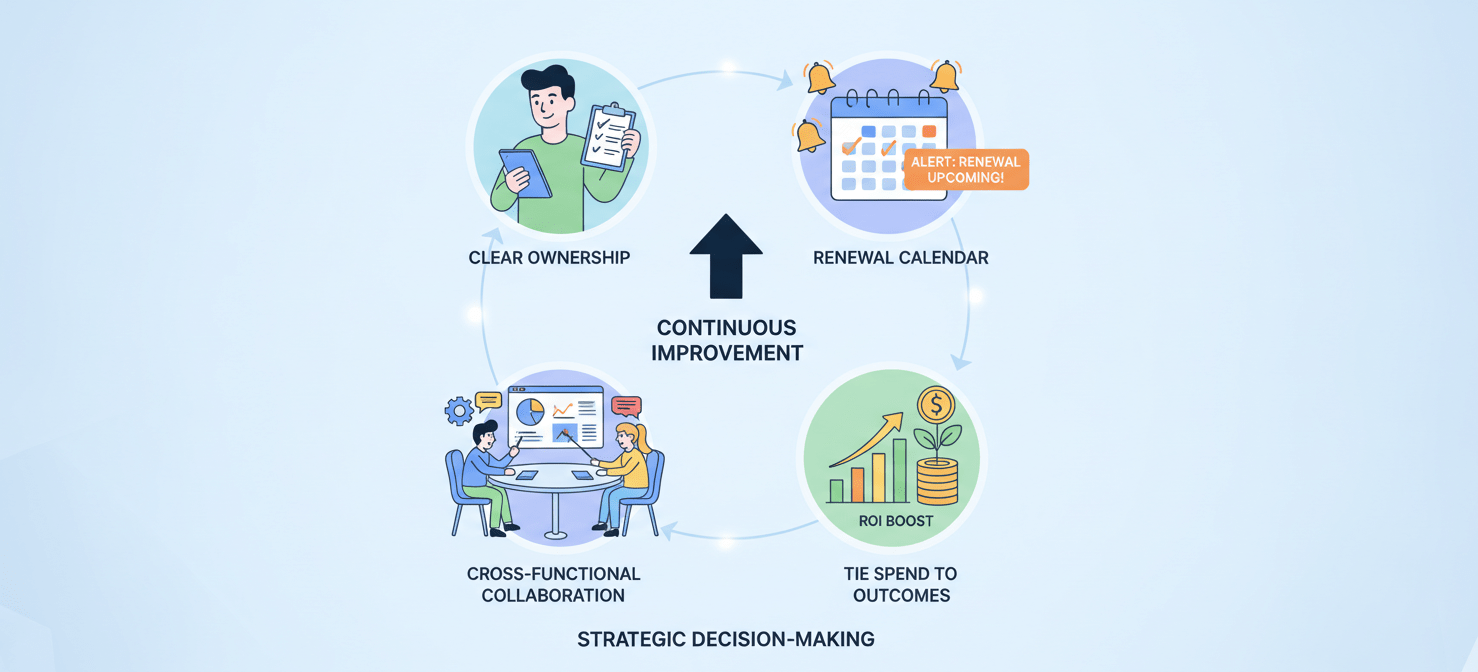
Effective SaaS cost optimization is a continuous discipline. Beyond the initial implementation, several best practices can help you maintain control and maximize the value of your software investments.
Establish Clear Ownership
Assign a clear owner to every application in your portfolio. This individual or team is responsible for managing the vendor relationship, tracking usage, and making decisions at renewal time. Without clear ownership, applications are more likely to be auto-renewed without proper evaluation.
Create a Renewal Calendar
Proactively manage your renewals by maintaining a centralized calendar of all contract end dates and notification periods. A best practice is to start the review process at least 90 days before the renewal date. This provides sufficient time to analyze usage data, explore alternatives, and negotiate favorable terms with the vendor.
Foster Cross-Functional Collaboration
Break down silos between IT, Finance, and individual departments. Effective SaaS management requires a collaborative effort. Finance can provide spending data, IT can manage security and integration, and department heads can offer insights into how tools are used in daily workflows. Regular meetings between these groups can align everyone on cost-saving goals.
Tie Software Spend to Business Outcomes
Ultimately, the goal is not just to cut costs but to ensure that software spending drives tangible business results. Work with department leaders to define key performance indicators (KPIs) for major software investments. For example, is your CRM actually improving sales productivity? Is your marketing automation platform generating a positive ROI? By connecting spend to outcomes, you can make more strategic decisions about where to invest your resources.
Conclusion
Ignoring the growing cost of software subscriptions is no longer an option. The decentralized nature of SaaS purchasing, coupled with the proliferation of shadow IT, can quickly erode budgets and introduce unnecessary risk. A disciplined approach to saas spend management is essential for maintaining financial health and operational efficiency. By systematically discovering your assets, analyzing their usage, and implementing strong governance, you can transform your software portfolio from a source of uncontrolled spending into a streamlined engine for growth. The process requires diligence, but the payoff—in both hard-dollar savings and strategic clarity—is well worth the effort. It’s time to stop guessing and start managing.
To move beyond guessing and truly manage your SaaS investments, you can easily begin a free trial of our platform, or for a personalized walkthrough of its capabilities, book a demo with our team.
 7-day free trial