



For finance and procurement leaders, any new technology investment must clear a high bar for financial justification. An AI chatbot is no exception. While the operational benefits are often touted by IT and customer service departments, your primary concern is the bottom line. A rigorous AI chatbot ROI analysis is not just a formality; it is the essential tool for validating the expenditure, managing vendor negotiations, and ensuring the project delivers quantifiable value against its forecasted costs. This analysis moves the conversation from “what it does” to “what it is worth,” providing the data-driven foundation for a sound investment decision.
Key takeaways:
- A complete ROI analysis must quantify both direct cost reductions (like lower cost-per-contact) and revenue-generating impacts (such as improved lead conversion).
- The total cost of ownership (TCO) extends beyond initial licensing; it must include implementation, integration, training, and ongoing maintenance fees.
- Successful financial modeling for an AI tool involves projecting costs and returns over a 3-year period to accurately calculate metrics like Net Present Value (NPV) and Payback Period.
- Intangible benefits, such as improved customer satisfaction (CSAT) and agent morale, should be quantified where possible by linking them to lagging financial indicators like customer churn and employee turnover.
Understanding the ‘R’ in ROI: Identifying Your Key Return Metrics
The “Return” component of your analysis must be translated into the language of the balance sheet. Vague promises of “better service” are insufficient. Instead, focus on specific, measurable financial outcomes. Your first step is to benchmark your current state to establish a baseline for comparison.
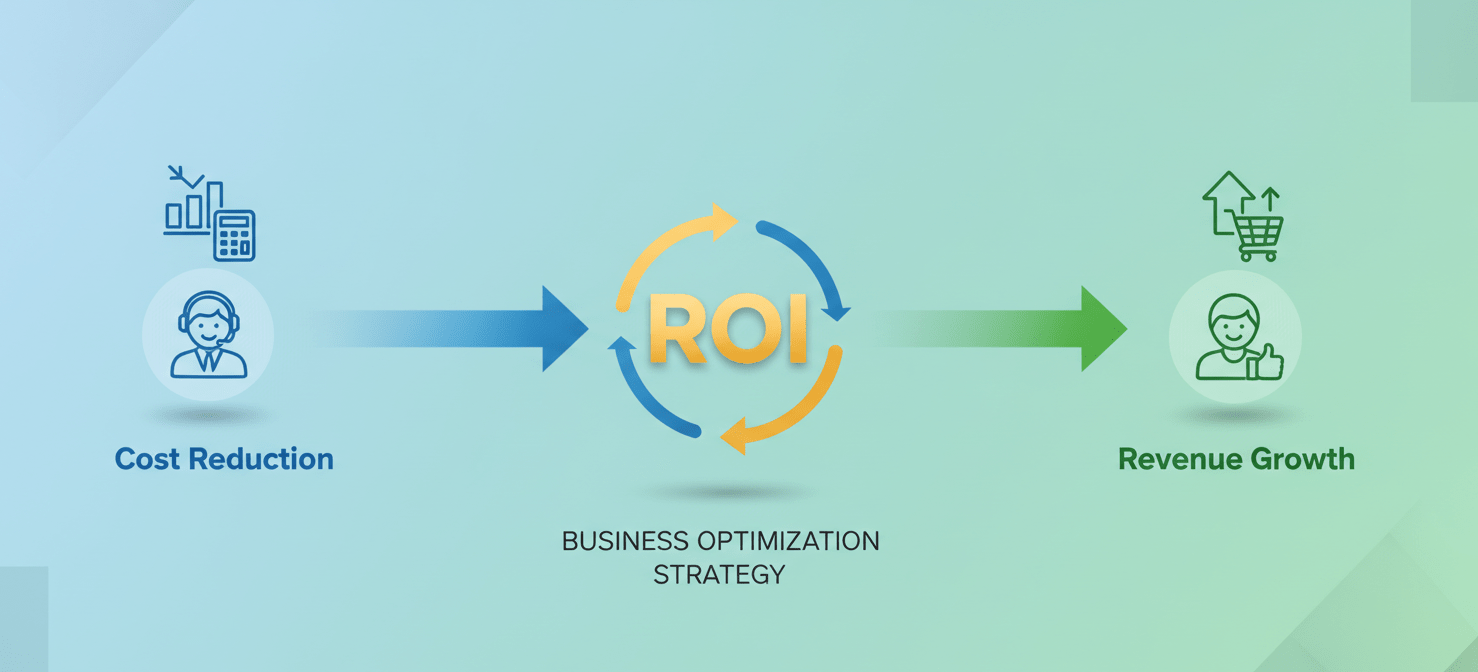
Direct Cost Reduction
This is the most straightforward part of the analysis. The primary driver here is the reduction in human agent interaction for routine, repetitive inquiries.
- Reduced Cost-Per-Contact: First, calculate your current fully-loaded cost per human interaction (call, email, or chat). This includes agent salaries, benefits, training, and a proportion of overhead for facilities and equipment. The average cost of a live agent interaction can range from $6 to $20, depending on the industry and complexity. An AI chatbot can handle a significant portion of these interactions at a fraction of the cost. For example, if a chatbot deflects 30,000 inquiries per month that would have cost an average of $8 each via a live agent, the direct operational savings are $240,000 per month.
- Lowered Agent Attrition Costs: High-volume contact centers often suffer from high employee turnover, with replacement costs (recruiting, hiring, training) estimated to be thousands of dollars per agent. By automating monotonous tasks, chatbots can improve agent job satisfaction and reduce burnout, leading to lower attrition and its associated costs.
- Optimized Staffing and Training: AI can handle volume spikes without requiring overtime or temporary staff. Furthermore, it reduces the training burden for new agents, as the chatbot becomes the first line of defense, handling simple queries and allowing human agents to focus on complex, high-value interactions.
Revenue Generation and Protection
Beyond cost savings, a well-implemented AI chatbot can directly contribute to top-line growth.
- Increased Lead Conversion: For sales-focused applications, a chatbot can engage website visitors 24/7, qualify leads, and schedule appointments. By measuring the conversion rate of chatbot-qualified leads versus other sources, you can assign a clear revenue value to its performance.
- Reduced Customer Churn: Poor customer service is a leading cause of churn. By providing instant, accurate answers anytime, a chatbot can improve the customer experience and, therefore, loyalty. You can model this return by calculating the value of a 1% reduction in your current annual churn rate. If your average customer lifetime value (CLV) is $5,000 and you have 10,000 customers, a 1% reduction in churn translates to retaining 100 customers, representing $500,000 in protected revenue.
- Higher Average Order Value (AOV): In e-commerce, chatbots can act as personal shoppers, providing product recommendations and upselling or cross-selling relevant items during the customer journey. This direct impact on AOV can be tracked and attributed to the AI’s intervention.
Quantifying the ‘I’ in ROI: A Comprehensive Cost Breakdown
A credible AI chatbot ROI analysis requires a thorough accounting of all associated costs, not just the sticker price from the vendor. Forecasting AI tool costs accurately means building a complete Total Cost of Ownership (TCO) model.
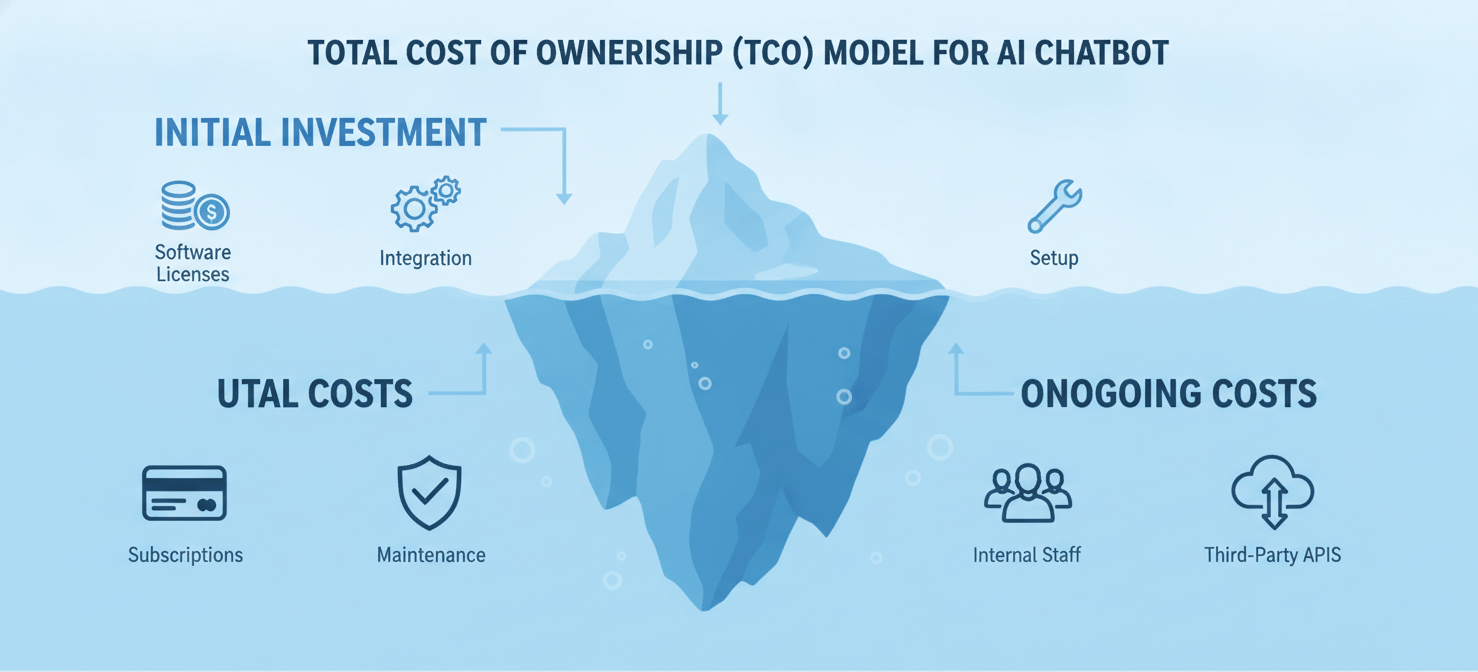
Initial Investment Costs
These are the one-time expenses required to get the solution operational.
- Platform and Licensing Fees: This is often the most visible cost. Vendors may use different models, such as per-user/per-agent seats, per-conversation, or a flat annual platform fee. Scrutinize these models carefully during vendor management and contract negotiation to understand how they scale with your usage.
- Implementation and Integration: The chatbot must connect to your existing systems (CRM, ERP, knowledge bases). This often requires professional services from the vendor or a third-party consultant. These costs can be substantial, sometimes equaling the first-year license fee. Demand a detailed Statement of Work (SOW) that clearly defines the scope and costs.
- Initial Content and Knowledge Base Build: The AI needs data to function. This involves costs associated with organizing existing knowledge bases, creating conversation flows, and training the initial AI models. This may require internal staff time or specialized contractors.
Ongoing Operational Costs
These are the recurring expenses to keep the system running, optimized, and secure.
- Recurring Subscription Fees: This is the core ongoing cost based on the vendor’s pricing model. Ensure your contract has clear terms on price increases at renewal.
- Maintenance and Support: Most vendors offer tiered support packages. The level you choose will impact your annual costs. A basic package may be included, but enterprise-level 24/7 support will be an added line item.
- Internal Staffing: You will need internal resources to manage the chatbot. This includes a “conversation designer” or “AI trainer” who monitors performance, analyzes transcripts, and continuously improves the chatbot’s accuracy and conversation flows. Factor in the fully-loaded cost of the FTEs (or partial FTEs) dedicated to this function.
- Third-Party System Costs: If the chatbot relies on API calls to other systems (e.g., a shipping provider’s tracking API), be aware of any potential per-call charges that could increase as chatbot usage grows.
Building the Financial Model for Your AI Chatbot ROI Analysis
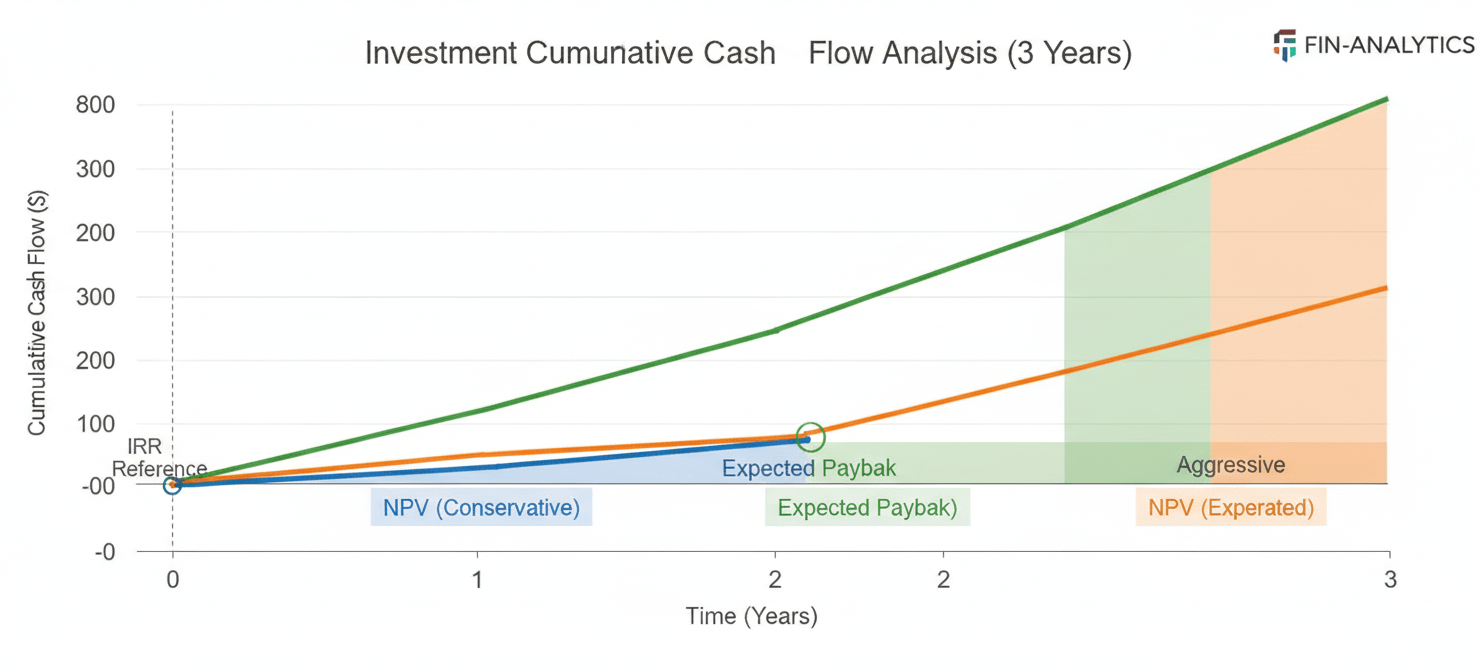
With costs and returns identified, the next step is to build a financial model to assess the investment’s viability over time. A standard 3-year or 5-year projection is typical for this type of technology investment.
Key Financial Metrics
Your model should calculate several standard financial KPIs to provide a comprehensive view of the investment’s performance.
- Payback Period: This is the time it takes for the accumulated returns to equal the initial investment. A shorter payback period is generally preferred. For example, if the total initial investment is $250,000 and the net annual savings are $150,000, the payback period is approximately 1.67 years.
- Net Present Value (NPV): NPV accounts for the time value of money, discounting future cash flows back to their present value. A positive NPV indicates that the projected earnings, in today’s dollars, exceed the anticipated costs. This is a critical metric for comparing the chatbot project against other potential capital expenditures.
- Internal Rate of Return (IRR): IRR is the discount rate at which the NPV of the project’s cash flows equals zero. If the IRR is higher than your company’s hurdle rate (the minimum acceptable rate of return), the project is considered a financially sound investment.
Modeling Scenarios
A robust model doesn’t just present a single outcome. It accounts for uncertainty. You should build three scenarios:
- Conservative Case: Assumes lower-than-expected call deflection rates, higher implementation costs, and slower adoption.
- Expected Case: Uses your most realistic assumptions based on vendor data, industry benchmarks, and internal analysis.
- Aggressive Case: Models higher adoption, greater efficiency gains, and potential for new revenue streams.
Presenting these scenarios demonstrates due diligence and provides a clearer picture of the potential risks and rewards, which is essential for budget approval.
Factoring in the Intangibles: Strategic and Operational Benefits
Not every benefit of an AI chatbot fits neatly into a spreadsheet cell. However, these “soft” benefits have tangible, long-term financial implications and should be included in your qualitative assessment.
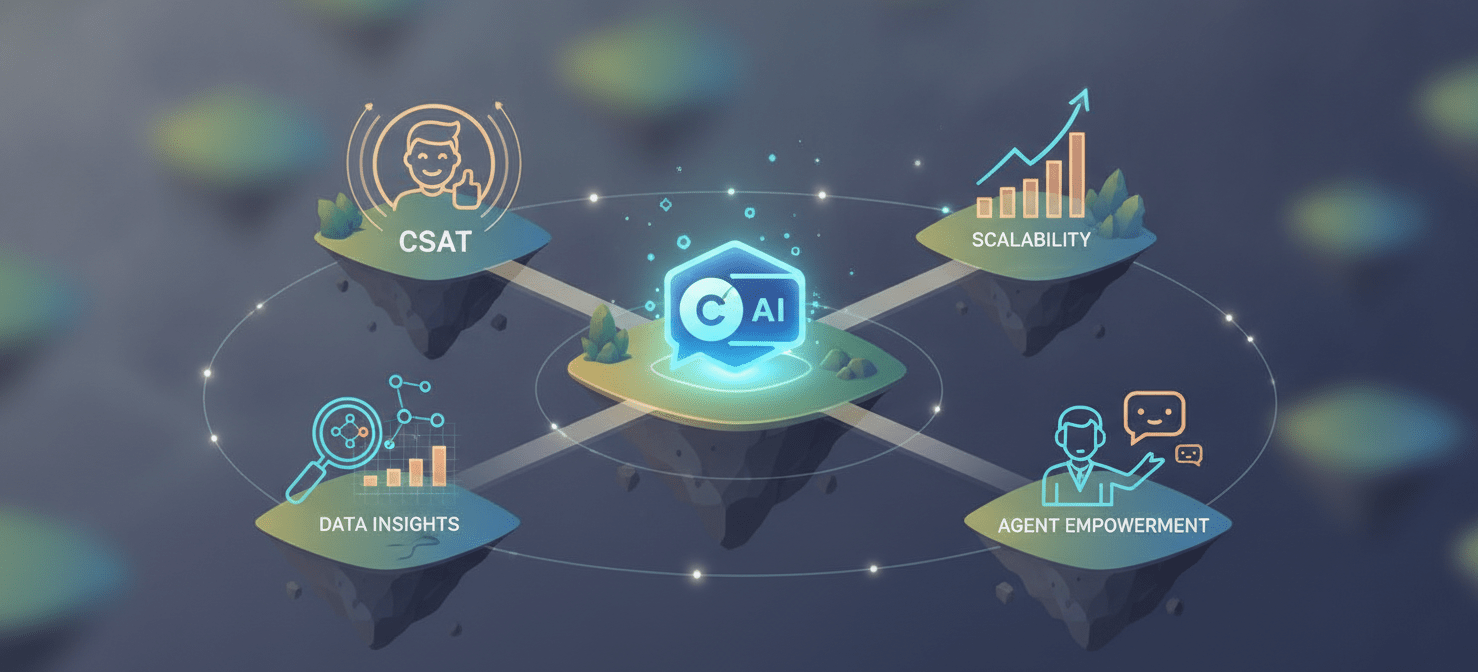
- Enhanced Customer Satisfaction (CSAT): While difficult to directly monetize, improved CSAT scores are a leading indicator of customer loyalty and reduced churn. Instant, 24/7 support is a significant driver of customer satisfaction. You can link improvements in CSAT to financial outcomes by correlating them with historical data on customer retention.
- Improved Data and Analytics: Chatbot conversation logs are a goldmine of unstructured data. They provide direct insight into what your customers are asking for, their pain points, and emerging trends. This data can inform product development, marketing strategy, and process improvements, leading to significant long-term value. For instance, if many customers ask about a feature you don’t have, that’s valuable R&D input.
- Scalability and Business Continuity: An AI chatbot can scale to handle virtually unlimited conversation volume without a linear increase in cost. This is crucial during unexpected events or seasonal peaks. This provides an operational resilience that is difficult to achieve with human-only teams, mitigating the financial risk of service disruptions.
- Agent Empowerment and Development: By offloading repetitive queries, chatbots free up human agents to focus on high-empathy, complex problem-solving. This not only improves their job satisfaction but also creates a more skilled, valuable support team, turning a cost center into a value-creation center.
Risk Mitigation and Forecasting AI Tool Costs
No investment is without risk. A credible analysis acknowledges and plans for potential downsides. Your budget and vendor negotiations should reflect a clear understanding of these risks.
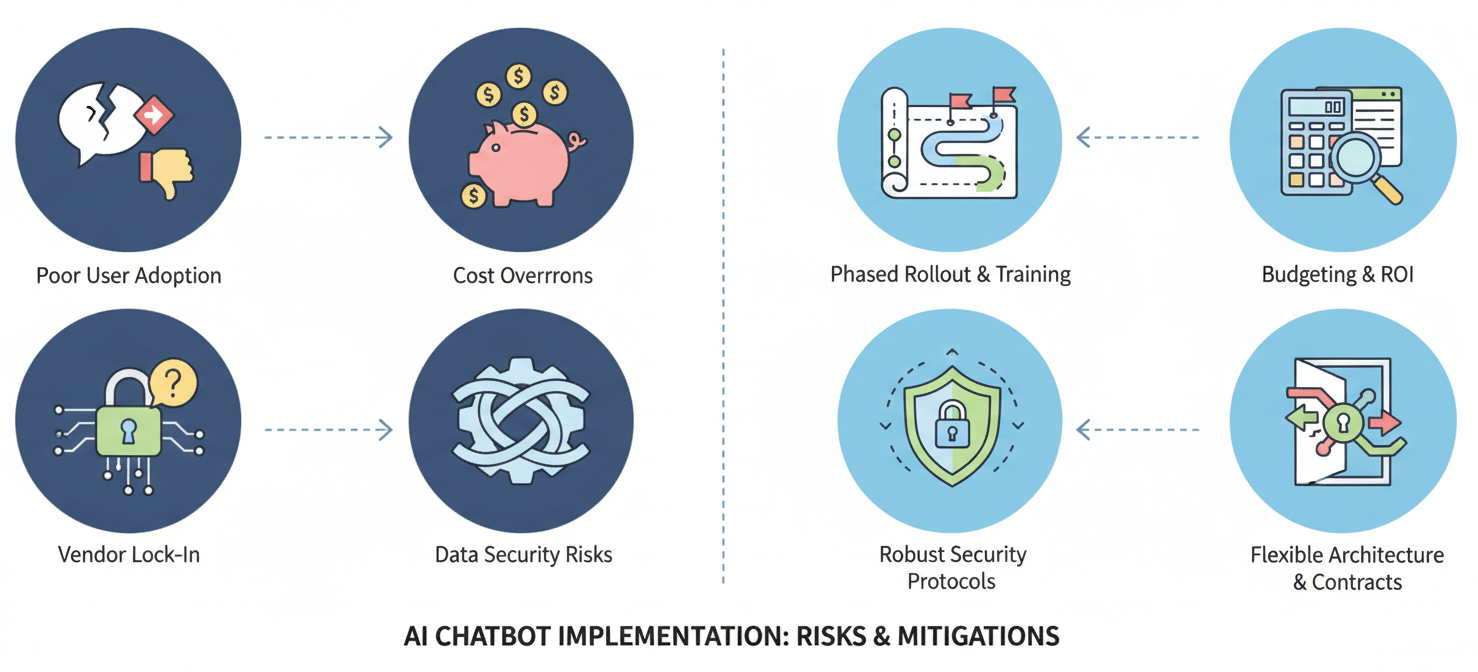
Common Risks and Mitigation Strategies
- Poor User Adoption: If customers find the chatbot unhelpful, they will bypass it, negating any potential ROI.
- Mitigation: Phase the rollout, starting with a narrow, well-defined set of use cases where the chatbot can achieve a high success rate. Invest in quality conversation design and user experience (UX).
- Cost Overruns: Integration complexity is often underestimated.
- Mitigation: Secure a fixed-bid SOW for implementation where possible. Build a contingency fund (typically 10-15% of the project cost) into your budget for unforeseen technical challenges.
- Data Security and Compliance: The chatbot will handle customer data, creating potential security and privacy risks (e.g., GDPR, CCPA).
- Mitigation: Conduct a thorough security review of any potential vendor. Ensure the contract includes clear clauses on data ownership, security protocols, and liability. Involve your legal and compliance teams early in the procurement process.
- Vendor Lock-In: Over-reliance on a single vendor’s proprietary technology can make it difficult and costly to switch in the future.
- Mitigation: Prioritize vendors that use open standards and provide clear data export capabilities. Negotiate contract terms that do not auto-renew without review and include favorable termination clauses.
Presenting Your Analysis to Stakeholders
Your final analysis should be presented in a clear, executive-ready format. Lead with the financial conclusion. Decision-makers want the bottom line first, followed by the supporting details.
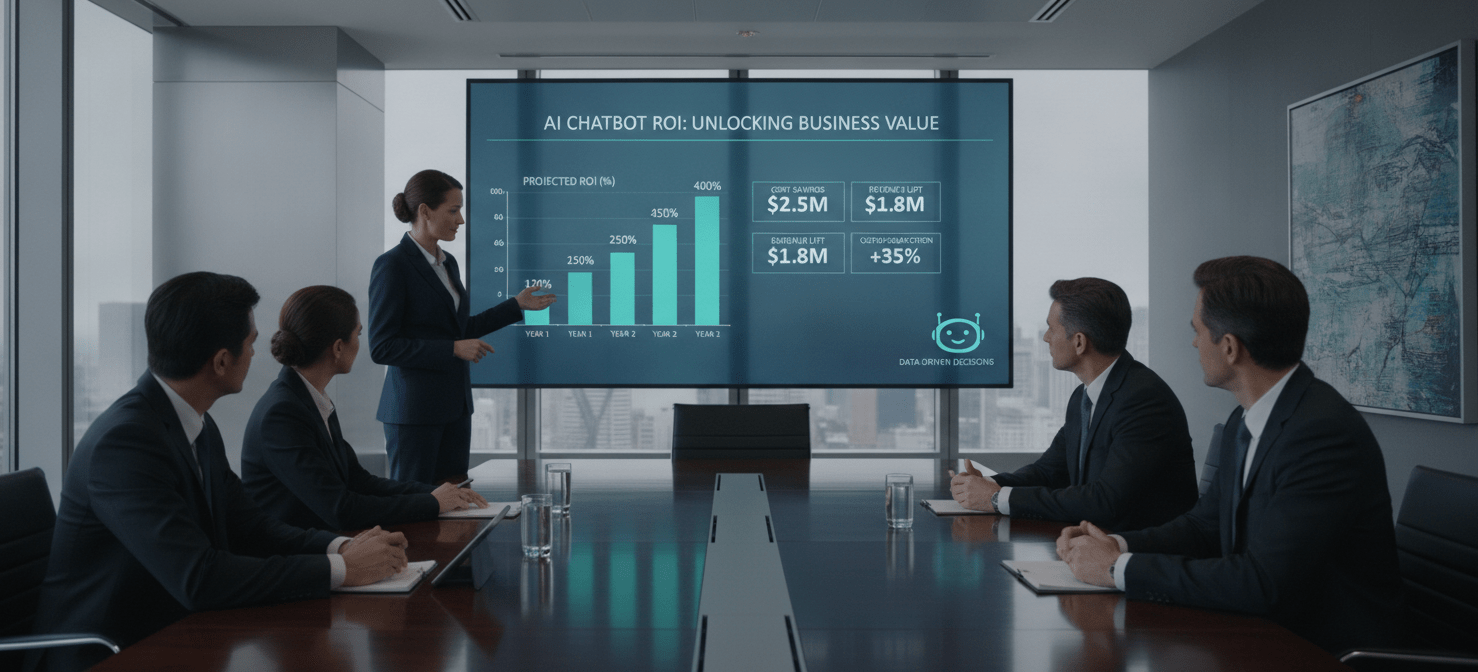
Structure your presentation around key financial metrics. Start with the projected IRR, NPV, and Payback Period. Use clear visualizations, such as a cash flow chart showing the investment payback over three years.
Be prepared to defend your assumptions. Document the sources for your baseline metrics (e.g., current cost-per-contact) and your projections (e.g., expected call deflection rate). Reference industry benchmarks and vendor case studies, but ground the analysis in your company’s specific data. Frame the investment not as a cost, but as a strategic imperative for efficiency, scalability, and competitive advantage. Show how the project aligns with broader company objectives, such as digital transformation or improving customer centricity.
Conclusion
Ultimately, a successful AI chatbot ROI analysis is more than an academic exercise; it is a strategic plan. It transforms a technology proposal into a compelling business case grounded in financial reality. By meticulously quantifying both the returns and the full scope of the investment, modeling future performance under various scenarios, and acknowledging inherent risks, you provide the financial stewardship necessary for a confident decision. The goal is not simply to get a “yes” for the budget, but to ensure the investment delivers on its promise, turning a line item in the procurement budget into a measurable and sustainable contributor to the company’s bottom line. The numbers, when properly assembled, don’t lie—and they are far more persuasive than any vendor’s marketing slick.
To truly validate an AI chatbot’s potential for your bottom line, consider experiencing its capabilities firsthand with a free trial or by scheduling a personalized demonstration to explore its ROI impact.
 7-day free trial