



As an engineering manager or director, you own the outcomes of your team’s architecture, and that includes its monthly AWS bill. While your primary focus is on shipping reliable features, managing the engineering budget for AWS is a critical secondary responsibility. When 70% of teams run workloads on On-Demand pricing for services that have predictable, steady-state usage, a significant opportunity for cost savings is often left on the table. This is where a deliberate strategy for AWS cost optimization for engineering teams becomes essential. Reserved Instances (RIs) are a foundational tool in this effort, offering deep discounts in exchange for a commitment to usage. However, without proper governance and process, RIs can also lead to waste. This article provides a manager’s perspective on leveraging RIs to reduce EC2 costs for your team, focusing on process, ownership, and accountability.
Key takeaways
- Analyze First, Buy Later: Before any RI purchase, analyze at least 60 days of usage data to identify stable, long-term workloads. Right-sizing instances before reserving them is critical to avoid locking in waste.
- Balance Flexibility and Savings: Standard RIs offer the highest discounts (up to 72%) but are inflexible, while Convertible RIs offer lower savings (up to 66%) but allow you to change instance families.
- Establish Clear Ownership: Centralize RI purchasing within a management account but assign the responsibility for utilization monitoring to the teams that own the underlying services.
- Monitor and Iterate: Use AWS Cost Explorer to track RI utilization and coverage reports monthly. Aim for a utilization rate above 80% and be prepared to sell underused Standard RIs on the marketplace.
Understanding the Business Case for RIs
Reserved Instances are not physical servers; they are a billing discount applied to your account when your On-Demand instance usage matches the attributes of the RI you purchased. By committing to a specific instance family, region, and term (one or three years), you can achieve savings of up to 72% compared to On-Demand pricing. For an engineering manager, this translates directly to a lower operational expenditure (OpEx) for your team’s services, freeing up the engineering budget for AWS for other priorities.
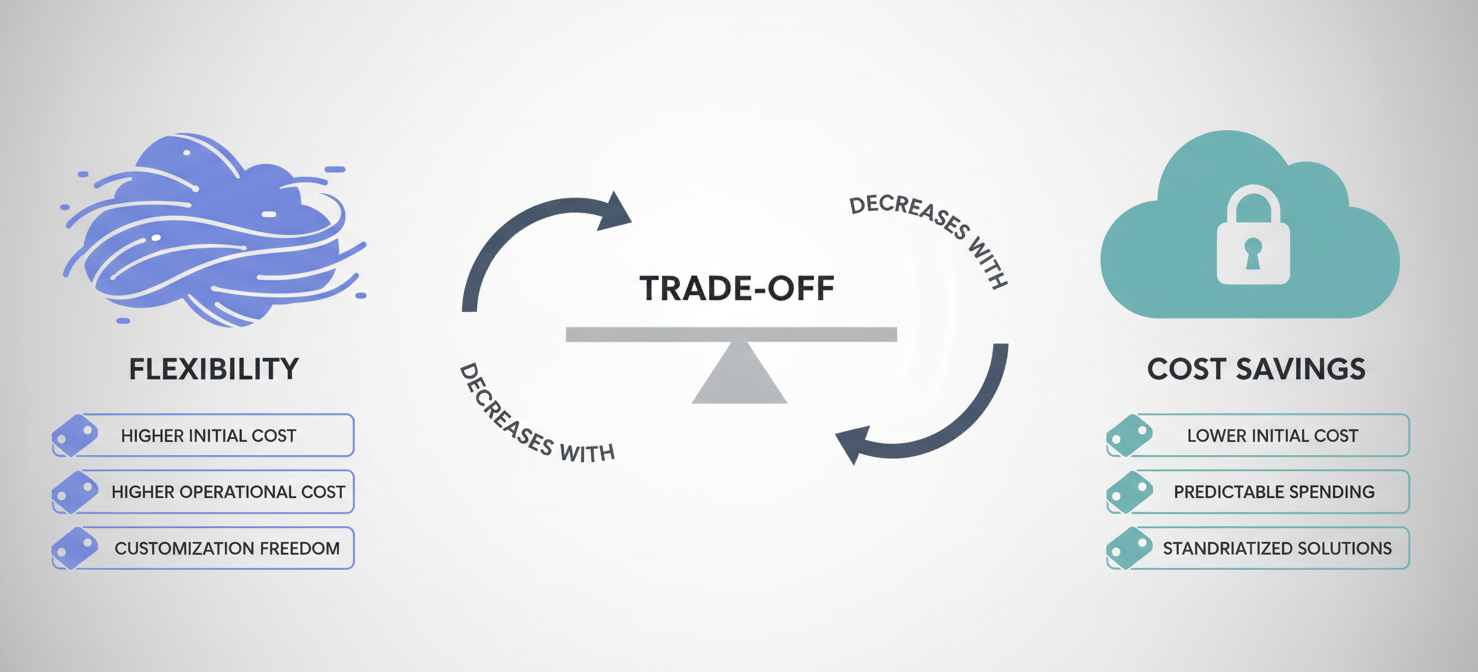
The core trade-off is flexibility for cost. On-Demand pricing offers maximum flexibility—perfect for development, testing, or unpredictable workloads—but at a premium. RIs, conversely, are designed for the predictable, steady-state components of your architecture. Think of the core services that run 24/7: production databases, application load balancers, or the baseline number of instances in an auto-scaling group. These are prime candidates for RIs.
Standard vs. Convertible RIs: A Governance Decision
Choosing between Standard and Convertible RIs is a strategic decision that impacts your team’s agility.
- Standard RIs offer the highest discount but are rigid. Once purchased, you cannot change the instance family, operating system, or tenancy. They are best suited for mature, stable workloads where you have high confidence in the architecture for the next one to three years.
- Convertible RIs provide a smaller discount but offer significant flexibility. You can exchange them for another RI with a different instance family, OS, or tenancy, as long as the new RI is of equal or greater value. This makes them ideal for teams with evolving architectures or those migrating to new instance generations.
From a governance perspective, a risk-averse approach might favor Convertible RIs, especially for teams that are still optimizing their services. The slightly lower discount is often a worthwhile price for the ability to adapt to technological changes without being penalized.
Payment Options and Team Budgeting
- All Upfront provides the largest discount but requires the full payment at the start of the term.
- Partial Upfront is a hybrid model with a smaller initial payment and discounted hourly rates.
- No Upfront requires no initial capital but offers the smallest discount.
The choice here is largely a financial one, often made in collaboration with your finance department. However, as an engineering manager, you should advocate for the model that aligns with your team’s budget cycle and risk tolerance. For a new project, a No Upfront RI might be a prudent way to secure savings while minimizing initial investment.
Establishing a Process for RI Purchasing and Management
Without a clear process, RI purchasing can become a free-for-all, leading to underutilized reservations and wasted money. A structured approach ensures that every RI purchase is justified by data and aligned with team goals.
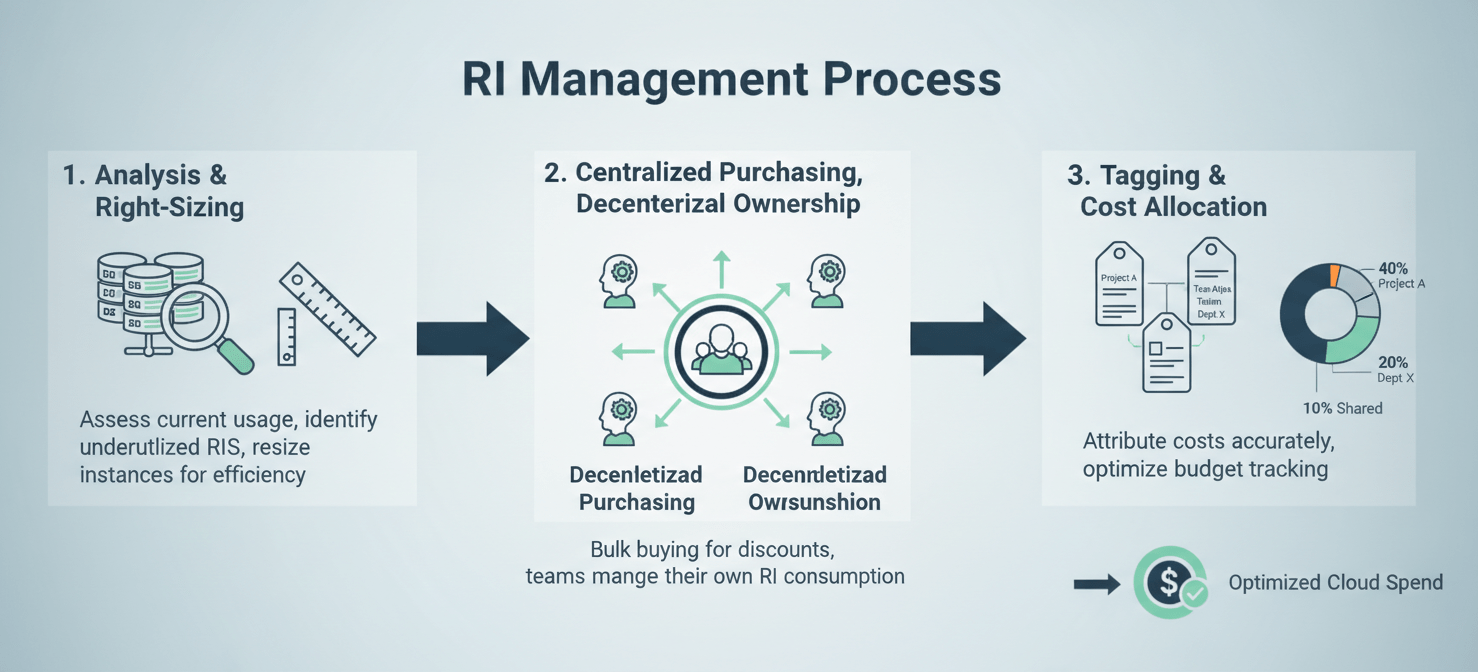
Step 1: Analysis and Right-Sizing
Before any commitment, the first step is a thorough analysis of your team’s current EC2 usage. Use the AWS Cost Explorer to analyze historical usage data for at least the last 30-60 days. Look for instances that have been running consistently. The goal is to identify the baseline usage—the minimum level of compute capacity that is always on.
This is also the time for right-sizing. It is a common mistake to reserve oversized instances, effectively locking in waste for the entire term. Use tools like AWS Compute Optimizer to get recommendations for more cost-effective instance sizes based on actual utilization metrics. Only after an instance has been right-sized should it be considered for an RI.
Step 2: Centralized Purchasing and Decentralized Ownership
To maintain control and visibility, RI purchasing should be centralized, typically within a primary management account in your AWS Organization. This prevents disparate teams from making uncoordinated purchases.
However, the responsibility for the utilization of those RIs should be decentralized. When a team requests an RI for their service, they are also taking ownership of ensuring it gets used. This creates accountability. If a team decommissions a service or changes its architecture, they are responsible for communicating this so the RI can be repurposed or sold.
Step 3: Tagging and Cost Allocation
A robust tagging strategy is crucial for accountability. Use cost allocation tags to associate each RI with the specific team, project, or service it’s intended for. This allows you to use the AWS Cost and Usage Report (CUR) to accurately track which teams are effectively using their reserved capacity and which are not. This data is invaluable for performance reviews and budget forecasting.
AWS cost optimization for engineering teams: Measuring Success
You can’t improve what you don’t measure. For RIs, the key metrics are utilization and coverage. These are readily available in the AWS Cost Explorer’s built-in reports.
RI Utilization Reports
The RI Utilization report shows you what percentage of your purchased RI hours are actually being used. A low utilization rate means you are paying for capacity you are not consuming. Your goal should be to maintain a utilization rate of over 95%. If you see a report with consistently low utilization, it’s a signal to investigate. You can set utilization targets in Cost Explorer and even create alerts with AWS Budgets to be notified when utilization drops below a certain threshold.
RI Coverage Reports
The RI Coverage report shows what percentage of your total instance hours are covered by RIs. This metric helps you understand if you have under-purchased RIs. For example, if your team’s services have a steady-state workload that runs 100% of the time, but your RI coverage is only 50%, you are missing out on potential savings. A reasonable target for stable production workloads is 70-80% coverage, which leaves a buffer for on-demand flexibility.
Handling Change: Modifying and Selling RIs
Despite careful planning, change is inevitable. A service may be re-architected, or a project may be canceled. Your RI strategy needs a process for handling these events.
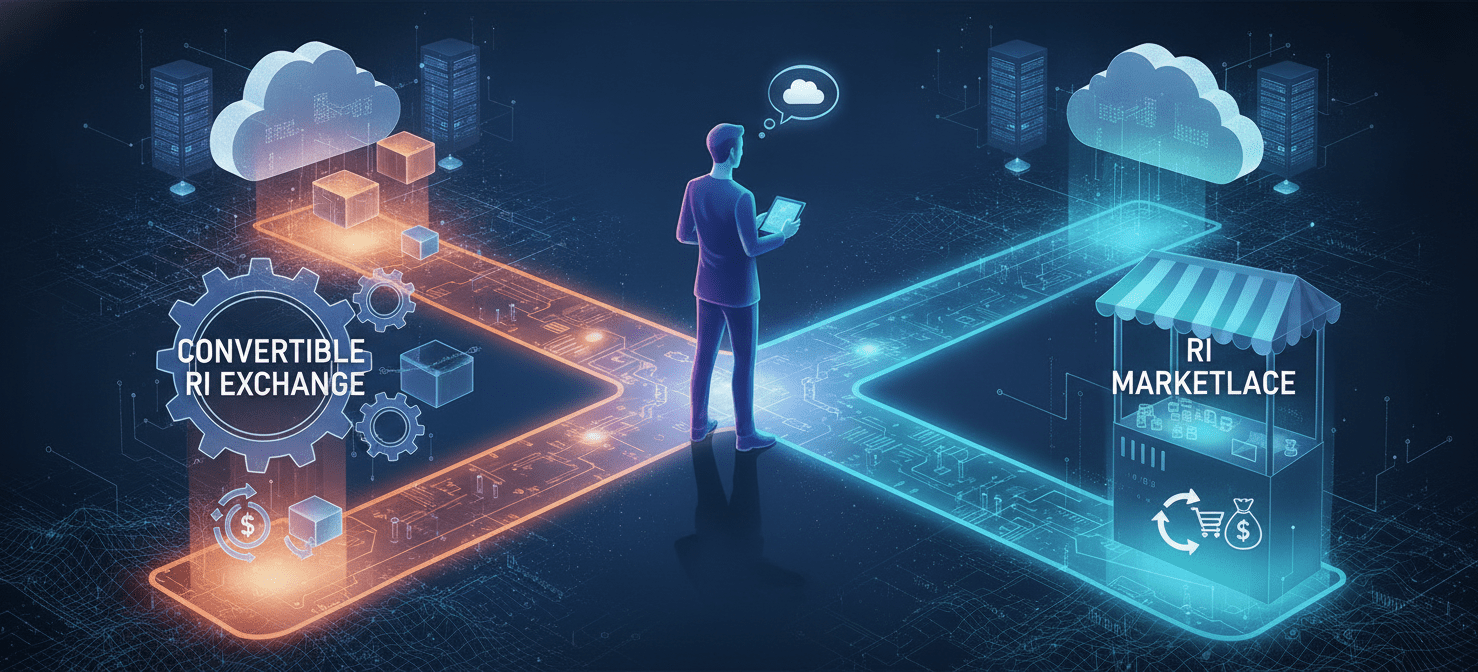
If you used Convertible RIs, you have the flexibility to exchange them for new ones that better match your current needs. This process is done through the AWS Management Console and allows you to adapt to new instance families or operating systems.
For Standard RIs, the options are more limited. You can modify the instance size within the same family (for example, changing two m5.large RIs to one m5.xlarge), but you cannot change the family itself. If your needs change fundamentally, your primary recourse is the Reserved Instance Marketplace. Here, you can list your unused Standard RIs for sale to other AWS customers. While you may not recoup the full value, it is a far better outcome than letting the reservation go to waste.
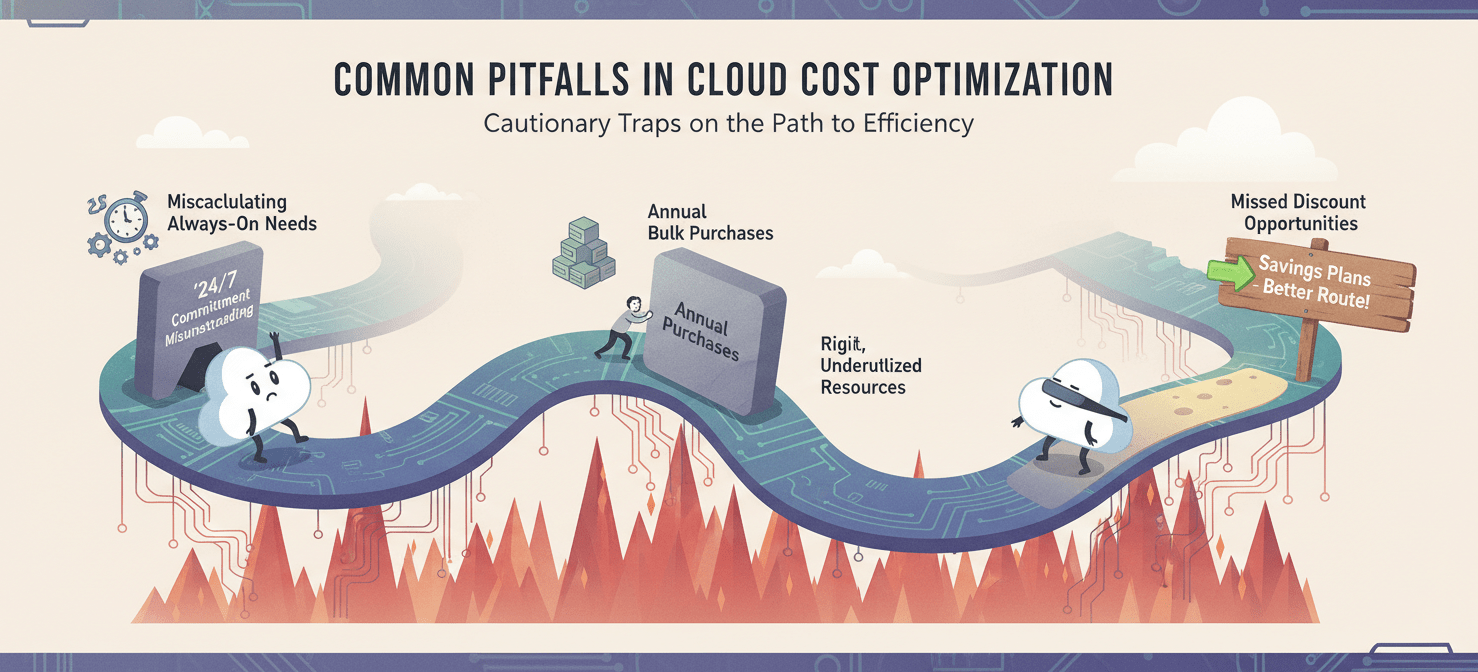
Common Pitfalls and How to Avoid Them
- Forgetting RIs are a 24/7 Commitment: A common mistake is to purchase RIs based on total monthly instance hours rather than concurrent usage. An RI is a commitment to pay for an instance every hour of the term. If you run six instances for 12 hours a day, purchasing three RIs will result in 50% utilization because for 12 hours, none of the reserved capacity is in use.
- Purchasing RIs Annually: Avoid making large, infrequent RI purchases. A better approach is an iterative one, reviewing usage and making smaller, more frequent purchases quarterly or even monthly. This aligns your commitments more closely with your evolving infrastructure.
- Ignoring Savings Plans: While this article focuses on RIs, it’s important to know that AWS also offers Savings Plans, which provide a more flexible discount model based on a dollar-per-hour commitment. For many dynamic workloads, a Compute Savings Plan might be a better fit than an RI. It’s often effective to use a mix of both.
Conclusion
For an engineering manager, mastering the use of Reserved Instances is a key lever in effective budget management. It transforms AWS cost optimization for engineering teams from a reactive, end-of-month surprise into a proactive, data-driven process. By establishing clear ownership, implementing a rigorous analysis and review cycle, and using the right tools to monitor performance, you can hold your teams accountable for their cloud spend. This isn’t about chasing the highest possible discount; it’s about building a sustainable governance model that balances cost efficiency with the engineering velocity your business demands. Get it right, and you’ll not only reduce your EC2 costs but also instill a culture of financial responsibility within your engineering organization. After all, an unused reservation is just a line item for regret.
To move beyond reactive cost management and build a truly data-driven governance model for your AWS spend, consider creating your free Binadox account for immediate insights, or book a demo to see how our platform can streamline your team’s financial accountability.
 7-day free trial