



As an engineering leader, you own more than just the codebase and the team’s velocity; you own the outcomes. A significant, and often overlooked, component of that ownership is the financial stewardship of your team’s resources. Effectively managing your engineering team software budget is not just a task for the finance department—it’s a core competency that directly impacts your ability to deliver value. Uncontrolled software spending drains resources that could be invested in headcount, infrastructure, or innovation. Therefore, mastering the SaaS budget for your engineering team is a critical lever for maximizing your team’s impact and demonstrating fiscal responsibility.
Key takeaways
- Unused licenses are a primary source of waste. On average, 33% of SaaS licenses are barely used or not used at all, representing a significant and avoidable cost.
- A 4-step framework provides structure. A proactive approach to software management involves a continuous cycle of auditing tools, evaluating their ROI, standardizing procurement, and actively managing renewals.
- Visibility is the foundation of control. You cannot control what you cannot see. Centralizing software inventory and tracking usage are the first steps to eliminating redundant tools and right-sizing licenses.
- Ownership drives accountability. Delegating budget responsibility to team leads and establishing clear governance for new software requests fosters a culture of cost-consciousness.
The Hidden Costs Lurking in Your SaaS Subscriptions
The sticker price of a software subscription is rarely its true total cost of ownership. For engineering managers, the direct costs are just the beginning. Hidden expenses can inflate your budget and introduce operational friction, impacting everything from developer productivity to security posture.
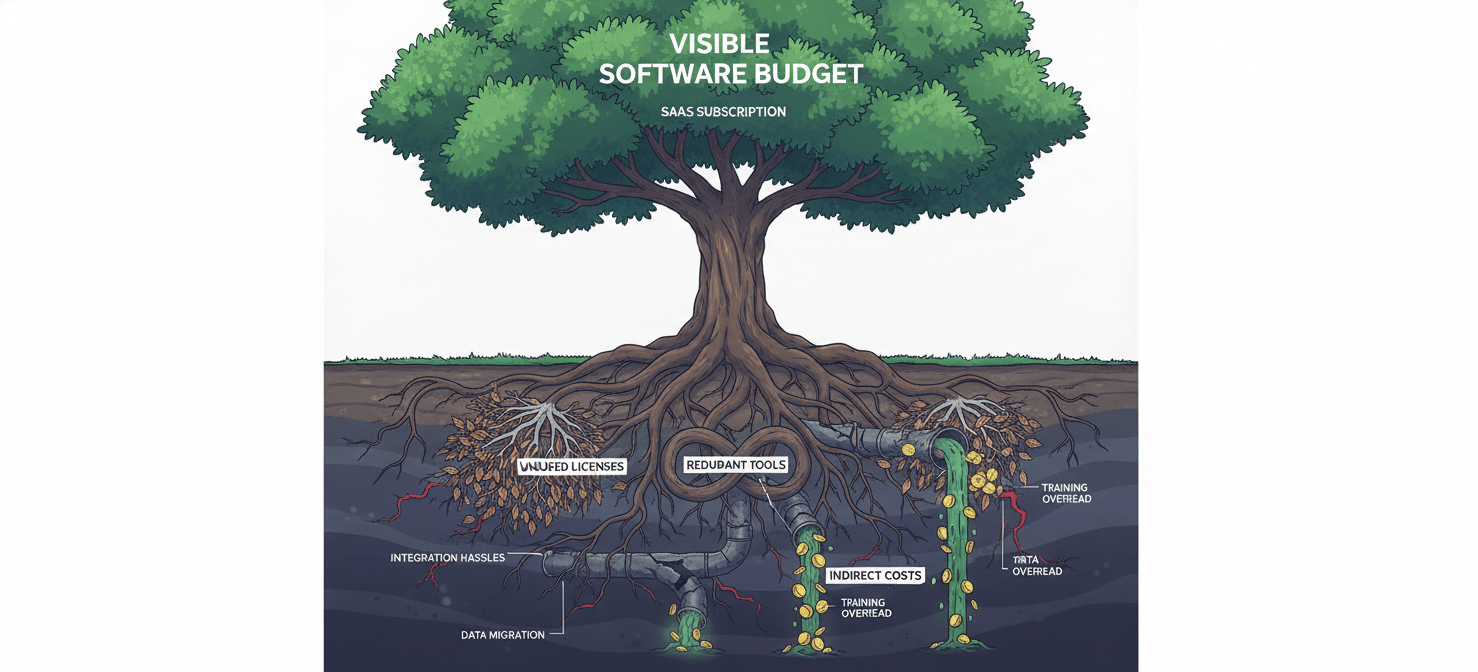
First, there are the unused and underutilized licenses. It’s a common scenario: an engineer leaves the company, a project concludes, or a tool falls out of favor, yet the licenses remain active, silently draining your budget. Research shows that a staggering 51-55% of enterprise software licenses can go unused, representing millions in wasted spend. This “shelfware” accumulates quietly, often due to decentralized purchasing and a lack of regular audits.
Furthermore, redundancy is a frequent issue. In a push for autonomy, different teams might purchase separate tools that serve the exact same function. You may have one team using a particular CI/CD platform while another uses a direct competitor, doubling costs without a corresponding increase in capability. This tool sprawl not only wastes money but also creates data silos and complicates cross-team collaboration.
Finally, consider the indirect costs that never appear on an invoice. Implementation and training consume valuable engineering hours—time that could be spent on product development. One study suggests engineers can spend up to 30% of their time on non-billable administrative tasks, a figure exacerbated by a complex toolchain. In addition, unmonitored applications and dormant accounts expand your team’s security attack surface, creating vulnerabilities that can lead to far more significant costs down the line.
A 4-Step Framework for Proactive Software Budget Management
To effectively control engineering software costs, you need to move from a reactive, ad-hoc purchasing model to a proactive, strategic framework. This involves a continuous cycle of evaluation and governance that ensures every tool in your stack provides a clear return on investment.
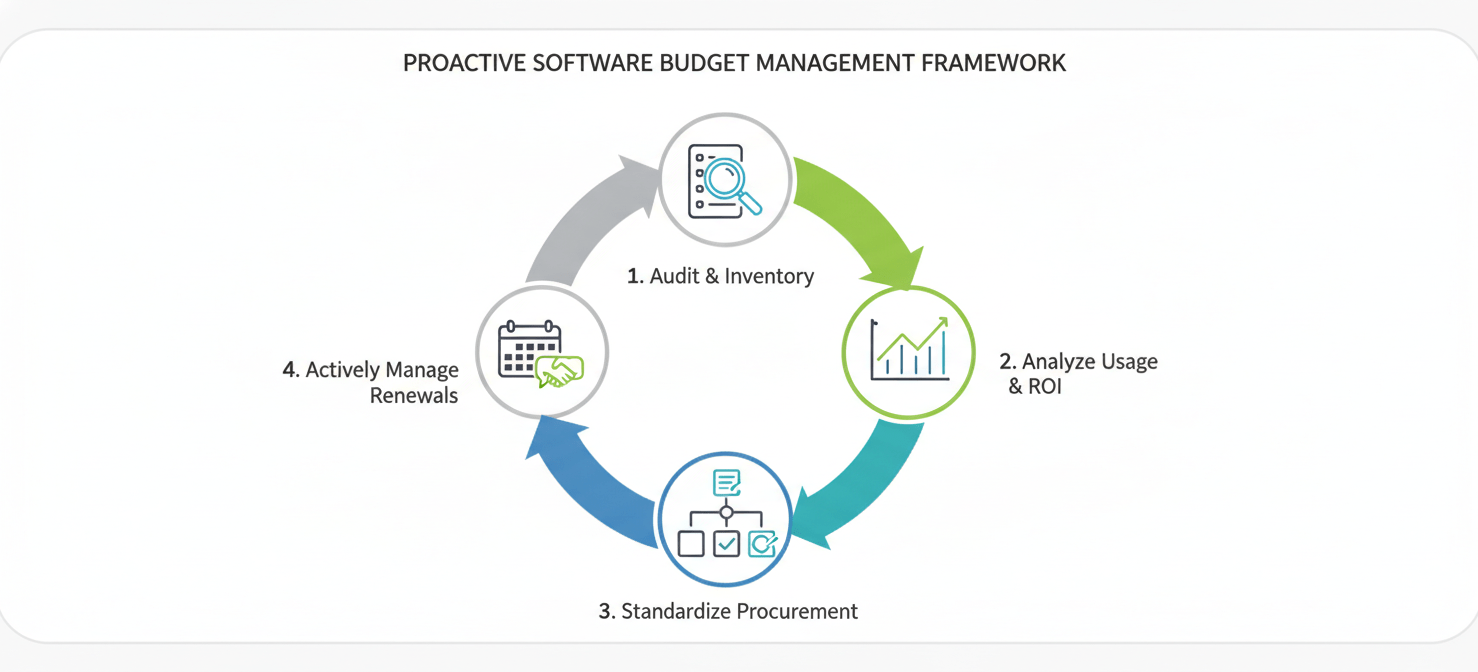
Step 1: Audit and Inventory Everything
You cannot manage what you don’t measure. The first step is to create a comprehensive, centralized inventory of every software tool, subscription, and license your team is using. This isn’t just about what’s centrally procured; it requires uncovering “shadow IT”—tools purchased by individual engineers or teams without formal approval.
To build this inventory, you should:
- Pull data from accounts payable, expense reports, and procurement records.
- Review single sign-on (SSO) logs to see what applications users are accessing.
- Survey your team to identify any tools that may have slipped through the cracks.
For each tool, document the owner, cost, renewal date, and the number of provisioned seats. This inventory becomes your single source of truth for all software assets.
Step 2: Analyze Usage and Evaluate ROI
With a complete inventory, the next step is to determine which tools are actually being used and the value they provide. Usage data is critical here. Many SaaS platforms provide dashboards that show active users and feature adoption. For those that don’t, SSO logs can offer a proxy for activity. The goal is to identify underutilized licenses that can be eliminated or reassigned.
Beyond simple usage, you must evaluate the tool’s return on investment (ROI). This can be challenging for developer tools, but it’s not impossible. Frame the analysis around key engineering metrics:
- Time Saved: Does the tool reduce time spent on manual or repetitive tasks? A cost-based analysis can estimate the value of this saved time.
- Velocity and Throughput: Does the tool help improve DORA metrics like deployment frequency or lead time for changes?
- Risk Reduction: Does a security or monitoring tool demonstrably reduce the likelihood of costly incidents?
Step 3: Standardize Procurement and Onboarding
Once you have optimized your existing stack, you need a process to prevent sprawl from creeping back in. Standardizing the procurement process transforms software acquisition from a chaotic scramble into a predictable business function.
Establish a clear, lightweight process for requesting and approving new software. This process should involve key stakeholders from engineering, security, and finance to ensure alignment. Before any new tool is purchased, the requestor should be required to answer fundamental questions:
- What specific problem does this tool solve?
- Is there an existing tool in our stack that can already solve this problem?
- What is the expected ROI, and how will we measure it?
This structured approach prevents redundant purchases and ensures every new tool has a clear business case and an owner responsible for its success.
Step 4: Actively Manage Renewals
Software renewals are a critical, often-missed opportunity to optimize your budget. Most vendors rely on auto-renewal clauses, which can lock you into price increases for tools you no longer need.
Implement a renewal calendar that provides alerts 90, 60, and 30 days before a contract expires. This gives you ample time to:
- Re-evaluate the tool’s usage and ROI.
- Right-size the number of licenses based on current needs.
- Negotiate pricing with the vendor, armed with data on your usage and the value you receive.
Starting negotiations well before the renewal date shifts the leverage in your favor and prevents you from being forced into a last-minute decision. Organizations that apply structured processes to renewals consistently report savings of 15-30%.
Gaining Visibility and Control Over Your Engineering Team Software Budget
A lack of visibility is the primary driver of wasted software spend. When you don’t have a clear picture of what tools are in use, who is using them, and what they cost, it’s impossible to make informed decisions. Gaining control starts with creating a single, unified view of your entire software ecosystem.
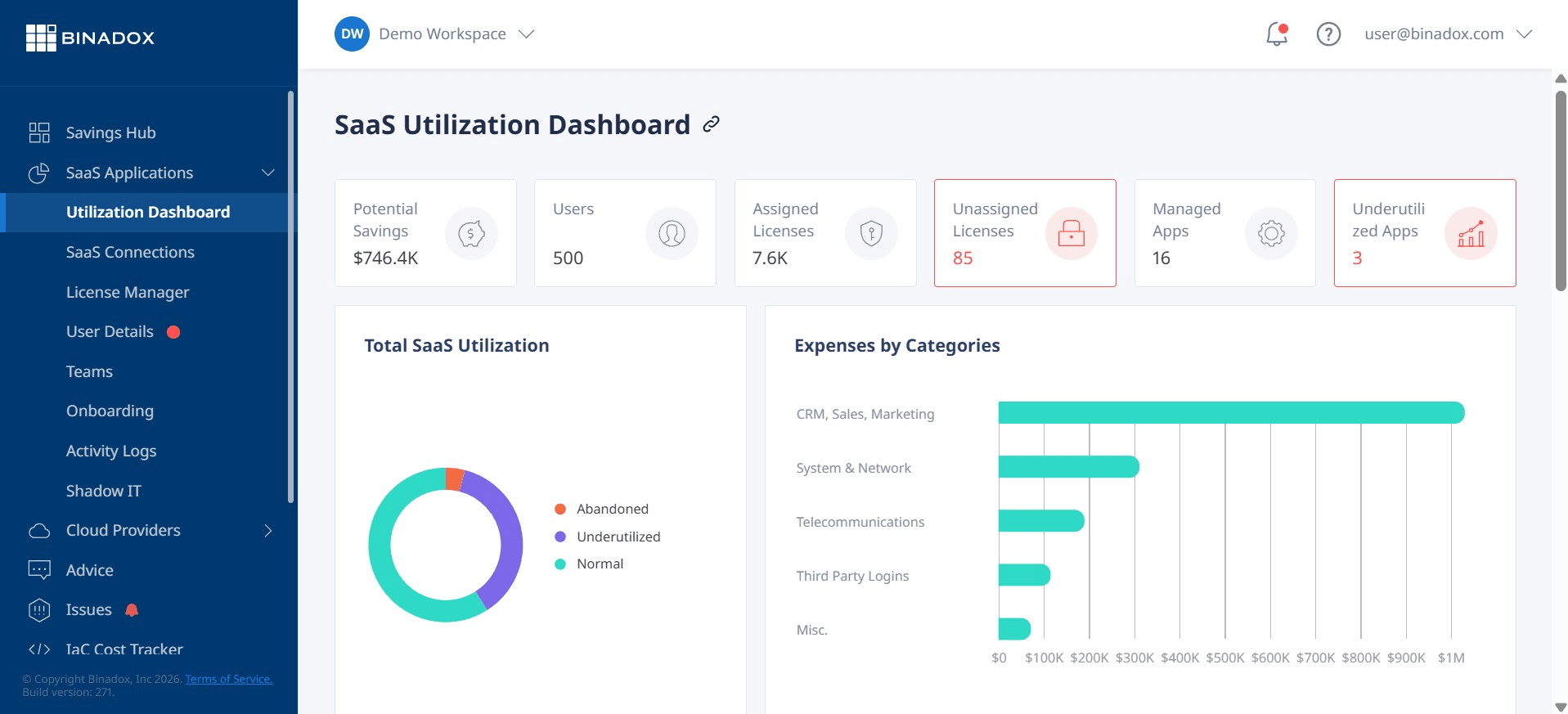
This process begins by centralizing your software inventory, as detailed in the framework above. However, a static spreadsheet is not enough. To maintain control, you need ongoing visibility. This can be achieved through SaaS management platforms that integrate with your financial and identity systems to automatically discover and track software usage across the organization. These tools provide real-time dashboards that highlight redundant applications, inactive licenses, and upcoming renewals.
Once you have visibility, you can begin to implement governance. This means establishing clear policies for how software is purchased and managed. A key component of this is creating a centralized software request process. Instead of allowing individual developers to expense new tools, all requests should flow through a standardized workflow where they can be reviewed by relevant stakeholders. This ensures that every new purchase is vetted for security, redundancy, and business need before any money is spent.
Finally, use this visibility to inform your budget forecasting. By understanding current usage patterns and projecting headcount growth, you can create more accurate software budgets. For example, if you plan to grow the team by 25%, you can proactively budget for a corresponding increase in licenses for essential tools like Jira or GitHub. This data-driven approach to forecasting builds credibility with finance and ensures your team has the resources it needs, without overspending.
Driving Accountability and Ownership
Ultimately, managing the engineering team software budget is not a one-person job. It requires a culture of ownership and accountability throughout the team. As a manager, your role is to create the systems and incentives that foster this culture.

A powerful strategy is to delegate budget responsibility. Allocate a specific software budget to each team or project lead and empower them to manage their own tool spending. This gives them direct ownership over their costs and incentivizes them to make smart trade-offs. When a team lead has to choose between a new, expensive tool and hiring another engineer, they are more likely to scrutinize the tool’s ROI.
To support this, provide team leads with the visibility they need. Give them access to dashboards showing their team’s software usage and spending against their budget. This transparency enables them to identify waste and make data-informed decisions. Regular, collaborative budget reviews—perhaps on a quarterly basis—can reinforce this process, allowing you to discuss spending, review tool effectiveness, and adjust allocations as priorities shift.
In addition, it’s crucial to build a strong partnership with your finance and procurement teams. Involve them early in the process. They can provide valuable insights into contract negotiation and help you understand the broader financial context of the company. When engineering and finance work together, you can present a united front to leadership, making it easier to secure the resources you need and demonstrate that you are managing them responsibly.
Conclusion
Tackling your engineering team software budget is less about aggressive cost-cutting and more about strategic resource allocation. It’s about ensuring that every dollar spent on software directly contributes to your team’s ability to ship high-quality products efficiently. The process begins with the unglamorous work of building an inventory and ends with the cultural shift of instilling ownership. By moving from a reactive state of surprise renewals and redundant tools to a proactive system of audits, approvals, and accountability, you reclaim control. The outcome isn’t just a healthier budget; it’s a more focused, efficient, and impactful engineering organization. After all, a well-managed budget doesn’t constrain your team—it frees them to work on what truly matters.
To transition from reactive spending to proactive optimization and empower your team with complete visibility, you can easily create your free Binadox account to get started, or book a demo with our experts to explore how our platform can transform your budget management.
 7-day free trial