



As a founder or CTO, your focus is on shipping product and extending runway. Every dollar and every engineering hour is critical. Yet, a silent budget killer is likely operating unchecked within your startup: the ever-expanding SaaS stack. Unmanaged subscriptions create waste, security risks, and operational drag. Effective startup SaaS stack management isn’t just about cutting costs; it’s a strategic discipline that directly impacts your burn rate and your team’s ability to execute. This guide provides a lean, actionable framework for getting your stack under control.
Key takeaways
- Startups often underestimate their SaaS portfolio size by nearly double and their spend by 3x.
- A focused, three-month audit and consolidation effort can eliminate significant waste and recover thousands in annual spend.
- More than half of all paid SaaS licenses often go unused, representing pure financial waste that directly shortens your runway.
- Automating user onboarding and offboarding is one of the highest-impact practices for mitigating security risks and preventing orphaned accounts.
Why SaaS Stack Management is a Founder-Level Problem
SaaS sprawl isn’t just an IT headache; it’s a direct threat to your startup’s financial health and operational velocity. In the early stages, it’s easy to let teams expense whatever tools they need to move fast. However, this decentralized approach quickly leads to redundant tools, unused licenses, and a complete lack of visibility into a major operational expense. For a lean startup, this is unsustainable.

The average company now uses over 100 SaaS applications, and this number can grow rapidly without oversight. This sprawl creates several critical problems for a founder or CTO:
- Runway Reduction: Wasted SaaS spend is cash that could be used for hiring another engineer, funding a critical marketing campaign, or extending your operational runway by another month. It’s a direct, recurring hit to your bottom line.
- Security and Compliance Gaps: Every unmanaged application is a potential security vulnerability. When employees sign up for tools without oversight (“shadow IT”), they may use weak passwords or grant excessive data permissions, creating risks your team isn’t even aware of.
- Operational Inefficiency: A bloated stack creates complexity. Your team wastes time context-switching between redundant tools, data becomes siloed across platforms, and onboarding new hires becomes a chaotic process of guessing which accounts they need.
Effective startup cost control requires treating your SaaS stack not as a collection of miscellaneous tools, but as a strategic asset portfolio that needs to be actively managed and optimized for ROI.
The Audit: Gaining Visibility and Control
You cannot manage what you cannot see. The first step is a comprehensive audit to create a single source of truth for your entire SaaS portfolio. This process is often eye-opening, revealing surprising levels of waste and redundancy.
Step 1: Discover Every Subscription
Your goal is to find every single recurring software payment. This requires a multi-pronged approach, as many tools won’t be on a centralized invoice.
- Scan Financial Records: Start by pulling all expense reports, credit card statements, and accounts payable records for the last 12 months. Look for recurring charges from software vendors.
- Survey Your Team: Create a simple form asking every employee to list the SaaS tools they use, who pays for them, and what they use them for. This is crucial for uncovering shadow IT.
- Check SSO and Password Managers: If you use a single sign-on (SSO) provider or a team password manager, review the list of connected applications. This can surface tools that were approved long ago and forgotten.
Step 2: Build Your SaaS Inventory
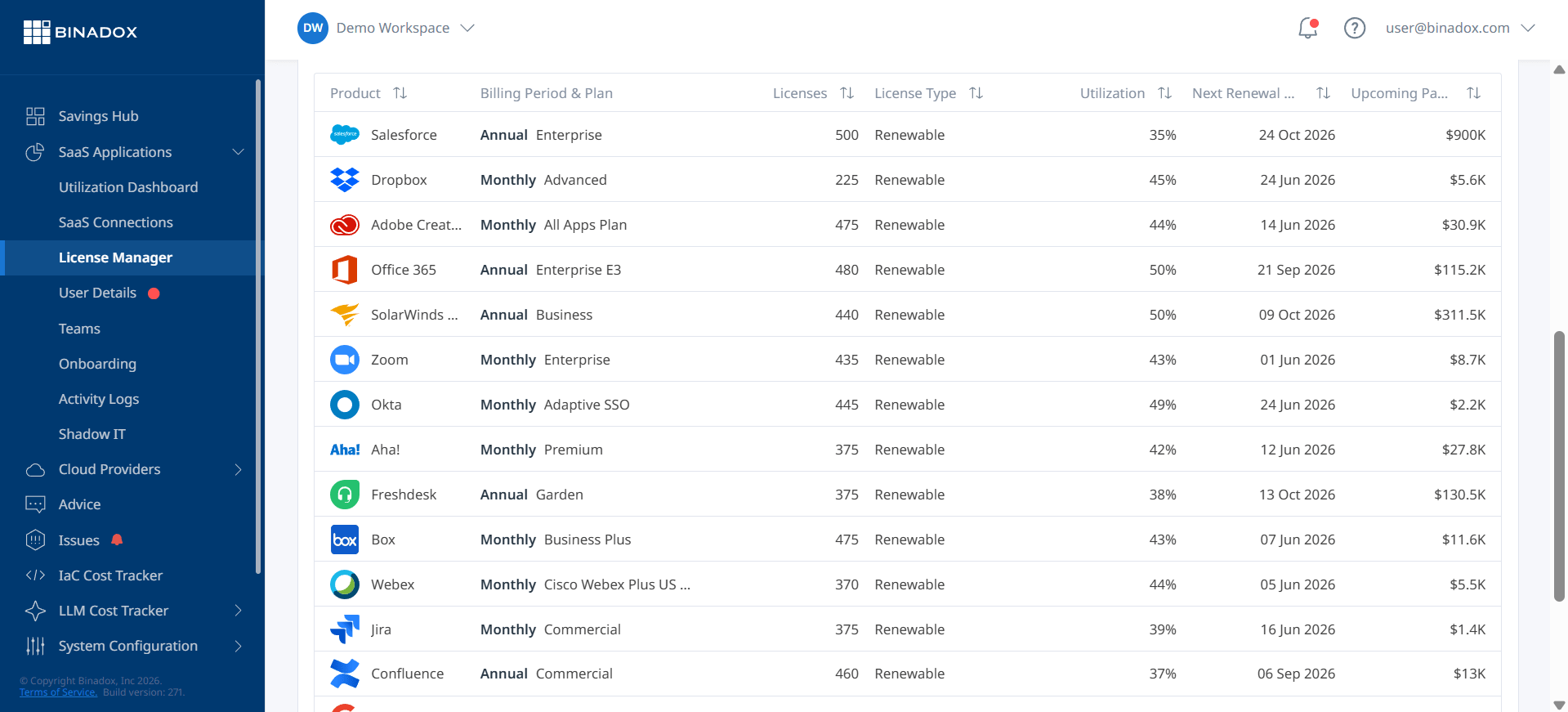
As you discover tools, consolidate the information into a simple spreadsheet or a dedicated SaaS management platform. For each application, you need to track:
- Application Name & Owner: Who is the internal champion for this tool?
- Cost & Billing Cycle: What is the monthly/annual cost, and when does it renew?
- User Count: How many licenses are you paying for?
- Usage Data: How many of those licenses are actually active? Many platforms provide admin dashboards with this data. For others, you may need to ask the owner.
- Function & Overlap: What business purpose does it serve? Does another tool in your stack do the same thing?
This inventory is now your command center for startup SaaS stack management.
The Cull: Rightsizing and Optimizing Your Stack
With full visibility, you can now move from discovery to optimization. This phase is about making data-driven decisions to eliminate waste and ensure every tool in your stack provides clear value. Your goal is to maximize utility while minimizing cost.

Step 1: Eliminate Redundancy
Your audit likely uncovered multiple tools serving the same function. For example, you might find the engineering team uses one project management tool while the marketing team uses another.
First, identify these functional overlaps. Next, work with the team leads to standardize on a single solution. The decision shouldn’t be based on cost alone; consider which tool best fits the workflow, integrates with other critical systems, and can scale with your needs. Consolidating tools not only cuts subscription costs but also reduces complexity and improves cross-team collaboration.
Step 2: Reclaim Unused Licenses
Data consistently shows that a large percentage of paid SaaS licenses go unused. This is the lowest-hanging fruit for startup cost control.
Go through your inventory and, for each tool, compare the number of paid seats to the number of active users. For every inactive user, de-provision their license. This is especially critical for high-cost-per-seat software like CRMs or design tools. Furthermore, establish a quarterly review process to continuously reclaim these “zombie” licenses and avoid paying for shelfware.
Step 3: Right-size Your Tiers
Many SaaS products are sold in tiers with different feature sets. It’s common for startups to buy a higher-tier plan for a single feature that only one or two people need.
Analyze your usage data to determine if you are fully utilizing the features of your current subscription tier. If not, downgrading to a lower-cost plan can provide significant savings without impacting performance. Conversely, if you find multiple teams buying separate, lower-tier subscriptions, it may be more cost-effective to upgrade to a single, higher-tier plan with team management features.
The Process: Building a Lean SaaS Management Framework
A one-time cleanup is good, but a sustainable process is better. To prevent SaaS sprawl from creeping back in, you need to establish a simple, lightweight framework for how your team acquires and manages software. This isn’t about creating bureaucratic hurdles; it’s about instilling a culture of ownership and cost-awareness.
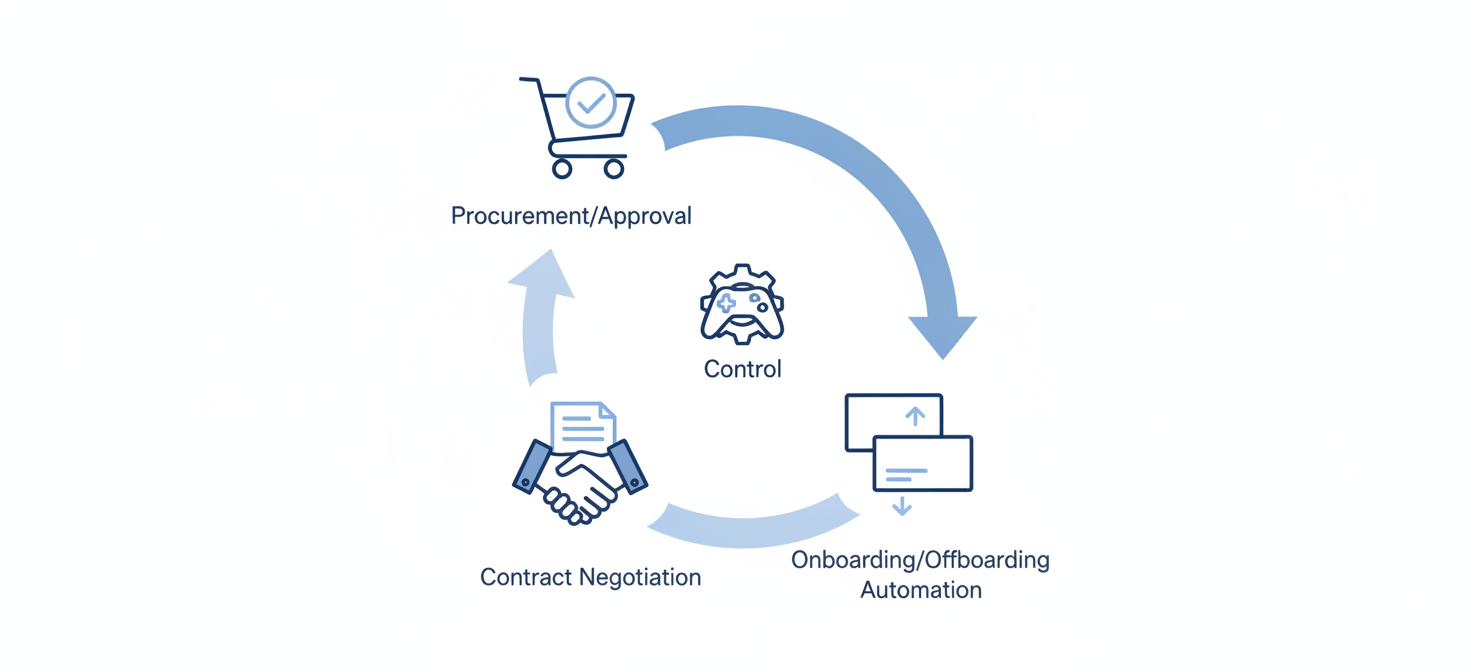
Establish a Clear Procurement and Approval Workflow
Define a simple process for requesting and approving new SaaS tools. This can be as straightforward as a dedicated Slack channel or a form that captures key information:
- What problem does this tool solve?
- Which existing tool, if any, does it replace?
- Who will be using it?
- What is the total cost per month/year?
The goal is to ensure every new subscription is a deliberate decision, not an impulse purchase. For a small startup, the CTO or founder can be the final approver. This centralizes visibility and ensures new tools align with the company’s technical and financial strategy.
Automate Onboarding and Offboarding
Employee turnover is a major source of SaaS license waste and security risk. When an employee leaves, their access to dozens of applications needs to be revoked immediately. Forgetting to do so leaves orphaned accounts that you continue to pay for and that pose a security risk.
Create a checklist for both onboarding and offboarding. For onboarding, this ensures new hires get access to the tools they need on day one. For offboarding, it ensures every account is deactivated. As you grow, consider using tools that can automate this provisioning and de-provisioning process, linking it to your central identity provider.
Negotiate Your Contracts
Don’t just accept the list price. Most SaaS vendors have room to negotiate, especially for annual contracts or larger teams. Before a renewal, do your homework.
- Benchmark Pricing: Research what similar companies are paying for the same service.
- Leverage Timing: Sales reps are most flexible at the end of a quarter or fiscal year when they are trying to hit their quotas.
- Negotiate Renewal Caps: A great introductory price means little if it doubles in year two. Negotiate a cap on future price increases, typically in the 3-5% range.
Always start renewal conversations at least 90 days before the deadline. This gives you leverage and prevents you from being forced to accept unfavorable terms at the last minute.
Conclusion: From Reactive Spending to Strategic Investment
Ultimately, disciplined startup SaaS stack management is about shifting your mindset. It requires moving from a reactive, decentralized approach where software is an unmanaged expense to a proactive, centralized strategy where software is a strategic investment. By implementing a framework of auditing, optimizing, and ongoing process management, you can directly extend your runway, reduce your security exposure, and improve your team’s operational focus. The goal isn’t to deprive your team of the tools they need to succeed. Instead, it’s to ensure every dollar spent on software is intentional, optimized, and directly contributes to building your business. Neglecting this is a luxury no early-stage startup can afford.
To move beyond reactive spending and make every SaaS dollar a strategic investment, explore how Binadox can centralize your management, and you can learn more with a demonstration to see its impact firsthand.
 7-day free trial