




For a founder or CTO, every dollar of runway counts. Engineering salaries, marketing spend, and cloud infrastructure rightly get intense scrutiny. Yet, a significant and often unmanaged expense quietly drains the budget: the ever-growing stack of Software-as-a-Service (SaaS) applications. Without a deliberate strategy, your startup’s SaaS spend can easily become a major drag on cash flow, directly shortening your runway. This playbook provides a lean, actionable framework for achieving meaningful SaaS cost savings, reframing it from a reactive chore into a strategic lever for capital efficiency.
Key takeaways
- Audit Ruthlessly: A 4-step process of auditing, rationalizing, negotiating, and managing your SaaS stack can reclaim significant budget.
- Eliminate Waste: On average, organizations waste thousands per employee on unused SaaS, with some reports indicating over 50% of licenses go unused.
- Negotiate Everything: Most SaaS contracts are negotiable; failing to do so can mean overpaying by 20-30%.
- Systematize Control: Implement a simple, ongoing management system to prevent costs from spiraling again as you scale.
The Hidden Costs of Unmanaged SaaS
The “per user, per month” model feels deceptively cheap at first. A $20 tool for one engineer is a rounding error. But as the team grows, those small charges compound. The average company now manages hundreds of SaaS applications. For a startup, this sprawl isn’t just messy—it’s a direct threat to your burn rate.

The problem has several layers. First, there’s redundant functionality, where multiple teams pay for separate tools that do the same thing (e.g., three different project management apps). Second, there are “zombie” licenses—seats paid for by former employees that were never de-provisioned. Finally, there’s the issue of mismatched tiers, where you pay for an enterprise-level plan when a basic tier would suffice. Each of these issues represents pure waste, consuming capital that could be funding another engineer or extending your operational runway by weeks or even months.
Step 1: Audit and Rationalize Your SaaS Stack
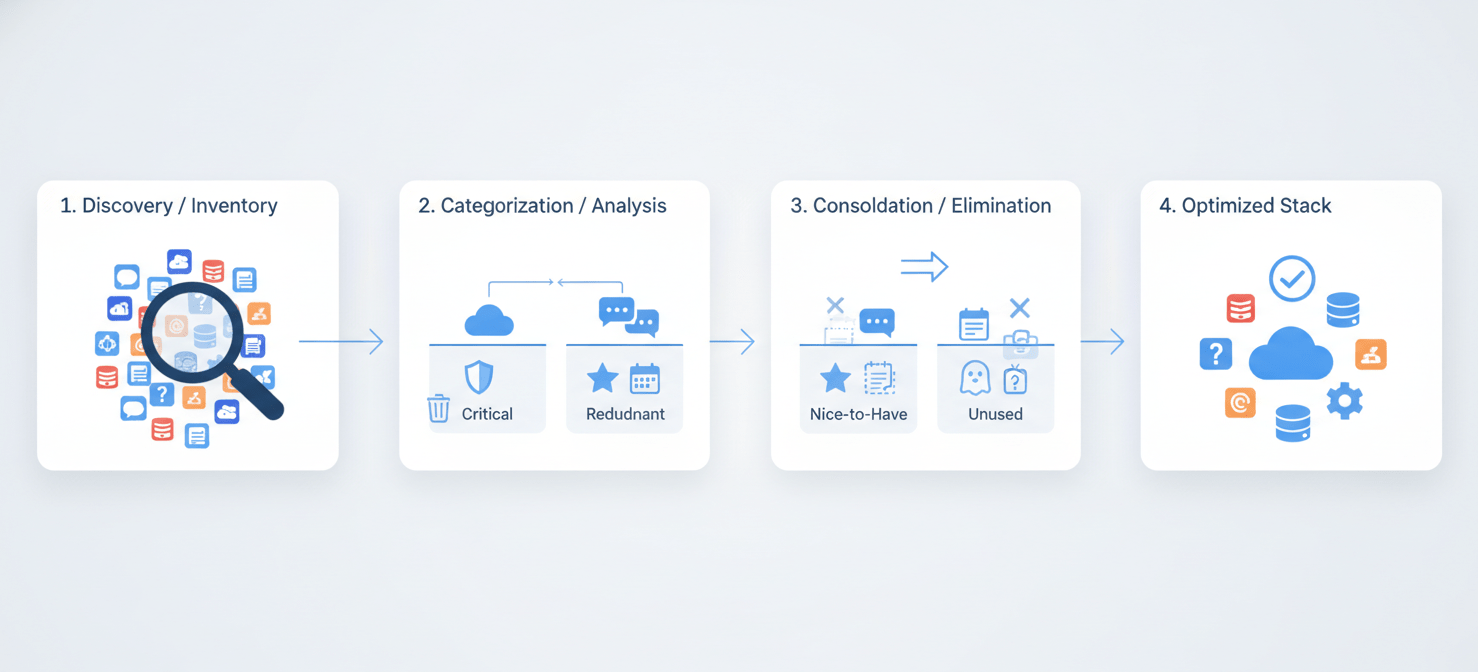
You cannot control what you cannot see. The first step is to create a comprehensive inventory of every SaaS tool your company pays for. This is a foundational step toward reducing your startup’s SaaS spend.
Build the Master List
Start by pulling records from accounting software and credit card statements. Don’t stop there; survey team leads. Many tools are expensed on individual or department cards, hiding the true scope of the sprawl. For each tool, document:
- Product Name: The specific SaaS application.
- Owner: The internal champion or primary user.
- Cost: Monthly or annual recurring cost.
- Users: Number of provisioned seats.
- Renewal Date: The date the contract automatically renews.
Analyze Usage and Value
With a complete list, the next step is to determine which tools are actually being used. Many platforms have admin dashboards that show the last login date for each user. For those that don’t, a simple poll of the assigned users can suffice.
Categorize each application:
- Mission-Critical: Essential for core operations (e.g., your primary code repository, CRM).
- Important but Redundant: Provides high value, but its core function overlaps with another tool on the list.
- Nice-to-Have: Improves workflow but isn’t essential.
- Unused (Zombie): No one is actively using it, or the provisioned users are no longer with the company.
This categorization provides a clear hit list. Zombie applications can be canceled immediately. For redundant tools, consolidate teams onto a single platform. Challenge the “nice-to-haves” by asking the owner to re-justify the expense against other priorities.
Step 2: Negotiate Smarter and Right-size Your Contracts
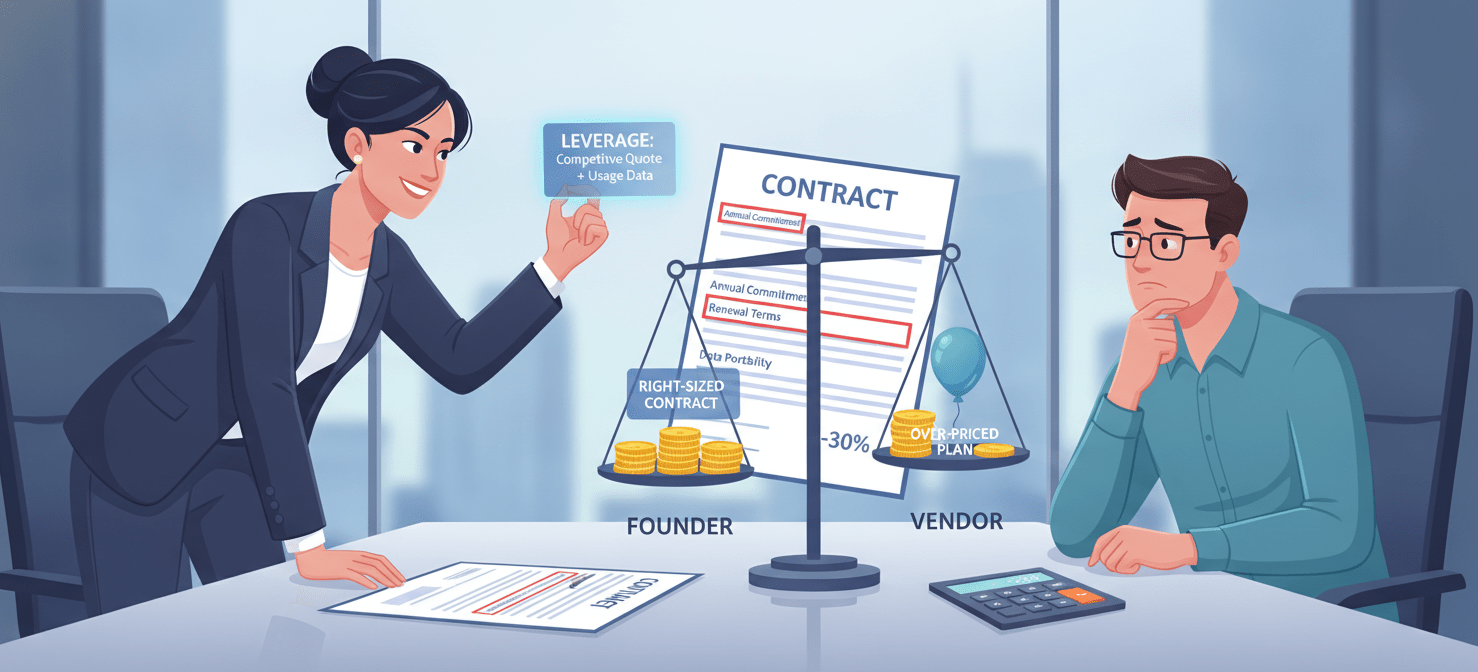
Accepting the public list price for SaaS is like paying the sticker price for a car—it’s a starting point for negotiation, not the final offer. Vendors expect you to negotiate, especially on annual contracts or for multi-seat licenses.
Leverage Your Position
Never accept the first offer. Sales representatives often have significant discounting power, especially near the end of a quarter or fiscal year. Use competitive intelligence; get quotes from two or three alternative vendors to benchmark pricing. This data gives you powerful leverage to ask for a better deal. Furthermore, don’t reveal your budget upfront, as this can anchor the negotiation in the vendor’s favor.
Right-size Your Tiers and Terms
Scrutinize the feature list of your current plan. Are you using all the “enterprise” features you’re paying for? Downgrading to a lower tier is one of the fastest ways to reduce SaaS costs. Also, pay close attention to renewal clauses. Insist on a cap for renewal price increases (e.g., no more than 3-5% annually) and ensure you have a clear out-clause that doesn’t lock you into an auto-renewal you can’t escape. Many startups get burned by steep price hikes after an attractive introductory year.
Step 3: Foster a Culture of Cost-Conscious Tooling
Technology decisions in a startup are often decentralized, which is great for agility but can be disastrous for cost control. As a founder or CTO, you must instill a culture where tooling decisions are made with an eye toward capital efficiency.
Implement a Simple Approval Process
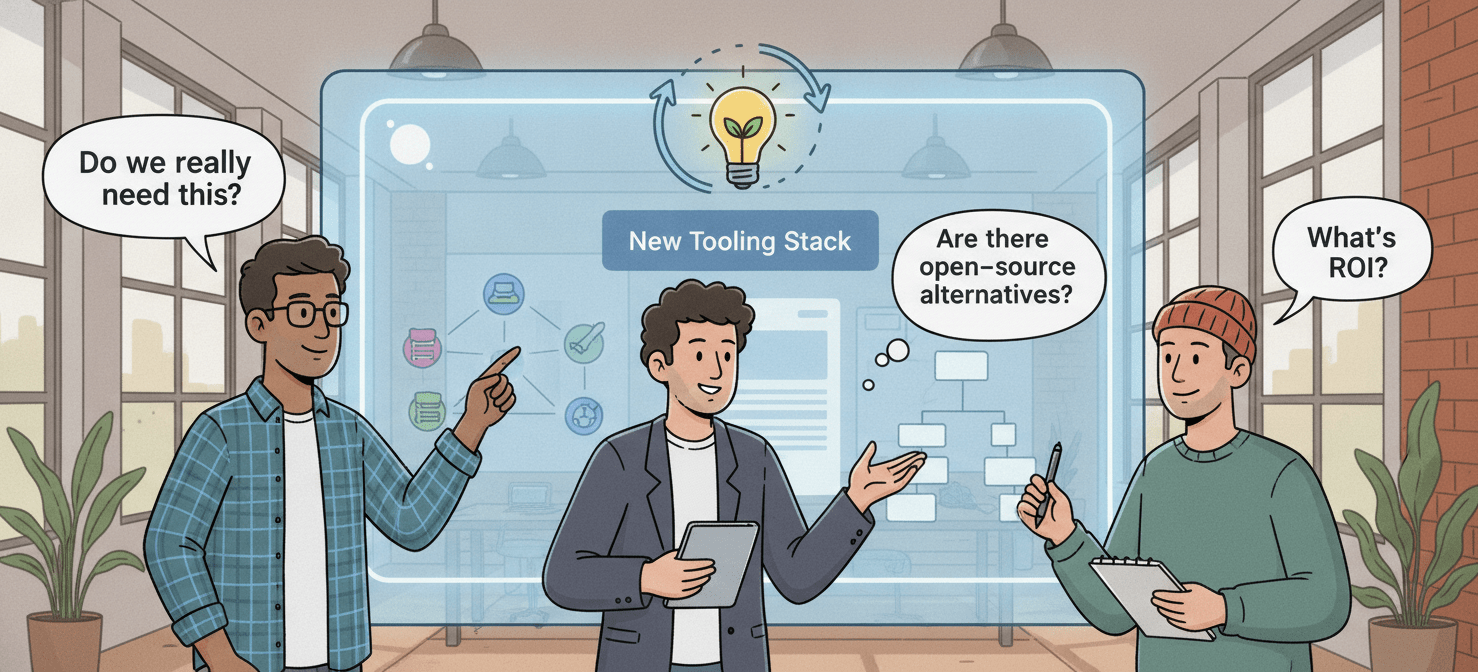
You don’t need a bureaucratic procurement department, but you do need a lightweight process. Mandate that any new SaaS subscription, regardless of cost, requires approval. This simple checkpoint forces a conversation about necessity and alternatives. The process should answer three questions:
- What core business problem does this tool solve?
- Do we already have a tool that can solve this problem?
- Have we evaluated at least one open-source or lower-cost alternative?
Champion Lean Alternatives
For many common SaaS categories, there are powerful and free open-source alternatives that can be self-hosted on your existing cloud infrastructure. For example, instead of paying for a premium analytics suite, you might use an open-source option. While this may require some engineering time for setup and maintenance, the long-term savings can be substantial, especially as your user base grows. Encourage your engineers to explore these options before defaulting to a paid service.
Step 4: Implement a System for Ongoing SaaS Management
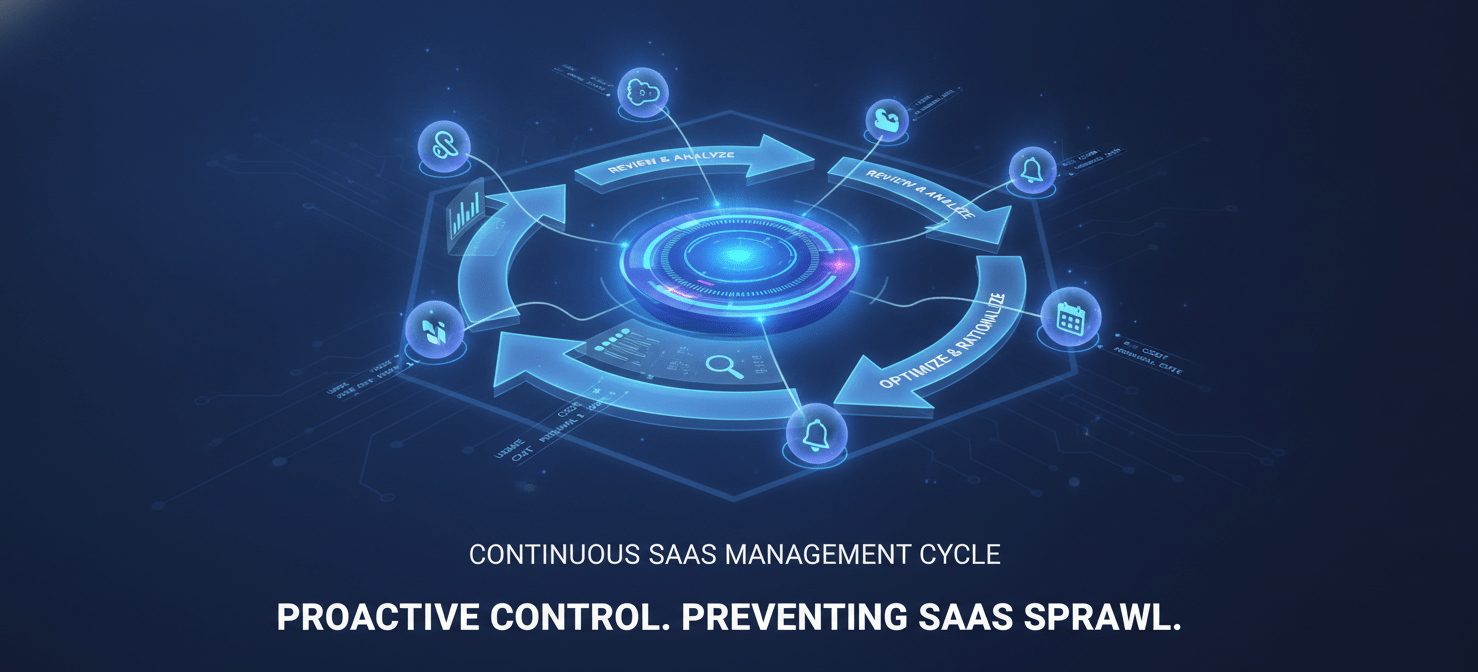
A one-time audit provides immediate relief, but the problem of SaaS sprawl will return without a system to manage it. Achieving long-term saas cost savings requires a continuous, low-friction process.
Centralize Ownership and Tracking
Assign a single person or a small group (e.g., the CTO and a finance lead) to own the master SaaS list created in Step 1. This list should be a living document, updated with every new subscription, cancellation, or contract change. Set calendar reminders 60-90 days before each renewal date. This provides ample time to review usage, re-evaluate the need for the tool, and negotiate terms from a position of strength, not last-minute desperation.
Consider SaaS Management Platforms
As your startup scales, manually tracking dozens of subscriptions becomes untenable. At this point, investing in a SaaS management platform can yield a significant ROI. These tools automate the discovery of SaaS applications across your organization, track usage, manage licenses, and centralize contract information. Platforms like Zylo or ManageEngine SaaS Manager Plus can provide the visibility needed to maintain control without creating excessive administrative overhead.
Conclusion
Controlling your startup SaaS spend is not about depriving your team of the tools they need to be effective. It is about disciplined, intentional decision-making. By systematically auditing your stack, negotiating intelligently, fostering a cost-conscious culture, and implementing a simple management system, you can convert wasted expense into valuable runway. This disciplined approach to achieving saas cost savings is a critical component of lean startup execution. It ensures that your hard-won capital is spent on what truly matters: building your product and winning customers. After all, the most innovative tool in your stack is a longer runway.
To put these strategies into practice and ensure every dollar extends your runway, discover how Binadox can centralize your SaaS management and schedule a demo to see its immediate impact on your budget.
 7-day free trial