



As an engineering leader, you own the outcomes of your team—and that includes the budget for the tools they rely on. When your teams have the right software, they can build, test, and deploy with velocity. But without a clear process for governance, your developer tool stack can quickly become a source of significant waste. Managing an engineering software budget isn’t just about cutting costs; it’s about optimizing investment to maximize your team’s productivity and innovation. This requires a strategic approach to tracking renewals, monitoring usage, and ensuring every dollar spent drives a tangible engineering outcome.
Key takeaways
- Companies waste an average of $18 million annually on unused software licenses, a 7% increase from previous years.
- A 4-step framework involving discovery, analysis, action, and automation can bring your engineering software spend under control.
- On average, companies only use about half (49%) of their provisioned software licenses, representing a massive opportunity for optimization.
- Decentralized purchasing is a major issue, with employees outside of IT (“citizen buyers”) influencing 40% of all company SaaS spending.
The high cost of unmanaged software spend
Unmanaged software spending creates significant financial drag and operational risk. The average company now manages around 106 different SaaS applications, and for large enterprises, that number can swell to over 275. This rapid expansion, often called “SaaS sprawl,” makes it nearly impossible to maintain a clear view of what’s being used, who owns it, and when it’s up for renewal.

The financial impact is staggering. Research shows that, on average, 49-53% of paid software licenses go unused, costing organizations millions annually. For an engineering team, this waste translates directly into a depleted budget that could have been allocated to headcount, new R&D projects, or performance bonuses. The problem is compounded by auto-renewals for tools that teams no longer need and the existence of multiple tools with overlapping functionalities—for instance, several project management or CI/CD platforms across different teams.
Beyond the direct financial cost, unmanaged spend introduces security and compliance vulnerabilities. When teams purchase and use tools without oversight—a practice known as “shadow IT”—they may expose the organization to significant risks. These unvetted tools might not meet security standards, creating potential breach points. In fact, nearly two-thirds of employee-expensed apps have a risk score of “Poor” or “Low.” Without a central governance process, you lose control over how company data is being handled, which can have serious consequences.
Why is tracking engineering software so hard?
Managing a software budget is a challenge for any department, but engineering teams face a unique set of obstacles. Developer tools are often highly specialized and purchased to solve a specific, immediate problem. This leads to a pattern of decentralized, bottom-up purchasing that bypasses traditional procurement channels.
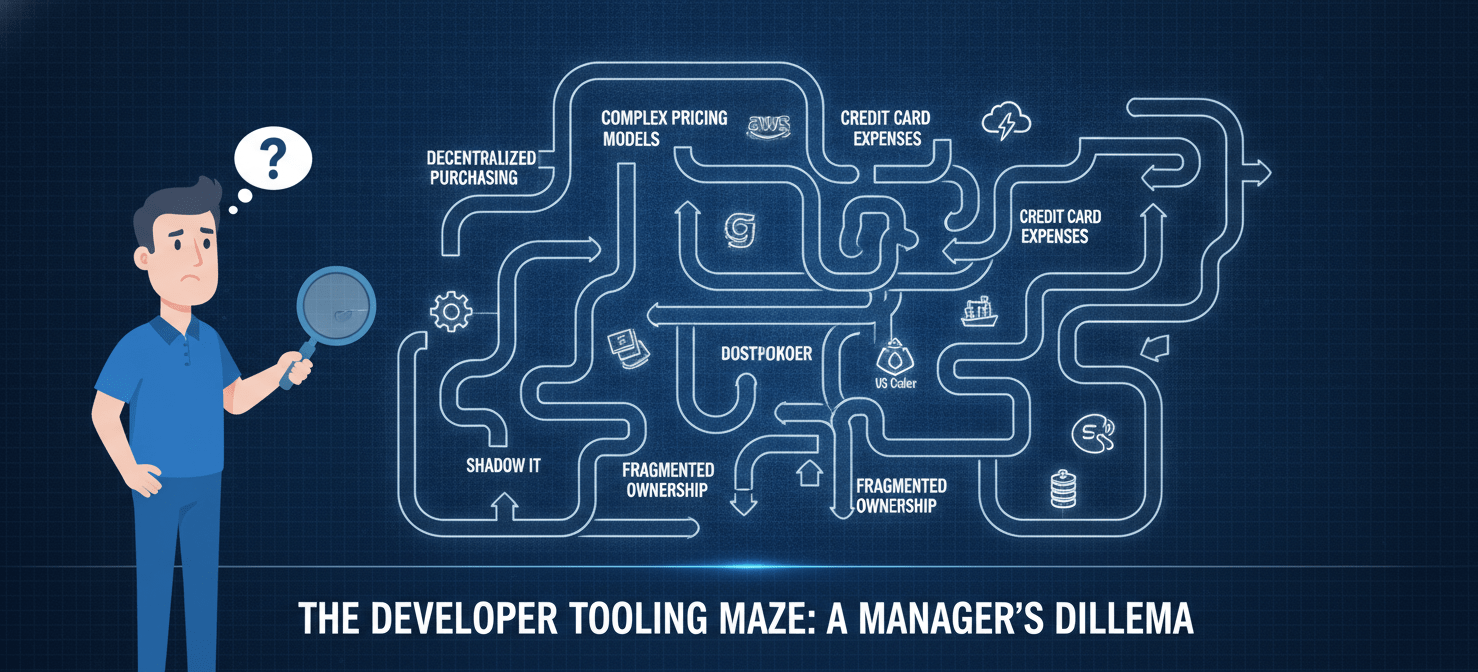
First, engineers are empowered to be problem-solvers. If a developer hits a roadblock, they will find a tool to solve it. This autonomy is great for productivity but can lead to a proliferation of single-purpose tools, many of which are purchased on a credit card and expensed. These small, individual purchases fly under the radar of finance and IT, yet they accumulate into significant recurring costs.
Second, the complexity of the tools themselves makes usage tracking difficult. How do you measure the value of a specific IDE extension, a database client, or an API testing platform? Unlike a CRM where you can track logins, the ROI of a developer tool is tied to efficiency gains that are harder to quantify. Many platforms also have complex, consumption-based pricing models that are difficult to forecast. For example, a CI/CD platform might charge per build minute, making costs fluctuate based on development velocity.
Finally, ownership is often fragmented. A specific team might “own” a tool, but when that team is reorganized or its members move on, the subscription is often forgotten. These “orphaned” subscriptions continue to auto-renew, becoming a persistent drain on the budget until someone finally notices.
A 4-step framework for your engineering software budget
Gaining control over your developer tool license management requires a systematic approach. Instead of a one-time cleanup, you need to implement a continuous process for discovery, analysis, and optimization. This four-step framework provides a clear path to establishing governance and accountability.
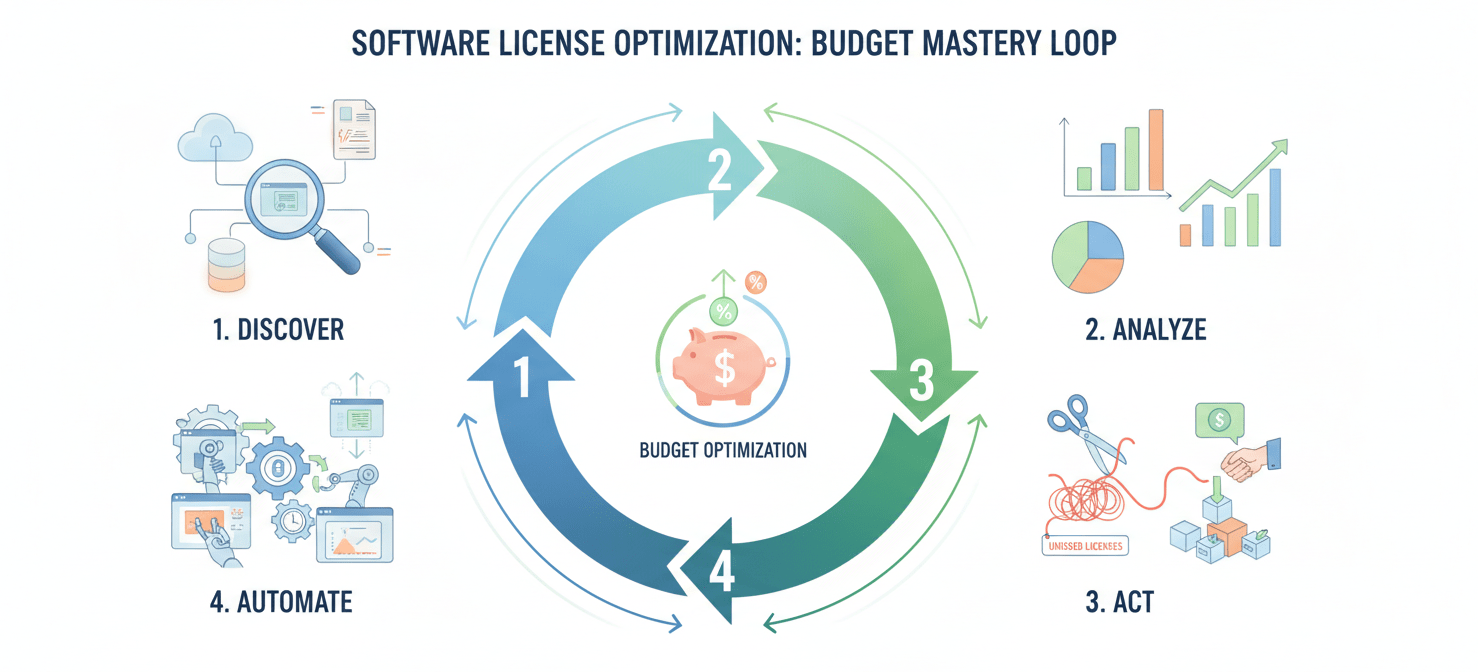
1. Discover: Create a complete inventory
You cannot manage what you cannot see. The first step is to build a comprehensive inventory of every single software tool your engineering organization is paying for. This is the most labor-intensive part of the process, but it is foundational.
- Collaborate with Finance and IT: Start by requesting a list of all software vendors from accounts payable.
- Review Expense Reports: Scrutinize expense reports from your engineering team for any recurring software charges.
- Survey Your Team: Ask your engineers and team leads to list all the tools they use, both free and paid. This will help you uncover shadow IT.
For each tool, you need to document the owner, the renewal date, the annual cost, the number of licenses, and the business purpose. A simple spreadsheet can work for smaller teams, but as you scale, you may want to consider a dedicated SaaS management platform.
2. Analyze: Evaluate usage and redundancy
With a complete inventory, you can begin to analyze your spend. The goal here is to identify waste and opportunities for consolidation.
- Audit Usage Data: For each tool, pull the usage data. Most SaaS platforms provide an admin dashboard showing active users. If a tool has a high percentage of inactive licenses—for example, if only 25% of Jira seats are being used—it’s a prime candidate for rightsizing.
- Identify Overlapping Capabilities: Look for tools that serve the same function. Do you have multiple teams using different project management tools? Are you paying for several CI/CD platforms? Consolidating these can lead to significant savings through volume discounts.
- Question the Value: For each renewal, ask the owner to justify the continued expense. Is the tool still critical to their workflow? Is there a more cost-effective alternative?
3. Act: Rightsize, consolidate, and negotiate
This is where you turn your analysis into action. Based on your findings, you can start making decisions to optimize your spend.
- De-provision Inactive Licenses: Reclaim and reallocate licenses from users who are no longer using a tool. Establish a policy to automatically de-provision licenses after a certain period of inactivity, such as 90 days.
- Consolidate Redundant Tools: Choose a standard tool for each function and migrate users off the alternatives. This not only saves money but also simplifies your tech stack and improves cross-team collaboration.
- Negotiate with Vendors: Armed with usage data, you are in a much stronger position to negotiate with vendors at renewal time. If you know you only need 75 licenses instead of 100, you can push for a contract that reflects your actual needs.
4. Automate: Establish a process for governance
Finally, you need to establish a sustainable process to prevent the problem from recurring. This involves creating clear policies for software procurement and management.
- Centralize Procurement: Create a formal process for requesting and approving new software. All requests should go through a central point—whether that’s you, a designated manager, or a procurement team—to ensure they are vetted for necessity and redundancy.
- Assign Clear Ownership: Every single tool in your inventory must have a designated owner who is responsible for managing the licenses and justifying the expense at renewal time.
- Use Management Tools: As your organization grows, managing this process manually becomes untenable. Consider investing in a SaaS management platform to automate the discovery, tracking, and renewal management process.
Choosing the right tools for the job
While a spreadsheet can be a good starting point, dedicated tools can provide the visibility and automation needed to effectively manage engineering SaaS spend at scale. These tools generally fall into a few categories.
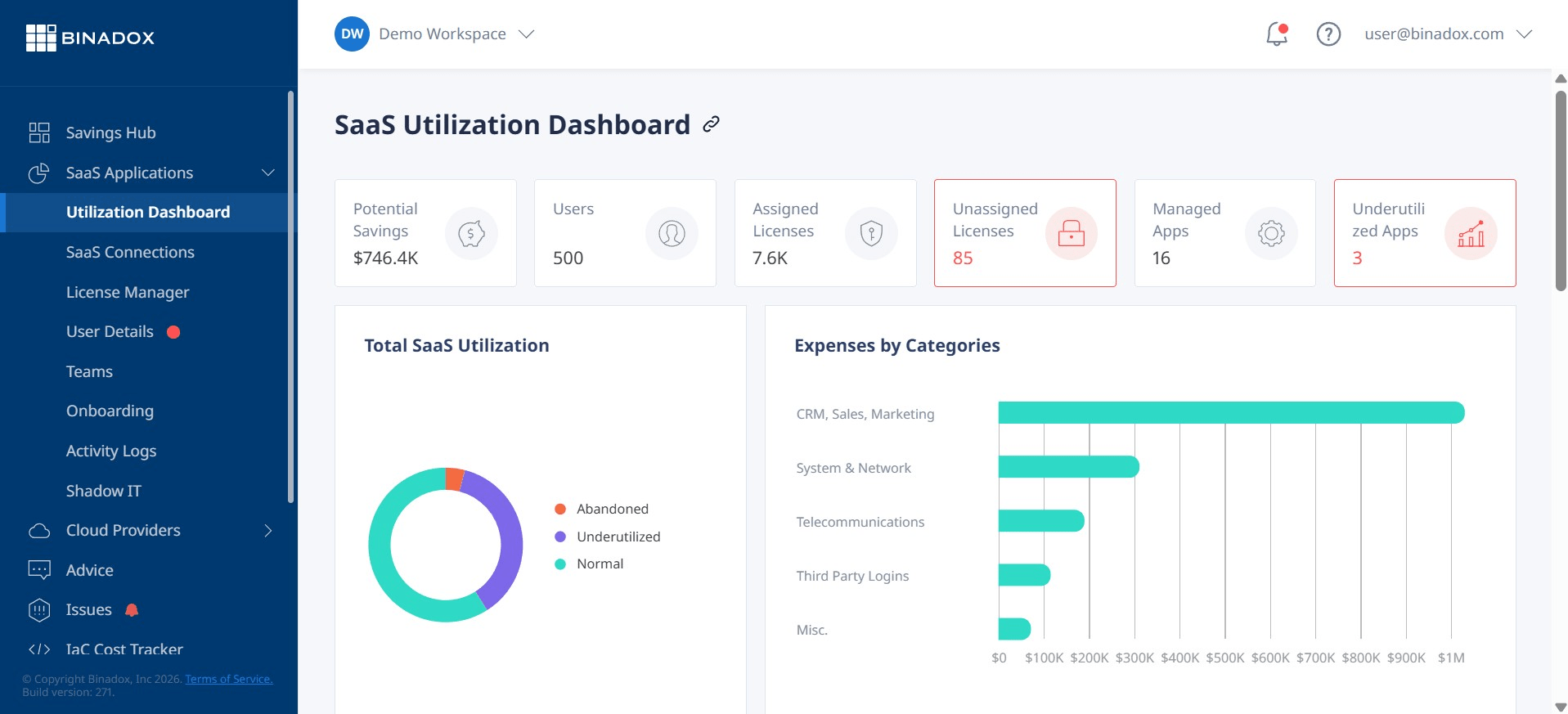
SaaS management platforms (SMPs) are designed to discover all the SaaS applications in use across your organization, including shadow IT. They integrate with your financial systems to track spending and provide dashboards to monitor usage, renewals, and compliance. This gives you a single source of truth for your entire software stack.
For engineering-specific tools, it’s also important to leverage the administrative features within the platforms themselves. For example, products like GitHub Enterprise and Atlassian Guard offer centralized user management, audit logs, and security controls. The GitHub Enterprise plan, for instance, starts at $21 per user/month and provides features like SAML single sign-on and advanced auditing that are critical for governance. Similarly, Atlassian Guard provides organization-wide administration and security policies for products like Jira and Confluence, helping you enforce compliance and manage user access from a single location.
By combining a dedicated SaaS management platform with the built-in governance features of your core engineering platforms, you can create a robust system for controlling costs and mitigating risk.
Conclusion
Effectively managing your engineering software budget is not a one-off project; it is an ongoing discipline. It requires a shift from a reactive, decentralized approach to a proactive, centralized governance model. By establishing clear ownership, implementing a systematic framework for tracking and analysis, and leveraging the right tools, you can transform your software budget from a source of waste into a strategic asset. The goal is not to stifle innovation by denying your teams the tools they need. Instead, it’s about ensuring that every dollar you invest in software is delivering maximum value, empowering your engineers to do their best work without breaking the bank. After all, a well-managed budget is a key indicator of a well-managed engineering organization.

To effectively implement this ongoing discipline and transform your software budget into a strategic asset, you can easily create your free Binadox account to begin gaining visibility, or book a demo to explore how our platform can specifically address your team’s unique challenges.
 7-day free trial