



Artificial intelligence is no longer a fringe R&D expense. It’s a core, and rapidly growing, component of your organization’s technology spend. Unlike traditional cloud infrastructure, AI costs are volatile, opaque, and driven by new consumption models like per-token pricing. For FinOps leads and cost analysts, this presents a significant challenge to forecasting, allocation, and optimization. Applying a structured approach is essential for managing this new frontier of expense. A dedicated FinOps for AI spend management framework provides the visibility, governance, and control necessary to connect AI investment to tangible business value.
Key takeaways
- AI spend is fundamentally different, driven by unpredictable, usage-based pricing models that break traditional forecasting.
- Effective AI cost management requires a three-phase approach: Inform (visibility), Optimize (efficiency), and Operate (governance).
- Only 26% of organizations report having real-time visibility into the cost of running AI at scale, exposing a critical governance gap.
- Successful implementation hinges on granular cost allocation, moving from showback to chargeback models to drive accountability.
The Unique Challenge of AI Spend
Traditional FinOps practices were built for a world of virtual machines and storage buckets. AI workloads, however, introduce a new set of economic drivers. The cost isn’t just about the GPU instance running a model; it’s about the number of tokens processed, the complexity of the queries, and the specific models being invoked. This creates a dynamic and often unpredictable spending pattern that can quickly spiral without dedicated oversight.

The core challenge lies in attribution. When multiple teams, projects, and applications use a shared AI service or platform, how do you accurately allocate costs? A single line item on an invoice from an AI provider is a black box. Without breaking it down, you can’t perform accurate showback, let alone implement a chargeback model that drives accountability. This lack of visibility makes it nearly impossible to calculate the true cost of a feature or determine the ROI of an AI initiative.
Furthermore, the rapid pace of experimentation inherent in AI development leads to cost spikes. Data scientists and developers need the freedom to test different models and approaches, but this experimentation can generate significant, and sometimes wasteful, expenditure. A proper framework must balance the need for innovation with financial discipline.
Phase 1: Inform — Gaining Visibility and Allocation
You cannot control what you cannot see. The foundational phase of any FinOps for AI practice is establishing granular visibility into every dollar of AI spend. This goes beyond the monthly cloud bill and requires a detailed understanding of consumption patterns.
Establishing a Comprehensive Tagging Strategy
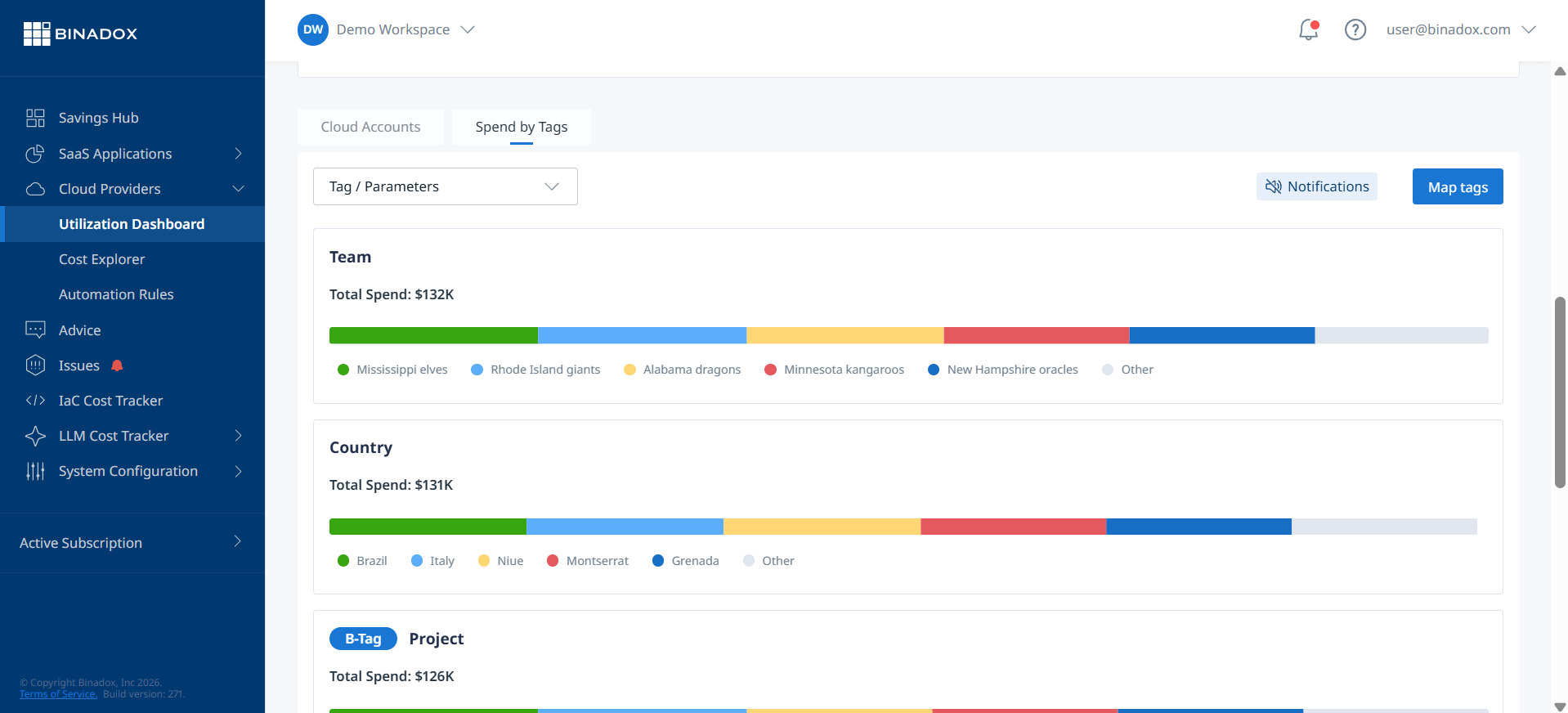
Just as with cloud resources, a consistent and mandatory tagging strategy is the bedrock of AI cost allocation. Tags must be applied to resources to identify the project, team, cost center, and business unit responsible for the consumption. For AI services, this might involve tagging at the level of a specific model deployment, an API key, or a development workspace. For example, cloud providers like AWS and Azure allow for detailed tagging of their machine learning resources, which can then be used to filter and group costs in their respective billing consoles.
Moving from Showback to Chargeback
With a solid tagging strategy in place, you can begin to implement showback. Showback is the process of reporting consumption costs back to the teams that incurred them without actually transferring funds. This is a crucial first step in building cost awareness and validating your allocation model. It allows engineering and product teams to see the financial impact of their decisions.
Once your showback model is accurate and trusted, the next step is to evolve to a chargeback model. Chargeback involves formally billing business units for their AI resource consumption, moving the cost onto their departmental budgets. This creates direct financial accountability and provides a powerful incentive for teams to optimize their usage.
Allocating Shared AI Costs
One of the most complex aspects of AI cost management is handling shared resources, such as a centralized inference endpoint or a shared data pipeline. A purely direct allocation model won’t work here. Instead, you need to develop a proportional allocation strategy. This could be based on the volume of API calls, the number of tokens processed, or another relevant usage metric. The goal is to distribute the shared costs in a way that fairly reflects each team’s consumption.
Phase 2: Optimize — Driving Cost Efficiency in AI Workloads
Once you have clear visibility into who is spending what, you can shift your focus to optimization. The goal is not simply to cut costs, but to improve the unit economics of your AI workloads—delivering the same or better business value for less spend.
Right-Sizing Models and Infrastructure
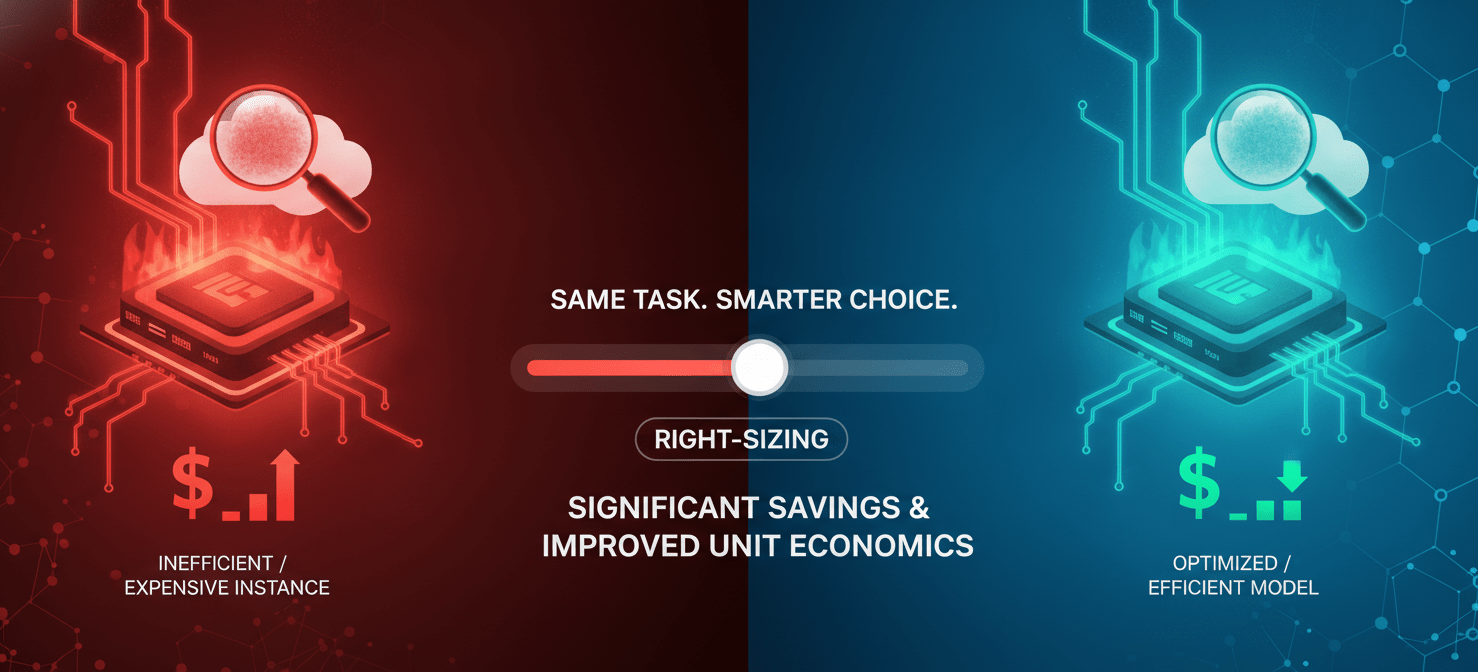
A common source of waste is using a powerful, expensive AI model for a task that a smaller, cheaper model could handle effectively. Your teams should be encouraged to evaluate the performance-to-cost ratio of different models for their specific use cases. For instance, a simple classification task may not require the most advanced large language model available.
Similarly, the underlying infrastructure must be right-sized. GPU instances are expensive, and underutilization is a significant cost driver. Monitoring GPU utilization rates can reveal opportunities to switch to less expensive instances or to implement autoscaling to match capacity with demand. Cloud providers offer a variety of GPU and specialized accelerator instances, and selecting the right one is a key optimization lever.
Leveraging Commitment-Based Discounts
For predictable, steady-state AI workloads, leveraging commitment-based discounts like Reserved Instances from Microsoft Azure or Savings Plans from AWS can yield significant savings over on-demand pricing. These discounts can range up to 72% for one or three-year commitments. Analyzing your historical usage data will allow you to make informed decisions about the level of commitment that makes sense for your organization.
Optimizing Data and Prompts
The cost of many AI services is directly tied to the amount of data processed, often measured in tokens. Therefore, optimizing prompts to be more concise without sacrificing accuracy can lead to direct cost savings. Furthermore, implementing caching for frequently repeated queries can reduce redundant processing and lower costs.
Phase 3: Operate — Embedding Governance and Automation
The final phase involves operationalizing your AI cost management practices to ensure they are repeatable, scalable, and embedded into your organization’s culture. This is where you establish the guardrails that prevent cost overruns before they happen.
Establishing Budgets and Alerts
Every team consuming AI resources should have a clearly defined budget. Using your cloud provider’s cost management tools, you can set up budgets that automatically track spending against these targets. Crucially, you must configure alerts to notify stakeholders when spending is forecasted to exceed the budget. This allows for proactive intervention rather than reactive analysis of a surprisingly large bill at the end of the month.
Implementing Policy-Based Governance
AI cost governance involves setting clear policies about which models can be used, what spending thresholds apply, and who needs to approve new AI-powered projects. These policies should be automated wherever possible. For example, you can use IAM policies to restrict which types of expensive GPU instances certain user roles can launch. The goal is to create “paved roads” that make it easy for developers to do the right thing from a cost perspective.
Automating Cost Management Workflows
As your AI usage scales, manual cost management becomes untenable. Look for opportunities to automate routine tasks. This could include scripts that automatically shut down idle development environments or tools that provide real-time cost estimates to developers within their IDE. The more you can embed cost awareness directly into engineering workflows, the more effective your governance will be.
Measuring Success: KPIs for AI Cost Governance and FinOps for AI spend management
To demonstrate the value of your FinOps for AI program, you need to track the right Key Performance Indicators (KPIs). These metrics will help you measure progress, identify areas for improvement, and communicate the business impact of your efforts.
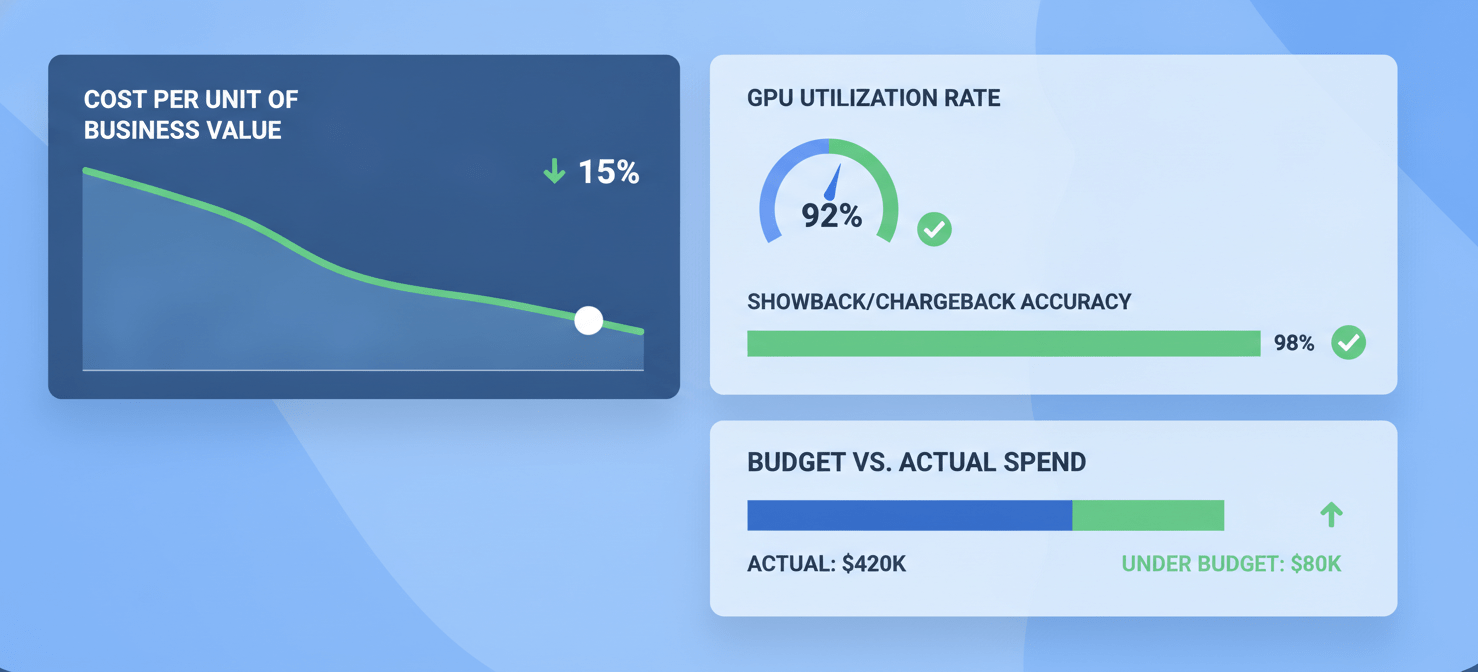
- Cost per Unit of Business Value: This is the North Star metric. Instead of just tracking total spend, you should aim to measure cost against a relevant business outcome. Examples include cost per customer inquiry handled, cost per transaction processed, or cost per line of code generated.
- Model Efficiency: This KPI tracks the cost to achieve a certain level of performance (e.g., accuracy) for a given model. It helps you compare the cost-effectiveness of different models and identify opportunities to switch to more efficient alternatives.
- GPU Utilization Rate: For self-hosted models, this metric is critical. It measures the percentage of time that your expensive GPU resources are actively processing workloads. Low utilization is a clear indicator of waste.
- Showback/Chargeback Accuracy: This measures the percentage of your total AI spend that you can successfully allocate to the correct business unit or project. A high accuracy rate indicates a mature and trustworthy cost allocation model.
- Budget vs. Actual Spend: A fundamental FinOps KPI, this tracks the variance between budgeted and actual AI spending for each team. It provides a clear measure of forecasting accuracy and budget adherence.
Getting Started: Your First 90 Days
Implementing a full-fledged FinOps for AI framework can seem daunting. A phased approach is the most effective way to build momentum and demonstrate value quickly.
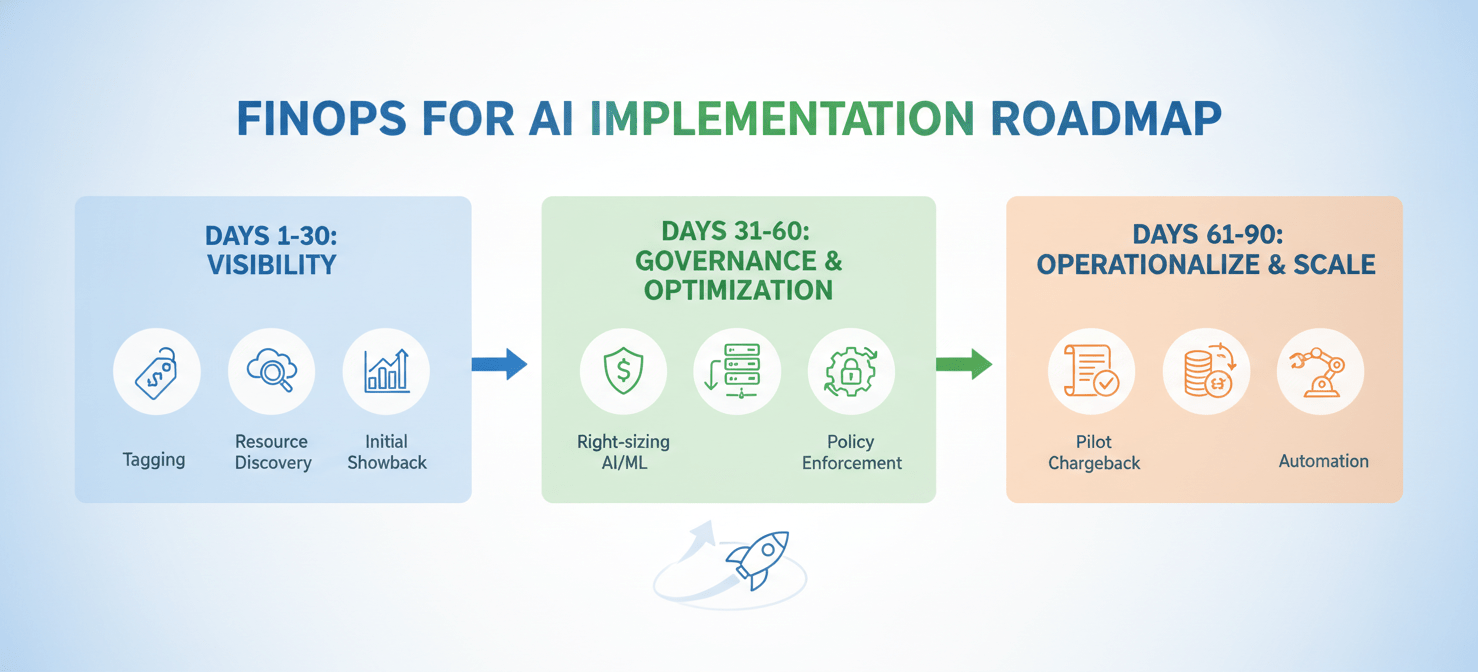
First 30 Days: Focus on Visibility. Your initial priority is to understand your current AI spend.
- Work with engineering teams to develop and implement a comprehensive tagging strategy for all AI resources.
- Configure your cloud billing console to activate these cost allocation tags.
- Develop an initial showback report that allocates 100% of your known AI spend, even if some of it is to a shared “unallocated” bucket to start.
Next 30 Days: Introduce Governance and Optimization. With basic visibility established, you can begin to implement controls.
- Establish initial budgets for each team based on their historical spending.
- Set up automated alerts to notify teams when they are approaching their budget limits.
- Identify the top five most expensive AI workloads and perform a deep-dive analysis to find initial optimization opportunities, such as right-sizing models or instances.
Final 30 Days: Operationalize and Scale. The goal of the final month is to make these practices a repeatable part of your operating rhythm.
- Formalize your showback process and present the reports in your monthly business reviews.
- Develop a proposal for a pilot chargeback program with one or two of the most mature teams.
- Document your AI cost governance policies and begin to automate their enforcement.
Conclusion
Managing AI costs is not a one-time project; it is an ongoing discipline that requires collaboration between finance, engineering, and product teams. The volatility and opacity of AI spend necessitate a dedicated framework that moves beyond traditional cloud cost management. By systematically implementing the phases of Inform, Optimize, and Operate, you can gain control over this new category of expenditure. Ultimately, a successful FinOps for AI spend management practice transforms cost from an unpredictable liability into a strategic investment, ensuring that every dollar spent on artificial intelligence is directly contributing to measurable business outcomes. Without it, you’re just watching the meter run.
To truly transform your AI spend into a strategic asset and gain the necessary control, you can explore Binadox’s capabilities with a free Binadox trial or arrange a personalized demonstration.
 7-day free trial